

BARS 101: Behaviorally Anchored Rating Scales for Performance Evaluation


-
Behaviorally anchored rating scales (BARS) are performance evaluation methods that assess employees using predefined workplace behaviors tied to specific rating levels.
-
In a BARS framework for customer service roles, a score of 5 may describe employees who resolve escalated complaints independently and communicate proactively during service disruptions, while a score of 2 may indicate frequent communication misunderstandings and delayed issue handling.
Performance reviews often become inconsistent when managers interpret rating standards differently across teams, departments, and leadership levels.
As organizations grow, vague scoring systems create bigger challenges during calibration discussions, promotion reviews, succession planning, employee experience management, and workforce development decisions.
This is why many companies are shifting toward behavior-based evaluation frameworks that prioritize observable actions instead of subjective impressions alone.
Behaviorally anchored rating scales (BARS) help organizations create clearer performance expectations, stronger documentation quality, and more actionable employee feedback throughout the review cycle.
In this article, we will discuss how BARS works, its advantages and disadvantages, implementation strategies, practical examples, and best practices for long-term performance management success.
What Is a Behaviorally Anchored Rating Scale?
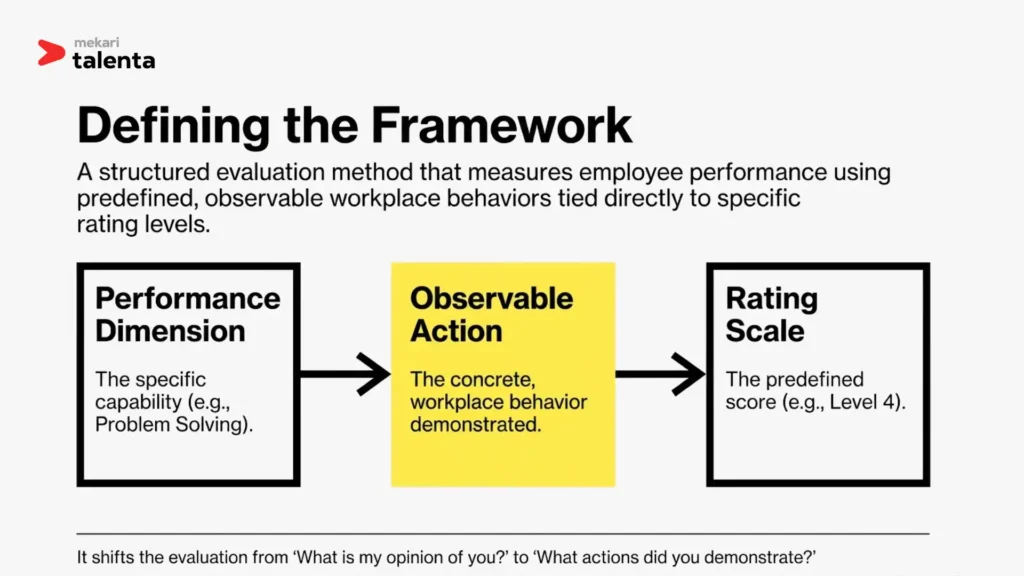
A behaviorally anchored rating scale (BARS) is a structured evaluation method that measures employee performance using predefined workplace behaviors tied to specific rating levels.
Instead of relying on vague scoring categories such as “good” or “excellent,” BARS describes what performance looks like through observable actions, communication patterns, decision-making quality, and work outcomes relevant to a role.
The method was developed to improve consistency in performance appraisal processes, especially in environments where multiple managers assess employees across departments, functions, or regions.
Each scale is built using real examples of effective and ineffective behaviors collected from actual job situations. This creates clearer evaluation standards and reduces interpretation gaps between managers.
BARS is commonly used in leadership reviews, operational roles, customer-facing functions, and project-based teams where behavioral quality directly influences collaboration, execution, and accountability.
Because the system connects ratings with concrete behaviors, employees typically understand expectations more clearly and managers can deliver more actionable feedback during evaluations.
BARS vs. Traditional Rating Scales
Traditional performance rating systems are still widely used because they simplify evaluation processes across departments and reporting lines.
Managers typically score employees using general labels such as “excellent,” “meets expectations,” or “needs improvement.”
However, generic scoring categories often create inconsistent interpretations between managers, especially when performance standards vary across teams.
Below are the key differences between traditional rating scales and behaviorally anchored rating scales.
| Aspect | Traditional Rating Scale | Behaviorally Anchored Rating Scale (BARS) |
|---|---|---|
| Evaluation basis | General performance perception | Observable workplace behaviors |
| Rating consistency | Depends heavily on manager interpretation | More standardized across evaluators |
| Feedback quality | Often broad and subjective | Specific and actionable |
| Calibration process | More difficult during cross-team reviews | Easier due to behavioral references |
| Bias exposure | Higher risk of favoritism and halo effect | Lower due to defined behavioral anchors |
| Employee clarity | Expectations may feel ambiguous | Performance expectations are clearer |
| Development planning | Less detailed guidance | Easier to identify capability gaps |
| Documentation strength | Limited behavioral evidence | Stronger support for performance decisions |
The core difference between traditional rating scales and BARS lies in evaluation precision.
Unlike management by objective systems that primarily focus on target achievement, traditional systems measure performance through broad perception, while BARS measures performance through clearly defined behaviors that employees can consistently demonstrate, improve, and replicate.
Why Behaviorally Anchored Rating Scales Improve Performance Review Accuracy
Many performance review systems fail because managers interpret rating standards differently, resulting in inconsistent evaluations, unclear feedback, and disputes during calibration sessions.
BARS improve evaluation quality by defining performance through observable workplace behaviors instead of subjective judgment.
This creates stronger consistency, clearer accountability, and more actionable development conversations across teams.
1. Reduces Subjective Bias in Performance Reviews
One of the biggest advantages of BARS is its ability to reduce common rating biases such as the halo effect, recency bias, and manager favoritism.
Because each score is linked to specific behavioral examples, managers assess employees against predefined standards rather than personal impressions.
2. Creates More Actionable Employee Feedback
Traditional appraisal systems often produce vague comments such as “needs improvement in communication” without explaining which behaviors need adjustment.
BARS improves feedback quality because managers can directly reference specific actions, responses, and work habits tied to each performance level.
This level of specificity helps managers conduct more productive coaching conversations, identify capability gaps earlier, and connect feedback directly to measurable behavioral improvement.
3. Strengthens Evaluation Consistency Across Managers
As organizations grow, maintaining evaluation consistency becomes increasingly difficult because managers naturally apply different leadership and assessment styles.
BARS creates a shared language for performance expectations, making review standards more uniform across functions and reporting structures.
This consistency becomes particularly valuable during promotion reviews, succession planning discussions, and compensation decisions where evaluation discrepancies can quickly damage employee trust.
4. Improves Documentation and Decision Defensibility
Performance evaluations often influence promotions, compensation adjustments, disciplinary actions, and workforce planning decisions.
BARS provides stronger documentation because ratings are supported by behavioral evidence rather than broad managerial opinions.
Engagedly highlighted that evaluations built on behavioral anchors are easier to defend because they are evidence-based and tied to clearly defined performance indicators.
This becomes increasingly important when organizations need transparent justification for high-impact talent decisions, especially during restructuring, leadership transitions, or formal performance management processes.
Read also: Guide to Performance Management: Definition, Objectives, & Process
Key Components of a Behaviorally Anchored Rating Scale
A behaviorally anchored rating scale is built through several interconnected components that make employee evaluations more structured and measurable.
Each component helps managers assess performance using observable workplace behaviors instead of broad personal judgment.
1. Performance Dimensions
responsibilities, or behavioral categories being evaluated within a role. These dimensions usually reflect the behaviors that most directly influence operational effectiveness and team performance.
For example, a customer service team may use dimensions such as:
- Communication quality
- Problem-solving ability
- Response speed
- Customer handling
- Team collaboration
2. Behavioral Anchors
Behavioral anchors are specific examples of workplace behaviors tied to each performance rating level. They explain what strong, average, or poor performance actually looks like in day-to-day situations.
These anchors are what differentiate BARS from traditional scoring systems because managers evaluate observable actions instead of subjective impressions.
For example, under the dimension “communication quality”:
- Rating 5: Clearly explains issues, actively listens, and resolves customer concerns without escalation
- Rating 3: Provides necessary information but occasionally requires clarification from supervisors
- Rating 1: Gives incomplete responses and frequently causes communication misunderstandings
These examples help managers evaluate employees more consistently.
3. Rating Scale Levels
BARS usually uses a structured scoring scale, commonly ranging from 1 to 5 or 1 to 7, that represents different levels of performance quality. Every score is paired with corresponding behavioral descriptions to help managers assign ratings more accurately.
Example:
- 1 = Poor performance behavior
- 2 = Below expectations
- 3 = Meets expectations
- 4 = Exceeds expectations
- 5 = Outstanding behavioral performance
4. Critical Incident Examples
Critical incidents are real examples of effective or ineffective employee behaviors collected from actual workplace situations.
These examples are typically gathered from managers, supervisors, and experienced employees during the development stage. The incidents help ensure behavioral anchors reflect realistic job expectations rather than theoretical assumptions.
For example:
- An employee successfully de-escalates an angry client during a service disruption
- A supervisor fails to communicate operational changes, causing project delays
- A team leader proactively reallocates resources to prevent deadline risks
5. Role-Specific Evaluation Criteria
BARS works effectively because evaluation standards are customized for specific positions or job families. The behavioral expectations for a sales manager, operations supervisor, or software engineer are naturally different.
This role-based customization improves evaluation relevance and makes performance discussions more actionable for employees and managers alike.
For example, a sales role may prioritize negotiation and client relationship behaviors, while a finance role may emphasize accuracy, compliance, and analytical judgment.
6. Structured Observation and Documentation
The system also depends on continuous observation throughout the review cycle. Managers are expected to document behavioral examples consistently instead of relying only on memory during year-end evaluations.
For example, instead of writing “Employee has good teamwork”, managers record specific observations such as “Collaborated with cross-functional teams during product launch and resolved reporting conflicts within one day.”
This creates stronger evidence during evaluation and calibration discussions. Without structured observation practices, even well-designed BARS frameworks can lose accuracy and credibility.
Uses of BARS Throughout the Employee Life Cycle
BARS are commonly associated with performance reviews, but their value extends far beyond annual evaluations.
Because the system defines success through observable workplace behaviors, BARS can support multiple workforce processes from hiring to leadership succession.
This creates stronger consistency in how organizations assess, develop, and retain employees across different stages of employment.
1. Recruitment and Candidate Assessment
Many organizations use BARS during structured interviews and talent acquisition processes to evaluate candidates more objectively.
Instead of relying on interviewer intuition, recruiters assess candidates against predefined behavioral indicators such as problem-solving ability, collaboration style, communication quality, and decision-making patterns.
This approach is especially effective for high-volume hiring, leadership recruitment, and customer-facing roles where behavioral consistency strongly affects long-term performance outcomes.
2. Onboarding and Early Performance Monitoring
During onboarding, BARS helps managers clarify what successful performance looks like in the first few months of employment.
New hires receive clearer expectations because behavioral standards are already documented within the rating framework.
Managers can also identify adjustment issues earlier by observing whether employees demonstrate the expected workplace behaviors tied to collaboration, responsiveness, adaptability, and accountability.
3. Employee Performance Evaluation
BARS is most widely used in employee evaluations because it improves rating consistency and feedback quality. Managers can provide more evidence-based assessments by referencing observable behaviors rather than relying on broad impressions.
This creates more productive review discussions, stronger calibration alignment, and clearer development priorities for employees across different business functions.
4. Learning and Development Programs
Organizations frequently use BARS data to identify behavioral capability gaps that may not appear in productivity metrics alone.
Evaluation trends can reveal weaknesses in leadership communication, stakeholder management, project ownership, or customer handling behaviors.
These insights help learning teams design more targeted employee training initiatives, coaching programs, upskilling and reskilling strategies, and role-based capability frameworks.
5. Promotion and Succession Planning
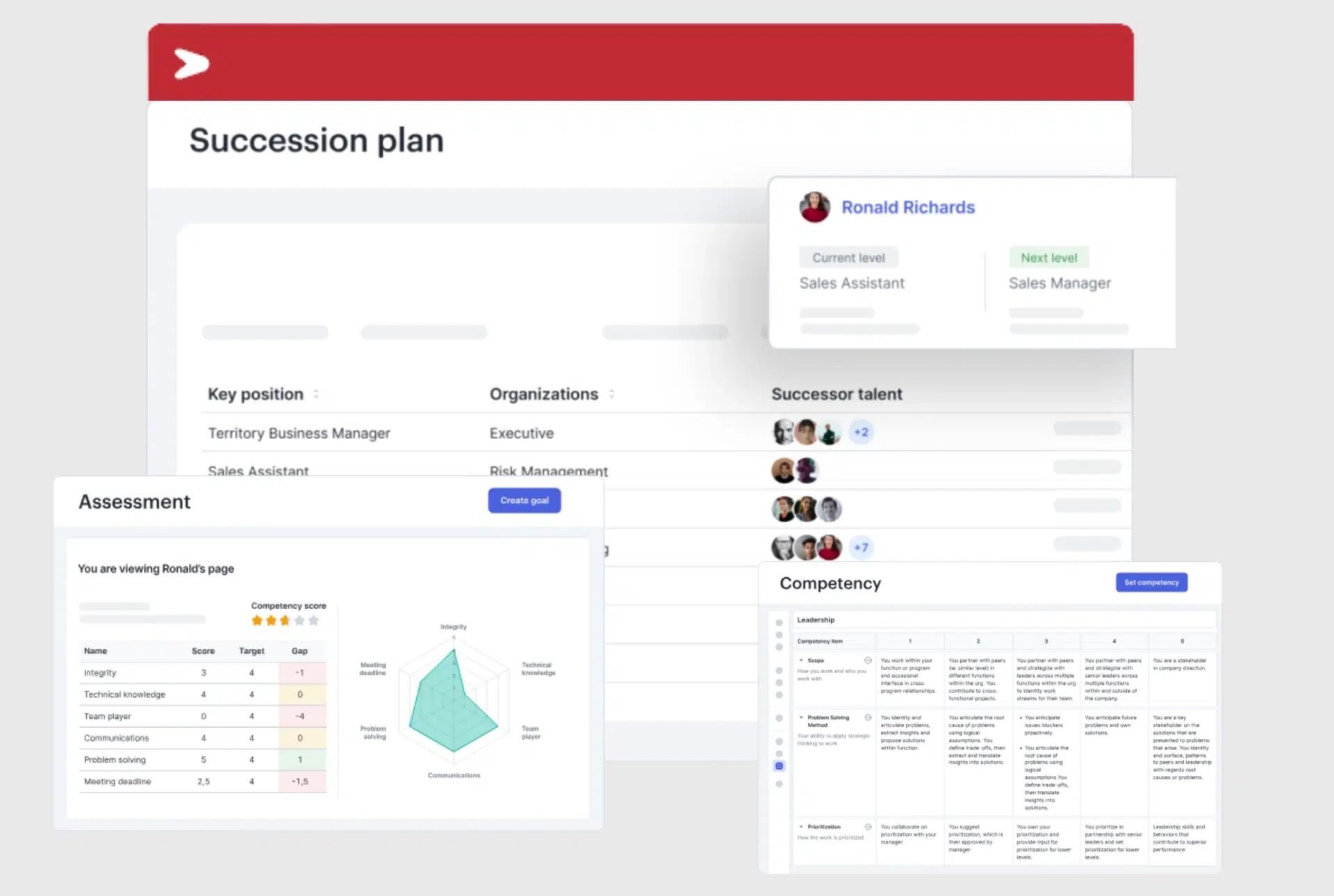
Promotion decisions become more reliable when behavioral readiness is measured consistently over time.
BARS allows leadership teams to evaluate whether employees demonstrate the behaviors required for broader responsibilities before formal role transitions occur.
This is particularly important for managerial and strategic positions where leadership behavior often influences team stability, operational execution, decision-making quality, and employee benefit considerations tied to performance outcomes.
Read also: A Complete Guide of Succession Planning – Process, Strategy, Example
6. Performance Improvement and Corrective Action
BARS also supports performance improvement processes because managers can clearly identify which behaviors need correction. Employees receive more specific guidance instead of general statements about underperformance.
This makes performance improvement plans easier to monitor since progress can be measured against observable behavioral changes over a defined review period.
When BARS shouldn’t be Used
Some organizations implement BARS expecting it to automatically solve every performance management issue. In reality, the system only works effectively when job expectations, managerial discipline, and behavioral standards are already well established.
Below are situations where BARS may not be the right approach.
- Roles with highly unpredictable responsibilities. BARS becomes difficult to maintain when job expectations change frequently because behavioral anchors can quickly lose relevance.
- Newly established teams or functions. The system depends on clear performance standards, which are often still evolving in newly formed departments.
- Small teams with simple reporting structures. Direct managerial feedback is often faster and more practical than building detailed behavioral rating frameworks.
- Organizations with poorly trained evaluators. BARS requires managers to consistently observe and document employee behaviors throughout the review cycle.
- Highly output-driven positions. Roles measured mainly through sales numbers, production targets, or transaction volume may benefit more from metric-based evaluations.
- Companies seeking immediate implementation across all departments. BARS requires role-specific customization, so rushed rollouts often create inconsistent and ineffective evaluation standards.
How BARS Works
Behaviorally anchored rating scales work by measuring employee performance through observable workplace behaviors tied to predefined rating levels.
Instead of relying on broad impressions, managers evaluate how employees demonstrate specific actions, communication patterns, and decision-making behaviors throughout the review cycle.
Below are the main stages of how BARS typically works within an organization.
1. Identifying Key Performance Dimensions
The process starts by determining which competencies or behavioral areas are most critical for a role. These dimensions usually reflect behaviors that directly influence operational effectiveness, collaboration quality, leadership capability, or customer outcomes.
For example, organizations commonly evaluate:
- Communication
- Problem-solving
- Team collaboration
- Leadership
- Accountability
The selected dimensions must align closely with actual job responsibilities rather than generic competency templates.
Read also: KPI (Key Performance Indicator): Examples & How to Calculate
2. Collecting Critical Behavioral Incidents
After defining the dimensions, managers and experienced employees gather examples of highly effective and ineffective workplace behaviors based on real situations. These examples are known as critical incidents.
For instance, a customer service employee who successfully de-escalates a difficult client situation may represent high-performance behavior, while repeated failure to update stakeholders during operational disruptions may reflect low-performance behavior.
Using real workplace incidents helps ensure the rating system reflects actual performance expectations instead of theoretical standards.
3. Developing Behavioral Anchors
The collected incidents are then grouped into performance levels to create behavioral anchors. Each rating level contains a description of behaviors employees are expected to demonstrate at that level.
For example, under the category “team collaboration,” a high-performing employee may proactively coordinate across departments and resolve conflicts independently, while a lower-performing employee may frequently create communication gaps that delay project execution.
This structure gives managers clearer guidance when assigning performance ratings.
4. Observing and Documenting Employee Behaviors
Throughout the evaluation period, managers continuously observe employee behaviors and document relevant examples connected to the rating dimensions.
This process improves evaluation accuracy because managers rely on accumulated evidence rather than recent memory during annual reviews.
Well-documented observations also strengthen calibration discussions between leaders, especially when promotion, compensation, or succession decisions are involved.
5. Assigning Ratings Based on Behavioral Evidence
At the end of the review cycle, managers compare documented employee behaviors against the predefined behavioral anchors within the scale.
Ratings are assigned based on demonstrated workplace actions rather than personal impressions or isolated outcomes.
This approach creates more consistent evaluations, more actionable feedback discussions, and stronger alignment across different managers and departments.
Behaviorally Anchored Rating Scale Example
To help you better understand how BARS works in real performance review processes, below is a practical BARS template that can be adapted for internal employee evaluation and performance management needs.
BARS Advantages and Disadvantages
BARS are widely used because they create more structured, behavior-based employee evaluations. The method helps managers assess performance using observable workplace actions instead of relying on subjective impressions alone.
However, despite its strengths, BARS also requires considerable preparation, continuous managerial involvement, and regular framework updates to remain effective over time.
Advantages of BARS
BARS offers several advantages that help organizations improve evaluation consistency, feedback quality, and performance transparency across teams.
- More consistent performance evaluations. Managers assess employees using predefined behavioral standards, reducing differences in scoring interpretation across teams.
- Clearer and more actionable feedback. Employees receive specific behavioral examples that explain why a certain rating was assigned and what needs improvement.
- Reduced evaluation bias. BARS helps minimize favoritism, recency bias, and halo effects because evaluations focus on observable actions.
- Stronger documentation quality. Behavior-based evidence supports promotion decisions, succession planning, and corrective action processes more effectively.
- Better alignment between expectations and performance. Employees understand what successful performance looks like in real workplace situations.
Disadvantages of BARS
Despite its benefits, BARS can also create operational and administrative challenges if the framework is not developed and maintained properly.
- Time-consuming framework development. Organizations must collect behavioral incidents, define competencies, and create role-specific rating anchors.
- Requires consistent managerial observation. Managers need to continuously document employee behaviors throughout the review cycle to maintain rating accuracy.
- Behavioral anchors require regular updates. As job responsibilities and operational priorities change, evaluation standards may also need revision.
- Less flexible for highly dynamic roles. Predefined behavioral standards may struggle to reflect rapidly changing responsibilities.
- Implementation can become resource-intensive. Large-scale adoption across multiple departments often requires training, calibration sessions, and ongoing system maintenance.
How to Develop a Behaviorally Anchored Rating Scale
Developing a BARS requires more than creating a performance review form with numbered ratings.
The framework must reflect real workplace expectations, observable employee behaviors, and operational realities across different teams.
Organizations that rush the development process often end up with rating systems that feel generic, inconsistent, and difficult for managers to apply during evaluations.
Below are the key stages commonly used to build an effective BARS framework.
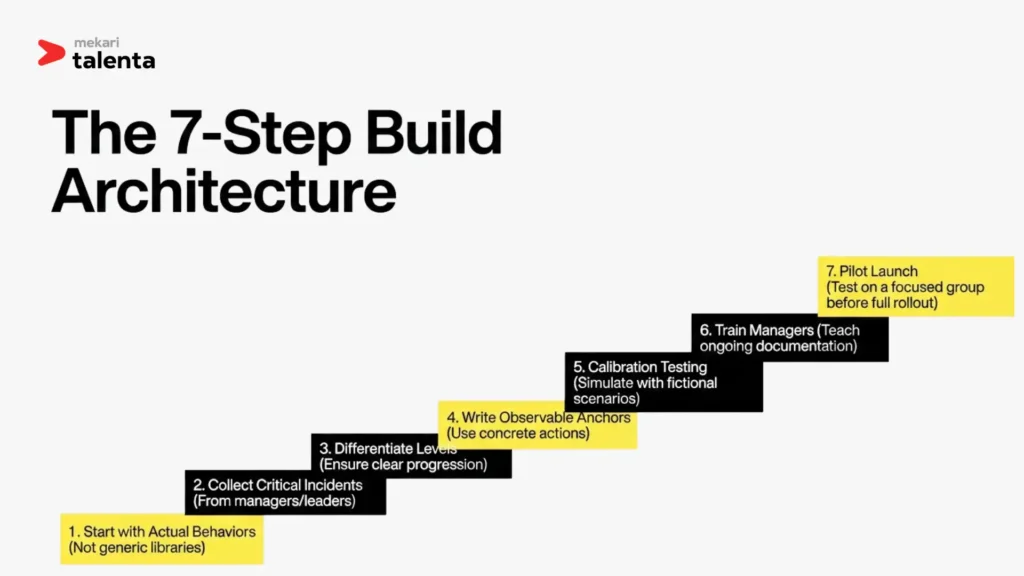
1. Start with Actual Job Behaviors, Not Generic Competency Libraries
One of the most common mistakes during BARS development is relying too heavily on generic competency frameworks copied from other organizations. Effective BARS systems are built around how employees actually perform their work on a daily basis.
This process usually involves interviewing high-performing employees, observing operational workflows, and identifying behaviors that consistently separate strong performers from average performers.
For example, in project management roles, high-performing employees often escalate risks early and coordinate stakeholders proactively, while average performers tend to react only after operational issues begin affecting timelines.
The goal at this stage is to identify behaviors that genuinely influence business outcomes rather than simply listing broad competency labels.
2. Collect Critical Incidents from Managers and Team Leaders
Behavioral anchors should come from real workplace situations rather than theoretical assumptions. Organizations therefore commonly conduct workshops or structured discussions with managers and experienced employees to collect examples of highly effective and ineffective behaviors.
These incidents should describe:
- behaviors that consistently improve operational outcomes
- actions that create recurring workflow problems
- observable responses during high-pressure situations
At this stage, personality-based wording should be avoided because it creates ambiguity during evaluations. Observable actions always produce more reliable scoring standards.
3. Differentiate Performance Levels Carefully
One of the hardest parts of building BARS is creating meaningful distinctions between rating levels. Many poorly designed frameworks fail because the behavioral difference between score 3 and score 4 feels too vague for managers to apply consistently.
Strong BARS frameworks create visible progression across performance levels. Employees at the middle level may complete responsibilities according to expectations, while higher-performing employees proactively solve issues before escalation occurs and contribute to operational improvements beyond their assigned responsibilities.
The clearer these behavioral differences are, the easier it becomes for managers to evaluate employees consistently across teams.
4. Write Behavioral Anchors Using Observable Actions
Behavioral anchors should describe actions managers can directly observe throughout the review cycle. Vague wording often weakens evaluation quality because managers interpret standards differently.
For example:
| Weak Behavioral Anchor | Strong Behavioral Anchor |
|---|---|
| “Has leadership potential” | “Coordinates cross-functional decisions independently and resolves team conflicts effectively” |
| “Communicates well” | “Provides timely operational updates and handles difficult stakeholder conversations clearly” |
| “Shows accountability” | “Takes ownership of unresolved issues and follows through without repeated supervision” |
The more measurable and observable the wording is, the stronger the evaluation consistency becomes.
5. Test the Framework Through Calibration Simulations
Before full implementation, organizations should test whether managers interpret the behavioral anchors consistently. One practical approach is using fictional employee scenarios during calibration exercises.
Managers evaluate the same employee case independently using the draft BARS framework. If scoring results vary significantly between managers, the behavioral anchors may still contain overlapping descriptions or unclear wording.
This stage helps identify weaknesses before the system affects actual performance evaluations.
6. Train Managers to Observe and Document Behaviors Properly
Even well-designed BARS systems can fail when managers do not document employee behaviors consistently throughout the year.
Many evaluations become inaccurate because managers rely too heavily on recent events during annual reviews instead of accumulated behavioral evidence.
Managers therefore need training on how to observe workplace behaviors objectively, document evidence consistently, and separate isolated incidents from recurring behavioral patterns. Without this discipline, BARS can eventually become just another subjective rating system.
7. Launch Through Pilot Testing Before Full Rollout
Most successful BARS implementations begin with pilot groups before expanding across departments. Pilot testing allows organizations to evaluate whether the framework feels practical for managers and relevant for operational teams.
During this stage, organizations often identify issues such as overly complex behavioral descriptions, overlapping rating levels, or dimensions that do not fully reflect actual job responsibilities.
Adjustments made during the pilot phase usually improve long-term adoption and evaluation consistency significantly.
How to Measure the Effectiveness of a BARS System
Implementing a BARS is only the first step. Organizations also need to evaluate whether the system actually improves performance review quality, managerial consistency, and employee development outcomes over time.
Without proper measurement, even well-designed BARS frameworks can become administrative exercises that add complexity without improving evaluation effectiveness.
Below are several indicators commonly used to measure the success of a BARS system.
1. Measure Rating Consistency Across Managers
One of the primary goals of BARS is reducing scoring inconsistency between evaluators. Organizations should therefore monitor whether managers assign ratings more consistently after the framework is implemented.
Large rating gaps between managers evaluating similar employee performance may indicate unclear behavioral anchors, inconsistent interpretation standards, or insufficient calibration training.
Many organizations compare pre-BARS and post-BARS calibration results to assess whether evaluation alignment improves over time.
2. Evaluate Feedback Quality During Performance Reviews
An effective BARS system should improve the quality of manager feedback. Performance discussions should become more specific, behavior-focused, and actionable instead of relying on vague comments.
Organizations often review:
- the specificity of manager comments
- the use of behavioral evidence during evaluations
- employee understanding of performance expectations
- the quality of development recommendations
If review discussions remain generic despite using BARS, the framework or manager training process may still require improvement.
3. Monitor Employee Perception of Fairness
Employees are more likely to trust performance evaluations when ratings are tied to observable workplace behaviors.
Organizations can measure this through employee surveys, review-cycle feedback sessions, or internal engagement assessments.
Common indicators include:
- perceived fairness of evaluations
- clarity of performance expectations
- confidence in promotion decisions
- trust in manager assessments
A successful BARS implementation usually improves transparency and reduces confusion surrounding evaluation outcomes.
4. Track Performance Improvement Trends
BARS should help employees understand which behaviors need improvement more clearly. Organizations can therefore measure whether performance improvement plans, coaching initiatives, or development programs become more effective after implementation.
For example, organizations may analyze:
- repeated behavioral issues across review cycles
- improvement rates after coaching interventions
- changes in low-performance employee outcomes
- readiness progression for promotion candidates
This helps determine whether behavioral feedback is actually influencing employee development.
5. Review Manager Adoption and Documentation Quality
Many BARS systems fail because managers stop documenting employee behaviors consistently after the initial rollout period.
Organizations should therefore monitor whether managers continue using the framework properly throughout the year.
Warning signs usually include:
- incomplete evaluation documentation
- repeated use of generic comments
- inconsistent behavioral evidence
- rushed year-end scoring patterns
Strong manager adoption is often one of the clearest indicators of whether a BARS system remains operationally sustainable.
6. Analyze Business Impact Over Time
Organizations with mature BARS frameworks sometimes connect evaluation trends with broader workforce metrics such as employee retention, employee attrition, promotion readiness, leadership effectiveness, or operational performance.
For example, companies may evaluate whether:
- high-performing employees are identified more accurately
- leadership pipelines become stronger
- internal mobility decisions improve
- performance-related disputes decrease over time
This broader analysis helps determine whether the system creates measurable organizational value beyond performance review administration alone.
The Future of Behaviorally Anchored Rating Scales
BARS are evolving alongside broader changes in performance management, workplace technology, and workforce expectations.
Organizations are gradually moving away from static annual reviews toward more continuous, data-driven, and behavior-focused evaluation models.
As a result, modern BARS frameworks are becoming more adaptive, integrated, and technology-enabled than traditional paper-based appraisal systems.
Below are several major trends shaping the future of BARS.
1. AI-Assisted Behavioral Evaluation
Artificial intelligence is increasingly being integrated into performance management systems to support behavior tracking, feedback analysis, and evaluation consistency.
Instead of relying entirely on year-end manager observations, organizations are beginning to use AI tools to analyze recurring workplace behaviors through collaboration platforms, project systems, and feedback channels.
This trend may eventually help organizations strengthen behavioral evidence collection while reducing administrative workload for managers.

2. Continuous Feedback Will Replace Static Annual Reviews
Traditional once-a-year performance reviews are becoming less effective in fast-moving work environments.
Modern BARS frameworks are therefore shifting toward continuous performance conversations supported by shorter review cycles and ongoing behavioral observations.
Instead of documenting employee behaviors only during annual evaluations, managers increasingly conduct:
- monthly check-ins
- quarterly development reviews
- project-based behavioral assessments
- real-time coaching discussions
This approach allows behavioral feedback to become more relevant, timely, and actionable.
3. BARS Will Become More Integrated with HR Technology Ecosystems
Performance management systems are becoming increasingly connected with broader HR platforms such as learning management systems (LMS), succession planning tools, engagement platforms, and workforce analytics dashboards.
This integration allows organizations to connect behavioral evaluation data with workforce planning and employee development strategies more effectively.
4. Adaptive and Role-Specific BARS Frameworks Will Increase
Many organizations are moving away from rigid company-wide rating structures toward more adaptive BARS models customized for different functions and business environments.
For example, customer-facing teams may prioritize communication and service recovery behaviors, meanwhile technical roles may focus more on collaboration, execution discipline, and problem-solving.
This trend reflects growing recognition that different roles require different behavioral success indicators.
5. Data-Driven Calibration Will Become More Important
As organizations manage larger and more distributed workforces, calibration accuracy is becoming a bigger priority. Future BARS systems will likely rely more heavily on analytics dashboards, behavioral trend monitoring, and evaluation consistency tracking across managers.
This allows organizations to identify:
- managers with unusually strict or lenient scoring patterns
- departments with inconsistent evaluation standards
- recurring behavioral gaps across teams
- promotion readiness trends over time
The future of BARS is therefore becoming increasingly tied to workforce analytics and evidence-based decision-making rather than standalone annual appraisal forms.
Strategic Best Practices for Sustainable BARS Implementation
In implementing BARS, organizations need clear operational alignment, strong manager discipline, and continuous framework refinement to ensure the system remains scalable as teams, workflows, and business priorities evolve.
Below are several best practices commonly used to maintain an effective and sustainable BARS framework.
1. Align Behavioral Anchors with Actual Business Priorities
One of the most common reasons BARS frameworks fail is because the behavioral standards no longer reflect operational realities.
Behavioral anchors should therefore be reviewed regularly to ensure they remain aligned with current workflows, collaboration models, leadership expectations, and performance priorities.
For example, organizations operating in highly cross-functional environments may prioritize stakeholder communication and adaptability more heavily than rigid task execution behaviors.
As hybrid work models and digital collaboration continue evolving, behavioral expectations also need periodic adjustment.
2. Keep the Framework Focused and Practical
Many organizations overcomplicate BARS by introducing too many competencies, rating dimensions, or behavioral descriptions. This often creates evaluation fatigue for managers and reduces scoring consistency during calibration discussions.
Strong BARS frameworks usually focus only on the behaviors that have the greatest influence on operational performance and team effectiveness.
A smaller number of highly relevant dimensions is often more scalable than overly detailed evaluation structures that managers struggle to apply consistently.
3. Train Managers Continuously, Not Only During Rollout
Manager calibration should not stop after initial implementation. Evaluation consistency naturally declines over time when managers develop different interpretations of behavioral anchors or stop documenting observations regularly.
Organizations with mature BARS systems commonly conduct recurring calibration sessions throughout the year to maintain scoring alignment across departments.
This becomes increasingly important as organizations expand geographically, adopt hybrid work arrangements, or manage larger leadership structures.
4. Integrate BARS with Continuous Feedback Processes
Modern performance management is moving away from isolated annual reviews toward continuous development conversations
BARS frameworks are therefore more effective when integrated into regular coaching discussions, quarterly check-ins, and project-based feedback cycles.
This approach allows managers to document behavioral observations continuously instead of relying heavily on year-end memory.
Employees also receive faster feedback, making behavioral improvements easier to implement before issues become recurring performance problems.
5. Use Workforce Analytics to Monitor Evaluation Quality
As organizations scale, maintaining evaluation consistency becomes more difficult without data visibility.
Many companies now use workforce analytics dashboards to monitor rating distributions, calibration trends, behavioral gaps, and manager scoring patterns across teams.
This analytical approach helps identify whether certain managers score too leniently, whether departments interpret behavioral anchors differently, or whether specific behavioral issues appear repeatedly across the organization.
Over time, combining BARS with workforce analytics creates a more evidence-based performance management system that supports stronger talent decisions and long-term organizational scalability.
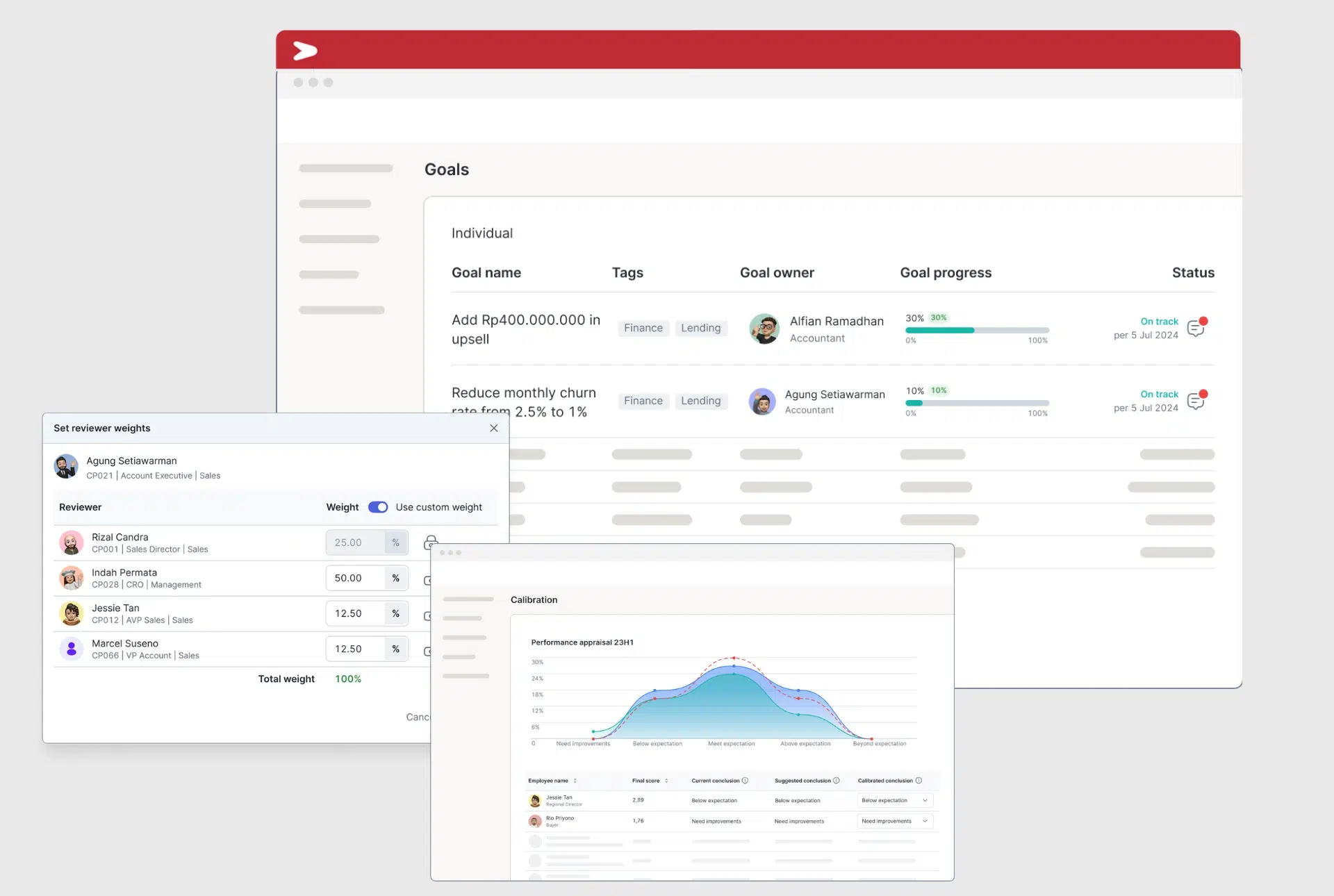
Build More Consistent Performance Reviews with Mekari Talenta Performance Management
An integrated HCM platform with performance management software designed to help organizations build more objective performance evaluations, centralize employee assessment data, automate review workflows, and connect behavioral evaluations directly with workforce development strategies.
Reference
Behaviourally anchored rating scale: a practical guide for HR
Frequently Asked Questions (FAQs)
What industries commonly use BARS?
What industries commonly use BARS?
BARS is widely used in industries that require strong behavioral consistency, structured decision-making, and collaborative work environments. Common examples include customer service, healthcare, finance, manufacturing, technology, retail, and project-based industries. The method is especially effective in roles where communication quality, leadership behavior, stakeholder management, and operational discipline directly affect business outcomes. Many organizations also use BARS for leadership and managerial evaluations because behavioral standards are easier to calibrate across teams.
How long does it take to implement a BARS framework?
How long does it take to implement a BARS framework?
Implementation timelines vary depending on workforce size, job complexity, and the number of departments involved. Smaller rollouts may take several weeks, while organization-wide implementations can take several months due to job analysis, manager workshops, calibration sessions, and framework testing. Companies that involve managers early in the design process usually experience smoother adoption. Pilot testing is also commonly used before expanding the framework more broadly.
Can BARS be combined with KPI-based performance management?
Can BARS be combined with KPI-based performance management?
Yes. Many organizations combine BARS with KPI-based systems to balance measurable business outcomes with behavioral expectations. KPIs typically measure what employees achieve, while BARS evaluates how employees achieve those results. This combination creates more balanced performance reviews because employees are assessed based on both operational outcomes and workplace behaviors. The approach is particularly useful for leadership, project management, and customer-facing roles.
Why do some managers resist using BARS?
Why do some managers resist using BARS?
Managers sometimes resist BARS because the system requires more observation, documentation, and behavioral evidence compared to traditional scoring methods. Some leaders may also feel uncomfortable evaluating employees using detailed behavioral standards if they are not trained properly. Resistance usually increases when frameworks become overly complicated or contain vague behavioral anchors. Continuous calibration and manager training are therefore important for long-term adoption.