

How to Prepare for a Performance Review: A Complete Guide for HR

-
A performance review is a structured evaluation process used to assess employee contribution, goal achievement, leadership readiness, and overall work performance over a specific period.
-
Understanding how to prepare for a performance review helps HR standardize evaluations, reduce bias, improve calibration accuracy, and create more actionable employee development outcomes.
Knowing how to prepare for a performance review becomes increasingly important as workforce structures grow across teams, locations, and reporting lines.
Small inconsistencies in evaluation standards, documentation quality, or manager feedback can quickly create larger problems affecting retention, promotion decisions, compensation planning, and workforce trust.
Many organizations already invest heavily in performance management processes, yet review cycles still become slow, subjective, and difficult to scale consistently.
Managers struggle with fragmented data, employees question evaluation fairness, and HR teams spend weeks consolidating information manually before calibration discussions even begin.
This article will explain how HR teams can prepare more effective performance reviews, avoid common operational mistakes, and improve evaluation quality through more structured and data-driven performance management practices.
What Is a Performance Review?
A performance review is a structured evaluation process used to assess an employee’s contribution, work quality, behavioral consistency, goal achievement, and readiness for future responsibilities over a defined period.
A well-executed review creates alignment between business priorities, leadership expectations, and day-to-day execution across teams, departments, and locations.
An effective performance review goes beyond annual scoring discussions. It helps identify capability gaps, succession readiness, collaboration issues, leadership potential, and areas requiring targeted employee training or upskilling and reskilling initiatives.
Many organizations also use review cycles to strengthen employee retention strategies, refine compensation decisions, and determine eligibility for certain types of employee benefit.
Modern review frameworks increasingly combine measurable KPIs with behavioral evaluation methods such as BARS (Behaviorally Acnhored Rating Scales) to improve scoring consistency and reduce manager bias across larger workforce structures.
Read also: A Guide to Performance Appraisal: Frameworks for Strategic Excellence
Why Proper Performance Review Preparation Matters
Performance reviews influence compensation planning, leadership pipelines, workforce capability, promotion readiness, and long-term organizational stability.
When review cycles are poorly prepared, discussions become inconsistent, managers rely on recency bias, and employees leave without clear direction or accountability.
Strong preparation creates a more credible review process that employees trust and managers can execute consistently across teams and regions.
Below are some of the biggest reasons preparation directly affects review quality and business outcomes.
1. Improves Employee Engagement and Accountability
Employees respond better to performance conversations when managers arrive with documented examples, measurable outcomes, and role-specific expectations.
Structured preparation also helps managers deliver balanced feedback instead of relying on vague impressions formed near the review date.
This matters because feedback quality directly affects employee engagement.
Frequent and well-prepared performance conversations create clearer accountability because employees understand how their work is evaluated and where improvement is expected.
Organizations with mature review preparation processes usually standardize calibration discussions before review periods begin.
This reduces scoring inflation between departments and improves fairness across managers handling different operational functions.
It also creates cleaner documentation for compensation reviews, promotion decisions, and succession planning discussions.
2. Reduces Retention and Performance Risks
Poorly prepared reviews often delay important conversations until problems have already escalated. In many cases, declining performance is visible months before formal evaluations take place, yet managers fail to document concerns consistently or address them early enough.
Preparation allows managers to identify patterns sooner, whether related to workload imbalance, leadership gaps, capability limitations, or collaboration issues.
It also helps determine whether an employee needs additional employee training, coaching support, or a structured performance improvement plan before performance deterioration begins affecting broader team operations.
The long-term impact can be significant because employees often evaluate workplace culture through the quality of management communication and feedback consistency.
Consistent review preparation also strengthens employee experience because employees understand how decisions are made, what good performance looks like, and how career progression is evaluated across the organization.
3. More Reliable Talent Decisions
Performance reviews are often used as the foundation for compensation planning, promotion readiness, succession pipelines, and future talent acquisition priorities.
When managers enter review discussions without sufficient preparation, leadership teams end up making workforce decisions based on incomplete or inconsistent information.
This challenge is more common than many organizations realize.
The issue is rarely caused by the review form itself. More often, the underlying problem comes from weak documentation, inconsistent manager standards, and limited calibration between departments.
Organizations that produce stronger review outcomes typically prepare months before evaluation cycles formally begin.
Managers collect project outcomes, behavioral observations, peer feedback, and operational performance indicators continuously throughout the year.
How to Prepare for a Performance Review: Key HR Preparations Before Reviews Begin
Performance reviews rarely fail because of the meeting itself. Most problems begin weeks earlier through incomplete preparation, inconsistent documentation, unclear evaluation standards, and poor manager alignment.
Once review discussions start, those gaps become highly visible through inflated ratings, conflicting feedback, compensation disputes, or employee distrust toward the process.
Below are the most important preparations that should happen before performance reviews start.
1. Standardize Evaluation Criteria Across Departments
One of the biggest hidden problems in performance reviews is inconsistent interpretation of performance standards between managers.
Two employees delivering similar outcomes may receive completely different ratings simply because their managers define “high performance” differently.
This issue becomes more visible when organizations operate across multiple business units, locations, or functions with different leadership styles.
Without standardization, performance reviews quickly become manager-dependent rather than performance-dependent.
Strong HR teams solve this early by defining measurable evaluation anchors before review cycles begin. That includes clarifying:
- what qualifies as exceeding expectations
- which behaviors reflect leadership readiness
- how collaboration and execution should be evaluated
- which outcomes carry the highest business weight
- how managers should assess cross-functional contributions
Many organizations strengthen consistency further by using structured behavioral frameworks such as BARS, especially for leadership, operational, or client-facing roles where subjective scoring tends to increase.
Another overlooked preparation involves aligning terminology across departments. For example, one manager may interpret “strategic thinking” as long-term planning capability, while another associates it with stakeholder influence.
Unless HR calibrates these definitions beforehand, review discussions become difficult to compare fairly during talent calibration sessions.
Read also: Developing Leadership Competencies: Skills for Managing Teams
2. Audit Performance Data Before Review Cycles Begin
Many review cycles rely on performance data that is incomplete, outdated, or heavily influenced by recency bias. Managers often remember the most recent successes or failures more clearly than consistent performance delivered earlier in the year.
HR should never assume manager documentation is equally reliable across teams. Some managers maintain detailed performance notes throughout the year, while others rely almost entirely on memory during review season.
Before reviews begin, HR should audit whether supporting information actually reflects the employee’s full performance period. This usually includes reviewing:
- goal completion history
- attendance or productivity trends where relevant
- project delivery outcomes
- peer or stakeholder feedback
- coaching documentation
- disciplinary records if applicable
- internal mobility or stretch assignment participation
One practical issue inexperienced HR teams often overlook is “silent high performers.” These employees consistently deliver operational stability without actively seeking visibility.
During calibration sessions, louder or more visible employees sometimes receive stronger evaluations despite weaker long-term consistency. Data audits help reduce this bias.
The same applies to employees working under high-pressure operational conditions. A branch manager handling understaffed teams, difficult shift schedules, or regional operational disruptions may show lower short-term metrics despite demonstrating strong leadership capability.
3. Conduct Manager Calibration Before Final Ratings
Calibration meetings are one of the most important but least understood parts of performance management. Many organizations treat them as optional discussions when they should function as quality control for the entire review process.
Without calibration, managers tend to score based on personal standards rather than organizational standards. This creates rating inflation in some departments and unusually harsh scoring in others.
Effective calibration sessions should happen before ratings are finalized, not afterward. During these discussions, HR challenges inconsistencies by comparing evaluation logic across managers. The goal is not to force identical ratings, but to ensure the reasoning behind ratings remains defensible and aligned.
For example, HR may identify situations where:
- multiple employees are labeled “top performers” despite average business impact
- managers avoid difficult ratings to prevent conflict
- collaboration issues are ignored because business targets were achieved
- leadership potential is confused with technical expertise
- low visibility employees are being undervalued
Strong HR facilitators also pay attention to behavioral patterns during calibration meetings. Some managers consistently overrate loyal team members.
Others unintentionally penalize employees who challenge ideas directly during discussions. These patterns become easier to identify when calibration is structured properly.
Organizations with more mature review systems often separate performance evaluation from compensation discussions during calibration stages.
This reduces emotional bias and helps managers focus on actual contribution quality before salary implications influence scoring decisions.
The same preparation stage is frequently used to review promotion readiness, bonus allocation frameworks, and eligibility criteria tied to employee benefit programs.
4. Prepare Managers for Difficult Review Conversations
Many managers are technically strong but poorly prepared for performance discussions. HR teams often underestimate how uncomfortable managers become when delivering developmental feedback, discussing low performance, or addressing promotion disappointment.
As a result, managers soften critical feedback too heavily, avoid direct language, or overcompensate with inflated ratings to reduce tension. This creates long-term credibility problems because employees receive mixed signals about their actual standing.
Before review cycles begin, HR should prepare managers through practical coaching sessions rather than generic presentation decks. Managers usually need guidance on:
- how to explain ratings clearly
- how to support feedback with examples
- how to handle emotional reactions professionally
- how to discuss missed promotion expectations
- how to respond when employees challenge evaluation fairness
- how to transition performance concerns into actionable development plans
One important reality many inexperienced HR teams overlook is that employees rarely become defensive because of critical feedback alone.
Most negative reactions happen when feedback feels inconsistent, vague, unexpected, or unsupported by prior conversations.
Preparation should therefore focus heavily on feedback continuity. Employees should never hear major performance concerns for the first time during formal review meetings.
5. Align Reviews With Workforce Development Priorities
Performance reviews become significantly more valuable when connected directly to workforce planning and capability development instead of functioning as isolated annual exercises.
Strong HR teams use review cycles to identify future leadership gaps, operational risks, succession readiness, and capability shortages across the organization.
This is where performance management becomes closely connected to employee training, workforce planning, and long-term organizational scalability.
For example, review outcomes may reveal patterns such as:
- frontline managers struggling with stakeholder communication
- technical specialists lacking leadership readiness
- regional teams requiring stronger compliance capability
- operational teams needing digital process adoption support
- emerging leadership candidates requiring cross-functional exposure
These findings often shape future upskilling and reskilling priorities, succession planning discussions, and even revisions to existing types of training programs.
Organizations that handle this well usually treat performance reviews as part of a broader talent ecosystem rather than a standalone HR process.
eview preparation therefore involves coordination between HR business partners, learning teams, operational leaders, and workforce planning stakeholders long before evaluation meetings officially begin.
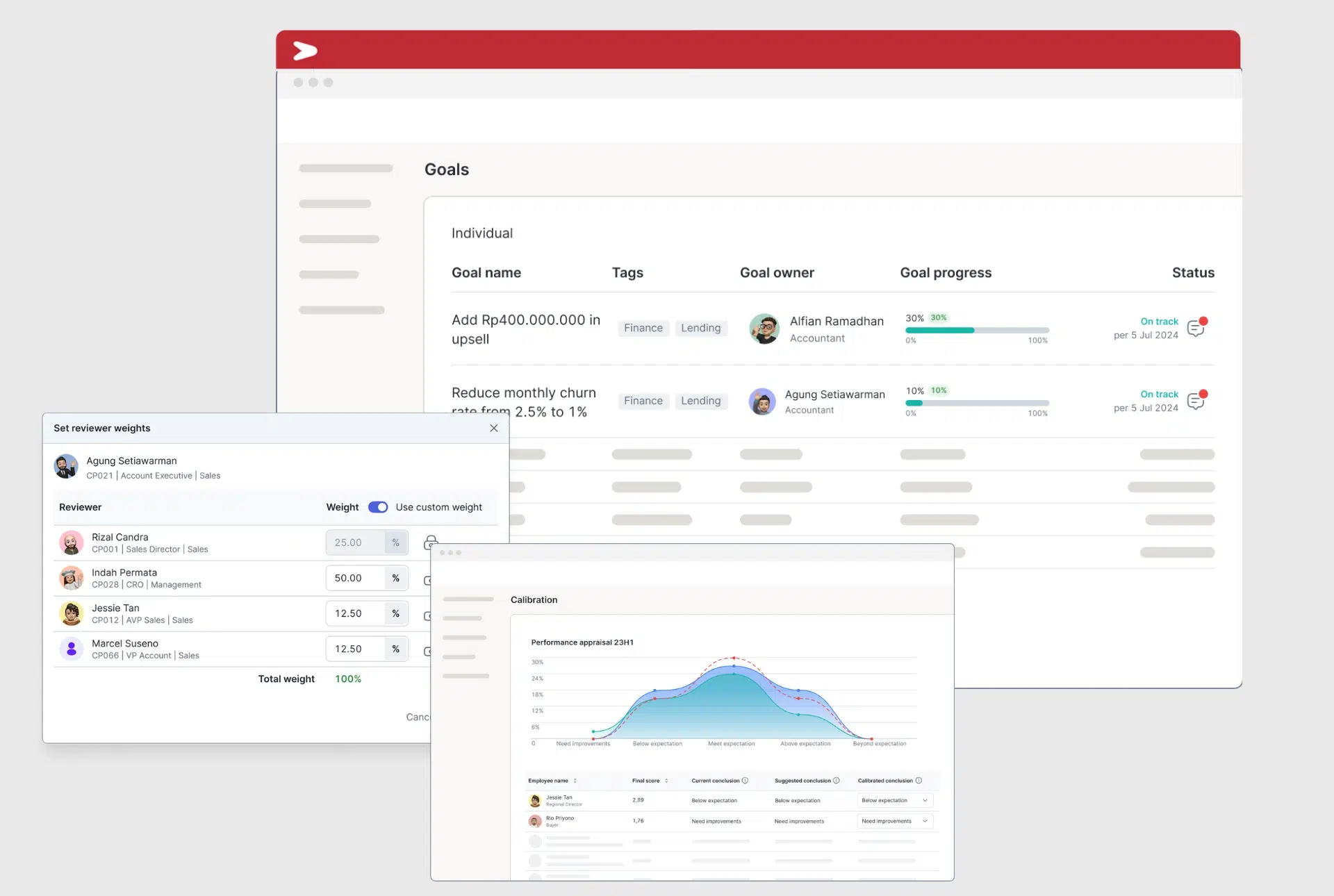
6. Use a Centralized Performance Management System to Improve Review Accuracy and Scalability
One of the biggest operational problems during performance review preparation is fragmented data. Managers often collect information from spreadsheets, emails, chat discussions, attendance systems, and separate KPI trackers before evaluations can even begin.
As review cycles grow larger across multiple teams or locations, this process quickly becomes difficult to manage consistently.
HR teams spend excessive time consolidating data manually, validating performance records, chasing manager inputs, and resolving scoring discrepancies before calibration discussions can happen.
A centralized performance management system helps solve this by consolidating the entire review workflow into one structured environment.
Instead of relying on disconnected tools, managers and HR teams can access performance goals, KPI progress, attendance records, peer feedback, historical evaluations, and development plans within a single platform.
This significantly improves review preparation quality because managers gain better visibility into employee performance history throughout the review period rather than depending heavily on memory or incomplete documentation.
More advanced systems also help standardize evaluations through configurable scoring frameworks, automated review workflows, and structured calibration processes.
Features such as automated scoring weights, AI-generated performance summaries, and integrated 9-box matrix calibration tools can help HR identify high performers, detect scoring inconsistencies, and improve fairness across departments.
Another important advantage is workflow continuity. Strong performance management systems connect goal setting, review discussions, development planning, promotion readiness, and incentive decisions into a single end-to-end process rather than treating performance reviews as isolated annual events.

Common Mistakes HR Should Avoid During Performance Reviews
Many performance review systems appear well-structured on paper but fail during execution because of avoidable operational mistakes.
Below are some of the most common mistakes HR should avoid during performance reviews.
1. Allowing Managers to Evaluate Based on Recent Events Only
Recency bias remains one of the most common review failures across organizations.
Managers often place disproportionate weight on events that happened shortly before the review period while overlooking performance delivered consistently throughout the year.
This becomes especially problematic in fast-moving operational environments where project cycles, business priorities, or staffing pressures shift constantly.
Employees who handled difficult operational periods successfully may receive weaker evaluations simply because their most recent quarter was less visible or less commercially impactful.
HR should actively challenge reviews that rely too heavily on short-term memory rather than documented performance history.
Strong review systems encourage managers to maintain ongoing performance documentation throughout the year instead of reconstructing employee contributions a few days before evaluation meetings.
Another overlooked issue is “performance visibility imbalance.” Employees working closely with leadership often receive stronger recognition because their work is more visible, while operational or support functions delivering long-term stability receive less attention despite significant business contribution.
2. Treating Performance Ratings as the Entire Review Process
Many organizations unintentionally reduce performance reviews into a scoring exercise focused almost entirely on ratings, salary adjustments, or bonus discussions. Once that happens, development conversations become secondary.
Employees rarely improve performance because of a number on a review form alone. Improvement usually happens when managers provide clear direction, specific examples, realistic development goals, and continuous follow-up after the review period ends.
One major mistake inexperienced HR teams make is forcing managers to finalize ratings too early before meaningful discussion occurs.
This often shifts employee attention entirely toward defending scores rather than understanding developmental feedback.
Performance reviews should instead clarify:
- which capabilities need strengthening
- which behaviors are limiting growth
- what leadership expectations look like at the next level
- which operational gaps require immediate attention
- what development actions should happen over the next review cycle
This is also where many organizations fail to connect review outcomes with actual workforce development actions.
Employees identified as future leaders are sometimes left without structured coaching, mentoring exposure, or advanced learning opportunities afterward. Over time, this weakens both employee experience and succession readiness.
3. Ignoring Calibration Problems Between Managers
One of the fastest ways to damage trust in performance management is allowing major scoring inconsistencies between departments. Employees quickly notice when some managers rate generously while others apply unusually harsh standards.
Without proper calibration, review outcomes become heavily influenced by manager personality rather than employee contribution quality.
High-performing employees under stricter managers may receive weaker ratings than average performers working under more lenient leadership.
Another common issue appears when managers avoid difficult ratings entirely to preserve team harmony. Over time, inflated scoring creates several operational problems:
- weaker differentiation between high and average performers
- unrealistic promotion expectations
- compensation distribution imbalance
- difficulty identifying future leadership pipelines
- reduced credibility of succession planning discussions
HR should actively monitor rating distribution patterns before reviews are finalized. Departments with unusually high top-performer percentages or consistently inflated scoring patterns usually require deeper calibration review.
Organizations with mature review systems also examine whether managers apply behavioral expectations consistently.
Strong business results should not automatically outweigh collaboration problems, leadership concerns, or repeated governance issues that create long-term operational risk.
4. Failing to Prepare Managers for Difficult Conversations
Many technically capable managers struggle significantly during performance discussions. Some avoid direct feedback completely, while others become overly blunt without providing actionable guidance.
Both approaches create problems.
When managers avoid difficult conversations, employees leave unclear about their actual performance standing. When managers deliver criticism without structure or context, employees often perceive the process as punitive rather than developmental.
HR teams frequently underestimate how much preparation managers need before review cycles begin. Managers should understand:
- how to explain evaluation decisions clearly
- how to support feedback with evidence
- how to respond when employees challenge ratings
- how to manage emotional reactions professionally
- how to discuss promotion readiness honestly
- how to transition low performance discussions into realistic recovery plans
Another important reality is that many managers unintentionally create legal or employee relations risk during poorly handled review discussions.
Inconsistent wording, vague allegations, unsupported claims, or emotionally driven feedback can later create disputes that become difficult to defend operationally.
Strong preparation reduces those risks significantly.
5. Failing to Follow Through After Reviews End
One of the most damaging mistakes in performance management happens after review meetings are completed. Many organizations invest heavily in evaluation cycles but fail to sustain momentum once discussions end.
Employees quickly disengage when development plans disappear immediately after review season. The review process begins to feel administrative rather than meaningful.
Strong HR teams ensure post-review follow-through includes measurable action plans, leadership check-ins, coaching timelines, and capability development initiatives tied directly to review outcomes.
This is especially important for employees placed into a performance improvement plan. One major mistake organizations make is treating these plans as disciplinary documents instead of structured recovery frameworks.
Effective improvement plans require regular follow-up, manager accountability, realistic performance milestones, and access to the right support resources.
The same principle applies to high performers. Employees identified as strong future leaders should not wait until the next annual cycle for growth opportunities.
Organizations with stronger retention outcomes usually connect review results directly to mentoring exposure, strategic projects, leadership development pathways, and specialized types of employee training shortly after evaluations are completed.
Best Practices for Running More Effective Performance Reviews
Many performance reviews become procedural exercises that employees tolerate rather than genuinely value.
Managers complete forms, discuss ratings, and move on without creating meaningful performance improvement, stronger accountability, or clearer development direction.
Below are several best practices that make performance reviews more effective, actionable, and credible across teams.
1. Shift From Annual Evaluation to Continuous Performance Dialogue
One of the biggest reasons performance reviews fail is because feedback happens too infrequently. When meaningful conversations occur only once or twice a year, employees often receive feedback too late to make meaningful adjustments.
Stronger organizations treat formal reviews as part of an ongoing performance conversation rather than a standalone annual event.
Managers are encouraged to conduct regular check-ins throughout the year to discuss priorities, workload challenges, collaboration issues, and development progress before formal evaluations happen.
This approach creates several operational advantages. Employees become less defensive during formal reviews because feedback is already familiar.
Managers also gain better visibility into performance patterns over time instead of relying heavily on memory during evaluation season.
More importantly, continuous conversations help identify capability gaps earlier. Teams can address operational weaknesses through targeted employee training, mentoring exposure, or cross-functional assignments long before performance problems escalate into larger organizational risks.
2. Separate Development Discussions From Compensation Conversations
One practical issue many organizations overlook is that employees process developmental feedback very differently once compensation discussions enter the conversation.
The moment salary adjustments, bonuses, or promotion outcomes dominate the meeting, employees naturally focus more on defending ratings than absorbing developmental guidance. Even well-delivered feedback becomes harder to process objectively.
Organizations with more mature performance systems often separate these conversations into different sessions. One discussion focuses entirely on contribution quality, leadership expectations, operational impact, and future growth areas. Compensation discussions are handled separately afterward through structured decision frameworks.
This approach improves conversation quality significantly because employees can engage more openly without immediately associating every feedback point with financial consequences or employee benefit outcomes.
It also helps managers deliver more balanced feedback. Managers become less likely to inflate ratings purely to avoid difficult compensation discussions or retention concerns.
3. Use Behavioral Evidence Instead of Generic Feedback
Vague feedback is one of the fastest ways to reduce review credibility. Statements such as “needs stronger leadership presence” or “should improve communication” provide little practical direction unless supported by observable examples.
Effective reviews rely heavily on behavioral evidence tied to measurable situations, decisions, and outcomes. Instead of discussing abstract personality traits, managers should explain:
- which behaviors created positive business impact
- where collaboration challenges appeared
- how decision-making affected operational outcomes
- what leadership behaviors should improve
- which actions demonstrated readiness for larger responsibilities
This is one reason many organizations adopt structured frameworks such as 360 degree-feedback for leadership and managerial evaluations.
Behavioral anchors help managers evaluate observable actions more consistently across departments and reduce subjective interpretation during calibration discussions.
Another overlooked best practice is documenting both positive and developmental examples continuously throughout the year.
Managers who rely entirely on memory often provide unbalanced evaluations shaped by recent events or emotional impressions.
4. Evaluate Performance Within Operational Context
Strong performance management looks beyond isolated metrics. Numbers alone rarely explain the full complexity behind employee contribution.
For example, two regional managers may deliver different revenue or productivity outcomes despite operating under completely different workforce conditions.
One may manage a stable, experienced team, while another handles understaffing, high turnover, or operational restructuring. Evaluating both employees purely through output metrics often creates unfair conclusions.
More effective review systems evaluate both outcomes and operating conditions simultaneously. HR teams should encourage managers to assess:
- resource limitations
- workload complexity
- team stability
- cross-functional dependency challenges
- leadership responsibilities during operational disruption
- contribution to long-term organizational stability
This approach produces more accurate talent identification because it recognizes leadership capability beyond short-term numbers alone.
It also reduces the tendency to overreward highly visible short-term performance while undervaluing employees who consistently stabilize operations behind the scenes.
5. Turn Performance Reviews Into Career Development Conversations
Many organizations unintentionally position performance reviews as judgment sessions rather than growth discussions. Employees leave knowing how they were scored but remain unclear about how to progress professionally.
More effective reviews focus heavily on future readiness. Employees should leave the conversation understanding:
- what skills they need to strengthen
- which leadership behaviors are expected at the next level
- where their career path could expand
- what experiences would accelerate readiness
- which learning opportunities should be prioritized
This is where performance reviews become closely connected to upskilling and reskilling strategies, leadership development pipelines, and long-term workforce planning.
Organizations with stronger employee retention outcomes often use review discussions to identify future mobility interests early.
Employees who see visible career direction are generally more engaged and less likely to seek external opportunities purely because growth pathways feel unclear internally.
Read also: Talent Development Strategy: A Complete Guide for Scalable Growth
6. Measure Manager Quality, Not Just Employee Performance
One of the least discussed performance management practices is evaluating how effectively managers conduct reviews themselves.
Many organizations spend enormous effort measuring employee performance while ignoring whether managers are delivering quality feedback, maintaining documentation consistency, or developing their teams effectively.
Strong HR teams monitor manager review quality through patterns such as:
- unusually inflated or harsh rating distributions
- repeated turnover within specific teams
- low internal mobility from certain departments
- weak development follow-through
- poor documentation quality
- recurring employee complaints about unclear expectations
Over time, these patterns often reveal deeper leadership capability issues that affect organizational performance more broadly.
Organizations that improve review effectiveness sustainably usually treat performance management as both an employee evaluation system and a manager capability system simultaneously.
Build More Objective Reviews with Mekari Talenta Performance Management
An integrated HCM platform with performance management software designed to help organizations streamline performance reviews, centralize KPI tracking, automate evaluation workflows, and connect performance outcomes directly with incentives, promotions, and employee development plans.
Reference
Frequently Asked Questions (FAQs)
How often should companies conduct employee training?
How often should companies conduct employee training?
Training frequency depends heavily on operational complexity, industry regulations, workforce turnover, and business transformation pace. Compliance and cybersecurity training are often conducted annually or semi-annually, while technical and operational training may occur whenever systems, workflows, or policies change. Leadership development and coaching programs are usually continuous because managerial capability evolves over time. Many organizations also reassess training priorities quarterly instead of relying solely on yearly learning calendars.
What is the difference between training and employee development?
What is the difference between training and employee development?
Training usually focuses on improving specific skills or operational capabilities required for current responsibilities. Employee development has a broader objective because it prepares employees for future roles, leadership responsibilities, and long-term career progression. For example, payroll system training helps employees execute current tasks more effectively, while leadership mentoring prepares them for managerial positions in the future. Both are interconnected but serve different organizational purposes.
What are common signs that employees need additional training?
What are common signs that employees need additional training?
Recurring operational errors, delayed project execution, inconsistent customer handling, weak system adoption, repeated compliance issues, and heavy dependency on supervisors are some of the most common indicators. Companies may also identify capability gaps through audit findings, onboarding failure rates, or declining team productivity trends. In some situations, increased employee frustration or communication breakdown between departments also signals the need for training intervention. Strong organizations typically combine operational data and manager observations to identify these issues early.
Should companies prioritize internal or external trainers?
Should companies prioritize internal or external trainers?
The decision depends on the type of capability being developed. Internal trainers usually work better for operational procedures, company systems, workflow alignment, and organization-specific processes because they understand internal realities more deeply. External trainers are often more effective for leadership development, industry certifications, specialized technical topics, or strategic transformation initiatives that require broader external expertise. Many organizations combine both approaches to balance operational relevance with outside perspective.
How can companies measure whether training is effective?
How can companies measure whether training is effective?
Training effectiveness should be evaluated using measurable operational outcomes rather than attendance rates alone. Common indicators include productivity improvement, reduction in operational errors, faster onboarding readiness, stronger audit results, improved customer satisfaction, and higher managerial effectiveness. Some organizations also compare pre-training and post-training performance metrics to assess behavioral or capability changes more accurately. Long-term measurement is particularly important for leadership, coaching, and soft skills development programs where impact often appears gradually over time.