
Management By Objectives: A Guide for Strategic Alignment


-
Management By Objectives (MBO) is a collaborative alignment mechanism where leaders and employees mutually define and track measurable goals to connect daily tasks with overarching strategic priorities.
-
Example of MBO: a regional sales objective to increase recurring revenue by fifteen percent is directly supported by an account executive’s specific goal to boost their individual average contract value by twenty percent.
Managing thousands of moving parts across global timezones requires a mechanism far more robust than generic annual reviews or motivational town halls.
Leadership teams constantly wrestle with the friction of translating high-level boardroom strategies into the daily routines of front-line supervisors and individual contributors.
Without a precise alignment architecture, widespread workforces naturally fragment into localized silos, burning resources on tasks that do not move the overarching business needle.
Embedding a structured goal-setting framework provides the critical psychological and operational anchor needed to bind individual output directly to long-term revenue and stability targets.
This article will dismantle the mechanics of Management By Objectives, providing the exact architectural blueprint required to synchronize a massive workforce and drive measurable, sustained output.
What is Management By Objectives (MBO)?
Management By Objectives (MBO) is a structured management framework where leaders and team members collaboratively define, agree upon, and track specific, measurable goals over a set period.
Through joint discussions, managers and employees establish clear targets tailored to specific roles, ensuring everyone understands exactly how their daily output drives the broader business strategy forward.
This mutual agreement forms the core engine of the entire framework. When individuals take a direct role in shaping their targets, accountability transitions from a top-down mandate to a personal commitment.
This psychological shift naturally drives higher employee engagement, turning passive task executors into active business drivers who understand exactly how their daily output moves the needle.
Furthermore, MBO establishes a highly structured, objective foundation for continuous performance management.
By anchoring evaluations to pre-agreed outcomes rather than subjective personality traits, leadership can facilitate transparent, equitable, and data-backed discussions regarding both operational success and long-term career progression.
Management By Objectives vs OKR
Navigating the landscape of goal-setting frameworks often leads to a debate between MBO and objective key results (OKR).
Both methodologies aim to align individual output with broader strategic priorities, yet they operate on entirely different philosophical and operational frequencies.
The choice between them heavily dictates how rapidly a workforce adapts to market shifts and how leadership ultimately defines success.
Bellow are the key differences between these two:
| Dimension | Management By Objectives (MBO) | Objective Key Results (OKR) |
|---|---|---|
| Cadence | Annual or bi-annual. Aligns directly with long-term fiscal planning cycles. | Quarterly or monthly. Designed for rapid iteration, continuous tracking, and pivoting. |
| Primary Focus | Achieving 100% of the set goal. Represents a firm, committed deliverable. | Aspirational “stretch” goals. Achieving 70% of the target is widely considered a success. |
| Measurement | Often tied to a specific metric or KPI evaluated formally at the end of the cycle. | Progress is evaluated continuously against 3 to 5 highly specific key results per objective. |
| Reward Linkage | Directly tied to compensation, annual bonuses, and formal appraisals. | Strictly decoupled from compensation to encourage bold risk-taking and innovation. |
Conclusion:
The core distinction lies in their intended behavioral outcomes.
MBO establishes a reliable, predictable baseline for standard operations and clearly defines what individuals must deliver to earn their financial incentives. It acts as a binding contract for steady-state productivity.
Conversely, OKR serves as an acceleration engine designed to push teams beyond their comfort zones without the fear of financial penalty if they fall short.
Selecting the appropriate framework depends entirely on whether the immediate business priority requires strict operational stability or aggressive, agile growth.
Read also: How to Implement OKRs: A Practical Guide for Organizations
The Advantages of Implementing MBO
Transitioning a massive global workforce toward a unified business goal requires much more than an inspiring town hall speech. It demands a systemic, architectural shift in how daily output is measured, discussed, and rewarded.
Below are the primary advantages of embedding the MBO framework into your core operational rhythm.
1. Driving Strategic Alignment and Accountability
Middle management frequently struggles to translate high-level boardroom strategies into actionable tasks for front-line workers.
MBO fundamentally solves this disconnect by forcing a collaborative negotiation of targets cascading downward.
When an employee actively co-authors their deliverables, they transform from a passive recipient of assigned tasks into a highly accountable stakeholder.
This transparent, top-to-bottom alignment fosters a cohesive internal culture, which organically strengthens your external employer branding because your workforce genuinely understands and champions the overarching mission.
2. Establishing Objective Evaluation Metrics
Subjectivity is the absolute enemy of trust during appraisal cycles. MBO strips away the reliance on a manager’s personal feelings or recency biases by anchoring the entire evaluation on pre-established, quantifiable outcomes.
This heavily objective approach provides an incredibly clean dataset. By feeding this reliable data into your broader people analytics initiatives, leadership can make highly accurate, non-biased decisions regarding promotions, lateral moves, and compensation adjustments.
3. Mitigating Costly Workforce Attrition
Ambiguity directly breeds anxiety in the workplace. When high performers are unsure of how their success is defined or measured, their frustration mounts and they eventually look for opportunities elsewhere.
MBO provides psychological safety through absolute clarity. Knowing precisely what needs to be accomplished to secure a bonus or earn a stellar review removes the draining guesswork from daily operations.
This structured clarity serves as a highly effective, practical mechanism to reduce employee turnover.
4. Accelerating Targeted Skill Building
Goals set within the MBO framework do much more than simply measure operational output. They act as strategic, built-in milestones for individual growth.
When a manager and an employee negotiate a specific objective, they must simultaneously identify the resources and new capabilities required to actually achieve it.
This naturally integrates daily deliverables with structured talent development, ensuring that upskilling happens contextually on the job rather than in isolated classroom training sessions.
The resulting boost in output is profound.
Types of Objectives in MBO
To effectively cascade goals down a massive organizational hierarchy, you must categorize them into a clear framework of strategic, tactical, and operational tiers.
A common failure point I observe during large-scale rollouts is treating all objectives identically. Structuring them properly ensures that the daily actions of a front-line worker directly feed into the long-term vision of the board.
Here is how these three categories function and interact within the MBO ecosystem.
1. Strategic Objectives
These sit at the very top of the pyramid and dictate the ultimate destination of the business over a one to five-year horizon.
Executive leadership defines these targets to address major shifts in market positioning, total revenue growth, or overarching operational transformations.
Because they are incredibly broad, strategic objectives act as the north star for all subsequent planning
For example, if the C-suite sets a strategic objective to dominate a new geographic market by 2028, this mandate instantly cascades downward to shape your entire global employee recruitment strategy, ensuring you secure the specialized local leadership required to execute that vision.
2. Tactical Objectives
This is the critical translation layer where high-level strategy converts into actionable departmental projects.
Tactical objectives are typically owned by middle management and department heads, operating on a quarterly or annual timeline.
If the strategic goal involves rapid digital transformation, a tactical objective for specific operational divisions might be standardizing fragmented internal systems.
As a real-world application, a department head might own a specific tactical objective to fully implement and migrate all regional data into a unified talent management software by the end of Q3. This level bridges the gap between grand visions and actual daily capabilities.
3. Operational Objectives
Operational targets live on the ground floor. These are the short-term, granular goals assigned to individual contributors and front-line supervisors, measured daily, weekly, or monthly. They represent the exact outputs required to keep the broader tactical plans on schedule.
A major warning sign at this level is a sudden drop in output quality or missed deadlines. When front-line operational targets consistently fail, the root cause is almost always a misalignment in how the goals were originally defined.
Some business units even waste significant budget bringing in external KPI consultancy services to fix broken operational metrics, only to discover the targets were simply completely detached from the reality of the daily workflow.
How to Build an MBO Approach
Launching this framework across thousands of employees requires meticulous orchestration. A common failure mode is rolling it out as a standalone administrative initiative.
To succeed, leadership must position the methodology as the definitive operating system for the entire business.
Here are the foundational pillars required to architect a sustainable, large-scale rollout.
1. Securing True Executive Sponsorship
Many rollouts fail before they even begin because executive leadership treats goal setting as a procedural chore.
Securing genuine sponsorship means the C-suite actively and visibly participates in the target negotiation process.
When the board openly publishes their own overarching objectives to the entire workforce, it sets a powerful precedent of transparency and accountability.
This visible commitment at the very top neutralizes internal resistance and signals that the methodology is a permanent shift in how the business operates.
2. Standardizing the Tracking Infrastructure
Attempting to manage thousands of fluid objectives across isolated localized spreadsheets guarantees a catastrophic data fracture.
You must finalize a centralized tracking architecture before communicating a single target to the broader workforce.
The tracking system must be universally adopted, seamlessly integrated into daily workflows, and capable of providing real-time visibility into goal progression.
A unified infrastructure prevents version control chaos and ensures leadership can accurately measure strategic momentum at a moment’s notice without relying on manual reporting.
3. Calibrating Middle Management
Front-line supervisors and department heads are the absolute linchpin of this entire operation. If they lack the specific skill to facilitate a collaborative negotiation, the framework immediately regresses into a toxic, top-down dictatorship.
Prior to launch, you must dedicate significant time to intensely training your middle managers on how to conduct objective-setting conversations.
They need practical frameworks for pushing back on sandbagging gracefully, identifying hidden operational bottlenecks, and confidently linking an individual’s daily tasks to the broader strategic vision.
The Key Steps of MBO Process
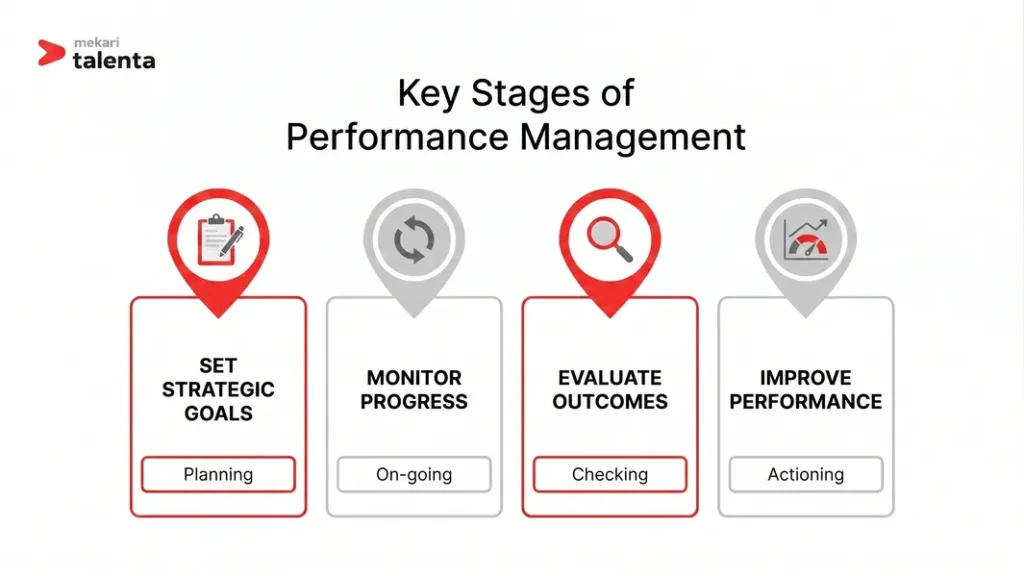
Implementing this framework requires a rigorous, non-negotiable operational rhythm. Missing a single phase breaks the chain of accountability and reverts your workforce back to reactive task execution.
Drawing from decades of navigating global rollouts, here is the exact architecture you must follow to ensure successful adoption.
1. Define Overarching Business Goals
The cycle must originate at the highest level of leadership. The executive board solidifies the strategic vision and defines the absolute baseline of success for the upcoming fiscal year.
Without a crystallized top-level target, the entire downstream process collapses into disjointed, unproductive silos.
For instance, the C-suite might mandate a strategic goal to increase overall B2B software subscription revenue by twenty percent within twelve months.
2. Cascade and Negotiate Individual Targets
This is the stage where the actual collaborative work begins. Department heads and direct supervisors sit down with their teams to translate that grand vision into specific individual deliverables.
A common pitfall here is dictating the goals strictly top-down. You must allow the employee to propose how they will contribute.
This collaborative phase clears up the constant confusion surrounding talent management vs performance management by seamlessly linking an employee’s core capabilities with the exact outputs they are expected to deliver.
To illustrate, a Director of Marketing would meet with a regional campaign manager to negotiate and agree on a target of generating four thousand qualified inbound leads by the end of Q3, thereby mathematically supporting the overarching twenty percent revenue push.
3. Monitor Progress Continuously
Setting a goal in January and ignoring it until December guarantees catastrophic failure. Managers must implement strict, recurring check-ins to track momentum.
These sessions serve strictly to remove operational roadblocks, pivot tactics, and adjust resources before a target is completely derailed.
As an example, during a routine monthly check-in, the regional campaign manager might flag that lead volume is falling behind pace due to a newly identified gap in digital ad proficiency on the team.
The director could then immediately deploy targeted training modules through the corporate learning management system to rapidly close this skill gap and get the project back on track.
4. Conduct Formal Evaluation
At the conclusion of the agreed-upon timeframe, the supervisor and employee review the final output. Because the targets were negotiated upfront, this conversation relies entirely on clean, objective data rather than subjective opinions.
The focus remains strictly on the predefined KPI and analyzing whether the final metric was achieved, exceeded, or missed.
At the end of Q3, for example, leadership and the employee simply review the system data to definitively determine if the campaign manager hit the four thousand inbound leads to satisfy the agreed-upon metric.
Read also: OKRs vs KPIs: Key Differences, Examples & When to Use
5. Deliver Feedback and Allocate Rewards
The final step officially closes the psychological accountability loop. The quantifiable achievement must directly connect to the broader compensation structure. Acknowledging and rewarding the win reinforces the desired behavior for the next cycle.
If a target is missed, this step pivots into an immediate root-cause analysis to prevent recurring failure in the future.
Following a successful cycle, the campaign manager receives their pre-agreed bonus for hitting the lead target, and the director utilizes this positive momentum to outline the manager’s promotion trajectory for the upcoming year.
How Should the Objectives for MBO Be Formulated?
Drafting the actual targets is the most critical vulnerability in the entire framework. A poorly formulated objective guarantees operational friction, misaligned deliverables, and heavily contested performance evaluations at the end of the year.
Supervisors must follow a stringent, standardized architecture when documenting these goals. Moving away from vague aspirations requires embedding extreme precision into the drafting phase through the rigorous application of the SMART methodology.
While widely recognized, the SMART framework is frequently misused as a basic administrative chore rather than a strategic calibration tool
To engineer bulletproof targets, leadership must enforce these specific parameters during the negotiation phase.
- Specific: A functional objective must explicitly define the exact scope of the expected outcome. Writing a goal to simply “improve the software user experience” is an automatic failure because it relies entirely on subjective interpretation. The target must drill down into the exact operational mechanic that needs changing, such as resolving system timeout errors within the primary client portal.
- Measurable: Once the specific action is defined, you must attach a rigid mathematical outcome. An effective formulation requires stating both the current baseline metric and the exact target metric. Building on the previous example, a measurable goal would dictate reducing those specific timeout errors from four hundred incidents down to fifty. This guarantees zero debate during the final appraisal regarding whether the goal was met.
- Achievable: Goals must stretch the employee’s capabilities without breaking their morale. If a target requires massive budget approvals or cross-departmental authority that the employee does not possess, it is fundamentally flawed. You must verify that the individual has the actual resources, funding, and autonomy to execute the assigned task.
- Relevant: This is where most middle managers fail. A supervisor must be able to draw a direct, undisputed line from the individual’s goal directly to a high-level departmental priority. If an objective cannot be explicitly mapped to a broader strategic initiative, it is categorized as unproductive busywork and must be eliminated entirely.
- Time-Bound: Every target requires a firm, non-negotiable deadline. Without a strict timeline, operational urgency dissolves. Specifying that the aforementioned support ticket reduction must be achieved by November first ensures that when evaluation time arrives, there is absolute certainty regarding success or failure.
This rigorous validation process ensures that every single target generated within your organization is actively pushing the core business strategy forward.
By filtering every individual goal through these four parameters, you effectively transform a basic goal-setting routine into a highly synchronized, aggressive execution engine.
MBO Examples for Various Departments in Your Organization
Here is how MBO approach translates across different operational pillars to ensure every individual is pulling in the exact same direction.
1. Sales and Revenue Generation
Sales teams naturally default to purely volume-based targets, which often drives account executives to onboard poorly qualified clients who will inevitably churn. A structurally sound MBO prevents this by tethering revenue directly to profitability.
Objective: Increase regional recurring revenue by 15% by the end of the third quarter while strictly maintaining an average customer acquisition cost below $500.
Sales Team Breakdown:
- Account Executives: Secure and close deals with high-value prospects, aiming for a 20% increase in average contract value to ensure long-term profitability offsets initial acquisition costs.
- Customer Success Managers: Execute targeted upsell campaigns during routine account reviews, contributing 5% to the overall recurring revenue growth while securing long-term renewals.
- Sales Development Representatives: Overhaul the initial outreach sequence to qualify a higher volume of premium leads, targeting a 25% increase in highly qualified pipeline volume passed directly to senior closers.
2. Human Capital and Workforce Planning
Our own discipline is historically guilty of establishing highly subjective, immeasurable targets. To gain genuine executive traction, workforce goals must be anchored in hard data and direct business impact.
Objective: Reduce voluntary attrition within the senior engineering unit by 12% over the next two quarters through targeted leadership intervention and structural workflow improvements.
Workforce Planning Team Breakdown:
- Business Partners: Aggregate and analyze raw data from the recent exit interview cycle to identify exact flight risks, conducting structured stay interviews with 100% of top-tier engineering talent within thirty days.
- Talent Acquisition Specialists: Revamp the specific employee onboarding module for technical hires, aiming to accelerate time-to-productivity by two full weeks to reduce early-tenure frustration and drop-off.
- Learning and Development Coordinators: Design and roll out a customized individual development plan framework specifically for mid-level engineers, aiming for an 80% adoption rate to ensure clear, visible internal promotion pathways.
Read also: Human Capital Management Strategy: Definition, Benefits & Examples
3. Supply Chain and Operations
Operational departments typically focus heavily on aggressive cost reduction. Cutting overhead too rapidly almost always degrades the final product quality or the speed of service delivery.
Objective: Reduce total supply chain freight costs by 8% over the next six months without allowing the regional on-time delivery rate to drop below the 98% threshold.
Operations Team Breakdown:
- Procurement Managers: Renegotiate bulk shipping contracts with tertiary vendors, securing a minimum 10% rate reduction while maintaining strict service level agreements to protect delivery speed.
- Logistics Analysts: Audit and implement new routing optimization protocols for daily delivery schedules, aiming to reduce overall fleet fuel consumption and transit delays by 5%.
- Warehouse Supervisors: Reorganize the primary distribution center layout based on fast-moving inventory data, decreasing average order fulfillment processing time by fifteen minutes per outgoing pallet.
Challenges and Disadvantages of MBO
Every management framework carries inherent structural flaws. Blindly adopting this methodology without installing protective guardrails inevitably creates toxic behavioral side effects.
The very mechanism that drives strict accountability also introduces significant operational risks if left completely unmonitored.
Based on decades of realigning large workforces, here are the primary friction points you must anticipate and engineer out of your system.
1. The Sandbagging Phenomenon
Tying annual financial compensation directly to the achievement of a rigidly defined target triggers a highly predictable psychological response.
During the initial negotiation phase, employees and front-line managers often intentionally under-promise their capabilities to ensure they easily hit their numbers. This practice is widely known as sandbagging.
Because exceeding a goal rarely provides an exponentially higher financial reward, the primary motivation quickly shifts from driving massive business growth to safely protecting a guaranteed baseline bonus.
To counteract this stagnation, leaders must structure compensation bands that continuously reward over-performance rather than utilizing a rigid pass or fail grading system.
2. Operational Rigidity and Market Blindness
This framework is historically designed around a rigid twelve-month fiscal planning cycle. Once targets are locked in and budgets are allocated, redirecting a massive workforce becomes incredibly cumbersome.
If a sudden macroeconomic shift occurs in the middle of Q2, employees will almost always stubbornly prioritize their original, obsolete objectives over the new strategic reality.
They do this simply because those original goals dictate their upcoming performance reviews.
Leaders must build explicit agility clauses into the operational rhythm. This allows management to formally void and rewrite deliverables mid-year without penalizing the employee for pivoting to address a new market threat.
Read also: What Is Performance Review Calibration?
3. Cross-Functional Sabotage
Hyper-focusing on localized goals frequently destroys lateral collaboration. When a software engineering unit is evaluated solely on the volume of code pushed to production, they will naturally deprioritize requests to help the customer success team resolve live technical bugs.
The engineers are doing exactly what the system incentivized them to do, yet the overall client experience rapidly degrades as a result.
Addressing this limitation requires dual-metric goal setting. You must mandate that at least one core deliverable for every individual contributor directly supports the success metric of an entirely different department.
This structural change forces teams to operate as an integrated ecosystem rather than competing internal factions.
Drive and Monitor Management By Objectives Automatically with Mekari Talenta
Orchestrating an MBO framework manually quickly becomes a massive logistical bottleneck as the workforce scales and individual deliverables multiply.
Relying on disconnected spreadsheets to document target agreements, track continuous progress, and calculate final performance outcomes creates severe operational friction.
Mekari Talenta is an integrated cloud-based HCM platform designed to centralize core operational processes, seamlessly connecting basic employee administration and payroll directly to your broader performance management architecture.
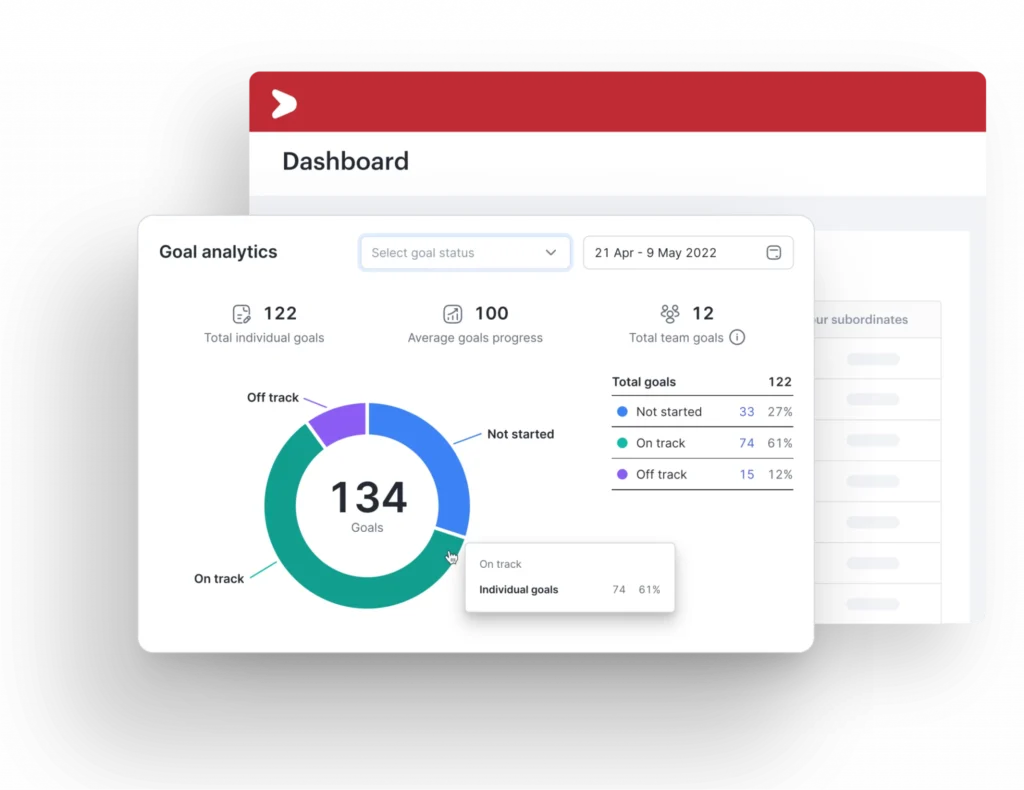
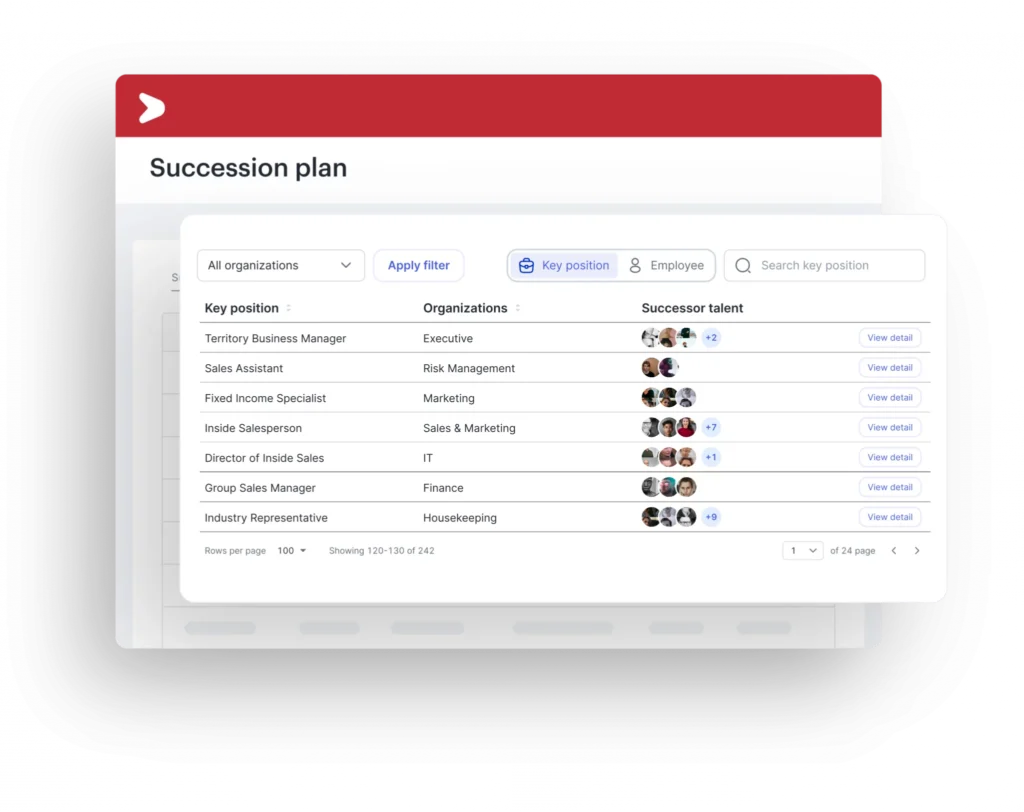
The platform provides dedicated modules specifically built to facilitate the collaborative goal-setting and tracking rhythms required by the MBO methodology.
Utilizing this infrastructure allows leadership to monitor individual target progression objectively, supported entirely by transparent, real-time data.
Consequently, supervisors can facilitate continuous feedback loops and conduct formal evaluations systematically, ensuring every daily task remains perfectly aligned with the overarching business strategy.
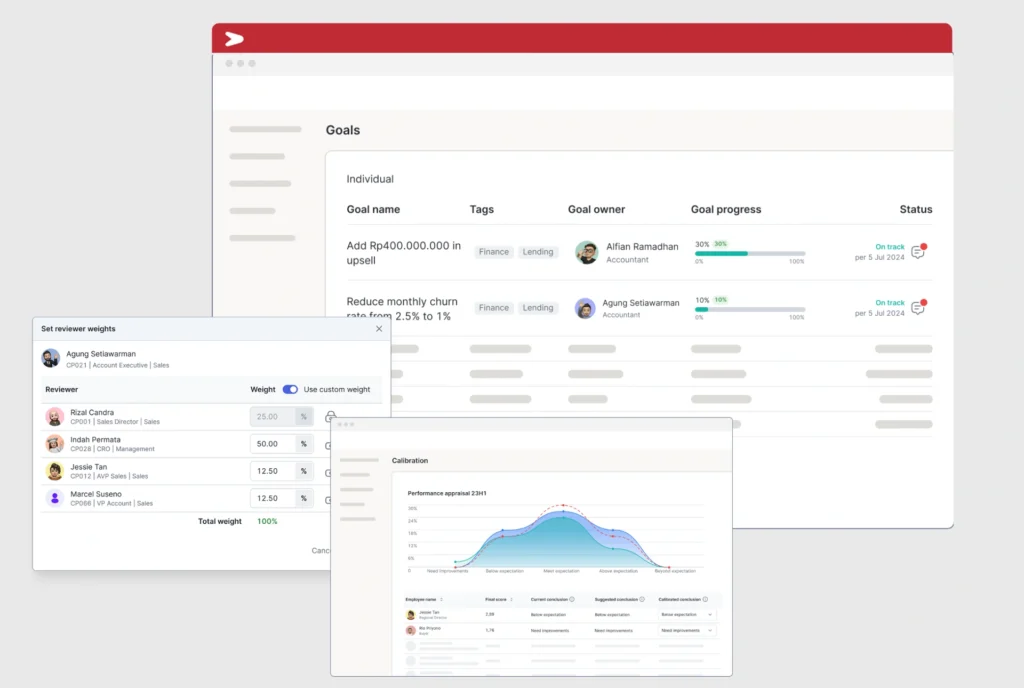
Several core features specifically engineered to support the MBO framework within Mekari Talenta include:
- Strategic Goal Cascading: Document macro-level business objectives securely within the system to ensure every subsequent individual target anchors directly to a clear strategic direction.
- Collaborative Target Negotiation: Facilitate and document the joint creation of measurable goals between supervisors and employees, distributing these exact deliverables seamlessly across relevant units.
- Real-Time MBO Tracking Dashboard: Equip leaders with centralized visibility to monitor operational momentum and target completion rates continuously throughout the fiscal cycle.
- Automated Incentive Linkage: Connect finalized performance outcomes and objective completion data directly to the internal payroll engine to calculate bonuses and financial rewards automatically.
- Data-Backed Formal Evaluations: Conduct highly structured performance appraisals relying strictly on documented goal progression rather than subjective memory.
- Accessible Employee Self-Service: Empower the workforce to review their negotiated targets, update their own work progress, and receive direct feedback through a dedicated mobile application.
Deploying this unified system guarantees your MBO rollout operates with maximum efficiency and absolute data integrity.
Furthermore, adopting Mekari Talenta permanently removes the heavy administrative lifting from your operational leaders, freeing them to focus entirely on targeted capability building and long-term workforce planning.
Contact the Mekari Talenta sales team to discover how a dedicated performance architecture can help your organization track, manage, and elevate workforce output systematically.
Reference
Frequently Asked Questions (FAQs)
Do we need specialized software to run MBO effectively?
Do we need specialized software to run MBO effectively?
Running this framework on manual spreadsheets inevitably leads to version control chaos and lost data across large teams. A dedicated performance tracking system provides the necessary infrastructure to monitor cross-departmental progress in real-time. This centralization allows leadership to instantly identify operational bottlenecks and reallocate resources before a major deadline is missed. Relying on automated tracking ensures the methodology scales seamlessly alongside your workforce expansion.
How often should managers conduct check-ins outside of the formal evaluation?
How often should managers conduct check-ins outside of the formal evaluation?
While the formal appraisal happens at the end of the cycle, managers should conduct informal check-ins on a strict bi-weekly or monthly cadence. These sessions are strictly designed to unblock obstacles rather than to micromanage daily tasks or issue early grades. Frequent touchpoints prevent the common pitfall of discovering a fundamentally derailed project only weeks before the final deadline. This proactive rhythm keeps momentum steady and allows for rapid pivoting if market conditions suddenly shift.
How does the framework handle repetitive daily tasks that fall outside the main objectives?
How does the framework handle repetitive daily tasks that fall outside the main objectives?
The system is designed to capture strategic deliverables and critical operational outputs, not every single keystroke an employee makes. Standard daily tasks are usually governed by foundational job descriptions and basic operational baselines rather than formal MBO targets. Managers should ensure that core objectives consume roughly seventy percent of an individual’s bandwidth, leaving room for routine maintenance and unexpected ad-hoc requests. Forcing every minor administrative duty into a measurable objective simply creates unnecessary bureaucratic bloat.
What happens to the goal structure when an employee transfers to a new role mid-cycle?
What happens to the goal structure when an employee transfers to a new role mid-cycle?
When an internal transfer occurs, the original manager must conduct an immediate close-out review of the current objectives based on the progress achieved up to that specific date. The remaining deliverables are then either formally reassigned to the successor or dissolved entirely if they are no longer strategically relevant. The incoming employee and their new manager then initiate a fresh negotiation phase to establish targets aligned perfectly with the new role. This clean break prevents inherited failures and ensures the employee is evaluated fairly on goals they actually co-authored.
Can this methodology be applied to an entire department as a collective target?
Can this methodology be applied to an entire department as a collective target?
Assigning a single objective to a large group without individual breakdowns often leads to the diffusion of responsibility, where team members assume someone else will handle the heavy lifting. The framework functions best when a macro-level departmental target is mathematically sliced into highly specific, individual deliverables. However, you can attach a shared bonus multiplier based on the collective departmental achievement to encourage peer-to-peer collaboration. This hybrid approach maintains strict individual accountability while fostering a highly synchronized team environment.