

Employee Performance Review 101: The Essential Guide for Leaders


- A performance review is a structured evaluation process used to assess employee contribution, goal achievement, capability development, and overall alignment with business expectations.
- Common performance review examples include annual reviews, quarterly reviews, 360-degree feedback, self-assessments, manager reviews, and continuous performance review systems.
Employee performance review processes increasingly influence how organizations make decisions related to compensation, promotions, workforce planning, leadership readiness, and long-term employee development.
As teams grow larger and business priorities shift faster, review cycles also become more difficult to manage consistently without structured evaluation frameworks and centralized performance visibility.
Many companies still struggle with delayed reviews, subjective evaluations, fragmented feedback, and inconsistent scoring standards across departments.
Employees now expect review discussions that provide clearer feedback, actionable development direction, and stronger visibility into future career opportunities.
This article will explain performance reviews, their objectives, types, preparation strategies, common mistakes, and best practices for building more effective and data-driven evaluation processes.
What is an Employee Performance Review?
An employee performance review is a structured evaluation process used to assess an employee’s work performance, contribution, progress, and overall alignment with business expectations over a specific period.
Companies typically use performance reviews to evaluate goal achievement, productivity, collaboration, leadership capability, technical competence, and behavioral standards within the workplace.
In many companies, performance reviews also function as a strategic decision-making tool that influences compensation adjustments, promotion readiness, succession planning, and long-term workforce development.
The process often combines manager evaluations, employee self-assessments, KPI measurement, competency frameworks, and future development discussions to create a more comprehensive understanding of employee performance.
A well-executed performance review gives you stronger visibility into workforce capability and operational readiness across teams.
It also helps managers identify skill gaps, recognize high-potential employees, and address performance concerns earlier before they affect broader business outcomes.
Performance Appraisals vs. Performance Reviews
Although the terms performance appraisal and performance review are often used interchangeably, both actually serve different purposes within workforce management.
Understanding the distinction is important because each process influences how you evaluate employees, deliver feedback, support development, and make workforce decisions across the organization.
| Aspect | Performance Appraisal | Performance Review |
|---|---|---|
| Primary Objective | Formal evaluation of employee performance and contribution | Ongoing discussion about performance, progress, and development |
| Focus Area | Ratings, KPI achievement, competency scoring, and documentation | Feedback, coaching, alignment, and performance improvement |
| Frequency | Usually annual or semi-annual | Can be quarterly, monthly, or continuous |
| Format | Structured and highly documented | More conversational and development-oriented |
| Key Outputs | Performance ratings, promotion decisions, compensation adjustments | Feedback alignment, coaching actions, development priorities |
| Connection to Business Decisions | Strongly connected to salary reviews, bonuses, and succession planning | Strongly connected to employee development and performance alignment |
| Manager’s Role | Evaluator and decision contributor | Coach, mentor, and feedback facilitator |
| Employee Involvement | Often centered around assessment results | More collaborative and discussion-based |
| Typical Measurement Method | KPI scorecards, competency ratings, management by objective systems | Feedback conversations, progress discussions, development tracking |
| Common Outcome | Formal employee performance classification | Continuous improvement and stronger performance alignment |
In many modern workplaces, performance appraisals and performance reviews are increasingly integrated within the same performance management framework.
Performance appraisals provide formal evaluation and documentation, while performance reviews support continuous feedback, coaching, and employee development throughout the year.
Organizations that combine both approaches effectively usually achieve stronger performance visibility, workforce alignment, and long-term employee growth outcomes.
Read also: A Guide to Performance Appraisal: Frameworks for Strategic Excellence
Performance Review Goals
Performance reviews are designed to create alignment between employee contribution, team priorities, and long-term business objectives.
Modern performance review systems also support broader workforce decisions related to succession planning, leadership readiness, compensation, and organizational growth.
1. Align Employee Performance With Business Priorities
One of the primary goals of a performance review is ensuring that employees clearly understand how their work contributes to broader organizational objectives.
Many companies use performance reviews to align individual KPIs, departmental priorities, and strategic business targets within a more measurable framework.
This alignment becomes especially important when business priorities shift rapidly due to operational transformation, market changes, or technology adoption.
Employees who understand performance expectations more clearly are generally able to make faster decisions, prioritize work more effectively, and collaborate more consistently across teams.
Many organizations also integrate management by objective frameworks into performance reviews to strengthen goal visibility and accountability.
This approach helps managers evaluate not only task completion, but also how employees contribute to measurable business outcomes.
2. Support Employee Development and Career Growth
Performance reviews also function as an important employee development tool.
Beyond evaluating past performance, review discussions help you identify capability gaps, leadership potential, learning priorities, and future career opportunities for employees across different functions.
Employees often expect clearer feedback about their strengths, growth areas, and long-term progression opportunities during review cycles.
When managers provide actionable development guidance, employees are more likely to remain engaged and motivated in their roles.
This is why many organizations connect performance reviews with employee training initiatives, coaching discussions, mentorship programs, and career pathing frameworks.
Review conversations often become the foundation for development plans that support future role readiness and workforce mobility.
Companies that consistently prioritize development-focused reviews usually create stronger employee experience outcomes because employees gain greater visibility into their long-term growth opportunities within the organization.
3. Identify Performance Issues Earlier
Performance reviews help managers identify productivity concerns, behavioral challenges, collaboration issues, and capability gaps before they escalate into larger operational problems.
Early visibility allows managers to respond faster through coaching, workload adjustments, additional support, or targeted development interventions.
Without structured review processes, performance concerns often remain undocumented until they begin affecting project delivery, team dynamics, customer outcomes, or operational efficiency. This situation becomes more difficult to manage when expectations were never clearly communicated earlier.
Many organizations also use performance reviews to determine whether employees require additional development support through a performance improvement plan.
In many cases, performance gaps emerge because employees lack clarity, coaching, resources, or evolving technical capabilities rather than motivation alone.
Structured review discussions create stronger documentation, clearer accountability, and more transparent communication between employees and managers throughout the performance management cycle.
4. Strengthen Workforce Planning and Retention Strategies
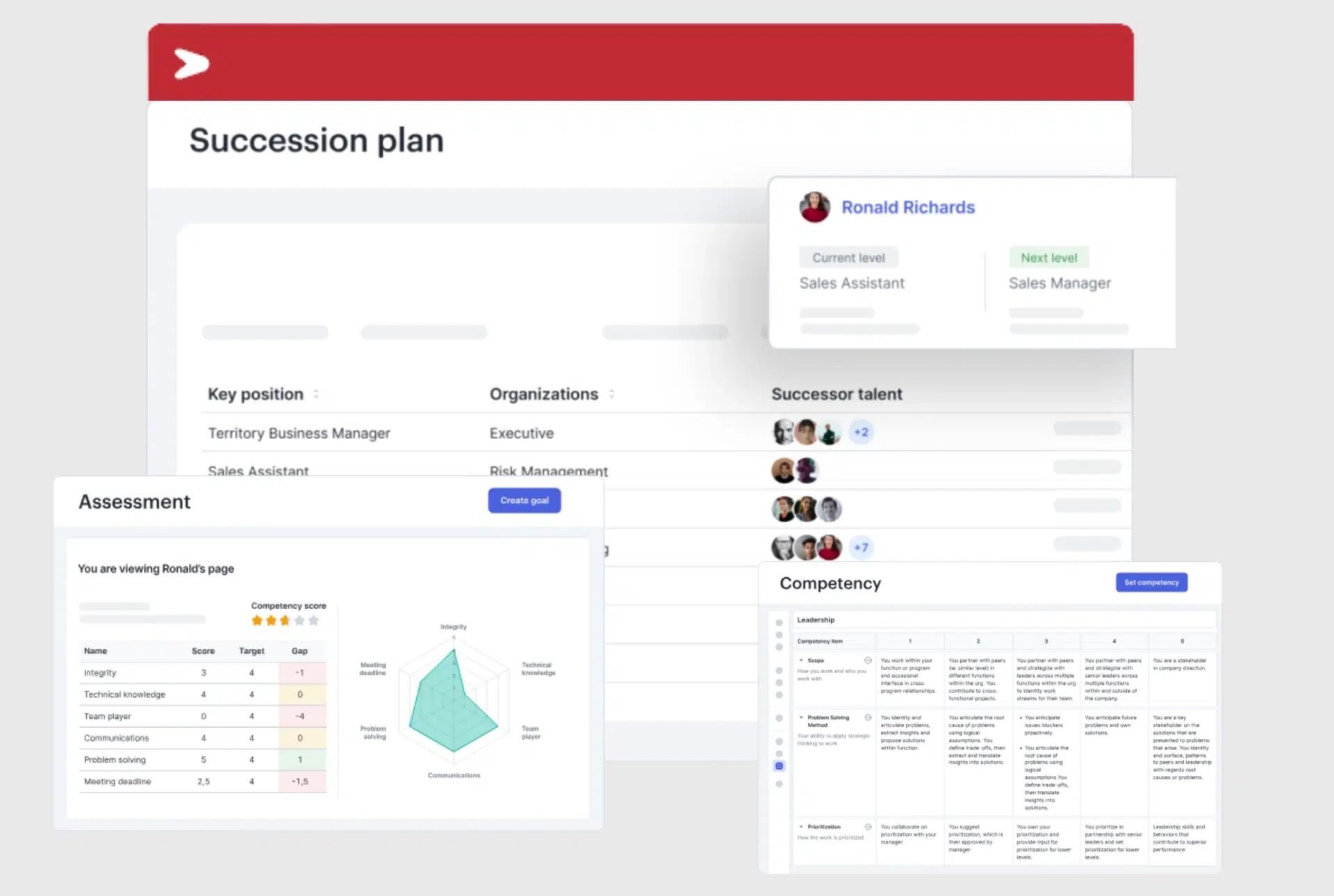
Performance review data plays a major role in workforce planning decisions. Organizations frequently use review outcomes to identify high-potential employees, succession candidates, leadership readiness levels, and workforce capability trends across departments.
Review insights also influence promotion planning, compensation decisions, mobility discussions, and long-term talent development strategies.
Employees who consistently perform well but receive limited growth opportunities are often more vulnerable to employee attrition, especially in highly competitive industries.
At the same time, review discussions help managers understand employee motivation, career expectations, and engagement risks more clearly.
This visibility allows organizations to strengthen employee retenton strategies by improving development access, career mobility, and recognition opportunities before employees begin exploring external opportunities.
Performance reviews also provide valuable insight into whether current talent aquisition strategies align with actual workforce capability needs across the organization.
The Role of Performance Review in Employee Development
Performance reviews play a major role in shaping how employees grow, adapt, and progress within the organization.
Beyond evaluating past performance, review discussions help you identify future potential, strengthen capability development, and create clearer direction for employee growth.
1. Create Continuous Development Conversations
One of the biggest contributions of performance reviews to employee development is creating structured and recurring growth conversations between managers and employees.
Employees need regular feedback to understand where they are performing well, where they need improvement, and which capabilities should be developed further.
This is why many organizations are shifting away from relying solely on annual review cycles. More companies now implement quarterly check-ins, monthly coaching discussions, and continuous feedback systems to maintain stronger development visibility throughout the year.
Frequent review conversations also help managers identify capability gaps earlier before they begin affecting productivity, collaboration, or leadership readiness.
Employees generally respond more positively when development feedback is delivered consistently rather than accumulated only during year-end evaluations.
2. Help Employees Build Clearer Career Direction
Performance reviews also help employees understand how their current performance connects to future career opportunities inside the organization.
Employees often become disengaged when they cannot clearly see progression pathways, development priorities, or expectations for advancement.
During review discussions, managers can provide more specific guidance regarding leadership readiness, skill development priorities, cross-functional opportunities, and future role expectations.
These conversations become especially important for high-potential employees who are preparing for larger responsibilities or more strategic positions.
3. Strengthen Accountability and Performance Improvement
Performance reviews also create stronger accountability structures that support employee growth over time. Employees develop more effectively when expectations, development priorities, and performance standards are clearly documented and discussed openly.
Structured review discussions allow managers to address performance concerns earlier while still focusing on employee development and capability building.
In many situations, employees underperform because they lack clarity, coaching, operational support, or evolving technical skills rather than motivation alone.
When managers approach performance discussions constructively, review processes become more effective in improving employee capability, confidence, and long-term contribution to the organization.
Types of Performance Review
Organizations use different types of performance reviews depending on workforce structure, operational priorities, management style, and performance management maturity.
Some review methods focus on formal evaluation and documentation, while others prioritize continuous feedback, collaboration, and employee development.
Many companies combine multiple review methods throughout the year to create more balanced and comprehensive employee evaluations.
1. Annual Performance Review
Annual performance reviews are the most traditional review format and are still heavily used for salary adjustments, bonus allocation, promotion decisions, and formal documentation purposes.
Employees are usually evaluated once a year based on KPI or OKR achievement, competency assessment, behavioral standards, and overall contribution during the review cycle.
The process typically involves self-assessment forms, manager evaluation, calibration discussions, and final scoring approval from leadership or HR teams.
In larger organizations, annual reviews are often tied closely to compensation cycles and workforce planning discussions.
The advantage of annual reviews is stronger long-term performance visibility and more structured documentation.
However, many employees feel annual reviews are too delayed because feedback is accumulated over an entire year.
Managers also tend to struggle with recency bias, where recent performance overshadows earlier contributions.
Read also: OKR vs KPI: Key Differences, Examples & When to Use
2. Quarterly Performance Review
Quarterly reviews are conducted every three months to create more frequent performance alignment and feedback discussions.
This review method is commonly used in companies with fast-changing priorities, aggressive growth targets, or highly dynamic operational environments.
Managers typically review short-term goals, project outcomes, collaboration quality, workload challenges, and development progress during these discussions. Quarterly reviews are usually shorter and less administrative compared to annual evaluations.
One major advantage is faster course correction. Employees receive feedback earlier and managers can identify performance risks before they become larger operational problems.
The challenge is consistency. Managers often deprioritize quarterly reviews during busy operational periods if the process feels overly administrative or disconnected from business priorities.
3. 360-Degree Feedback Review
A 360-degree review collects feedback from multiple stakeholders including managers, peers, direct reports, project teams, and sometimes clients.
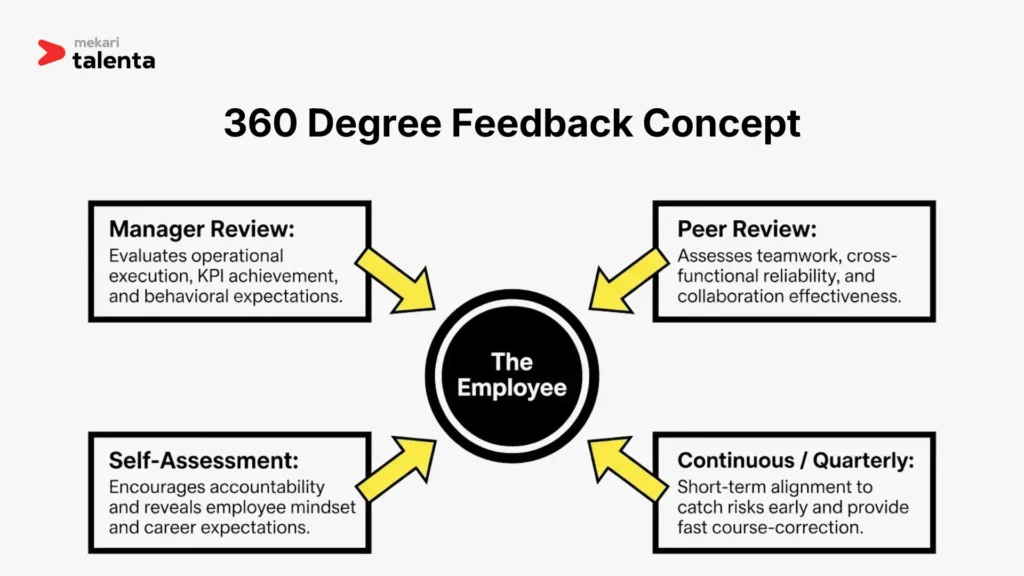
This method is commonly used for leadership assessment, managerial evaluation, and succession planning because it provides broader visibility into how employees work with others.
The process usually involves anonymous surveys or structured feedback forms focused on communication, collaboration, leadership behavior, accountability, and interpersonal effectiveness.
This method is highly valuable for identifying blind spots that direct managers may not see. For example, an employee may achieve strong KPIs while still creating collaboration issues across teams.
However, 360-degree reviews can become politically sensitive if employees do not trust the confidentiality of the process. Feedback quality may also become inconsistent when reviewers are not properly trained.
4. Self-Assessment Review
Self-assessment reviews require employees to evaluate their own performance before formal review discussions take place. Employees usually reflect on achievements, challenges, development progress, capability gaps, and future goals.
This method is often combined with manager reviews to create more balanced conversations during evaluation periods.
Many organizations use self-assessments to encourage stronger accountability and employee participation during performance discussions.
One major benefit is stronger visibility into employee mindset and career expectations. Managers can better understand employee concerns, ambitions, and perceived challenges before review meetings begin.
The limitation is that self-assessment quality varies significantly between employees. Some employees underestimate their contributions, while others overrate performance without sufficient evidence.
5. Manager or Supervisor Review
Manager reviews remain the most widely used performance review method across organizations. Direct managers evaluate employees based on productivity, work quality, KPI achievement, behavioral expectations, and overall contribution to team performance.
This approach is heavily relied upon because managers usually have the clearest visibility into operational performance and daily work execution.
Manager evaluations also commonly influence promotion readiness, compensation decisions, succession planning, and performance improvement plan discussions.
The advantage is decision-making efficiency because evaluation responsibility remains centralized. However, manager reviews are highly dependent on managerial capability.
Poorly trained managers often create inconsistent scoring standards, subjective evaluations, unclear feedback, or favoritism concerns that reduce employee trust in the review process.
6. Peer Review
Peer reviews involve employees evaluating colleagues they regularly collaborate with on projects, operational activities, or cross-functional work.
This method is commonly used to assess teamwork, communication quality, responsiveness, reliability, and collaboration effectiveness.
Peer reviews are especially useful in matrix organizations or project-based environments where employees contribute across multiple teams and reporting structures. In many situations, peers observe day-to-day collaboration behavior more directly than managers.
The biggest advantage is broader behavioral visibility. Organizations gain stronger insight into how employees operate within teams beyond KPI results alone.
The challenge is maintaining objectivity. Peer reviews can become influenced by personal relationships, internal politics, or reluctance to provide honest feedback.
7. Continuous Performance Review
Continuous performance reviews focus on ongoing feedback rather than relying heavily on formal scheduled evaluations.
Managers conduct regular check-ins throughout the year to discuss progress, priorities, workload challenges, coaching needs, and development opportunities.
This approach has become increasingly common in organizations prioritizing agility, employee development, and faster decision-making.
Many companies now integrate continuous feedback into weekly one-on-one meetings, monthly coaching discussions, or digital performance management platforms.
One major advantage is stronger real-time performance visibility. Employees receive faster guidance, managers identify risks earlier, and feedback becomes more actionable because discussions happen closer to actual events.
The challenge is managerial discipline. Continuous review systems fail quickly when managers do not consistently prioritize coaching conversations or document performance discussions properly.
What Does a Great Performance Review Process Look Like?
A strong performance review process creates clarity, consistency, accountability, and actionable development outcomes across the organization.
Employees should clearly understand what is being evaluated, how performance is measured, and what actions are expected after review discussions take place.
Many performance review systems fail because they become overly administrative, inconsistent between managers, or disconnected from actual operational priorities.
1. Clear Expectations From the Beginning
Effective performance reviews start long before formal evaluation meetings happen. Employees need clear visibility into KPIs, behavioral standards, priorities, and success measurements from the start of the review cycle.
Organizations with stronger performance management cultures usually establish expectations early through goal-setting discussions, role alignment meetings, and regular manager check-ins.
Employees generally perform better when they understand how their work contributes to broader business objectives and how their performance will later be evaluated.
This process also helps reduce confusion during evaluation periods because employees already understand the standards being used throughout the review cycle.
2. Continuous Feedback Throughout the Year
Great performance review systems rely heavily on ongoing communication rather than accumulating feedback only during annual evaluation periods.
Managers who provide regular feedback throughout the year usually create stronger employee alignment, faster improvement, and more productive review conversations.
Many organizations now implement quarterly check-ins, monthly coaching sessions, or continuous feedback systems to maintain better visibility into employee progress and operational challenges.
This approach allows managers to address capability gaps, workload concerns, and collaboration issues earlier before they begin affecting broader team performance.
Employees also tend to respond more positively to review discussions when feedback is familiar and consistently communicated rather than delivered as a surprise during formal evaluations.
3. Balanced and Evidence-Based Evaluation
Strong performance review processes use multiple evaluation inputs to create more balanced assessments. Relying entirely on manager opinion often increases subjectivity, inconsistency, and bias within the evaluation process.
Many organizations combine:
- manager evaluations
- self-assessments
- peer feedback
- project outcomes
- KPI tracking
- competency frameworks
This creates stronger visibility into employee contribution across different situations, projects, and working relationships.
Effective evaluations also rely on specific examples and measurable outcomes rather than vague feedback.
Employees are more likely to accept and act on feedback when managers can clearly explain the operational impact, observable behaviors, and performance patterns supporting the evaluation.
4. Development-Focused Review Conversations
One of the biggest indicators of a strong review process is the quality of development discussions after evaluation results are shared. Employees should leave performance review meetings with clear understanding of:
- strengths
- capability gaps
- future expectations
- development priorities
- potential career opportunities
Many managers focus too heavily on ratings and scoring discussions while spending too little time discussing future growth strategies.
This often reduces employee engagement because employees view reviews as administrative exercises rather than meaningful development conversations.
Organizations with stronger workforce development cultures usually connect review discussions with employee training plans, mentoring opportunities, career pathing, and succession planning initiatives.
5. Consistency Across Managers and Teams
Consistency is one of the hardest parts of managing performance reviews at scale. Different managers often apply different scoring standards, communication styles, and evaluation expectations even within the same organization.
To reduce inconsistency, many companies conduct calibration discussions before finalizing performance ratings or compensation decisions.
Calibration sessions allow leadership teams to compare evaluation standards across departments and identify potential scoring bias or rating inflation issues.
Technology also helps improve consistency. Integrated performance management systems allow organizations to centralize KPI tracking, competency evaluation, feedback documentation, and review workflows within one platform.
This creates stronger visibility into workforce performance trends while improving transparency across the review process.

Traditional vs Modern Performance Reviews
Performance review systems have evolved significantly as organizations adapt to faster business cycles, changing workforce expectations, and more dynamic operational environments.
Traditional performance reviews were primarily designed for annual evaluation, compensation decisions, and formal documentation. Modern performance reviews place greater emphasis on continuous feedback, employee development, agility, and real-time performance visibility.
Many organizations today still combine elements of both approaches depending on workforce structure, leadership style, and operational needs.
Understanding the differences helps you evaluate whether your current review process still supports workforce performance and long-term employee development effectively.
| Aspect | Traditional Performance Reviews | Modern Performance Reviews |
|---|---|---|
| Review Frequency | Usually conducted annually or semi-annually | Conducted continuously through regular check-ins and feedback conversations |
| Primary Focus | Performance scoring and formal evaluation | Employee development, coaching, and performance alignment |
| Feedback Style | One-way feedback primarily delivered by managers | Two-way feedback with stronger employee participation |
| Goal Management | Goals are usually fixed for long review cycles | Goals are adjusted more dynamically based on business priorities |
| Manager’s Role | Evaluator and rating authority | Coach, mentor, and development partner |
| Employee Involvement | Limited involvement beyond formal review discussions | Employees actively participate in feedback and development discussions |
| Performance Visibility | Performance discussions happen mainly during formal review periods | Managers monitor progress continuously throughout the year |
| Technology Usage | Often manual or document-based processes | Integrated digital performance management platforms with real-time tracking |
| Development Approach | Development discussions are secondary to evaluation | Development conversations are integrated throughout the review cycle |
| Common Challenges | Delayed feedback, recency bias, limited agility | Requires higher managerial consistency and stronger communication discipline |
Traditional performance reviews still provide value for formal documentation, compensation planning, and workforce evaluation consistency
However, many organizations are gradually shifting toward more modern performance review models because employees increasingly expect faster feedback, clearer development support, and more continuous communication with managers.
Modern review systems also help organizations respond more quickly to changing priorities, operational shifts, and workforce development needs throughout the year.
What Skills Are Assessed in Performance Reviews?
Performance reviews evaluate far more than task completion or KPI achievement. Modern review systems are increasingly designed to assess how employees contribute operationally, collaborate with others, adapt to change, and support long-term business priorities.
The specific skills assessed during performance reviews usually depend on role scope, seniority level, operational responsibilities, and organizational priorities.
However, several core capability areas consistently appear across most review frameworks because they directly influence workforce performance, leadership readiness, and long-term organizational effectiveness.
1. Technical and Role-Specific Skills
Technical capability remains one of the most fundamental areas assessed during performance reviews. Managers evaluate how effectively employees perform responsibilities related to their role, including operational execution, system usage, technical knowledge, compliance standards, analytical capability, and problem-solving quality.
For operational roles, this may involve productivity accuracy, reporting quality, system proficiency, or process execution consistency.
For managerial or strategic roles, technical assessment often includes decision-making quality, project oversight, business analysis, and operational planning capability.
2. Communication and Collaboration Skills
Performance reviews also heavily assess how employees communicate and collaborate across teams. Employees rarely work independently in modern workplaces, making interpersonal effectiveness increasingly important for operational success.
Managers commonly evaluate:
- communication clarity
- responsiveness
- teamwork quality
- stakeholder management
- conflict resolution
- meeting participation
- cross-functional collaboration
This area becomes especially important in matrix structures or project-driven environments where employees frequently work across departments and reporting lines.
Employees with strong technical capability but poor collaboration skills often create operational friction that affects broader team performance.
Because of this, many organizations place increasing weight on collaboration behavior during review discussions, especially for employees preparing for leadership responsibilities.
3. Leadership and Decision-Making Capability
Leadership capability is assessed even for employees who do not currently hold managerial positions. Many organizations evaluate leadership potential early to identify employees who may be suitable for succession planning or expanded responsibilities in the future.
This assessment often includes:
- initiative
- accountability
- ownership mentality
- decision-making quality
- adaptability
- coaching ability
- strategic thinking
For managers, leadership evaluation becomes even broader. Organizations may assess team development capability, delegation quality, employee engagement support, coaching effectiveness, and workforce management consistency.
Leadership assessment also helps organizations identify employees who may require additional support through mentoring, coaching, or targeted development initiatives before transitioning into larger responsibilities.
Read also: Developing Leadership Competencies: Skills for Managing Teams
4. Adaptability and Learning Agility
As business priorities shift more rapidly, adaptability has become one of the most important skills assessed during performance reviews.
Organizations increasingly evaluate how employees respond to operational changes, evolving priorities, technology adoption, and new working environments.
Employees who adapt quickly generally contribute more effectively during restructuring, digital transformation, process redesign, or workforce transition periods.
Managers often evaluate willingness to learn, openness to feedback, flexibility under pressure, and ability to handle ambiguity during review discussions.
This capability area has become particularly important as organizations place greater emphasis on workforce agility and long-term capability development.
5. Productivity and Goal Achievement
Performance reviews still heavily focus on measurable outcomes and execution consistency. Employees are commonly evaluated based on KPI achievement, work quality, productivity levels, deadline management, and contribution to business targets.
Many organizations use management by objective frameworks to connect employee performance directly with operational goals and strategic priorities.
his creates stronger alignment between individual contribution and broader organizational performance expectations.
Managers also evaluate consistency over time rather than isolated high-performance periods alone. Employees who consistently deliver reliable execution, maintain accountability, and contribute positively to operational stability are generally assessed more favorably during performance reviews.
How to Prepare for a Performance Review
Performance reviews usually become ineffective when preparation only focuses on filling evaluation forms a few days before the discussion takes place.
Strong review discussions require structured preparation from both managers and employees so the conversation remains objective, actionable, and aligned with actual operational performance.
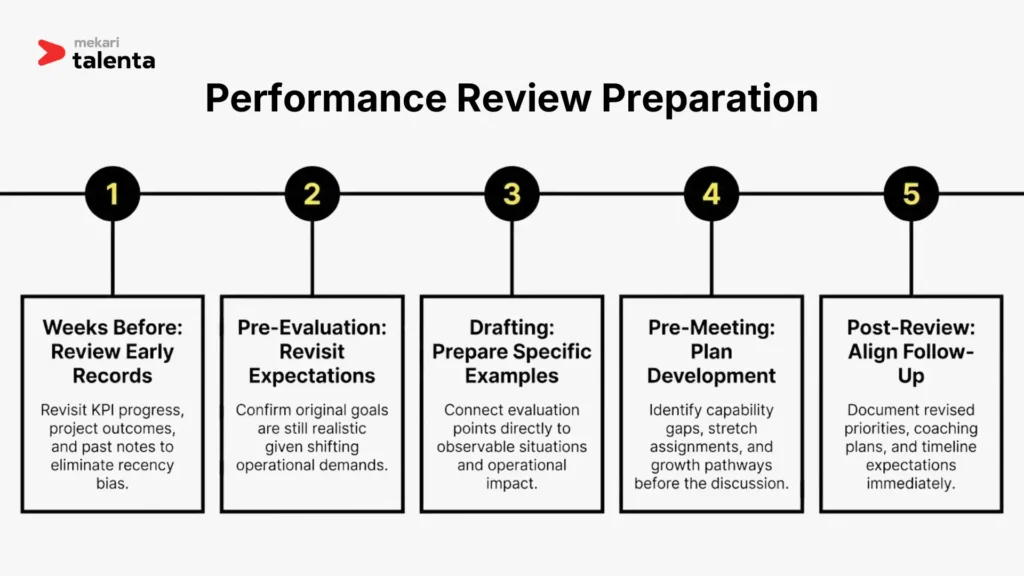
Below are several practical steps on how to prepare for a performance review that more effective and consistent.
1. Review Performance Records and Operational Contribution Early
One of the most effective ways to improve review quality is starting preparation several weeks before evaluation meetings begin.
Managers should revisit KPI progress, project outcomes, operational contributions, collaboration patterns, attendance records, and previous review notes before assessing employee performance.
This step helps reduce recency bias, where managers unintentionally evaluate employees based mostly on recent events instead of overall contribution throughout the review cycle.
Employees should also review their own accomplishments, completed initiatives, workload challenges, and development progress beforehand so they can participate more actively during discussions.
Organizations with more mature review systems usually encourage managers to maintain ongoing performance notes throughout the year rather than relying purely on memory during review periods.
2. Revisit Goals and Expectations Before Giving Ratings
Many review discussions become unproductive because managers immediately focus on ratings without first revisiting the expectations established earlier in the review cycle.
In reality, business priorities, project scopes, and operational demands often change significantly throughout the year.
Before finalizing evaluations, managers should first confirm whether original KPIs, workload expectations, and role responsibilities remained realistic during the review period.
This creates fairer evaluations because employees are assessed within the proper operational context rather than against outdated targets that may no longer reflect actual responsibilities.
This preparation step is especially important in fast-changing environments where restructuring, technology adoption, staffing shortages, or shifting business priorities frequently affect employee workload and deliverables.
3. Prepare Specific Examples Instead of General Feedback
One of the most common mistakes during performance reviews is giving vague feedback that employees cannot translate into actionable improvement.
Statements such as “improve communication” or “be more proactive” often create confusion because employees do not clearly understand which behaviors need improvement.
Strong managers prepare specific examples before review meetings begin. Effective feedback usually explains what happened, the operational impact it created, and what improvement is expected moving forward.
Employees are generally more receptive to feedback when managers can connect evaluation points to observable situations rather than subjective opinions.
Specific examples also strengthen documentation quality and reduce the likelihood of disagreement during performance discussions.
4. Plan Development Discussions Before the Review Meeting
Performance reviews become significantly more valuable when managers prepare development discussions before the meeting starts rather than improvising growth recommendations during the conversation itself.
Managers should already identify possible development priorities, capability gaps, stretch assignments, mentoring opportunities, and future growth pathways before discussing evaluation results with employees.
This preparation creates more meaningful conversations because employees leave the review meeting with clearer direction instead of only receiving performance scores.
Many organizations also use this stage to identify employees who may benefit from future upskilling and reskilling initiatives, leadership preparation programs, or additional employee benefit support related to learning and career development.
5. Align Follow-Up Actions After the Discussion Ends
A strong performance review process does not end after the meeting finishes. One major reason review systems fail is because there is little follow-up after feedback is delivered.
Managers should clearly align next steps with employees immediately after the discussion, including revised priorities, development targets, coaching plans, timeline expectations, and future check-in schedules.
Employees generally show stronger improvement when follow-up expectations are documented clearly and revisited consistently throughout the year.
Organizations that handle follow-up seriously usually create more effective review systems because performance discussions become connected to continuous improvement rather than isolated annual evaluation exercises.
Read also: Guide to Performance Management: Definition, Objectives, & Process
Mistakes & Challenges to Avoid During Performance Reviews
Performance reviews often become frustrating for both managers and employees when the process is inconsistent, overly manual, or disconnected from actual business priorities.
As teams grow larger and operational structures become more complex, performance review preparation also becomes significantly harder to manage without standardized systems and centralized performance visibility.
Many organizations already have review frameworks in place, but the execution quality often remains inconsistent across departments
Below are some of the most common mistakes and operational challenges that frequently weaken performance review effectiveness.
1. Relying Too Heavily on Manual Review Preparation
One of the biggest challenges in performance reviews is manual preparation. Many managers still collect KPI records, attendance information, feedback notes, project contributions, and evaluation forms separately across spreadsheets, emails, chat history, and multiple systems.
This situation usually creates delays, inconsistent documentation, and incomplete evaluations because managers spend too much time gathering information instead of analyzing performance quality itself.
As review cycles become larger, manual preparation also increases administrative workload significantly for HR teams.
Organizations that continue relying heavily on fragmented review preparation often struggle to scale performance management consistently across multiple teams and departments.
2. Using Inconsistent Evaluation Standards Between Managers
Performance reviews quickly lose credibility when employees feel evaluation standards differ significantly between managers.
Inconsistent scoring methods, unclear competency definitions, and subjective interpretations often create fairness concerns during review periods.
This challenge becomes more visible when organizations lack standardized evaluation frameworks or calibration processes.
Some managers may score employees too generously, while others evaluate very strictly even for similar levels of contribution and performance outcomes.
Without centralized review structures and standardized scoring criteria, organizations usually struggle to maintain evaluation consistency across teams.
This situation also makes promotion decisions, incentive allocation, and succession planning discussions more difficult because performance comparisons become unreliable.
3. Evaluating Employees Based on Memory Instead of Data
Another major mistake is relying too heavily on memory during review discussions. Managers often unintentionally focus only on recent incidents while overlooking contributions, challenges, or achievements from earlier periods.
This creates recency bias and reduces evaluation objectivity. Employees may feel their work is undervalued because performance discussions are influenced more by recent situations than overall contribution throughout the review cycle.
Strong performance review systems usually centralize KPI tracking, attendance records, project outcomes, feedback history, and development progress within one platform.
Better visibility helps managers evaluate employees using more complete and measurable performance information instead of relying primarily on personal recollection.
4. Treating Performance Reviews as Administrative Exercises
Many review discussions become overly focused on completing forms, assigning ratings, or meeting administrative deadlines.
Employees often leave review meetings without clear understanding of future expectations, development priorities, or actionable improvement plans.
This usually happens when managers spend most of the discussion defending scores rather than discussing performance trends, capability gaps, and future growth direction.
Strong performance review processes should support broader workforce decisions such as promotion readiness, incentive planning, development priorities, and long-term capability building.
Employees generally become more engaged when review conversations feel constructive, transparent, and connected to future opportunities rather than purely evaluative.
5. Lack of Visibility Into Employee Performance Trends
Managers often struggle to evaluate employees accurately when performance information is fragmented across different systems and reporting structures.
This challenge becomes more difficult in cross-functional environments where employees contribute across multiple projects, teams, or operational initiatives simultaneously.
Without centralized visibility, managers may miss collaboration patterns, workload concerns, leadership contributions, or recurring performance issues that affect broader operational outcomes.
Organizations increasingly address this challenge through integrated performance management systems that centralize:
- KPI tracking
- feedback documentation
- competency evaluation
- review workflows
- calibration discussions
- development planning
This creates stronger workforce visibility while helping organizations prepare reviews faster, improve evaluation consistency, and align performance outcomes more closely with business priorities.
Best Practices for a Great Performance Review
Many performance review problems are caused by execution habits that organizations continue repeating every year without realizing the long-term impact on employee trust, evaluation quality, and workforce development.
Even companies with structured review systems can still struggle with inconsistent feedback, weak manager capability, and low employee engagement during review cycles.
Below are several practices that many experienced HR teams consistently implement to improve review quality and reduce common performance management issues.
1. Separate Development Discussions From Compensation Discussions
One practice that significantly improves review quality is separating development conversations from salary or bonus discussions whenever possible.
Employees tend to become more defensive during review meetings when compensation becomes the primary focus of the conversation.
Many experienced managers conduct development-focused discussions first, covering strengths, operational contribution, capability gaps, career direction, and future expectations before compensation decisions are discussed separately afterward.
This structure creates more open conversations because employees become more receptive to feedback and long-term development planning when they are not immediately focused on financial outcomes.
2. Train Managers Before Every Review Cycle
Many organizations assume managers already know how to conduct performance reviews effectively, but review quality often depends heavily on managerial communication capability and evaluation discipline.
Strong organizations usually conduct manager calibration and refresher sessions before every review cycle begins. These sessions commonly cover:
- feedback delivery techniques
- evaluation consistency
- bias awareness
- documentation standards
- difficult conversation handling
- scoring alignment
This practice becomes especially important as organizations grow because inconsistent manager capability is one of the biggest reasons employees lose trust in review systems.
Companies that invest consistently in manager review training usually create more balanced evaluations, stronger employee experience outcomes, and better workforce development conversations overall.
3. Use Real-Time Documentation Instead of Year-End Recall
One of the most effective ways to improve review objectivity is encouraging managers to document performance observations continuously throughout the year rather than reconstructing performance history during year-end reviews.
Experienced HR teams often encourage managers to maintain simple ongoing records regarding project contributions, operational improvements, leadership behaviors, collaboration challenges, customer feedback, and coaching discussions.
This habit dramatically improves evaluation quality because managers rely less on memory and emotional impressions during formal review periods.
Employees also perceive reviews as more fair and evidence-based when managers can reference specific operational examples consistently.
4. Evaluate Performance Within Operational Context
One mistake many organizations make is evaluating employees purely based on KPI results without considering operational realities during the review period.
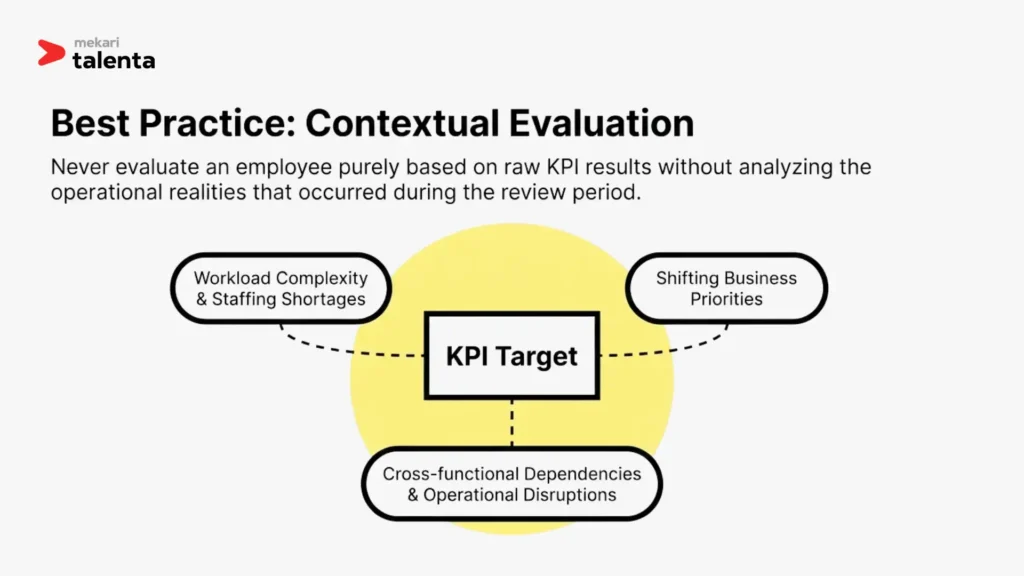
Strong managers usually assess performance alongside:
- workload complexity
- staffing conditions
- shifting priorities
- operational disruptions
- cross-functional responsibilities
- resource availability
For example, employees handling critical operational issues, covering staffing shortages, or supporting major transformation projects may contribute significantly even when some KPI targets are partially affected.
This contextual evaluation approach creates fairer discussions while giving leadership better visibility into workforce adaptability and operational resilience across teams.
5. Focus More on Future Contribution Than Past Mistakes
Many managers spend too much review time analyzing past weaknesses without discussing how employees can contribute more effectively moving forward. Strong review discussions should create actionable direction rather than functioning only as historical evaluations.
Experienced organizations usually guide managers to spend more time discussing:
- future expectations
- capability development
- leadership readiness
- stretch opportunities
- growth pathways
- business priorities for upcoming periods
This approach creates stronger employee engagement because employees leave review meetings with clearer understanding of how they can progress rather than feeling defined solely by past performance issues.
It also helps organizations identify employees who may benefit from future coaching, development opportunities, or structured career mobility pathways earlier before performance concerns begin affecting long-term workforce stability.
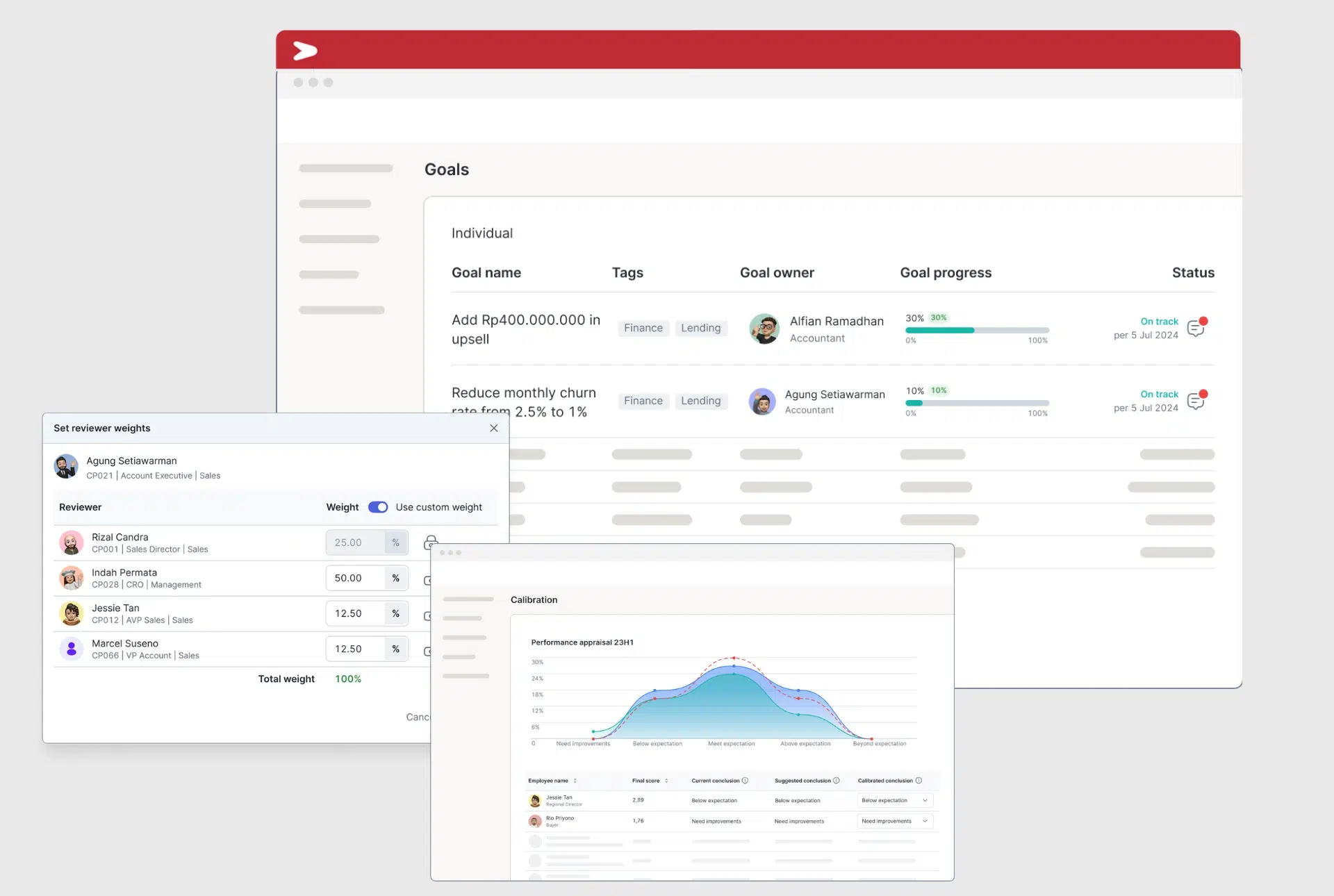
Build More Objective Reviews with Mekari Talenta Performance Management
An integrated HCM platform with performance management software designed to help organizations streamline performance reviews, centralize KPI tracking, automate evaluation workflows, and connect performance outcomes directly with incentives, promotions, and employee development plans.
Reference
Frequently Asked Questions (FAQs)
How often should performance reviews be conducted?
How often should performance reviews be conducted?
The ideal frequency depends on operational structure, workforce size, and business priorities. Many organizations still conduct annual reviews for compensation and promotion purposes while adding quarterly check-ins or continuous feedback discussions throughout the year. Faster-moving environments usually benefit from more frequent review conversations because priorities and workloads change more dynamically. Consistency matters more than frequency alone.
Who should be involved in a performance review process?
Who should be involved in a performance review process?
Performance reviews usually involve direct managers, employees, HR teams, and sometimes peers or cross-functional stakeholders depending on the review method being used. Organizations using 360-degree feedback systems may also include project leaders, subordinates, or clients to provide broader evaluation visibility. Multiple evaluation inputs generally create more balanced assessments compared to relying entirely on manager opinion alone. Strong review systems also require leadership alignment during calibration discussions.
Why do employees sometimes dislike performance reviews?
Why do employees sometimes dislike performance reviews?
Employees often become frustrated when reviews feel subjective, overly administrative, delayed, or disconnected from their actual work contribution. Poorly prepared managers, vague feedback, inconsistent scoring standards, and lack of follow-up actions are among the most common reasons review systems lose credibility internally. Employees generally respond more positively when discussions include clear examples, transparent expectations, and actionable development direction. Review quality depends heavily on managerial capability and communication consistency.
What is the difference between KPI-based and competency-based reviews?
What is the difference between KPI-based and competency-based reviews?
KPI-based reviews focus primarily on measurable outcomes such as targets, productivity, revenue contribution, project completion, or operational performance metrics. Competency-based reviews evaluate behavioral capability, leadership potential, collaboration quality, communication skills, adaptability, and decision-making effectiveness. Many organizations combine both approaches to create more balanced evaluations because employees are expected to deliver both strong results and effective workplace behavior. Combined evaluation models usually provide stronger workforce insight overall.
Can performance reviews improve employee retention?
Can performance reviews improve employee retention?
Well-executed performance reviews often contribute positively to retention because employees gain clearer visibility into expectations, growth opportunities, development priorities, and career direction. Employees are generally more engaged when managers provide regular feedback, recognize contributions properly, and discuss future progression opportunities transparently. Review discussions also help organizations identify disengagement risks earlier before employees begin actively exploring external opportunities. Strong development-focused reviews usually create healthier long-term workforce stability.