

Guide to Performance Management: Definition, Objectives, & Process


-
Performance management is a continuous process that aligns employee performance with business goals through ongoing feedback, evaluation, and development.
-
Common methods of performance management include MBO, 360-degree feedback, continuous performance management, rating scales, and OKRs, often used in combination.
Managing employee performance is no longer limited to annual reviews or isolated evaluations. Organizations today require a more structured, continuous approach to ensure alignment between individual contributions and business priorities.
As teams grow and operations become more complex, maintaining visibility, consistency, and accountability across performance processes becomes increasingly critical.
A well-defined performance management system enables organizations to monitor progress, support development, and make informed decisions at scale.
This article will explore what performance management is, how it works, and how organizations can implement it effectively.
What Is Performance Management?
Performance management is a continuous process used by organizations to ensure employees’ work aligns with overall business goals.
It involves setting clear expectations, monitoring progress, providing regular feedback, and evaluating results to support both individual and organizational success.
Rather than being limited to annual reviews, performance management focuses on ongoing conversations and improvements.
Managers and employees work together to define goals, track performance through measurable indicators, and identify areas for development—often supported by HR dashboards and analytics to provide real-time insights.
This helps employees understand what is expected of them and how their contributions impact the bigger picture.
At a broader level, performance management is also closely tied to talent management, ensuring that employee performance contributes to long-term organizational capability.
This is why many organizations integrate performance processes within a talent management software.
Performance Management vs. Performance Appraisal
Performance management and performance appraisal are often used interchangeably, but they refer to different concepts.
While both relate to evaluating employee performance, performance management is broader and ongoing, whereas performance appraisal is more specific and periodic.
The differences between these two include:
| Aspect | Performance Management | Performance Appraisal |
|---|---|---|
| Definition | A continuous process to align employee performance with business goals through planning, monitoring, feedback, and development | A formal evaluation of an employee’s performance at a specific point in time, usually documented and standardized |
| Scope | Broad, covering goal setting, regular check-ins, feedback, coaching, and development planning | Narrow, mainly focused on assessing performance against predefined criteria or targets |
| Frequency | Ongoing, conducted regularly (e.g., weekly or monthly check-ins) | Periodic, typically conducted annually or semi-annually |
| Focus | Improving performance, building capabilities, and ensuring alignment with goals | Measuring performance outcomes and assigning ratings |
| Approach | Proactive and forward-looking, focusing on continuous improvement | Reactive and past-focused, reviewing what has already been achieved |
| Responsibility | Shared between managers and employees, with active two-way communication | Primarily driven by managers and HR, with employees as subjects of evaluation |
| Example | A manager conducts weekly one-on-one meetings to review progress, address challenges, and provide coaching to help an employee achieve targets | At the end of the year, a manager evaluates the employee’s overall performance, assigns a rating, and determines bonus or promotion eligibility |
In short, performance appraisal is one component within the broader performance management process. While appraisal helps assess past performance, performance management ensures continuous alignment, improvement, and development moving forward.
Read also: Talent Management vs Performance Management: 6 Key Differences
Objectives of Performance Management
To understand the value of performance management, it’s important to look at what it is designed to achieve.
Beyond simply evaluating employees, performance management serves as a structured approach to ensure alignment, clarity, and continuous improvement across the organization. These objectives are typically aligned with a broader human capital management strategy.
The following objectives highlight how performance management functions in practice:
1. Align Individual Performance with Business Goals
Performance management ensures that individual contributions are directly connected to what the organization is trying to achieve.
Take a company aiming to increase annual revenue by 20%. This goal is translated into team-level and individual targets. Sales teams are assigned revenue quotas, marketing focuses on generating qualified leads, and customer success works on improving retention.
Through this structured alignment, each role contributes to the same strategic outcome rather than working in silos.
In some cases, organizations rely on KPI consultancy to ensure these targets are measurable and aligned with business priorities.
2. Establish Clear Performance Expectations
Another key objective is to remove ambiguity around what “good performance” looks like.
For instance, instead of giving a general goal like “improve sales,” a company defines specific expectations such as closing $50K in deals per month or maintaining a 25% conversion rate.
Performance management ensures these expectations are documented, communicated early, and understood by employees, so they can prioritize their efforts effectively.
3. Monitor and Track Performance Continuously
Performance management aims to provide real-time visibility into performance, rather than relying only on end-of-year reviews.
For example, a manager may conduct weekly check-ins to review sales pipelines, track progress against targets, and identify issues such as stalled deals. This allows teams to make adjustments quickly instead of waiting until it’s too late to correct course.
4. Facilitate Continuous Feedback and Communication
A structured feedback loop is essential to maintaining performance. When challenges arise—such as difficulty closing deals—managers can step in with targeted coaching, whether it’s refining negotiation techniques or improving communication with clients.
Regular conversations also help reinforce what is working well, making feedback a consistent part of daily operations rather than a one-time event.
5. Support Employee Development and Growth
Performance management also serves as a foundation for employee development. If an employee consistently underperforms due to specific skill gaps, such as presentation or stakeholder management, managers can recommend relevant training, mentoring, or stretch assignments.
Over time, this ensures employees are not only meeting current expectations but also preparing for future responsibilities.
6. Enable Data-Driven Talent Decisions
Another important objective is to provide a reliable basis for talent-related decisions.
With consistent performance data—such as target achievement, competency assessments, and feedback records—organizations can make more objective decisions around promotions, compensation adjustments, and succession planning.
This also supports strategic workforce planning by identifying capability gaps and future talent needs.
Benefits of Performance Management
While objectives focus on what performance management is designed to achieve, the benefits reflect the tangible outcomes and impact organizations gain when the system is implemented effectively.
Below are some of the most significant benefits:
1. Improved Business Performance and Revenue Growth
A well-implemented performance management system creates alignment, clarity, and accountability across the organization, all of which directly impact business outcomes.
When employees understand priorities, receive consistent feedback, and are evaluated against clear metrics, execution becomes more focused and efficient.
This happens because performance management reduces misalignment and ensures that effort is consistently directed toward high-impact activities.
Instead of fragmented execution, organizations operate with a shared direction, which compounds into stronger financial results over time.
2. Higher Employee Engagement and Motivation
Performance management plays a critical role in employee engagement because it addresses one of the main drivers of disengagement: lack of clarity and feedback.
When employees know what is expected of them, receive recognition, and have regular conversations with their managers, they are more likely to feel connected to their work.
Effective performance management directly counters this by creating structure—clear goals, regular feedback, and development opportunities—which increases employees’ sense of purpose and ownership.
In practice, engagement improves not because of perks, but because employees feel guided and valued in their roles.
3. Increased Productivity and Goal Achievement
One of the most immediate benefits of performance management is improved productivity. By setting clear targets and continuously tracking progress, employees can focus on what truly matters and avoid wasted effort.
The underlying reason is simple: performance management reduces ambiguity.
Employees are not guessing priorities. They are working toward defined outcomes, supported by regular check-ins and adjustments.
This creates a more disciplined execution environment, where performance gaps are identified early and corrected quickly.
4. Better Talent Retention and Attraction
Performance management also strengthens retention by addressing key reasons employees leave, such as lack of growth, unclear expectations, and poor management. When employees receive regular feedback and see a clear path for development, they are more likely to stay.
This benefit is driven by transparency and fairness. Performance management creates a system where employees understand how they are evaluated, what they need to improve, and how they can progress.
As a result, trust increases, and voluntary turnover decreases, reducing both hiring costs and productivity loss.
5. More Informed and Objective Decision-Making
Performance management provides structured, consistent data that improves the quality of organizational decisions. Without it, decisions around promotions, compensation, or succession planning often rely on subjective judgment.
With a proper system in place, organizations can base decisions on measurable performance trends, documented feedback, and competency evaluations. This leads to fairer and more defensible outcomes.
Additionally, strong performance and engagement data are closely linked to key business metrics such as profitability, retention, and customer satisfaction.
The result is not just better HR decisions, but stronger organizational credibility where employees perceive decisions as transparent and merit-based.
Performance Management Methods
Different organizations adopt different performance management methods depending on their structure, goals, and culture.
Each method comes with its own strengths and limitations, making it important to choose the right approach based on specific needs.
However, in practice, many organizations do not rely on a single method. Instead, they combine approaches to create a more balanced and effective performance management system.
1. Management by Objectives (MBO)
Management by Objectives (MBO) focuses on setting clear, measurable goals that are agreed upon by both managers and employees.
Performance is then evaluated based on the achievement of these objectives. This method is effective in creating strong alignment and accountability, as employees clearly understand what is expected of them.
However, it can become overly rigid if goals are not reviewed regularly, and it may place too much emphasis on results while overlooking behaviors or collaboration.
MBO is best suited for target-driven environments—such as sales or operations—where outcomes can be easily quantified.
2. 360-Degree Feedback
The 360-degree feedback method collects input from multiple sources, including managers, peers, subordinates, and sometimes even clients.
In a performance management system like Mekari Talenta, the 360-degree feedback process is usually conducted within the platform, where employees can complete self-assessments and receive input from multiple stakeholders in one place.
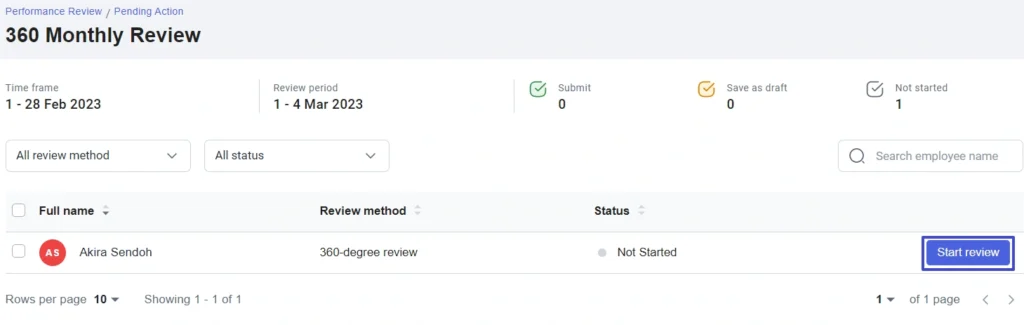
This creates a more comprehensive view of an employee’s performance, particularly in areas like communication, leadership, and teamwork.
While it helps reduce bias from a single evaluator and supports personal development, the process can be time-consuming and the quality of feedback may vary.
Without proper structure, it may also lead to inconsistent or overly subjective input. This method works best in organizations that emphasize collaboration and leadership development.
3. Continuous Performance Management
Continuous performance management shifts away from annual reviews and focuses on regular check-ins, real-time feedback, and ongoing performance conversations.
This approach allows managers to address issues early, adjust goals when needed, and keep employees aligned with changing priorities. It is particularly effective in dynamic environments where agility is important.
However, it requires strong managerial discipline and consistency. Without it, the process can feel unstructured or burdensome. This method is ideal for fast-paced organizations that value adaptability and continuous improvement.
4. Rating Scales (Graphic Rating Scale)
The graphic rating scale is a traditional method where employees are evaluated based on predefined criteria, typically using a numerical scale (e.g., 1–5).
It provides a simple and standardized way to assess performance across multiple employees, making it useful for documentation and comparison.
However, it can sometimes oversimplify performance and introduce subjectivity, especially if clear definitions for each rating are not established.
This method is commonly used in organizations that require structured and consistent evaluation frameworks, particularly for administrative or compliance purposes.
5. OKRs (Objectives and Key Results)
OKRs (Objectives and Key Results) are a goal-setting framework that combines ambitious objectives with measurable outcomes.
This method enhances transparency and alignment, as goals are often visible across teams and progress is tracked regularly. It encourages employees to aim high while maintaining focus on measurable results.
That said, OKRs can be challenging to implement effectively without proper guidance, and overly aggressive targets may create unnecessary pressure. This approach is best suited for organizations focused on growth, innovation, and cross-functional collaboration.
Read also: OKRs vs KPIs: Key Differences, Examples & When to Use
Process & Stages of Performance Management
Performance management is not a one-time activity, but a structured and continuous cycle.
While the exact approach may vary across organizations, the process generally follows a series of interconnected stages that ensure performance is planned, monitored, evaluated, and improved over time.
1. Planning
The process begins with setting clear expectations and defining what success looks like. At this stage, business goals are translated into individual objectives, ensuring alignment from the top down. Managers and employees collaborate to agree on targets, success metrics, and priorities for the period.
Typical activities at this stage include setting KPIs or OKRs, defining roles and responsibilities, and creating a clear performance plan.
A strong planning phase ensures employees know exactly what they are working toward and how success will be measured.
2. Monitoring
After goals are established, performance needs to be tracked consistently. Monitoring ensures that progress is visible and that any issues can be identified early, rather than waiting until the end of the cycle.
In practice, this involves regular check-ins such as weekly or monthly one-on-one meetings, reviewing progress through dashboards or reports, and discussing any blockers.
Managers may also track key metrics, such as sales performance or project milestones, to ensure employees remain on target.
3. Developing
As performance is being monitored, organizations simultaneously focus on developing employee capabilities. This stage ensures that employees have the skills, knowledge, and support needed to meet expectations.
Common activities include providing coaching and feedback, assigning training programs, offering mentoring, or giving stretch assignments.
For instance, if an employee lacks certain skills, targeted development efforts can be introduced to help them improve in real time. These development efforts are typically aligned with a structured talent development strategy.
Read also: What Is Talent Development? – Importance, Process, & Program Examples
4. Reviewing
At specific intervals—such as mid-year or end-of-year—performance is formally reviewed. This stage focuses on evaluating results by comparing actual performance against the goals set during the planning phase.
Activities typically include conducting performance appraisal discussions, gathering feedback, completing self-assessments, and assigning performance ratings.
In many organizations, calibration sessions are also conducted to ensure consistency and fairness across teams. The insights gathered here often contribute to succession planning for future leadership roles.
5. Rewarding and Planning Forward
The final stage connects performance outcomes with organizational decisions and future planning. Based on the evaluation, organizations determine rewards such as bonuses, salary adjustments, or promotions.
At the same time, insights from the review are used to inform the next performance cycle. Managers and employees may reset goals, address performance gaps, and refine development plans. This ensures the process remains continuous, with each cycle building on the previous one.
Performance Management Example
To see how performance management works in real-world settings, here are two well-known company case studies that reflect how organizations have evolved beyond traditional performance appraisal.
1. Adobe: From Annual Reviews to Continuous “Check-In” System
Adobe transformed its performance management approach in 2012 by eliminating traditional annual performance reviews and replacing them with a continuous “Check-In” system.
Previously, Adobe used a stack-ranking system, where employees were ranked against each other. This created internal competition, low morale, and higher turnover.
To address this, Adobe introduced a model focused on ongoing feedback, goal alignment, and employee development.
Instead of waiting for year-end evaluations, managers now conduct regular check-ins with employees to:
- Set and adjust goals continuously
- Provide real-time feedback and coaching
- Discuss career development and growth
Impact:
- Voluntary turnover decreased by around 30%
- The company saved 80,000+ hours previously spent on annual reviews
Key takeaway:
Adobe’s case shows that shifting from evaluation-focused to development-focused performance management can significantly improve engagement, retention, and productivity.
2. Deloitte: Replacing Annual Reviews with Frequent “Performance Snapshots”
Deloitte redesigned its performance management system by moving away from traditional annual reviews toward a more frequent, real-time feedback approach.
Instead of long, backward-looking evaluations, Deloitte introduced short, regular “performance snapshots” where managers assess employees based on current contributions and future potential.
Key practices include:
- Frequent check-ins and feedback conversations
- Short, forward-looking performance questions
- Focus on what employees can improve in the near future
The shift was driven by the realization that annual reviews were time-consuming and often ineffective in improving performance.
Impact:
- Stronger employee engagement due to more frequent conversations
- Better alignment with fast-changing business needs
- Increased focus on development rather than just evaluation
Key takeaway:
Deloitte’s approach highlights that performance management is more effective when it is continuous, simple, and future-focused, rather than heavily administrative and retrospective.
Best Practice of Effective Performance Management
Most organizations already understand the basics: set goals, give feedback, run reviews.
However, in practice, what truly makes performance management effective often comes from execution details that are rarely documented but consistently applied by experienced practitioners.
Here are five best practices that tend to work in real-world settings:
1. Separate Performance Conversations from Compensation Discussions
One of the most common mistakes is combining performance reviews with salary or bonus discussions. In practice, this reduces the quality of the conversation: employees focus on the outcome (money), not the feedback.
High-performing managers intentionally separate these discussions. Performance conversations are used for reflection, coaching, and development, while compensation discussions are handled in a different setting. This creates a safer space for honest feedback and leads to more meaningful performance improvement.
2. Focus on Fewer, High-Impact Goals (Not Too Many KPIs)
In theory, more KPIs (Key Performance Indicators) mean better measurement. In reality, it often creates confusion and diluted focus. Experienced practitioners typically limit goals to 3–5 key priorities per role.
This forces clarity that employees know exactly what matters most, and managers can focus their coaching on high-impact areas.
Teams that operate this way tend to execute better because effort is concentrated, not scattered across too many metrics.
3. Treat Check-Ins as Decision-Making Moments, Not Status Updates
Many organizations run regular check-ins, but they often become routine updates with little impact. In practice, effective managers use check-ins as decision-making forums.
Instead of just asking “what’s the progress?”, focus on:
- What is stuck and why?
- What needs to change?
- What support is required right now?
This shift turns check-ins into action-oriented conversations that directly influence outcomes, rather than passive reporting sessions.
4. Evaluate Both Results and Behavior, But Don’t Weight Them Equally
A common framework is to assess both what employees achieve (results) and how they achieve it (behavior). However, in practice, not all roles require equal weighting.
Experienced HR practitioners often adjust the weight based on role context:
- Sales roles → heavier on results
- Leadership roles → stronger emphasis on behavior and influence
This flexibility ensures fairness and relevance, rather than applying a rigid, one-size-fits-all evaluation model.
5. Document Performance Continuously
One of the biggest gaps in performance management is relying on memory during evaluations. This leads to recency bias and inconsistent assessments.
Practitioners who run effective systems make it a habit to document performance in real time: key achievements, feedback, and notable incidents are recorded throughout the cycle.
By the time the review happens, the evaluation becomes a summary of documented evidence, not a subjective recollection. This improves accuracy, reduces bias, and makes performance discussions more credible.
Streamline Performance Management with Mekari Talenta
Managing employee performance effectively involves coordinating multiple processes—from goal setting, KPI tracking, feedback collection, performance reviews, to development planning—across teams, systems, and timelines.
Without a structured system, performance management often becomes fragmented. Goals may not be aligned, feedback is inconsistent, and evaluations rely heavily on manual processes, making it difficult to ensure fairness, transparency, and continuity across the organization.
A centralized platform helps standardize how performance is managed, ensuring that every stage is connected and data-driven. This allows organizations to maintain consistency, improve visibility, and make more informed decisions around performance, rewards, and development.
This becomes even more critical in organizations with multiple teams or complex structures, where alignment and real-time visibility are essential to maintaining performance and driving sustainable growth.
Mekari Talenta is an AI-centric cloud-based HCM platform that enables organizations to manage their workforce in a more integrated and data-driven way.
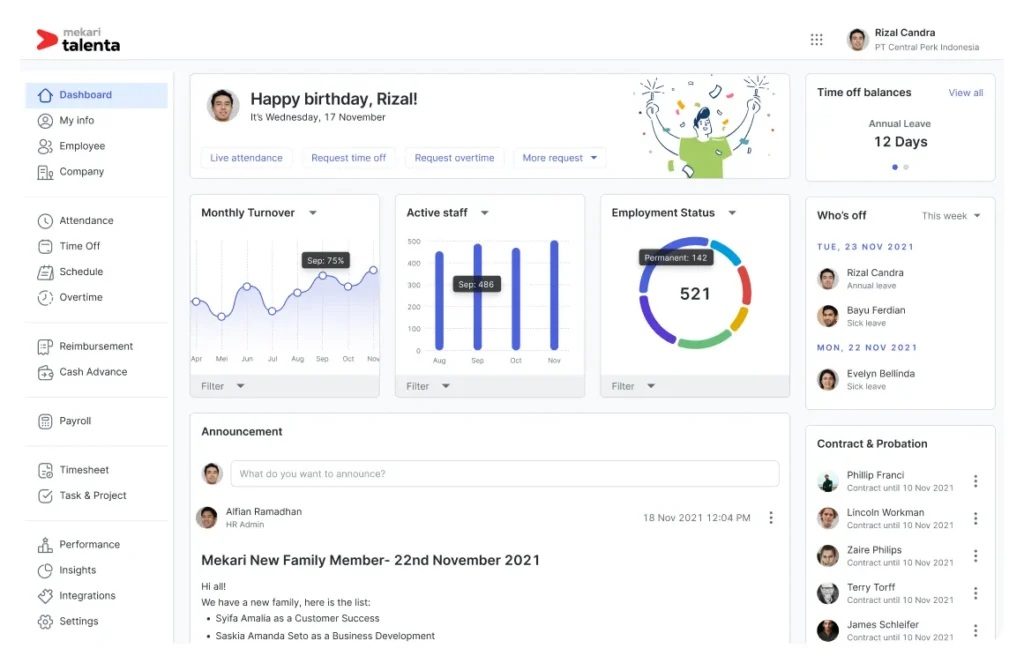
Within the platform, Mekari Talenta provides a performance management feature that helps organizations monitor, evaluate, and develop employee performance in real time through a structured and centralized system.
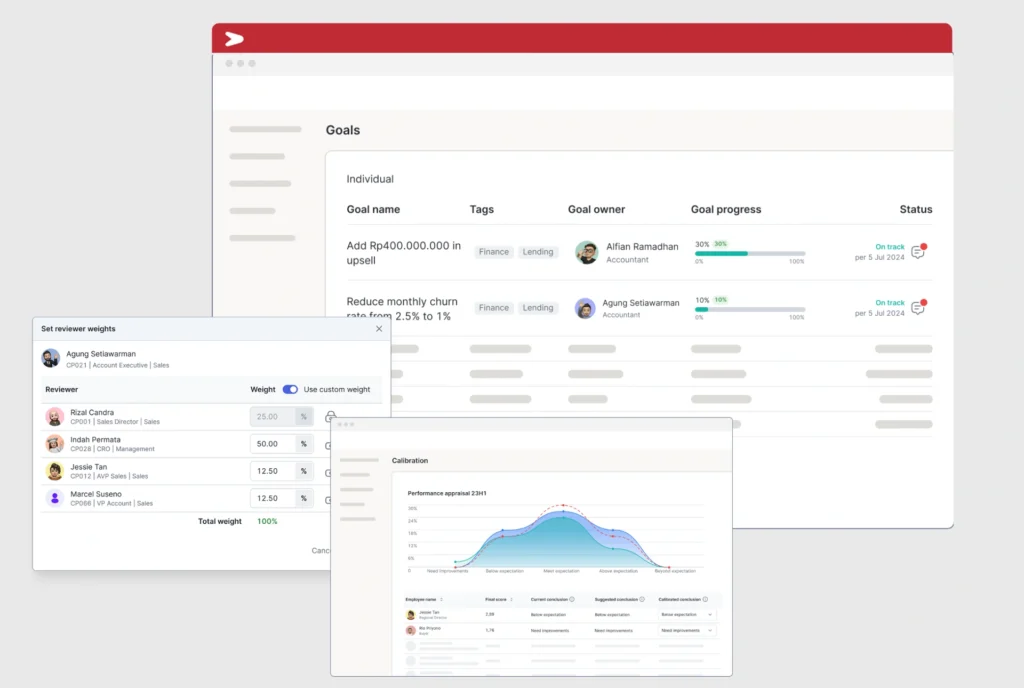
Key features include:
- OKR & KPI Management. Align company goals down to individual targets with flexible review periods, scoring methods, and performance cycles. Track progress in real time via web and mobile, with automatic incentive calculations based on achievement.
- Performance Reviews. Conduct structured evaluations through 360-degree feedback, self-assessments, and manager reviews. Integrate performance data with KPIs, attendance, and disciplinary records, supported by customizable scoring weights for more objective evaluations.
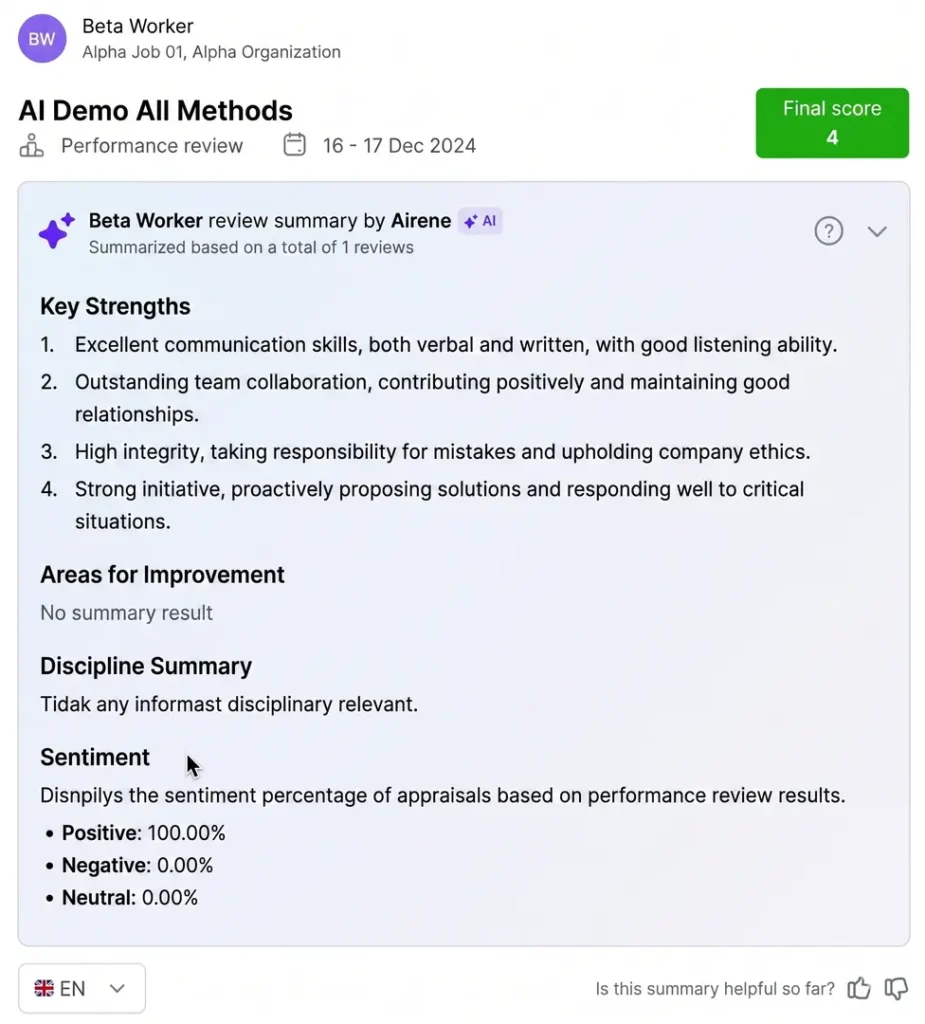
- AI-Powered Review Summary. Automatically generate performance summaries from multiple feedback sources. Identify improvement areas, detect high-potential employees, and provide data-driven insights to support more effective performance discussions.
- Reporting & Calibration. Generate performance reports in Excel or PDF formats and calibrate results using structured distribution methods. Automatically map employees into a 9-Box Matrix to support promotion, succession, and talent development decisions.
By integrating performance management into a single platform, organizations can move beyond manual processes and build a more structured, transparent, and scalable approach to managing employee performance.
Looking to improve how your organization manages performance and drives growth? Connect with our team to see how Mekari Talenta can support your performance management at scale.
Reference