

A Guide to Employee Experience: Driving Growth Through Engagement

- Employee experience refers to how employees perceive every interaction they have with an organization throughout the employee life cycle.
- The employee life cycle that shape employee experience typically consists of seven stages: attract, hire, onboard, engage, perform, develop, and exit.
Organizations today face increasing pressure to maintain workforce engagement, collaboration quality, and long-term retention across rapidly changing work environments.
Employees now evaluate organizations through daily workplace experiences such as leadership communication, operational responsiveness, career development opportunities, and overall work flexibility.
As organizations continue expanding across teams, functions, and locations, employee experience becomes more closely connected to operational consistency and workforce stability.
Poor employee experience often leads to disengagement, communication breakdowns, productivity challenges, and higher turnover over time.
This article will explain what employee experience is, why it matters, the stages that shape it, and how organizations can improve and measure employee experience more strategically.
This article will explain what employee experience is, why it matters, the stages that shape it, and how organizations can improve and measure employee experience more strategically.
What Is the Employee Experience?
Employee experience refers to every interaction employees have with an organization throughout their journey, from recruitment and onboarding to development, performance, and exit.
It shapes how employees perceive leadership, communication, culture, operational processes, and day-to-day work environments.
A strong employee experience improves engagement, retention, collaboration, and workforce performance by creating consistency across every stage of the employee life cycle.
Employee experience is often viewed through several core characteristics that influence how employees interact with the organization throughout their journey:
1. End-to-End
Covers every employee interaction across the full employee life cycle.
2. Human-Centered
Focuses on how employees feel, work, collaborate, and grow.
3. Business Impact
Directly influences productivity, retention, and workforce stability.
Why Is the Employee Experience Important?
Employee experience directly influences how employees perform, collaborate, stay engaged, and remain connected to the organization over time.
Companies that invest in employee experience typically see stronger workforce stability, better operational consistency, and healthier long-term business performance.
Below are some of the biggest reasons why employee experience has become a critical business priority.
1. Higher Employee Engagement and Productivity
Employee experience strongly affects how connected employees feel to their work, managers, teams, and organization.
Employees who consistently experience supportive leadership, clear communication, role clarity, and healthy collaboration environments are generally more motivated to contribute, solve problems proactively, and maintain stronger performance consistency over time.
When employees feel supported and valued throughout their journey, they are more likely to stay engaged, participate in collaboration, and maintain higher levels of accountability across teams.
2. Stronger Employee Retention and Lower Turnover
Employee experience plays a major role in whether employees choose to remain with an organization long term.
Employees evaluate their experience continuously through daily interactions with managers, communication quality, workload expectations, career development opportunities, workplace flexibility, and organizational support systems.
When employees consistently experience unclear direction, weak leadership support, limited recognition, or poor collaboration environments, disengagement tends to increase gradually over time.
In many cases, employee turnover is not triggered by a single event, but by repeated negative workplace experiences that accumulate throughout the employee journey.
3. Better Employer Branding and Talent Attraction
Employee experience significantly shapes how organizations are perceived by both current employees and potential candidates.
Workplace culture, leadership quality, communication practices, career development opportunities, and employee support systems all contribute to the organization’s reputation over time.
Employees regularly share their workplace experiences through professional networks, employer review platforms, social media, and personal referrals.
As a result, employee experience has become closely connected to employer branding and long-term talent attraction strategies.
Employee Experience vs. Employee Life Cycle
Employee experience and employee life cycle are closely connected, but they are not the same concept.
The employee life cycle refers to the structured stages employees move through during their relationship with an organization, while employee experience focuses on how employees perceive and respond to those stages.
Organizations that understand both concepts are better positioned to improve employee engagement, retention, workforce planning, and operational consistency across the employee journey.
Employee Life Cycle Stages That Shape the Employee Experience
The employee life cycle refers to the structured stages employees move through during their relationship with an organization, starting from initial awareness as a candidate through long-term development and eventual exit.
Each stage shapes how employees experience leadership, communication, culture, operational processes, and workplace expectations over time.
Organizations that manage these stages consistently are generally better positioned to improve engagement, retention, workforce stability, and long-term employee performance.
Below are the main stages that form the employee life cycle.
Attract
The employee life cycle begins before candidates formally apply for a role. During the attraction stage, potential employees start forming perceptions about the organization through employer branding, recruitment marketing, company culture visibility, leadership reputation, and employee advocacy.
Organizations that create a clear and credible employer reputation are generally more successful in attracting qualified talent and building stronger long-term workforce pipelines.
Hire
The hiring stage focuses on evaluating candidates, selecting the right talent, and creating a professional recruitment experience. Communication quality, interview consistency, transparency, and hiring efficiency all shape early employee perceptions during this stage.
A well-structured hiring process also improves alignment between employee expectations and organizational needs before onboarding begins.
Onboard
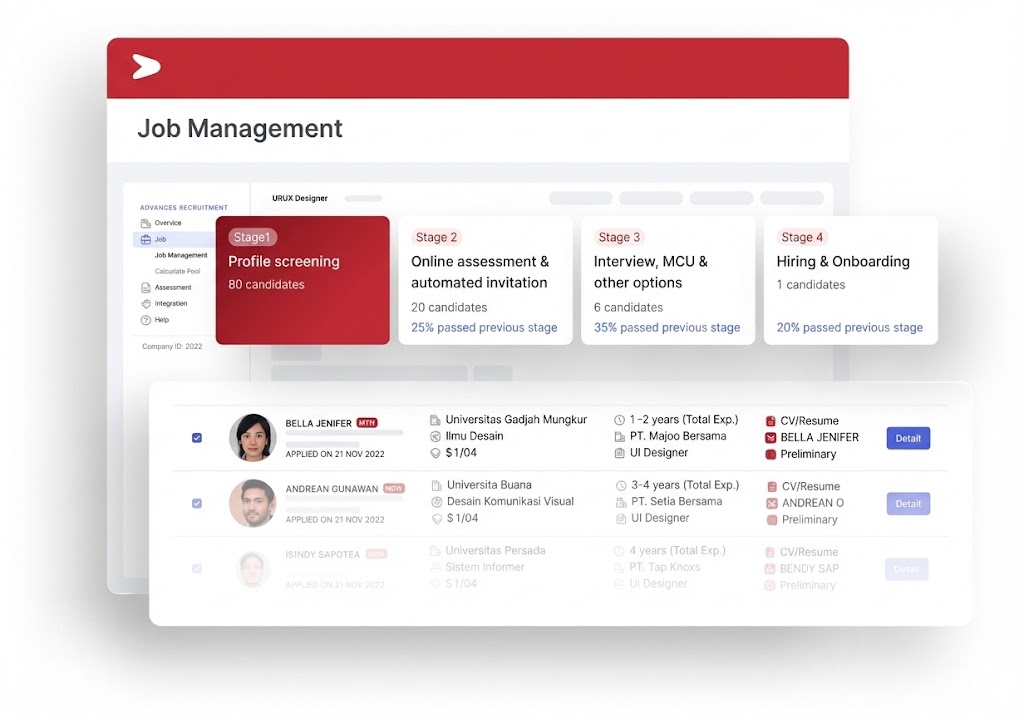
The onboarding stage helps employees adapt to their roles, understand operational expectations, build workplace relationships, and integrate into the organization’s culture.
Strong onboarding experiences typically improve confidence, productivity readiness, collaboration, and early employee engagement while reducing adjustment challenges during the first months of employment.
Engage
The engagement stage focuses on maintaining employee motivation, connection, communication quality, and workplace involvement over time.
Leadership support, recognition practices, manager relationships, workload balance, and collaboration environments all contribute significantly to employee engagement throughout the employee journey.
Perform
During the performance stage, organizations focus on helping employees achieve goals, maintain accountability, improve productivity, and contribute to broader business objectives.
Performance management systems, feedback quality, coaching support, and operational clarity all influence how effectively employees perform within their roles.
Develop
The development stage focuses on strengthening employee capabilities, supporting career growth, and preparing employees for future responsibilities.
Organizations that invest in learning opportunities, leadership development, internal mobility, and career progression generally improve workforce retention and long-term organizational capability.
Exit
The exit stage occurs when employees leave the organization voluntarily or involuntarily. Although often overlooked, this stage still affects employer branding, workforce continuity, and organizational learning.
Well-managed exit processes help organizations gather feedback, preserve professional relationships, and identify recurring workforce challenges that may affect future employee experience strategies.
Many organizations also use an exit interview process to better understand employee concerns, workplace experience patterns, leadership issues, and operational factors that may contribute to turnover over time.
Read also: Employee Lifecycle Management: Definition, Stages, and Tips
How to Improve Employee Experience to Strengthen Workforce Engagement and Retention
Improving employee experience requires organizations to manage the full employee journey more intentionally, from recruitment and onboarding to development, performance management, and daily workplace interactions.
Many organizations focus heavily on isolated initiatives such as engagement events or employee benefits, even though employee experience is primarily shaped through operational consistency, leadership quality, communication practices, and day-to-day work environments.
Below are some of the most effective ways organizations can improve employee experience across the employee life cycle.
1. Improve Leadership Communication and Manager Effectiveness
Managers play a major role in shaping employee experience because employees interact with leadership more frequently than with broader organizational systems.
Communication quality, feedback consistency, recognition practices, and decision-making transparency all influence how employees perceive their workplace experience over time.
Organizations should equip managers with stronger communication, coaching, and people management capabilities to create healthier team environments and clearer operational expectations.
2. Strengthen Employee Onboarding Experiences
Employee experience often develops rapidly during the first months of employment. Employees use onboarding experiences to evaluate organizational culture, leadership support, communication quality, operational clarity, and workplace expectations.
Organizations should create onboarding processes that go beyond administrative orientation by helping employees build relationships, understand team dynamics, access learning resources, and integrate into operational workflows more effectively.
Employees often form long-term workplace perceptions during their first onboarding experiences.
Organizations that provide clear guidance, stronger support systems, and early relationship-building opportunities are generally more successful in improving employee adaptation and retention.
Effective onboarding also accelerates productivity readiness while helping employees feel more confident and connected within the organization.
3. Create More Consistent Employee Feedback Loops
Employees generally want more clarity regarding expectations, performance, development opportunities, and workplace concerns.
Organizations that create continuous feedback environments are usually more successful in improving trust, communication quality, and employee alignment.
Feedback should not only happen during annual performance reviews. Recurring manager check-ins, pulse surveys, coaching discussions, and development conversations help organizations identify workforce concerns earlier while improving employee responsiveness and engagement.
Continuous feedback environments also help employees feel more involved in organizational decision-making and workplace improvement initiatives.
4. Reduce Workplace Friction Across Daily Operations
Daily operational friction often becomes one of the biggest hidden drivers of employee frustration.
Employees frequently lose time and productivity because of slow approval flows, repetitive manual reporting, disconnected systems, unclear communication channels, overlapping responsibilities, or excessive administrative coordination across departments.
These operational inefficiencies gradually affect responsiveness, collaboration quality, workload balance, and employee motivation, especially within fast-moving or highly collaborative work environments.
Organizations should regularly evaluate how employees interact with workplace systems, approval structures, reporting processes, and internal communication workflows throughout their daily responsibilities.
Simplifying operational processes and improving cross-functional coordination often creates a more responsive work environment while reducing unnecessary employee fatigue and workplace inefficiencies.
5. Invest in Career Growth and Development Opportunities
Employees are more likely to remain engaged when they see visible growth opportunities within the organization. Career stagnation, unclear progression paths, and limited development support often reduce long-term workforce motivation.
Organizations should provide employees with clearer career pathways, learning opportunities, mentorship programs, leadership development initiatives, and internal mobility opportunities.
Employee Experience Best Practices for Building a More Connected and Productive Workforce
Below are some practical employee experience best practices commonly used to create healthier workplace environments and more consistent workforce experiences.
1. Standardize Manager Check-Ins and Team Communication
Employees often experience organizations primarily through interactions with their direct managers. Inconsistent communication, unclear expectations, delayed feedback, and lack of managerial support can gradually reduce trust and engagement across teams.
Organizations should establish recurring manager check-ins to improve communication consistency, workload visibility, coaching quality, and employee support.
Regular conversations help employees feel more aligned with priorities while allowing managers to identify concerns earlier before they develop into larger workforce issues.
Strong organizations also create clearer communication standards regarding feedback frequency, meeting expectations, escalation processes, and team collaboration practices.
2. Simplify Employee Onboarding Processes
Employee experience is often shaped quickly during the onboarding period. Employees use early workplace experiences to evaluate operational readiness, organizational culture, leadership accessibility, and support quality.
Organizations should reduce unnecessary onboarding complexity by simplifying administrative processes, clarifying role expectations earlier, centralizing onboarding resources, and improving coordination between HR, managers, and operational teams.
Structured onboarding processes generally help employees adapt faster while improving confidence, collaboration, and early productivity readiness.
3. Reduce Operational Friction in Daily Workflows
Employees become disengaged when routine workplace processes feel unnecessarily complicated or inefficient. Slow approvals, disconnected systems, unclear workflows, repetitive reporting, and communication bottlenecks often create long-term frustration across teams.
Organizations should regularly evaluate whether operational workflows support productivity or create avoidable administrative burdens.
Improving workflow efficiency typically enhances responsiveness, collaboration quality, employee satisfaction, and overall workplace experience simultaneously.
4. Personalize Learning and Career Development
Employees are more likely to remain engaged when development opportunities feel relevant to their career goals and current responsibilities.
Generic training programs often fail to create meaningful employee engagement because employees do not always see how learning connects to long-term growth.
Organizations should provide more personalized learning pathways, mentorship opportunities, leadership exposure, skill development plans, and internal mobility visibility.
Employees who see clearer growth opportunities within the organization are generally more motivated to remain engaged and contribute long term.
5. Improve Recognition and Employee Appreciation Practices
Recognition significantly affects how employees perceive their value within the organization. Employees who consistently feel overlooked or underappreciated often become disengaged over time even when compensation and operational conditions remain stable.
Organizations should encourage more consistent recognition practices across managers and departments rather than limiting recognition to annual reward programs alone.
Timely recognition for contributions, collaboration, problem-solving, leadership support, and operational improvements often strengthens motivation and workforce morale significantly.
6. Create More Responsive Employee Feedback Channels
Employees are more likely to trust organizational feedback systems when they see visible follow-up actions after sharing concerns or suggestions.
Organizations should create accessible feedback channels that allow employees to raise concerns, share ideas, and provide workplace input continuously rather than relying solely on annual engagement surveys.
This may include pulse surveys, anonymous feedback systems, recurring team discussions, employee listening sessions, or manager-led feedback conversations.
Organizations that respond more visibly to workforce feedback are generally more successful in strengthening employee trust, communication quality, and workplace engagement over time.
Read also: Strategic Workforce Planning: Benefits and Implementation
How to Measure Employee Experience Effectively
Employee experience should be measured continuously through a combination of workforce feedback, operational indicators, behavioral patterns, and employee sentiment across different stages of the employee life cycle.
Many organizations rely too heavily on annual engagement surveys alone, even though employee experience is influenced by daily workplace interactions, leadership quality, communication consistency, operational processes, and long-term workforce conditions.
A more comprehensive measurement approach helps organizations identify workforce challenges earlier while improving decision-making across leadership and HR teams.
Below are some of the most effective ways organizations measure employee experience.
1. Analyze Employee Engagement Trends
Employee engagement remains one of the most commonly used indicators for evaluating employee experience. Engagement data helps organizations understand how connected employees feel to their work, managers, teams, and organizational goals.
Organizations typically measure engagement through recurring surveys that evaluate factors such as communication quality, leadership trust, recognition, workload balance, development opportunities, and workplace satisfaction.
However, engagement data should not be viewed in isolation. Organizations should analyze engagement trends alongside operational performance, workforce behavior, and employee feedback patterns to gain broader visibility into workplace experience conditions.
2. Monitor Employee Retention and Turnover Patterns
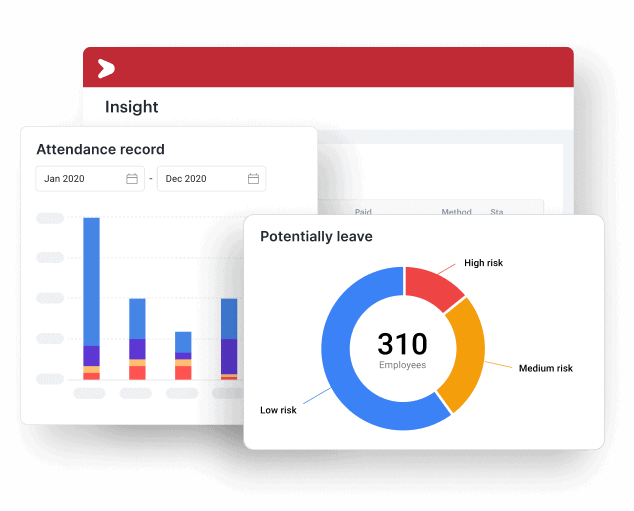
Employee retention trends often provide strong signals regarding overall employee experience quality. High turnover rates within specific departments, teams, locations, or managerial structures may indicate deeper workplace experience challenges.
Organizations should monitor patterns involving:
- voluntary turnover
- early-stage resignations
- internal mobility rates
- recurring attrition trends
- high-performer retention
Consistent workforce analysis helps organizations identify whether leadership issues, operational complexity, career stagnation, or workplace culture problems are affecting long-term workforce stability.
Read also: A Guide to Employee Attrition: Risk Mitigation for Talent Continuity
3. Evaluate Manager Effectiveness and Team Conditions
Managers significantly influence employee experience because they shape communication quality, workload expectations, recognition practices, collaboration environments, and day-to-day team culture.
Organizations should regularly evaluate manager effectiveness through employee feedback, performance trends, retention patterns, and team-level engagement data.
Common indicators may include:
- communication consistency
- feedback quality
- coaching effectiveness
- workload management
- conflict resolution capability
Organizations with stronger leadership evaluation processes are generally more successful in identifying workplace issues before they affect broader workforce stability.
4. Measure Employee Sentiment Across the Employee Life Cycle
Employee experience changes throughout different stages of the employee journey. Because of this, organizations should evaluate employee sentiment continuously across recruitment, onboarding, development, performance management, and exit stages.
For example:
- onboarding feedback helps measure adaptation quality
- development feedback helps evaluate career growth support
- performance discussions help assess managerial alignment
- exit feedback helps identify unresolved workforce concerns
This broader life cycle approach allows organizations to understand where employee experience challenges occur most frequently across the organization.
5. Use People Analytics to Identify Workforce Patterns
Organizations increasingly use people analytics to measure employee experience more strategically and predictively.
Workforce analytics helps organizations connect employee behavior, operational performance, retention data, engagement trends, and organizational outcomes into a more centralized decision-making framework.
Advanced workforce analysis can help organizations identify patterns involving:
- turnover risk
- engagement decline
- leadership effectiveness
- productivity shifts
- workforce stability across departments
Organizations that integrate workforce analytics into employee experience strategies are generally more capable of making proactive workforce decisions instead of reacting only after major organizational issues emerge.
6. Combine Quantitative and Qualitative Insights
Employee experience cannot be measured effectively through numbers alone. Survey scores, retention metrics, and operational KPIs provide valuable visibility, but they do not always explain why employees feel disengaged or disconnected.
Organizations should combine quantitative data with qualitative insights gathered through manager conversations, focus groups, employee listening sessions, and recurring workforce discussions.
This combination helps organizations understand both measurable workforce patterns and the underlying employee experiences shaping those outcomes.
How to Develop an Employee Experience Strategy for Long-Term Workforce Stability
An effective employee experience strategy requires organizations to align leadership, operational processes, workforce planning, communication practices, and talent development into a more connected long-term approach.
Below are the key steps organizations should consider when developing an employee experience strategy.
1. Identify Workforce Challenges Across the Employee Journey
Organizations should begin by evaluating where employee experience problems occur most frequently throughout the employee life cycle.
This includes reviewing workforce feedback, engagement trends, turnover patterns, onboarding effectiveness, manager capability, communication quality, and operational pain points across teams.
Many organizations discover that employee experience issues are not caused by a single factor, but by repeated friction across multiple workplace processes such as unclear expectations, inconsistent leadership communication, limited development visibility, or inefficient workflows.
A broader workforce assessment helps organizations prioritize the areas that create the greatest impact on employee engagement and operational stability.
2. Align Leadership and Workforce Management Practices
Employee experience becomes inconsistent when leadership expectations vary significantly across departments or management levels.
Organizations should establish clearer standards regarding communication practices, feedback quality, recognition, coaching, workload management, and employee support systems.
Leadership alignment is especially important because employees often evaluate the organization primarily through daily interactions with managers rather than through formal HR programs alone.
Organizations with stronger leadership consistency generally create healthier collaboration environments, better workforce trust, and more stable employee engagement outcomes over time.
3. Integrate Employee Experience Into Operational Processes
Employee experience should not function separately from operational workflows. Recruitment processes, onboarding systems, performance management, communication structures, learning programs, and workforce technology all contribute directly to how employees experience the organization.
For example, organizations that manage performance concerns through a structured performance improvement plan process are often more successful in creating transparency, accountability, and clearer employee expectations compared to organizations with inconsistent performance management practices.
Similarly, organizations that simplify administrative workflows and improve cross-functional coordination typically reduce operational friction that negatively affects employee experience daily.
4. Create Continuous Workforce Listening Systems
Organizations need recurring visibility into workforce sentiment and workplace conditions to improve employee experience consistently over time.
This requires continuous listening mechanisms such as pulse surveys, recurring manager check-ins, employee feedback programs, development discussions, and workforce analytics reviews.
Continuous feedback systems help organizations identify emerging workforce concerns earlier while improving responsiveness across leadership and HR teams.
Employees are also more likely to remain engaged when they believe organizational feedback processes are transparent, actionable, and consistently acknowledged.
5. Use Workforce Data to Support Strategic Decisions
Organizations should use workforce data and operational insights to guide employee experience improvements more objectively.
This may include analyzing:
- employee engagement trends
- retention and turnover patterns
- onboarding outcomes
- manager effectiveness
- internal mobility rates
- workforce productivity indicators
Organizations that integrate workforce analytics into employee experience strategies are generally more capable of identifying long-term organizational risks before they significantly affect workforce stability or operational performance.
6. Treat Employee Experience as an Ongoing Organizational Strategy
Employee experience strategies should evolve continuously alongside workforce expectations, leadership structures, operational changes, and business priorities.
Organizations that maintain strong employee experience outcomes typically treat workforce experience as a long-term strategic initiative rather than a short-term engagement program.
Sustained investment in leadership capability, operational improvement, workforce development, communication quality, and employee support systems helps organizations strengthen workforce resilience, improve organizational adaptability, and maintain healthier employee relationships over time.
Frequently Asked Questions (FAQs)
What are the biggest factors that affect employee experience?
What are the biggest factors that affect employee experience?
Employee experience is heavily influenced by leadership quality, communication consistency, workload management, career growth opportunities, workplace flexibility, and operational efficiency. Employees also evaluate their experience through daily interactions with managers, internal systems, and organizational support processes. Even small operational frustrations can gradually affect engagement and retention over time. Organizations that manage these factors consistently generally create healthier workplace environments.
How does remote or hybrid work affect employee experience?
How does remote or hybrid work affect employee experience?
Remote and hybrid work environments change how employees interact with managers, teams, and organizational systems. Without clear communication structures and collaboration processes, employees may experience isolation, slower feedback cycles, or reduced visibility into development opportunities. Organizations often need stronger digital communication practices, performance visibility, and employee support systems to maintain a positive experience across distributed teams. Workforce technology also becomes more important in supporting operational consistency.
Who is responsible for managing employee experience?
Who is responsible for managing employee experience?
Employee experience is not solely the responsibility of HR teams. Managers, leadership teams, operational departments, and employees themselves all contribute to workplace experience quality through communication, collaboration, decision-making, and day-to-day interactions. HR usually helps coordinate workforce strategies, policies, and systems, while managers influence employee experience more directly through daily leadership practices. Strong employee experience strategies generally require organization-wide alignment.
How often should organizations evaluate employee experience?
How often should organizations evaluate employee experience?
Employee experience should be monitored continuously rather than only during annual engagement surveys. Organizations often combine recurring pulse surveys, manager check-ins, workforce analytics, onboarding feedback, and exit interviews to maintain visibility into workforce conditions. Continuous evaluation helps organizations identify emerging concerns earlier before they affect retention, productivity, or workforce stability. Frequent feedback cycles also improve organizational responsiveness.
What is the difference between employee engagement and employee experience?
What is the difference between employee engagement and employee experience?
Employee engagement refers to how emotionally connected and motivated employees feel toward their work and organization, while employee experience covers the broader workplace conditions shaping those feelings. Employee experience includes leadership interactions, communication quality, operational processes, workplace culture, development opportunities, and daily work environments. In many cases, employee engagement is considered one outcome of overall employee experience quality. Organizations with stronger employee experience strategies are generally more successful in maintaining long-term engagement.