

Employee Recruitment: Definition, Process & How to Hire 60% Faster

-
Employee recruitment is a structured process of identifying, attracting, and selecting candidates who align with business needs and role requirements.
-
The recruitment process typically includes analyzing hiring needs, planning, sourcing, screening, interviewing, selecting, and onboarding candidates.
iring in large organizations involves multiple stakeholders, layered approvals, and parallel priorities that don’t always align from the start, especially when recruitment is positioned as part of a broader human capital management strategy.
A single role can move across teams, from HR, hiring managers, and leadership, each with different expectations on what defines the right candidate.
Without a clear structure, this often results in delayed decisions, inconsistent evaluation standards, and missed hiring opportunities.
At the same time, hiring teams are expected to maintain speed while ensuring accuracy and long-term fit.
This article will explain what employee recruitment is, how the process works, and how to execute it more effectively in complex hiring environments.
What Is Recruitment?
Recruitment is a structured process of identifying, attracting, and selecting the most suitable candidates to fill specific roles within an organization.
Its primary purpose is to ensure that the organization has the right talent in place—individuals whose skills, experience, and capabilities align with business needs and can contribute to achieving strategic objectives.
The recruitment process typically involves multiple stages, including sourcing candidates, screening applications, assessing qualifications, and ultimately selecting and placing individuals into roles that match predefined criteria and competencies.
In addition, recruitment is also carried out to obtain variation in terms of background and work experience of candidates, so that organizations can have diverse employees and can provide added value for the company, while also supporting broader talent management initiatives within a structured talent management system.
Objectives of Employee Recruitment
The objective of recruitment is to attract and select the right candidates to fill certain positions in a company or organization.
The main objective of recruitment is to meet the human resource needs required by the company in facing market demands or business expansion.
In addition, the objectives of recruitment may also include:
1. Align Talent with Business Strategy
The primary objective of recruitment is to ensure that every hiring decision directly supports business goals. This means translating organizational priorities—such as expansion, efficiency, or innovation—into specific talent requirements.
Rather than hiring based on immediate needs alone, recruitment should anticipate future demands by identifying the capabilities required to sustain performance.
When done effectively, this alignment ensures that new hires are not only filling gaps, but actively contributing to strategic execution.
2. Attract and Select High-Quality Candidates
Recruitment aims to identify candidates who possess not only the required technical skills, but also the ability to adapt, collaborate, and grow within the organization.
High-quality hiring reduces performance gaps and accelerates productivity from the early stages of employment.
This objective also emphasizes the importance of structured evaluation—using clear criteria, consistent assessment methods, and data-backed decisions—to ensure that selected candidates truly meet role requirements and organizational standards.
3. Build a Sustainable and Diverse Talent Pipeline
Another key objective is to ensure a continuous supply of qualified candidates, rather than relying on reactive hiring.
By building and maintaining a talent pipeline, organizations can respond more quickly to hiring needs and reduce time-to-fill.
At the same time, recruitment plays a critical role in increasing workforce diversity.
Bringing in individuals from varied backgrounds and experiences enhances creativity, strengthens problem-solving, and enables the organization to operate more effectively in complex environments.
4. Improve Cost Efficiency and Reduce Hiring Risks
Effective recruitment minimizes the long-term costs associated with poor hiring decisions, such as high turnover, repeated hiring cycles, and lost productivity.
Selecting the right candidate from the beginning reduces the likelihood of early attrition and performance issues.
This objective also includes optimizing the recruitment process itself, ensuring that hiring is conducted efficiently, without unnecessary delays or resource waste, while maintaining quality and consistency in decision-making.
5. Strengthen Employer Brand and Workforce Quality
Recruitment shapes how the organization is perceived by potential candidates. A well-structured and transparent hiring process builds trust and enhances the organization’s reputation as an employer of choice.
At the same time, consistently hiring capable and well-aligned individuals improves overall workforce quality.
This creates a positive cycle—strong talent attracts more strong talent—while also supporting long-term productivity, engagement, retention, and enabling a more structured talent development approach aligned with the organization’s talent development strategy.
Type of Employee Recruitment
Organizations adopt different recruitment methods depending on their workforce strategy, operational scale, and talent needs.
Broadly, recruitment can be categorized into internal (closed) and external (open) methods, each offering distinct advantages and trade-offs.
Internal recruitment focuses on leveraging existing employees, while external recruitment expands the talent pool beyond the organization.
However, in practice, effective recruitment strategies often combine both approaches to balance efficiency, cost, and access to new capabilities.
| Type | Method | Description | Best Use Case |
|---|---|---|---|
| Open Recruitment (External) | Job Vacancy Advertisement | Publishing job openings through websites, job portals, and social media to reach a wide pool of candidates with the help of digital tools and automated screening. | High-volume hiring, multi-location recruitment, or roles requiring broad reach. |
| Employee Referral / Self-Application | Leveraging employee networks or direct applications through career pages to identify candidates with strong cultural fit. | Faster hiring with higher retention potential. | |
| Job Fair | Participating in recruitment events to engage directly with candidates while promoting employer branding. | Early talent acquisition and brand awareness. | |
| Campus Recruitment | Hiring fresh graduates through campus outreach programs to build long-term talent pipelines. | Entry-level hiring and future leadership development. | |
| Headhunting / Talent Search | Proactively sourcing specialized or senior candidates through agencies or targeted search. | Critical or hard-to-fill roles requiring niche expertise. | |
| Internship Program | Providing work experience opportunities to evaluate candidates before offering full-time roles. | Reducing hiring risk and building future talent pipelines. | |
| Closed Recruitment (Internal) | Promotion | Advancing high-performing employees to higher positions based on performance and potential. | Strengthening retention and internal career growth. |
| Transfer / Rotation | Moving employees across roles or departments to optimize skills and broaden experience. | Cross-functional development and workforce flexibility. | |
| Rehiring | Re-employing former employees who already understand company culture and operations. | Faster onboarding with experienced talent. | |
| Temporary / Contract Workers | Hiring contract-based employees for short-term or project-specific needs. | Flexible workforce management and cost control. |
Employee Recruitment Process
When structured properly, recruitment becomes a consistent system that improves hiring quality, reduces delays, and strengthens overall workforce capability.
Below is how an ideal recruitment process typically works in practice:
1. Analyzing Hiring Needs
The process starts by clearly identifying why a role needs to be filled. This could be due to increased workload, team expansion, or replacing an existing employee. However, what matters most is not the headcount, but the actual need behind it.
In many cases, initial hiring requests are still too broad. A team might request “one additional staff,” but after deeper discussion, the real need could be someone who can handle a specific client segment, manage certain tools, or take ownership of a critical function.
Clarifying this early helps avoid hiring someone who looks qualified on paper but does not actually solve the core problem.
2. Planning the Recruitment Approach
Once the need is clear, the next step is translating it into a structured hiring plan. This includes defining the job scope, required competencies, level of experience, and success indicators for the role.
At this stage, alignment between HR and hiring managers is critical. Without it, recruitment often becomes inefficient—candidates are screened multiple times, expectations shift midway, and decision-making slows down.
A well-aligned plan ensures everyone agrees on what “good” looks like before the search begins, which significantly improves both speed and accuracy in hiring.
3. Sourcing Candidates
After planning, the role is opened through the most relevant channels. This can include internal announcements, job portals, social media, and professional platforms like LinkedIn.
However, relying solely on job postings is rarely enough, especially for mid-to-senior or specialized roles.
Strong recruitment processes combine inbound applications with proactive sourcing, such as reaching out directly to potential candidates or leveraging employee referrals.
In practice, some of the most qualified candidates are not actively applying. They are identified through targeted outreach, which is why sourcing strategy plays a major role in overall hiring success.
4. Screening and Shortlisting
As applications come in, candidates are evaluated against predefined criteria. This stage is not just about filtering based on keywords, but understanding the context behind each profile.
Two candidates may have similar job titles, but very different levels of responsibility and impact. A more effective screening approach looks at scope of work, ownership, and measurable outcomes, rather than relying purely on titles or years of experience.
The goal is to narrow down to candidates who are not only qualified, but also relevant to the specific challenges of the role.
In a structured recruitment process, this stage is typically supported by an Applicant Tracking System (ATS) like Talenta Recruitment, where candidate data is centralized and evaluated systematically, often supported by AI to automatically filter, rank, and prioritize candidates based on relevance and job fit.
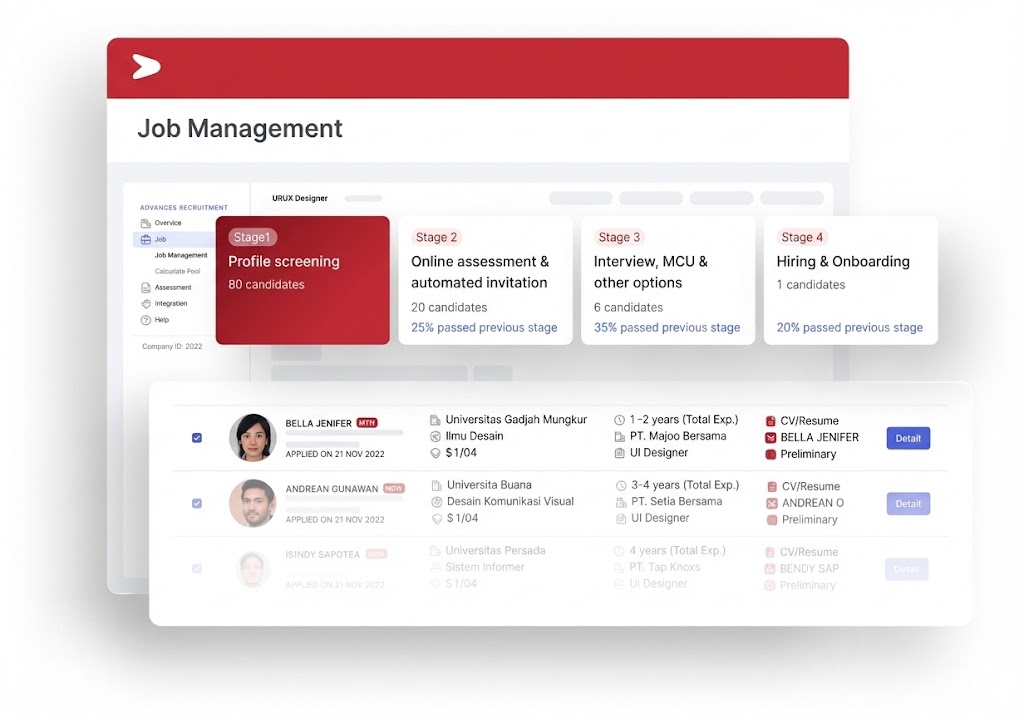
Instead of manually reviewing each application, recruiters can filter, compare, and track candidates based on predefined criteria—such as experience, skills, and role relevance—within a single dashboard.
Read also: Examples of AI in HR and Recruitment Enhancement
5. Interview and Assessment
Shortlisted candidates then go through a structured evaluation process. This typically includes interviews and, depending on the role, technical tests or case-based assessments.
A well-designed interview process does not rely on a single perspective, but often incorporates multi-source input similar to a 360 degree evaluation approach used in performance management practices.
Instead, different stakeholders assess different aspects, such as capability, problem-solving approach, communication, and alignment with team dynamics.
This multi-angle evaluation helps reduce bias and ensures that hiring decisions are based on a more complete understanding of the candidate.
6. Final Selection and Offer
Once all evaluations are completed, the hiring team consolidates feedback and selects the most suitable candidate.
At this stage, decision-making should be grounded in evidence such as interview insights, assessment results, and alignment with role requirements, often structured in a way that connects with a broader performance management system.
The offer stage then follows, where compensation, benefits, and expectations are clearly communicated.
Speed and clarity are critical here, as delays or misalignment can lead to losing strong candidates to other opportunities.
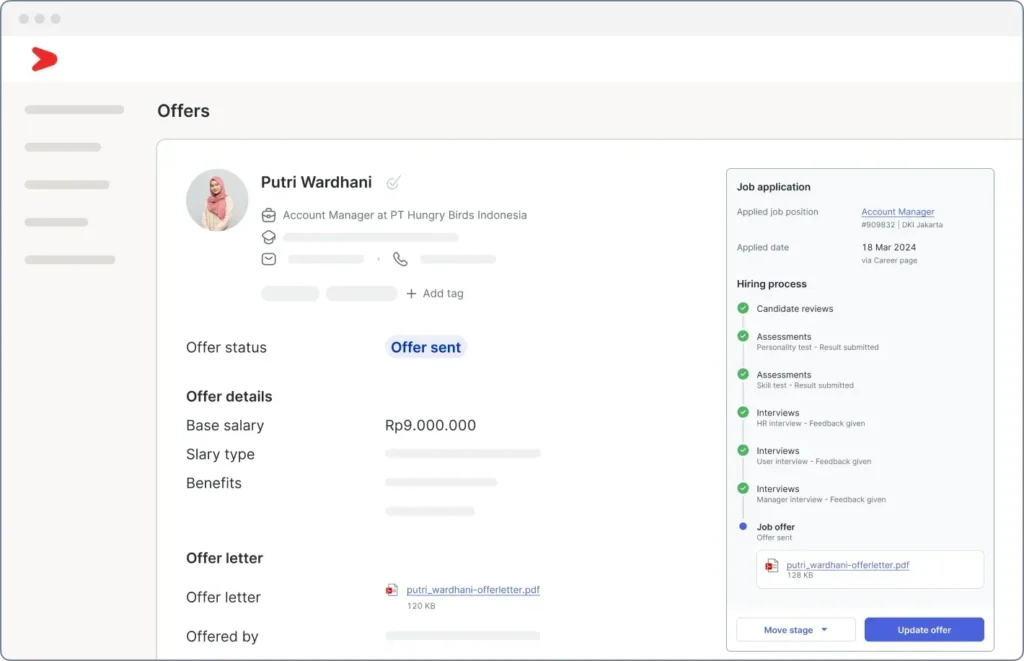
For this reason, many organizations leverage an recruitment platform like Talenta Recruitment, which enables hiring teams to manage the entire process, from evaluation to final offer, within a single platform.
By centralizing candidate data, feedback, and offer management, teams can move faster, reduce bottlenecks, and ensure that decisions are executed without unnecessary delays.
7. Candidate Experience and Communication
Throughout the process, communication plays a significant role. Candidates should be informed of their progress, expectations, and outcomes in a timely and professional manner.
Even candidates who are not selected contribute to employer perception. A structured and respectful process helps build a positive reputation, while poor communication can damage it—even among strong candidates.
8. Onboarding and Transition
The recruitment process does not end when the offer is accepted. The transition into the organization is equally important.
A well-prepared onboarding process ensures that new hires understand their role, expectations, and working environment from the beginning. This reduces ramp-up time and increases the likelihood of early success.
In many cases, the gap between hiring and actual performance is not due to poor recruitment, but due to weak onboarding. That is why both processes need to be closely connected.
Read also: Employee Recruitment Strategy: A Guide for Modern HR Teams
Employee Recruitment Best Practice
Most organizations already follow standard recruitment steps. However, what truly improves hiring outcomes often comes from execution details that are rarely documented but consistently applied by experienced practitioners.
Here are five best practices that tend to work in recruitment process:
1. Calibrate the Role Before You Open It
One of the most common mistakes is opening a role too quickly with a generic job description. In practice, this leads to misaligned candidates, repeated interviews, and delayed hiring.
Strong recruiters spend time upfront calibrating the role with hiring managers, clarifying what success looks like in the first 3–6 months, what problems the hire will solve, and which requirements are truly non-negotiable.
When this is done properly, candidate quality improves immediately, and the process becomes significantly faster because everyone evaluates candidates using the same standard.
2. Screen for Context, Not Just Credentials
Many hiring decisions fail because screening focuses too much on titles, companies, or years of experience. In reality, these indicators rarely reflect actual capability.
What works better is understanding context:
- What scale did the candidate operate in?
- What level of ownership did they have?
- What measurable impact did they deliver?
For example, two candidates with the same “Manager” title may have completely different scopes: one managing strategy, another executing tasks. The difference only becomes clear when you look beyond the surface.
3. Use Interviews to Test Thinking, Not Just Experience
Traditional interviews often revolve around past experience, which candidates can easily prepare for. However, this does not always reflect how they will perform in your environment.
More effective interviews simulate real scenarios—asking candidates how they would approach a current challenge, make decisions with limited data, or handle conflicting priorities.
This shifts the evaluation from “what they have done” to “how they think,” which is often a stronger predictor of future performance.
4. Move Fast—Because Top Candidates Don’t Wait
This is one of the most overlooked realities in recruitment.
The gap between these two timelines is where most hiring opportunities are lost.
In practice, the pattern is fairly consistent. A strong candidate completes the final interview, but internal discussions take longer than expected.
Feedback is delayed, decisions are not immediately aligned, and by the time an offer is ready, the candidate has already moved forward with another opportunity.
The issue is rarely about making rushed decisions. It’s about removing friction from the process. Delays often come from slow interviewer feedback, multiple approval layers, or unclear ownership in decision-making.
Over time, it becomes clear that companies don’t lose candidates because they lack competitiveness. They lose them because their process cannot keep up.
The organizations that consistently secure strong talent are usually those that move with clarity and speed, not necessarily those offering the highest compensation.
5. Treat Candidate Experience as a Long-Term Asset
Candidate experience is often underestimated because its impact is not immediately visible. However, every interaction during recruitment shapes how the organization is perceived in the talent market.
Simple practices such as clear communication, timely updates, and respectful rejection, create a positive impression even for unsuccessful candidates.
Over time, this builds trust and strengthens employer reputation.
Many strong hires come from candidates who were previously rejected but chose to reapply because they had a good experience, similar to how insights from an exit interview can influence long-term talent strategy.
6. Leverage ATS and Recruitment Technology to Drive Consistency
As hiring volume grows, relying on manual processes quickly becomes inefficient and inconsistent. This is where an Applicant Tracking System (ATS) plays a critical role.
An ATS helps centralize candidate data, streamline screening, automate communication, and track progress across every stage of the hiring process.
More importantly, it ensures that decisions are based on structured data rather than fragmented notes or individual judgment.
In practice, this solves many common bottlenecks in recruitment. Candidate pipelines become visible, feedback is easier to consolidate, and hiring teams can move faster without losing control over quality.
It also reduces administrative workload, allowing recruiters to focus more on evaluation and candidate engagement rather than coordination.
Read also: 10 Recruitment Process Optimization Steps to Improve Hiring Efficiency
Build a Scalable, Data-Driven Recruitment Process with Mekari Talenta
Managing recruitment effectively involves coordinating multiple stages, from job posting, candidate sourcing, screening, interviews, to offer management, across different teams, tools, and timelines.
Without a structured system, recruitment often becomes fragmented. Candidate data is scattered, screening is inconsistent, and hiring decisions rely heavily on manual coordination, making it difficult to maintain speed, quality, and transparency.
A centralized system helps standardize how recruitment is managed, ensuring that every stage—from sourcing to hiring—is connected, measurable, and easier to control.
Mekari Talenta is an AI-centric cloud-based HCM platform that enables organizations to manage workforce processes in a more integrated and data-driven way.
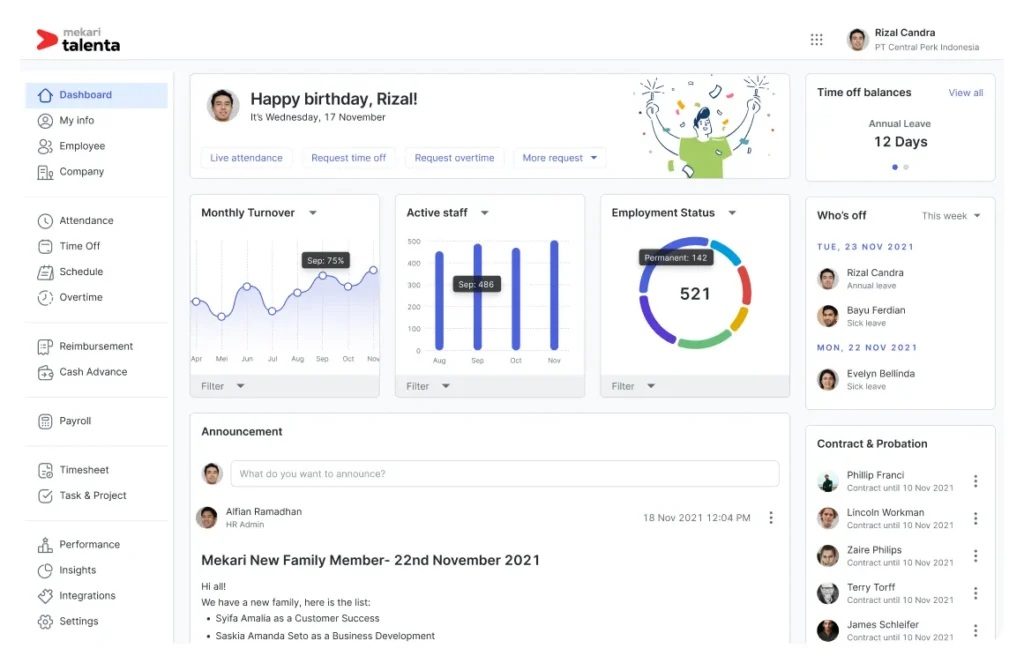
Within the platform, Mekari Talenta provides a recruitment solution called Talenta Recruitment that helps organizations streamline hiring processes, improve candidate quality, and accelerate time-to-hire.
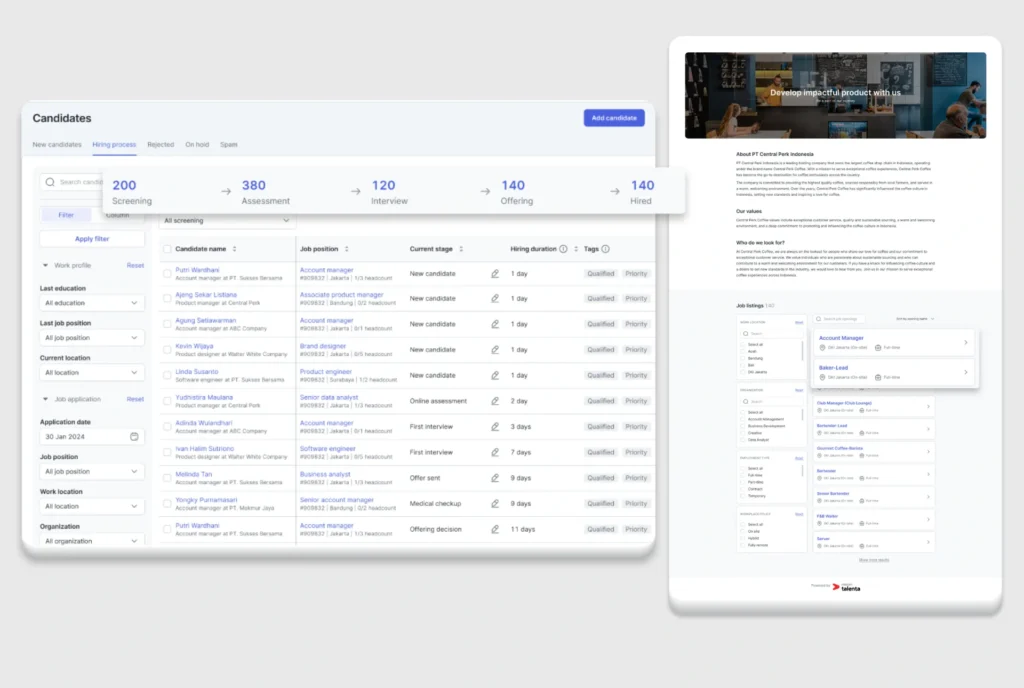
With Mekari Talenta’s recruitment solution, organizations can simplify hiring workflows while improving visibility and decision-making across the entire recruitment lifecycle. Key features include:
- Job Posting & Sourcing. Publish job openings across multiple platforms such as LinkedIn, JobStreet, and company career pages in one click, while managing all applications within a single dashboard.
- AI-Powered Screening. Automatically filter and rank candidates based on skills, experience, and job fit, helping identify top candidates faster and reduce manual screening effort.
- Interview, Assessment & Onboarding. Manage interview scheduling, conduct assessments and personality tests such as MBTI, and seamlessly transition candidates into onboarding with integrated workflows and digital documentation.
- Recruitment Insights & Reports. Track key metrics such as time-to-hire, source effectiveness, and candidate conversion rates through a centralized reporting dashboard.
By integrating recruitment into a single platform, organizations can move beyond manual coordination and build a more structured, scalable, and data-driven approach to hiring.
Looking to improve how your organization attracts and hires top talent? Connect with our team to see how Mekari Talenta can support your recruitment process at scale.
Reference:
Frequently Asked Questions (FAQs)
What is the difference between recruitment and talent acquisition?
What is the difference between recruitment and talent acquisition?
Recruitment is typically focused on filling immediate vacancies, while talent acquisition takes a more strategic and long-term approach. Talent acquisition includes employer branding, strategic workforce planning, and building talent pipelines for future needs. In practice, organizations often combine both approaches, especially when hiring at scale. Recruitment handles execution, while talent acquisition shapes the broader strategy.
What is the ideal time-to-hire for most roles?
What is the ideal time-to-hire for most roles?
The ideal time-to-hire varies depending on role complexity, but many organizations aim for 30–45 days as a benchmark. However, for high-demand or specialized roles, strong candidates may be off the market in under 10–14 days. This gap is why speed and decision clarity are critical. Reducing delays in feedback and approvals often has a bigger impact than shortening interview stages.
How do you measure recruitment success?
How do you measure recruitment success?
Recruitment success is typically measured through metrics such as time-to-hire, quality of hire, offer acceptance rate, and retention of new hires. Among these, quality of hire is the most important but also the hardest to measure, as it requires linking hiring decisions to performance outcomes over time. Organizations with mature processes often combine short-term metrics (speed, cost) with long-term indicators (performance, retention). This creates a more balanced evaluation of recruitment effectiveness.
Why do companies lose strong candidates during hiring?
Why do companies lose strong candidates during hiring?
The most common reason is process delays and lack of clarity. Slow feedback, too many approval layers, and unstructured decision-making create friction that causes candidates to disengage. In competitive markets, candidates often move forward with faster-moving companies. Improving internal coordination and reducing bottlenecks can significantly increase hiring success.
When should a company invest in recruitment technology like an ATS?
When should a company invest in recruitment technology like an ATS?
An ATS becomes critical when hiring volume increases, multiple roles are managed simultaneously, or coordination across teams becomes complex. Manual processes may work for small-scale hiring, but they quickly lead to inefficiencies and data fragmentation as hiring grows. An ATS helps standardize workflows, centralize data, and improve visibility across the pipeline. This not only increases efficiency but also improves decision quality.