
A Guide to Employer Branding: Framework, Components, & Strategy


-
Employer branding is the structured effort to align how an organization is perceived with how it actually operates as a workplace.
-
Employer branding strategies include career path transparency, realistic hiring practices, and standardized employee experience across teams.
In complex organizations, managing people at scale introduces a level of inconsistency that cannot be solved by policies alone.
Different teams interpret expectations differently, leadership styles vary, and employee experiences often diverge across functions and locations.
Over time, these inconsistencies begin to affect how the organization is perceived, both internally and externally.
What candidates expect during hiring and what employees actually experience can gradually drift apart if not managed deliberately.
This article will explain how employer branding works as a structured system to align perception, experience, and long-term talent strategy.
What Is Employer Branding?
Employer branding is the structured effort to define, communicate, and consistently deliver an organization’s identity as a place to work.
It represents how the organization is perceived by both current employees and potential candidates in terms of its values, work environment, leadership quality, and overall employee experience.
At its core, employer branding is about aligning what the organization promises with what employees actually experience.
This includes how roles are designed, how performance is managed, how careers are developed, and how employees are supported throughout their lifecycle within the organization.
Employer branding also plays a critical role in shaping workforce quality. When the positioning is clear and credible, it attracts candidates who are aligned with the organization’s culture and expectations.
At the same time, it strengthens internal engagement by reinforcing a shared understanding of what the organization stands for and how employees are expected to contribute.
Employer Branding vs Employee Branding
While employer branding is often discussed as a strategic HR initiative, it is frequently confused with employee branding. In practice, both concepts are closely related but serve different purposes within the organization.
Below is a structured comparison to clarify the differences:
| Aspect | Employer Branding | Employee Branding |
|---|---|---|
| Definition | Organizational effort to define and communicate identity as a workplace | How employees reflect and represent the organization’s brand through behavior |
| Focus | External perception and internal alignment | Internal behavior and representation |
| Ownership | Primarily driven by HR and leadership | Driven by employees, influenced by culture and management |
| Objective | Attract, align, and retain talent | Reinforce brand credibility through employee actions |
| Scope | Covers entire employee lifecycle (hire to exit) | Focuses on day-to-day employee conduct and interaction |
| Audience | Candidates and employees | Customers, candidates, and external stakeholders |
| Nature | Strategic and structured | Behavioral and experiential |
| Example | Clear EVP, structured career paths, consistent hiring messaging | Employees demonstrating company values in communication and work |
Key Difference:
Employer branding is defined and managed by the organization. It sets expectations, like what the company claims to offer as a workplace and how it positions itself to talent.
Employee branding, on the other hand, is expressed through employees. It reflects how those expectations are actually experienced and demonstrated in everyday behavior.
When both are aligned, the organization builds credibility. When they are not, the gap becomes visible quickly, both internally through disengagement and externally through negative perception.
Importances of Employer Branding
Employer branding often gets treated as a communication or marketing initiative, but its importance goes far beyond visibility. It directly affects how consistently an organization can attract, select, manage, and retain talent over time.
When employer branding is not clearly defined, organizations typically face recurring issues, such as misaligned hiring expectations, inconsistent employee experience, and increasing difficulty in maintaining workforce stability. These are not isolated problems, but structural gaps that compound over time.
1. Prevents Misalignment Between Hiring and Reality
Without a clear employer brand, there is often a gap between what candidates expect and what they actually experience after joining.
This misalignment leads to early disengagement, poor performance, or even quick employee turnover. Candidates may join based on assumptions, while managers operate with different expectations. Over time, this creates friction that is difficult to correct because the issue starts from the entry point.
Employer branding ensures that what is communicated externally reflects actual working conditions, reducing the risk of expectation mismatch.
2. Creates Consistency Across Teams and Locations
In organizations with multiple functions or locations, inconsistency is one of the most common challenges. Different teams may operate with different standards, cultures, or management styles.
Without a strong employer brand, these differences become more visible and harder to control. Employees may have completely different experiences depending on where they are placed, which weakens trust and internal alignment.
Employer branding provides a reference point—a consistent identity that guides how employees are managed, developed, and engaged across the organization.
3. Reduces Dependency on Reactive Hiring
When employer branding is weak, hiring becomes reactive. Organizations rely heavily on short-term tactics such as compensation adjustments or urgent employee recruitment campaigns to fill gaps.
This approach is costly and often results in lower-quality hires, because decisions are made under pressure rather than based on long-term fit.
A strong employer brand builds a more stable talent pipeline over time. It attracts candidates who already understand and align with the organization, reducing the need for constant reactive hiring.
4. Strengthens Internal Trust and Retention Foundation
Retention issues are often attributed to compensation or workload, but many cases stem from a lack of clarity and consistency in how employees experience the organization.
If the employer brand is unclear or inconsistent, employees struggle to understand what the organization stands for and what they can expect in the long term. This uncertainty weakens trust and increases the likelihood of disengagement.
Employer branding provides that clarity. It reinforces a shared understanding of values, expectations, and growth direction, which becomes a foundation for stronger retention.
5. Supports Long-Term Workforce Stability and Planning
Workforce planning depends on having a predictable and stable talent base. Without employer branding, organizations face higher variability in hiring success, retention rates, and employee engagement.
This makes it difficult to plan for future capability needs, leadership pipelines, or succession strategies.
Employer branding reduces this uncertainty by creating a more stable inflow and retention of talent. It ensures that workforce development efforts are not constantly disrupted by turnover or misalignment, allowing long-term plans to be executed more effectively.
Benefits of Employer Branding
While the importance of employer branding lies in preventing structural issues, its benefits are reflected in measurable outcomes.
When employer branding is managed consistently, the impact can be seen across recruitment efficiency, workforce quality, cost structure, and overall organizational performance.
1. Improves Quality and Volume of Talent Pipeline
A strong employer brand increases both the number and the relevance of candidates applying to the organization.
Candidates today actively evaluate employers before applying.
As a result, employer branding does not just increase applicant volume—it improves alignment. Organizations receive candidates who already understand the culture, expectations, and environment, reducing mismatch during hiring.
2. Reduces Recruitment Cost and Time
Employer branding directly affects how efficiently roles can be filled.
This happens because less effort is needed to convince candidates to apply. The organization becomes a preferred option rather than one that needs aggressive promotion. Over time, this reduces dependency on paid channels, recruitment agencies, and repeated hiring cycles.
3. Increases Employee Retention and Reduces Turnover
A well-managed employer brand strengthens alignment between employee expectations and actual experience, which directly impacts retention.
When employees clearly understand what the organization stands for—and experience consistency in how it operates—they are less likely to disengage or leave prematurely. This reduces disruption and stabilizes workforce continuity.
4. Enhances Employee Performance and Engagement
Employer branding influences not only attraction and retention, but also how employees perform.
When employees feel aligned with the organization’s identity and direction, they are more likely to contribute beyond minimum expectations. This creates a more productive and committed workforce over time.
5. Strengthens Overall Business Performance
The impact of employer branding extends beyond HR metrics into broader organizational outcomes.
This reflects a cumulative effect: better talent quality, lower turnover, stronger engagement, and more efficient hiring processes—often supported by people analytics—all contribute to improved operational and financial performance.
Key Components of Employer Branding
Employer branding is not built from a single initiative or campaign. It is shaped by several core components that must work together consistently.
When one component is weak or misaligned, the overall employer brand becomes unclear or unreliable, both internally and externally.
Below are the key components that form a strong and sustainable employer branding framework:
1. Employee Value Proposition (EVP)
The Employee Value Proposition defines what employees receive in exchange for their contribution. It is the foundation of employer branding and answers a simple but critical question: why should someone join and stay?
A strong EVP goes beyond compensation. It includes career growth opportunities, learning and development, work environment, leadership quality, and overall employee experience.
For example, an organization may position itself as a place for accelerated career growth. However, if promotions are unclear and development is inconsistent, the EVP becomes unreliable.
This is why EVP must be grounded in reality. It should reflect what the organization can consistently deliver, not just what it wants to communicate.
2. Candidate Experience (Pre-Employment Stage)
Employer branding begins before an employee even joins. The candidate experience shapes first impressions and influences whether candidates perceive the organization as credible and well-managed.
This includes job descriptions, communication during recruitment, interview processes, and feedback timelines.
For instance, if an organization promotes itself as structured and professional, but candidates experience delayed responses and unclear processes, the employer brand weakens immediately.
A consistent and well-managed candidate experience ensures that expectations are set correctly from the beginning.
Read also: Employee Recruitment Strategy: A Guide for Modern HR Teams
3. Employee Experience (Internal Reality)
While employer branding is often associated with external perception, it is primarily built from internal experience.
This includes how employees are managed, how performance is evaluated, how feedback is given, and how decisions are made.
Daily interactions with managers and systems shape how employees perceive the organization far more than external messaging.
For example, if an organization promotes a collaborative culture but operates with siloed decision-making and limited communication, employees will quickly recognize the gap. Consistency between what is communicated and what is experienced is critical in maintaining credibility.
4. Leadership and Management Practices
Leadership plays a central role in shaping employer branding because managers directly influence employee experience.
Even with strong policies and systems, inconsistent leadership behavior can weaken the employer brand. Employees often evaluate the organization based on how their managers lead, communicate, and make decisions, which in many cases is reinforced through structured inputs such as 360 degree feedback.
For example, if leaders consistently provide clear direction, recognize performance, and support development, the organization will be perceived as structured and growth-oriented.
On the other hand, unclear expectations and inconsistent feedback can create confusion and reduce trust, regardless of how strong the external branding appears.
5. Communication and Brand Representation
This component covers how the organization communicates its identity externally and internally.
Externally, it includes career sites, job postings, social media presence, and employee testimonials. Internally, it includes how updates, policies, and expectations are communicated to employees.
The key here is alignment. Communication should reflect actual conditions, not idealized messaging. For example, showcasing employee success stories can strengthen credibility, but only if those stories represent typical experiences, not exceptions.
6. Talent Development and Career Pathing
One of the most influential components of employer branding is how the organization develops its people through a clearly defined talent development strategy.
Clear career paths, structured development programs, often enabled through a learning management system, and transparent progression criteria signal that the organization invests in long-term growth. Without this, employees may perceive limited future opportunities, regardless of other benefits.
For example, organizations that implement structured development plans—such as Individual Development Plans (IDP)—create visibility into how employees can grow and what is required to progress. This directly strengthens both retention and external perception.
7. Organizational Culture and Work Environment
Culture is often mentioned but rarely defined clearly. In the context of employer branding, culture refers to observable patterns, like how people collaborate, how decisions are made, and how work is executed daily.
It is not defined by slogans, but by consistent behavior across teams. For instance, an organization may claim to be “fast-paced and innovative,” but if decision-making is slow and risk-taking is discouraged, the actual culture contradicts the stated identity.
A clearly defined and consistently practiced culture strengthens employer branding because it provides predictability for employees and candidates.
How to Build a Strong Employer Branding for Your Organization
Building employer branding is often misunderstood as a communication exercise, like improving career pages, posting on social media, or showcasing company culture. In practice, those are only the visible layer.
A strong employer brand is built operationally, through how people are hired, managed, evaluated, and developed on a daily basis. It requires alignment across HR processes, leadership behavior, and actual employee experience. Without this alignment, branding efforts may create visibility, but not credibility.
Below are the key steps that reflect how employer branding is built in real organizational settings:
1. Diagnose the Gap Between Perception and Reality
The starting point is understanding whether there is a gap between how the organization is perceived and how it actually operates.
This is rarely documented formally, but it is visible through patterns. Recurring early resignations, inconsistent performance across teams, or repeated feedback about unclear expectations are all indicators that the employer brand is not aligned with reality.
In practice, this diagnosis comes from combining multiple signals:
- Employee feedback trends (engagement surveys, informal feedback)
- Exit interview patterns
- Hiring success rate (offer acceptance vs early turnover)
The objective is not to “fix branding,” but to identify operational inconsistencies that are shaping the current perception.
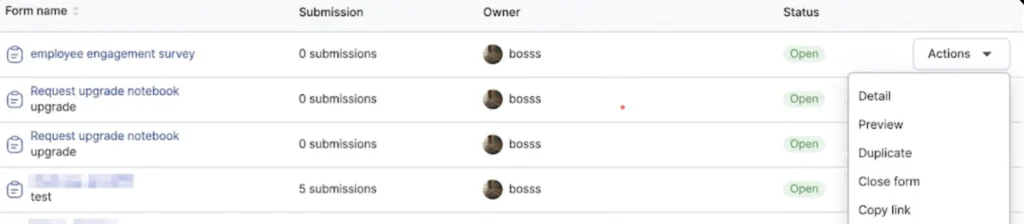
In practice, organizations often utilize tools like Mekari Talenta to support this process, e.g. by creating employee engagement surveys through forms that are integrated within the HCM system, allowing them to be easily distributed and assigned directly to employees.
2. Translate EVP into Operational Standards
Defining an Employee Value Proposition is necessary, but the real challenge is making it executable.
A common issue is that EVP remains conceptual. Terms like “growth,” “collaboration,” or “high performance” are used without clear operational meaning. As a result, different teams interpret them differently.
To avoid this, EVP must be translated into standards that can be applied consistently. For example, For example, if growth is part of the positioning, it should be reflected in how development is structured, how promotions are decided, and how performance is evaluated using clear metrics such as those defined in KPI frameworks.
Without this translation, EVP becomes messaging. With it, EVP becomes a system that guides decision-making.
3. Align Hiring Process with Actual Work Conditions
Employer branding is first tested during recruitment. If the hiring process does not accurately represent the actual working environment, misalignment starts from day one.
In many cases, roles are positioned to attract candidates rather than to reflect reality. This may improve short-term hiring outcomes but often leads to early dissatisfaction and turnover.
A more effective approach is to present the role as it is, including expectations, pressure points, and working style. Candidates who proceed are more likely to be aligned, even if the overall applicant pool becomes smaller.
This step requires discipline, especially when hiring targets are high. However, alignment at entry point reduces downstream issues that are far more costly to fix.
4. Standardize Core Employee Experience Without Over-Control
One of the biggest challenges in complex organizations is inconsistency. Employees in similar roles may have very different experiences depending on their manager or team.
To build a credible employer brand, certain aspects must be standardized, typically supported by a centralized talent management system that ensures consistency across teams. This includes how performance is evaluated, how feedback is given, and how development is structured.
At the same time, over-standardization creates rigidity. The goal is not to control every interaction, but to define a baseline that ensures fairness and clarity.
Employees should consistently understand what is expected of them, how they are assessed, and how they can progress. When this baseline exists, variation becomes manageable instead of disruptive.
5. Treat Managers as the Core of Employer Branding Execution
Employer branding is often driven by HR, but experienced by employees through their managers.
Even with strong systems in place, inconsistent managerial behavior can break alignment. Employees evaluate the organization based on how expectations are communicated, how feedback is delivered, and how decisions are made at the team level.
This is why manager capability is a central component. Organizations that take this seriously invest in ensuring managers can:
- Set clear expectations
- Provide structured feedback
- Support development consistently
Without this, employer branding remains theoretical, regardless of how well it is defined.
6. Connect Employer Branding with Talent Decisions
Employer branding becomes credible when it is reflected in actual decisions.
If an organization promotes internal growth but frequently hires externally for key roles, the signal becomes inconsistent. If performance is emphasized but high performers are not recognized or progressed, credibility declines.
This is where alignment with talent processes becomes critical. Promotion decisions, succession planning, and development investments must reflect the stated positioning.
In Mekari Talenta, succession planning can be managed by mapping key roles and identifying potential successors based on actual performance and development progress.

Employees do not evaluate branding through messaging. Hence, they evaluate it through decisions that affect them directly.
7. Continuously Recalibrate Based on Workforce Signals
Employer branding is not static. As the organization evolves, so do expectations, workforce composition, and operational realities.
The most effective approach is to continuously recalibrate based on observable signals. These signals are often already available but underutilized—such as turnover patterns, internal mobility trends, or recurring feedback themes.
For example, if multiple teams report similar issues around workload or unclear expectations, this is not a localized problem. It indicates a broader misalignment that affects employer perception. Addressing these signals early prevents small inconsistencies from becoming structural issues.
Employer Branding Strategy Examples
Employer branding strategies vary depending on what the organization is trying to fix or strengthen. In practice, most strategies are not created from scratch, since they are responses to real operational gaps such as poor retention, inconsistent hiring quality, or unclear career progression.
Below are several employer branding strategies that are commonly implemented in real organizational settings, along with how they typically work in practice.
1. Career Path Transparency Strategy
This strategy is used when employees lack clarity about how to grow within the organization, often leading to disengagement or unnecessary turnover.
Instead of relying on general messaging about “career growth,” the organization defines clear role levels, expectations, and promotion criteria. These are then communicated openly to employees and candidates.
For example, each role may have:
- Defined competency requirements
- Expected timeline for progression
- Clear indicators for readiness
This creates alignment between expectation and reality. Employees understand what is required to progress, and candidates can assess whether the environment matches their goals before joining.
2. Realistic Hiring & Role Positioning Strategy
This approach focuses on reducing mismatch between hiring expectations and actual work conditions.
Rather than presenting roles in the most attractive way, the organization ensures that job descriptions, interviews, and hiring conversations reflect real responsibilities, challenges, and working style.
For example, if a role involves high pressure, ambiguity, or tight deadlines, this is communicated clearly during the hiring process. Some organizations even include case simulations or realistic job previews.
The result is a smaller but more aligned talent pool, with lower risk of early turnover and faster adjustment after onboarding.
3. Manager-Led Development Strategy
This strategy addresses inconsistency in employee experience caused by varying management styles.
Instead of relying solely on HR programs, the organization positions managers as the primary drivers of development. This includes standardizing how managers set expectations, provide feedback, and support employee growth.
In practice, this may involve:
- Structured check-ins between managers and employees
- Clear guidelines for performance conversations
- Defined expectations for development support
This ensures that employer branding is experienced consistently at the team level, not just defined at the organizational level.
4. Internal Mobility & Talent Visibility Strategy
This strategy is applied when employees feel limited in growth opportunities, even though roles exist internally.
The organization creates visibility into open roles, required capabilities, and readiness criteria. Employees are encouraged to explore opportunities across teams rather than waiting for external hiring.
For example, internal job boards, talent reviews, and readiness tracking systems are used to match employees with available opportunities. This reinforces the message that growth is not only possible, but actively supported within the organization.
5. Employee Experience Standardization Strategy
This strategy focuses on reducing inconsistency across teams or locations.
Key processes such as onboarding, performance management, and talent development planning are standardized to ensure a consistent baseline experience. While teams may still operate differently, core expectations remain aligned.
For example, every employee may go through:
- A structured onboarding program
- Regular performance review cycles
- Defined development planning process
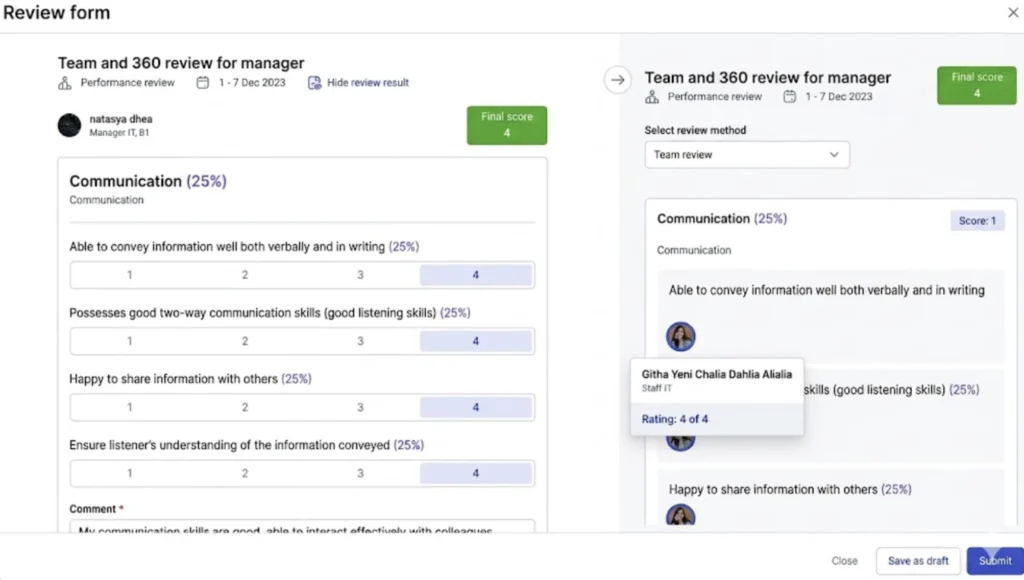
In Mekari Talenta, performance reviews can be standardized through predefined evaluation criteria & workflows and set to run on a regular basis, making it easier to maintain consistency and track progress over time.
This creates predictability and fairness, which strengthens trust and overall employer perception.
6. Feedback-Driven Improvement Strategy
This approach treats employer branding as a continuously evolving system rather than a fixed concept.
Instead of relying on assumptions, the organization actively uses employee feedback and workforce data to refine its approach. This includes analyzing engagement surveys, exit interviews, and retention patterns.
For example, if exit data consistently shows lack of career progression as a reason for leaving, the organization may prioritize strengthening development frameworks or internal mobility programs.
This ensures that employer branding remains relevant and responsive to actual workforce conditions.
7. Employee Advocacy & Testimonial Strategy
This strategy focuses on strengthening credibility through real employee voices.
Rather than relying solely on corporate messaging, the organization highlights authentic employee experiences through testimonials, case stories, or internal success journeys.
For example, showcasing how employees progressed across roles or handled complex projects provides tangible proof of the employer brand.
The key here is authenticity. Over-curated or unrealistic stories tend to weaken trust, while genuine experiences reinforce credibility.
How to Measure Employer Branding Effectiveness
Employer branding is often perceived as intangible, but in practice, its effectiveness can be measured through observable workforce patterns and decision outcomes.
The key is to avoid relying on perception-based metrics alone (e.g., “brand awareness”) and instead focus on indicators that reflect alignment between expectation, experience, and talent outcomes.
A strong employer brand does not show up in a single metric. It is reflected in consistency across hiring quality, retention stability, employee engagement, and internal mobility over time.
Below are the key ways to measure it in a structured and practical manner:
1. Hiring Quality and Acceptance Rate
One of the earliest signals of employer branding effectiveness appears during hiring.
When employer branding is strong, candidates already have a clear understanding of the organization before applying. This typically results in:
- Higher offer acceptance rates
- Lower drop-off during recruitment stages
- Better alignment between candidate expectations and actual role conditions
If candidates frequently decline offers or withdraw late in the process, it often indicates a mismatch between perception and reality.
Read also: 10 Recruitment Process Optimization Steps to Improve Hiring Efficiency
2. Early Turnover and New Hire Stability
Early-stage attrition (e.g., within the first 3–6 months) is one of the most critical indicators. High early turnover usually signals that:
- The role was not represented accurately during hiring
- The work environment differs from expectations
- Onboarding and initial experience are inconsistent
A well-managed employer brand reduces this gap, resulting in more stable new hire retention and faster adjustment.
3. Employee Engagement and Feedback Trends
Employer branding is continuously reflected in how employees experience the organization. This can be measured through:
- Engagement survey results
- Feedback consistency across teams
- Sentiment trends over time
The focus should not only be on scores, but on patterns. For example, recurring feedback about unclear expectations or inconsistent management often indicates a weak or fragmented employer brand.
In practice, structured tools such as employee engagement surveys within integrated HCM systems help capture these insights more systematically and at scale.
4. Internal Mobility and Promotion Ratio
A strong employer brand creates clarity around growth and development, which should be reflected in internal movement. Key indicators include:
- Percentage of roles filled internally
- Promotion rate vs external hiring
- Readiness of internal talent pipelines
If most key roles are filled externally despite internal availability, it may indicate that development systems are not aligned with the employer brand positioning.
5. Time to Fill and Recruitment Cost Efficiency
Employer branding directly affects how efficiently roles can be filled. When positioning is clear and credible:
- Time to fill tends to decrease
- Dependency on external sourcing reduces
- Recruitment costs become more stable
This happens because candidates are more likely to proactively apply and remain engaged throughout the process.
6. Performance and Productivity Indicators
Employer branding also influences how employees perform once they are inside the organization. Aligned expectations and consistent experience lead to:
- Faster ramp-up time for new hires
- More stable performance across teams
- Higher contribution beyond baseline expectations
If performance varies significantly across similar roles or teams, it may reflect inconsistency in how the employer brand is executed operationally.
7. Retention Stability and Turnover Patterns
Rather than looking at overall turnover alone, it is more useful to analyze patterns:
- Voluntary vs involuntary turnover
- Turnover by tenure (early vs long-term)
- Turnover concentration in specific teams
A strong employer brand does not eliminate turnover, but it reduces unpredictable and preventable attrition caused by misalignment and unclear expectations.
8. External Perception and Candidate Quality
External perception still matters, but it should be evaluated in relation to quality, not just visibility. Indicators include:
- Quality of applicants (not just volume)
- Employer review trends (e.g., consistency of feedback themes)
- Candidate feedback during hiring process
A strong employer brand attracts candidates who are already aligned, reducing the need for heavy filtering and correction during recruitment.
Driving Consistent Employer Branding Through an Integrated HCM System with Mekari Talenta
Building a strong employer brand is not only about external communication, but about ensuring that employee experience, talent decisions, and organizational practices are consistently aligned over time.
Without an integrated system, organizations often face challenges in maintaining consistency across hiring, performance management, and employee development, which can lead to fragmented experiences and weaken overall employer perception.
To support a more structured and data-driven approach, organizations can leverage Mekari Talenta as an AI-centric, cloud-based HCM solution that enables consistent execution of employer branding across the entire employee lifecycle.
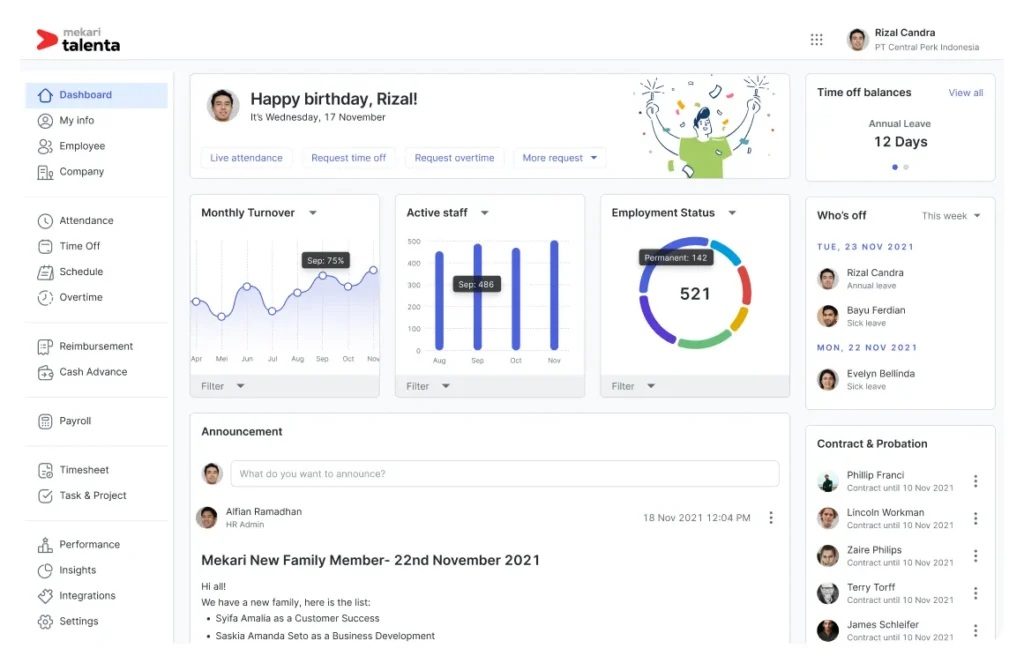
Mekari Talenta provides a comprehensive set of features that help HR teams operationalize employer branding in a measurable and scalable way, including:
- HR Dashboard & Analytics to monitor workforce trends, engagement signals, and overall employee experience indicators
- Performance Management System to standardize evaluations, ensure consistent feedback, and align performance expectations across teams
- Employee Self Service (ESS) to improve transparency and accessibility of HR processes, enhancing day-to-day employee experience
- Forms & Survey tools to collect structured employee feedback, such as engagement surveys and pulse checks, to identify perception gaps early
- Talent Development & Individual Development Plan (IDP) to create clear career pathways and support continuous employee growth
- Succession Planning & Talent Management to map critical roles and prepare internal talent, reinforcing internal mobility and growth credibility
With a centralized HCM platform, organizations can ensure that what is communicated as part of their employer brand is consistently reflected in how employees are managed, developed, and supported in daily operations.
Interested in exploring Mekari Talenta? Schedule a demo with our team and see how it can support a more structured, consistent, and scalable employer branding strategy.
Reference:
Frequently Asked Questions (FAQs)
How is employer branding different from company branding?
How is employer branding different from company branding?
Company branding focuses on how customers and the market perceive a business, while employer branding focuses on how the organization is perceived as a workplace. Although both share the same foundation, employer branding specifically addresses employee experience, work environment, and talent positioning. The audience is different, so the execution and priorities are also distinct.
Who is responsible for managing employer branding?
Who is responsible for managing employer branding?
Employer branding is typically led by HR, but it is not owned by HR alone. It requires alignment with leadership, hiring managers, and even internal communications. Since employer branding is reflected in daily operations, execution depends heavily on how managers lead and how decisions are made across the organization.
How long does it take to build a strong employer brand?
How long does it take to build a strong employer brand?
Employer branding is not a short-term initiative. It develops over time as organizational practices become consistent and credible. While perception can shift within months, building a strong and stable employer brand often takes years of aligned execution across hiring, performance management, and development processes.
Can employer branding exist without formal documentation?
Can employer branding exist without formal documentation?
Yes, employer branding always exists, even if it is not formally defined. It is shaped by how employees experience the organization and how candidates perceive it during hiring. However, without formal structure, it tends to be inconsistent and difficult to manage or improve.
How do you measure employer branding effectiveness?
How do you measure employer branding effectiveness?
Employer branding can be measured through a combination of indicators, such as offer acceptance rate, early turnover, employee engagement trends, and internal mobility. No single metric defines it. Instead, effectiveness is reflected in how stable, aligned, and predictable talent outcomes become over time.