
A Complete Guide to Employee Compensation and Benefits in Indonesia

- Structuring compensation in Indonesia requires strict adherence to mandatory legal frameworks, including the 75% minimum basic salary ratio, compulsory THR payouts, and complex PPh 21 payroll tax methodologies (Gross, Net, or Gross-Up).
- Managing multi-regional wage variations (UMP/UMK) and shifting benefit compliance manually creates severe operational friction, making centralized automation via platforms like Mekari Talenta essential for balancing data accuracy with workforce scalability.
Designing a comprehensive compensation and benefits strategy is one of the most critical factors influencing talent attraction and retention in Indonesia’s vibrant corporate landscape.
According to international market insights, such as Randstad’s Employer Brand Research, competitive salaries and benefits consistently remain the top factors global professionals consider when choosing or staying with an employer.
This empirical trend emphasizes how strategic remuneration directly shapes workforce stability and corporate attractiveness. For foreign multinational companies establishing a presence in the region, navigate remuneration goes far beyond calculating basic monthly salaries.
It encompasses a highly regulated network of mandatory social security contributions, religious holiday allowances, statutory paid leaves, and localized perks that collectively define the employer compliance profile and the overall employee experience.
Many international businesses initially struggle because Indonesian employment practices are heavily anchored in strict local labor regulations, distinct cultural expectations, and intensifying market competition for specialized skills.
Failing to structure these packages correctly can expose an organization to severe compliance risks, widespread workforce dissatisfaction, and operational disruption.
To build a sustainable foundation, expanding enterprises require a robust compensation and benefits framework that seamlessly balances market competitiveness with regulatory adherence.
Navigating these requirements effectively allows companies to optimize their long-term employee retention while strengthening their local employer branding in a highly competitive talent market.
Understanding Compensation & Benefits in Indonesia
Modern compensation and benefits management in Indonesia has evolved from a basic administrative payroll routine into a sophisticated, strategic business driver. Organizations can no longer view remuneration simply as a monthly financial transaction. Instead, it serves as a core mechanism affecting talent acquisition capability, day-to-day engagement, and overall business scalability.
The entire employment framework across the archipelago is anchored by a strict legal architecture, primarily guided by Law No. 13 of 2003 on Manpower, Government Regulation (PP) No. 35 of 2021, specific social security mandates, and annual regional minimum wage determinations, known locally as UMP (Upah Minimum Provinsi) and UMK (Upah Minimum Kabupaten/Kota).
To navigate this market successfully, employers must understand that a standard Indonesian remuneration package is structurally divided into direct compensation and non-cash fringe benefits.
The direct compensation cluster typically demands a balanced mix of base salaries, fixed or variable allowances, performance incentives, overtime calculations, and the legally mandated religious holiday allowance known as THR (Tunjangan Hari Raya).
On the parallel benefit track, organizations provide a combination of mandatory national insurance coverages, comprising BPJS Kesehatan for healthcare and BPJS Ketenagakerjaan for social security, supplemented by private health insurance policies, transport or meal stipends, wellness allocations, and flexible work perks designed to elevate the modern employee experience.
Foreign businesses often underestimate this complexity, assuming that a high base salary alone will satisfy local talent. However, the Indonesian workforce places immense cultural and financial value on the security provided by comprehensive allowances and family healthcare protection.
Because wage floors, statutory obligations, and talent expectations shift drastically depending on the specific industry, corporate scale, and geographic location, businesses must move away from generic global templates.
A technology enterprise operating in Jakarta will naturally face entirely different market expectations and regulatory minimums compared to a manufacturing facility situated in an emerging industrial economic zone.
Read more: HRIS vs Payroll Software: What Indonesian HR Leaders Actually Need
Core Components of Compensation in Indonesia
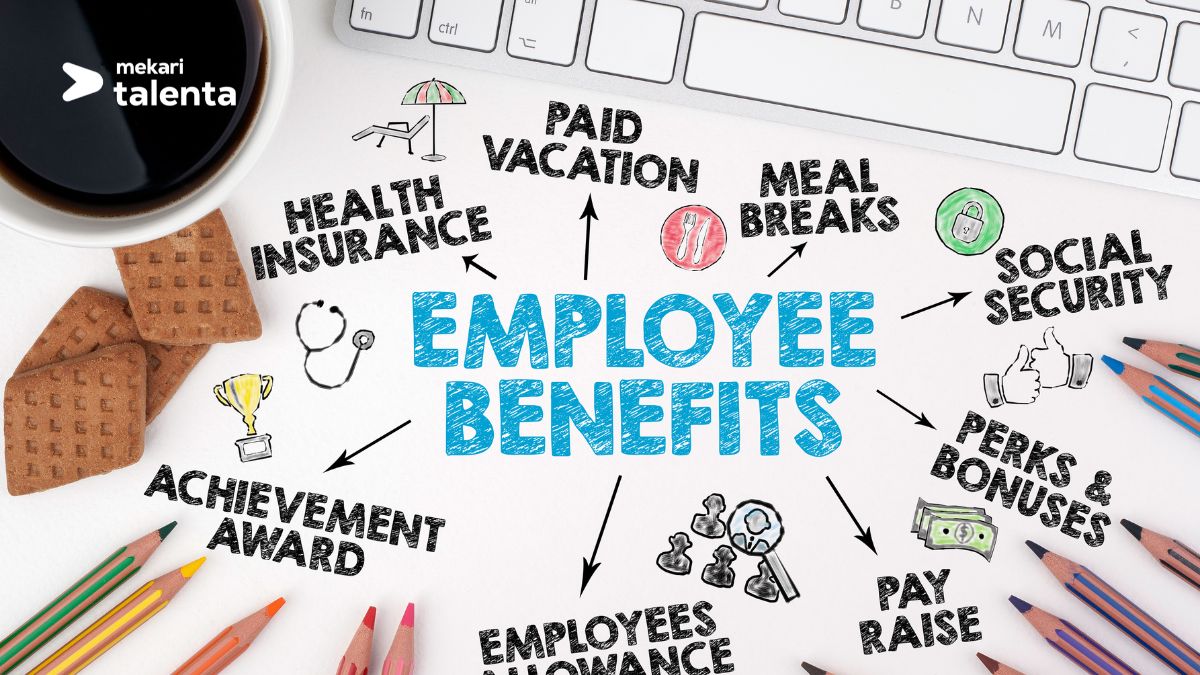
Structuring direct cash compensation in Indonesia requires strict adherence to statutory structural ratios and calculation methodologies defined by local labor codes.
Base Salary
The base salary represents the fundamental, fixed cash component paid to an employee every month. Under Indonesian manpower regulations, the base salary cannot fall below the officially mandated regional minimum wage (UMP or UMK) of the specific area where the employee is legally registered to work.
Furthermore, the law dictates a strict structural ratio: the basic salary component must constitute at least 75% of the total sum of the base salary and fixed allowances combined.
When determining base salaries, corporate planners must utilize comprehensive salary structure and scale guidelines (Struktur dan Skala Upah) that factor in job levels, industry benchmarks, and local cost-of-living adjustments to maintain internal equity and external market competitiveness.
Fixed Allowances
Fixed allowances are regular financial provisions paid to employees on a consistent monthly timeline, completely independent of their daily attendance or performance metrics. Common examples include localized housing allowances, fixed transport stipends, communication allocations, and specific position-based allowances tied to managerial responsibilities.
The primary legal distinction between a fixed allowance and a non-fixed allowance is that fixed allowances do not fluctuate based on the number of days an employee actually reports to the office, and they must be factored directly into statutory calculation baselines such as severance pay and holiday allowances.
Variable Compensation
Variable compensation serves as a flexible performance driver designed to align individual employee contributions with macro-level corporate goals. This category includes sales commissions, monthly or quarterly attendance bonuses, productivity incentives, and annualized performance bonuses tied to corporate profitability.
Forward-thinking companies utilize structured variable rewards to boost frontline productivity, foster accountability, and retain high-performing talent without permanently inflating fixed overhead costs.
THR (Religious Holiday Allowance)
The Tunjangan Hari Raya (THR) is a non-negotiable, legally mandated annual religious holiday allowance that employers must distribute to all eligible workers.
By law, employees who have completed 12 months of continuous service are entitled to receive a minimum of one full month’s basic wage as THR, paid out at least 7 days prior to their respective religious holiday, such as Eid al-Fitr or Christmas. For workers with a tenure of at least one month but less than a year, the allowance must be calculated using a strict prorated formula:
THR = Months of Service / 12 x One Month’s Wages
Overseas enterprises frequently miscalculate their annual workforce budgets by failing to account for THR as a mandatory 13th-month salary obligation.
Overtime Compensation
Overtime compensation represents a highly scrutinized statutory obligation applied to non-managerial employees who work beyond standard business hours.
Under PP 35/2021, standard overtime wages are calculated using a progressive hourly rate multiplier based on the employee’s monthly salary base.
The first hour of overtime on a regular workday is compensated at 1.5 times the hourly wage, while all subsequent hours escalate to 2.0 times the hourly wage, with even higher multipliers applied during weekends and national public holidays. Non-compliance with overtime reporting and payment rules carries heavy administrative and financial penalties.
Read more: What Is Payroll Automation? Cut Payroll Processing Time by 80%
Mandatory Employee Benefits in Indonesia
Beyond direct financial compensation, the Indonesian government mandates participation in comprehensive national social security and healthcare networks to safeguard the local workforce.
BPJS Kesehatan
BPJS Kesehatan is the mandatory national healthcare insurance program designed to provide universal medical coverage for all workers and their immediate families. The total statutory premium for this program is set at 5% of the employee’s monthly salary, which is structured through a shared contribution model.
The employer is legally obligated to cover 4% of the premium, while the remaining 1% is deducted directly from the employee’s monthly pay. The government enforces a specific maximum salary cap for this calculation, which is adjusted periodically to reflect changing economic conditions.
BPJS Ketenagakerjaan
BPJS Ketenagakerjaan is the overarching national social security system that manages employment risks through five distinct, mandatory protection programs.
The Old-Age Benefit (Jaminan Hari Tua – JHT) requires a total contribution of 5.7%, split between a 3.7% employer contribution and a 2% employee deduction.
The Pension Benefit (Jaminan Pensiun – JP) requires a 3% total premium, with 2% funded by the employer and 1% by the employee. The Work Accident Benefit (Jaminan Kecelakaan Kerja – JKK) ranges from 0.24% to 1.74% of the salary, funded entirely by the employer based on the specific risk level of the workplace environment.
The Death Benefit (Jaminan Kematian – JKM) requires a flat 0.3% premium funded completely by the employer, while the newer Job Loss Insurance (Jaminan Kehilangan Pekerjaan – JKP) provides unemployment support and is funded through government subsidies and a reallocation of existing BPJS premiums.
Paid Leave Entitlements
Indonesian employment law guarantees several mandatory paid leave entitlements that corporations must honor without any salary deductions. Karyawan are entitled to a minimum of 12 days of paid annual leave once they complete 12 months of continuous employment.
Female employees are entitled to 3 months of fully paid maternity leave, which can be extended under specific medical conditions as regulated by recent family welfare legislations.
Sick leave must be fully compensated by the employer for the first 4 months of prolonged illness, after which the payment ratio gradually scales down over subsequent months.
Furthermore, special statutory leaves with full pay are granted for specific personal milestones, including the employee’s own marriage, the circumcision or baptism of their children, or the death of an immediate family member.
Fringe Employee Benefits Commonly Offered by Employers
To stand out in a crowded employment market, companies frequently supplement mandatory statutory benefits with non-mandatory fringe benefits designed to support holistic employee wellbeing.
Many enterprises provide private group health insurance policies to grant employees faster access to premium private hospital networks and specialized dental care. Wellness stipends, gym memberships, and direct mental health counseling support are also increasingly common to prevent workplace burnout.
Following the shift toward flexible work arrangements, progressive organizations offer hybrid work benefits, including work-from-home allowances to cover high-speed internet and ergonomic office equipment.
Dedicated learning and development budgets, professional certification sponsorships, and tuition assistance are highly valued by ambitious talent looking to accelerate their career trajectories.
By implementing customized, flexible benefit programs where employees can select perks that match their specific lifestyle needs, companies can create a highly compelling employee value proposition.
Tax Considerations in Compensation and Benefits
Every single component of an employee’s total rewards package carries direct implications for corporate and individual tax compliance within the Indonesian fiscal system.
Why Tax Matters in Compensation and Benefits
All financial components distributed to workers must be aligned with the national income tax regulations governed by the Directorate General of Taxes, specifically regarding PPh 21 (Pajak Penghasilan Pasal 21) calculations.
Managing these tax components accurately is vital for avoiding corporate payroll errors, prevent incorrect tax withholding penalties, and eliminate employee disputes stemming from unexpected salary deductions.
A company’s choice of tax calculation methods directly impacts the actual take-home pay received by the workforce, the total operational cost of human resources, and the overall complexity of monthly payroll administration.
Taxable Compensation Components in Indonesia
Under standard PPh 21 regulations, almost all cash-based compensation elements are classified as taxable income. This taxable baseline includes the employee’s base salary, regular fixed allowances, performance bonuses, sales commissions, overtime payouts, and the annualized THR distribution.
Furthermore, under the recent tax harmonization laws (UU Harmonisasi Peraturan Perpajakan), certain non-cash benefits provided in-kind (Natura) are now classified as taxable objects for the employee, depending on specific thresholds and functional categories defined by the tax authority. This modern fiscal shift requires meticulous data classification during the payroll process to ensure full regulatory alignment.
Common Compensation Tax Methods Used by Companies
Corporations operating in Indonesia generally adopt one of three standardized methodologies to calculate and settle monthly PPh 21 liabilities:
- The Gross Method: Under this framework, the employee bears the full burden of their personal income tax. The system calculates the PPh 21 amount based on their total earnings and deducts it directly from their gross pay, thereby reducing their final take-home pay.
- The Net Method: With this approach, the employer absorbs the entire personal income tax liability on behalf of the employee. The worker receives their salary clean of tax deductions, as the company settles the PPh 21 amount as a direct corporate expense.
- The Gross-Up Method: This methodology represents a blended tactical approach where the employer provides a specific, formula-calculated tax allowance that is added to the employee’s gross earnings. This allowance is designed to exactly offset the calculated PPh 21 deduction, ensuring the employee receives a predictable take-home pay while allowing the corporate tax allowance to be classified as a deductible business expense.
The Importance of Integrated Payroll and Tax Management
Because monthly compensation figures, continuous attendance metrics, dynamic BPJS calculations, and progressive PPh 21 tax bands are completely interdependent, managing them in separate silos is highly risky.
Companies must maintain flawless payslip documentation, unified payroll registries, and punctual electronic tax reporting submissions to avoid costly compliance audits.
Maintaining centralized employee compensation data serves as the primary defense against administrative friction and operational liabilities.
Ultimately, an effective compensation strategy in Indonesia cannot be separated from tax and compliance frameworks, as these structural decisions directly dictate total workforce overhead, employee satisfaction, and legal risk exposure.
Compensation & Benefits Practices in Indonesia

Remuneration landscapes across the nation are continuously shifting, driven by evolving workforce demographic expectations and structural economic transitions.
Compensation Structures Vary Across Industries and Locations
Remuneration expectations across the Indonesian archipelago are deeply fragmented by geography and sector. A company operating in the metropolitan hub of Jakarta faces vastly higher wage floors and talent premium costs compared to operations based in regional areas across Central Java or Sumatra, where the local UMK baselines reflect a lower cost of living.
Similarly, multinational corporations and well-funded technology enterprises typically utilize highly aggressive compensation models to secure top-tier digital talent. In contrast, traditional manufacturing, agriculture, or retail sectors lean heavily on fixed allowance adjustments and volume-based productivity incentives to manage their high headcounts efficiently.
Flexible Benefits Are Becoming More Common
There is a notable corporate shift away from rigid, one-size-fits-all benefits packages toward personalized, employee-centric programs. Modern professionals increasingly prioritize employers that offer flexible lifestyle perks, such as mental health allowances, remote-work infrastructure support, or customizable wellness allocations that can be adjusted via automated reimbursement credits.
Offering flexible benefits has transitioned from a progressive luxury into a core strategy for employer differentiation, enabling businesses to construct an inclusive workplace culture that supports multi-generational talent pools.
Companies Are Increasingly Using Performance-Driven Rewards
To maximize their human capital returns, businesses are aggressively shifting toward compensation models tightly mapped to objective performance metrics.
Instead of relying purely on fixed annual salary increments, organizations tie a significant portion of total compensation to the achievement of specific Key Performance Indicators (KPIs), individual productivity milestones, and overall business outcomes.
This operational evolution features the widespread use of performance-linked bonuses, project completion rewards, and specialized retention incentives tailored to insulate high-performing assets from external recruitment poaching.
Employee Expectations Around Compensation Are Evolving
The contemporary Indonesian workforce, particularly the rising segment of younger, highly skilled professionals, demands elevated levels of corporate salary transparency and fair pay practices.
Job seekers evaluate potential employers not merely on the initial cash offer, but on the clarity of career progression pathways, internal compensation equity, and the robustness of the broader Employee Value Proposition (EVP).
Consequently, corporate employer branding success is now tied directly to the transparency and modern execution of a firm’s compensation and benefits policies.
Common Compensation & Benefits Challenges for Companies in Indonesia
Managing corporate remuneration scales at an enterprise level introduces several persistent administrative and operational hurdles that HR teams must continuously solve.
Balancing Compliance and Competitiveness
Organizations face the constant challenge of balancing strict compliance with rising statutory minimums while maintaining an attractive, market-competitive compensation package that does not compromise long-term fiscal sustainability.
Managing Compensation Across Multiple Locations
For businesses operating across multiple provinces, tracking and executing payroll according to varying local UMK rates, disparate regional holidays, and distributed field structures introduces severe logistical friction.
Compensation Structures Become Difficult to Scale
As a company’s total headcount grows, decentralized, legacy allowance models and manual verification methods become major operational bottlenecks, leading to inconsistent salary grading across newly formed departments.
Limited Visibility into Total Compensation Costs
Without a centralized data dashboard, corporate leadership often struggles to accurately calculate total real-time workforce costs, analyze benefits utilization rates, or forecast future compensation budget adjustments effectively.
Fragmented HR and Payroll Data
Relying on disconnected systems where attendance logs, sales incentive metrics, medical claim spreadsheets, and historical salary records are managed in separate silos increases the risk of payroll errors and compliance vulnerabilities.
How Companies Manage Compensation & Benefits Operations
To maintain absolute operational continuity, enterprises establish rigid, standardized workflows to govern their monthly and annualized remuneration activities.
Manage Salary Review and Adjustment Cycles
HR departments oversee structured cyclical review workflows to handle annual salary increments, promotion-based pay scaling, and performance bonus approvals. These multi-layered approval chains require strict alignment with corporate financial targets and departmental budget allocations before execution.
Standardize Benefits Administration
Companies implement formalized reimbursement and claims workflows that clearly define eligibility rules, individual spending thresholds, and multi-tier manager approval paths. This rigorous oversight prevents policy abuse and ensures that employee benefits utilization is tracked accurately against corporate budgets.
Monitor Workforce Cost and Compensation Budget
Financial alignment demands continuous compensation forecasting, precise allowance allocation auditing, and real-time workforce cost monitoring. This continuous data analysis prevents budget overruns and provides executive leadership with the accurate financial insights needed for future workforce planning.
Maintain Compliance Across Locations and Entities
Enterprise governance requires maintaining compliance across all regional branches, ensuring precise adherence to localized UMK wage floors, accurate monthly BPJS administration, and the timely distribution of statutory THR allowances across separate business entities.
Centralize Compensation, Payroll, and Employee Data
To eliminate operational errors, companies work to establish a unified single source of truth. By fully integrating core employee data, attendance tracking systems, and payroll calculation engines into a single system, management can ensure data consistency, eliminate manual data entry, and secure total compensation visibility.
How Companies Build an Effective Compensation & Benefits Strategy
Crafting a sustainable remuneration strategy requires an intentional corporate design process that bridges human resource goals with long-term business objectives.
Align Compensation with Business Goals
An effective strategy must directly support the organization’s overarching growth objectives. HR leaders must intentionally design compensation models that incentivize high productivity, reduce regrettable talent turnover, and support strategic workforce planning by connecting remuneration directly to a robust performance management system.
Build Structured Salary Bands and Benefit Policies
Organizations must establish formal salary grading frameworks and job leveling matrices. Developing these standardized salary bands ensures internal pay equity across all departments, prevents arbitrary wage inflation, and provides employees with a transparent view of their financial growth trajectory within the company.
Define Salary Positioning and Pay Philosophy
Corporate leadership must explicitly define their market pay philosophy, deciding whether to position the company as an above-market premium employer to attract top-tier talent, or to align tightly with the market median while emphasizing non-cash benefits. This strategic decision guides internal equity standards and shapes corporate pay transparency policies.
Design Competitive Total Rewards Packages
To build an attractive EVP, companies must design holistic total rewards packages that look beyond basic cash components. This involves weaving together competitive base pay, flexible wellness initiatives, comprehensive family health coverages, and clear career development paths to create a highly compelling employment offer.
Use Compensation Benchmarking and Workforce Data
Strategic compensation design relies on objective data rather than guesswork. HR teams must leverage professional salary benchmarking surveys, conduct thorough talent turnover analyses, and utilize compensation analytics to understand exactly how their packages compare against direct industry competitors.
Build a Scalable Compensation Governance Model
Finally, enterprises must implement a scalable compensation governance model that establishes clear policy consistency and strict approval workflows. This robust operational framework ensures that compensation policies remain structured, auditable, and perfectly scalable as the organization expands into multi-entity or international markets.
Managing Compensation & Benefits More Efficiently with Mekari Talenta
As organizations grow, managing compensation and benefits manually becomes increasingly difficult due to fragmented employee data, inconsistent allowance structures, and growing compliance requirements.
In practice, HR and finance teams often struggle to maintain compensation consistency across locations and entities, align payroll and benefits data, manage compensation reviews efficiently, and gain visibility into total workforce costs.
As an integrated HCM platform, Mekari Talenta helps companies manage compensation and benefits through a centralized system connected to payroll, attendance, employee data, and workforce workflows in one platform.
Through payroll software Mekari Talenta, companies can:
- Centralize compensation and employee benefits data in one system.
- Manage payroll, allowances, incentives, overtime, and THR more efficiently.
- Improve visibility into workforce costs and compensation allocation.
- Support structured compensation review and approval workflows.
- Reduce manual administrative work through integrated HR and payroll processes.
With a more connected and scalable approach, companies can build compensation and benefits management that is more compliant, efficient, and aligned with long-term workforce strategy.
Schedule a consultation with Mekari Talenta to explore how integrated HR and payroll systems can simplify compensation & benefits management in Indonesia.
Reference: