
What Is Employee Engagement and How It Drives Business Performance


-
Employee engagement is the level of commitment, emotional connection, and discretionary effort employees bring to their work and organizational goals.
-
Examples of employee engagement activities include structured 1:1 check-ins, continuous feedback loops, recognition programs, and cross-functional collaboration initiatives.
Sustaining consistent performance across multiple teams, functions, and priorities requires more than well-defined strategies. Many organizations invest heavily in planning, yet face persistent gaps when translating direction into execution.
These gaps often stem from how work is experienced on the ground, where alignment, ownership, and decision-making discipline determine outcomes.
Employee engagement becomes a critical lever in closing this gap, shaping how individuals contribute beyond their defined responsibilities.
This article will explore how employee engagement works in practice and how it can be operationalized to drive consistent execution and long-term performance.
What is Employee Engagement?
Employee engagement is the level of commitment, emotional connection, and discretionary effort employees bring to their work and to the organization’s goals.
It shows up in how consistently people apply discretionary effort, how they make decisions when no one is watching, and how they respond to pressure, ambiguity, and change.
Engagement is not an attitude captured once a year. It is a pattern of behavior shaped daily by leadership signals, clarity of priorities, and the credibility of internal systems.
In practice, engagement becomes visible through execution discipline. Teams with strong engagement demonstrate sharper ownership of outcomes, faster problem resolution, and fewer handoff frictions.
This is where many organizations misread the signal. High satisfaction scores do not always translate into high engagement.
The more reliable indicator sits in how well employees align their efforts to defined KPI (Key Performance Indicator) and whether they actively seek to improve them without being prompted.
The purpose of employee engagement is to create a workforce that is both committed and operationally effective. It ensures that strategic priorities cascade into meaningful individual contributions, supported by tools such as a talent management system that maintains visibility over goals, capabilities, and progression.
When engagement is managed well, organizations see stronger retention patterns, more resilient performance during transitions, and a healthier internal talent pipeline that reduces dependency on external hiring.
Who Drives Employee Engagement?
Employee engagement is shaped collectively, with the strongest influence coming from direct managers. They translate strategy into daily priorities, set expectations, and reinforce accountability through consistent follow-through.
Senior leadership defines the tone by aligning decisions, communication, and resource allocation with stated values.
Meanwhile, supporting functions ensure the infrastructure holds, from employee recruitment that brings in the right profiles to systems that sustain clarity and growth.
Engagement strengthens when these layers operate in sync, removing ambiguity and reinforcing trust through consistent execution.
Why is Employee Engagement Important?
Employee engagement directly influences how strategy translates into execution. It determines whether priorities remain as presentations or become consistent operational outcomes.
In most organizations, the gap between planning and execution is rarely about capability. It is about whether people are aligned, committed, and willing to take ownership beyond defined responsibilities.
1. Engagement Drives Measurable Business Performance
Engagement has a direct correlation with output quality and consistency. Teams with higher engagement levels operate with stronger accountability and tighter coordination, which reduces inefficiencies that are often invisible in reporting structures.
In practice, this is where performance management and talent development becomes critical. Engagement ensures that development efforts are not isolated programs but actively influence day-to-day performance delivery. Without engagement, even well-designed systems fail to translate into results.
2. Engagement Reduces Turnover and Stabilizes Workforce Planning
Sustaining a stable workforce is less about retention programs and more about how employees experience their work environment daily. Engagement acts as a leading indicator of retention risk long before it appears in reports.
Strong engagement also increases the effectiveness of processes such as exit interview, as feedback becomes more actionable rather than reactive.
From a planning standpoint, engagement reduces volatility in workforce projections and minimizes over-reliance on reactive hiring.
Read also: The Great Resignation: Causes, Trends, and Solutions
3. Engagement Impacts Productivity at a Macro Level
At scale, engagement is not a cultural initiative. It is an economic driver. When engagement declines, the impact compounds across productivity, decision-making speed, and overall organizational efficiency.
Engagement data, when connected with performance and operational metrics, provides early signals of execution gaps that are not visible through traditional reporting.
4. Engagement Strengthens Talent Attraction and Reputation
Engagement does not stay internal. It shapes how organizations are perceived externally, especially by potential candidates evaluating long-term career decisions.
A workforce that is visibly engaged contributes to stronger employer branding, which improves the quality of hiring pipelines. Candidates increasingly assess organizations based on employee experience signals rather than compensation alone.
In reality, engagement becomes a competitive advantage in talent markets. Organizations that sustain high engagement levels attract candidates who are already aligned with their operating standards, reducing onboarding friction and accelerating time to productivity.
The Factors that Drives Employee Engagement
Employee engagement is shaped by a set of consistent, experience-driven factors that determine how employees perceive their role, their manager, and their future within the company.
These drivers are embedded in how work is structured and led on a daily basis, not in isolated programs or initiatives.
1. Clarity of Goals and Performance Expectations
Engagement improves when employees clearly understand what is expected of them and how success is measured. When expectations are unclear, execution slows down, ownership weakens, and priorities become fragmented across teams.
This indicates that clarity is not a supporting factor, but a baseline requirement. When this element is weak, other engagement drivers such as recognition, development, and purpose become less effective because employees lack direction in how to contribute.
In practice, clarity requires continuous alignment between leadership direction and individual execution, reinforced through regular performance conversations and consistent expectation setting.
In some cases, organizations engage KPI consultancy support to standardize goal-setting frameworks and ensure alignment across teams.
2. Quality of Direct Management
The immediate manager has the strongest influence on engagement because they define the day-to-day work environment, including priorities, feedback, and decision-making dynamics.
This makes engagement a leadership execution issue rather than a programmatic one. Managers shape how work is experienced, whether through clear direction, timely support, or the ability to remove blockers.
Organizations that fail to build strong managerial capability often see engagement initiatives collapse at the execution level, despite having well-designed frameworks.
3. Opportunities for Growth and Development
Long-term engagement depends on whether employees see credible progression in their roles. When growth is unclear or inconsistent, even high-performing employees begin to disengage over time.
This highlights that development is not a retention initiative, but a core engagement driver. Employees evaluate growth based on visibility and structure, not just access to training.
A clearly defined individual development plan provides direction on capability building, while a learning management system ensures continuous access to relevant learning resources.
When development is structured and measurable, it reinforces commitment and strengthens long-term engagement.
Types of Employee Engagement
Employee engagement operates across four interconnected dimensions that shape how employees feel, think, act, and interact at work.
Understanding these dimensions helps translate engagement from an abstract concept into observable and manageable behaviors.
1. Emotional Engagement
Emotional engagement reflects how employees feel about their work, their team, and the organization. It includes pride, sense of belonging, and attachment to outcomes.
In practice, emotionally engaged employees demonstrate resilience during pressure, maintain ownership in uncertain situations, and show consistency in effort even when facing setbacks.
This dimension is heavily influenced by leadership credibility, fairness in decisions, and how recognition is delivered. When emotional engagement is weak, employees tend to withdraw effort gradually rather than disengage immediately.
2. Cognitive Engagement
Cognitive engagement refers to the level of focus, attention, and mental investment employees bring to their work. It determines how deeply employees think about problems, make decisions, and contribute ideas.
Employees with strong cognitive engagement do not operate on autopilot. They question assumptions, anticipate risks, and actively look for improvements in processes or outcomes.
This dimension is strengthened when priorities are clear, information flows efficiently, and employees understand how their work connects to broader objectives.
Cognitive engagement becomes critical in roles that require problem-solving and cross-functional coordination, where shallow thinking leads to costly errors or delays.
3. Behavioral Engagement
Behavioral engagement is the most visible dimension, reflected in actions and work habits. It includes effort level, consistency in execution, accountability, and willingness to go beyond minimum requirements.
This is where engagement translates into measurable outcomes. Employees who are behaviorally engaged follow through on commitments, respond quickly to issues, and maintain quality standards without constant supervision.
Organizations often misinterpret activity as engagement. High volume of work does not always indicate strong engagement.
The key indicator lies in ownership and follow-through, especially when challenges arise or when oversight is limited.
4. Social Engagement
Social engagement captures how employees interact with others, including collaboration, communication, and contribution to team dynamics.
Employees with strong social engagement actively support their colleagues, share information openly, and contribute to a productive team environment. They help reduce silos and improve coordination across functions.
Social engagement becomes critical in environments where work depends on cross-team collaboration. Weak social engagement leads to misalignment, duplicated efforts, and slower execution, even when individual performance remains strong.
Components of Employee Engagement
Employee engagement is built through a combination of interconnected components that shape how employees think, act, and contribute at work.
These components operate simultaneously and reinforce one another. Weakness in one area often limits the effectiveness of others.
1. Emotional Commitment to Work and Organization
Engagement begins with how employees feel about their work and the organization. Emotional commitment reflects whether employees care about outcomes, take pride in their contributions, and feel connected to the company’s direction.
This shows up through discretionary effort. Employees step in to solve problems beyond their defined scope, maintain quality under pressure, and remain accountable even without supervision.
Emotional commitment is shaped by leadership credibility, fairness in decision-making, and consistency between what is said and what is done.
2. Clarity of Role and Expectations
Employees perform better when they understand what is expected of them and how their work contributes to broader priorities. Clarity reduces hesitation and enables faster decision-making.
This component becomes critical during periods of change, where shifting priorities can create confusion. Organizations that maintain strong alignment mechanisms ensure that employees spend less time interpreting direction and more time executing against it.
3. Quality of Manager Relationship
The direct manager defines the day-to-day employee experience. This includes how feedback is delivered, how priorities are communicated, and how support is provided during challenges.
A strong manager relationship creates psychological safety, enabling employees to raise issues early, seek guidance, and take calculated risks.
In contrast, inconsistent or reactive management leads to disengagement, even when other engagement initiatives are in place.
4. Opportunities for Growth and Progression
Employees remain engaged when they see forward movement in their careers. This includes both skill development and access to new responsibilities or roles.
Growth becomes tangible when it is structured and visible. Employees need to understand what capabilities to build, how progress is measured, and what opportunities are available. Without this clarity, development efforts feel abstract and fail to sustain engagement over time.
This is where the distinction between talent management vs performance management becomes relevant, as long-term capability building requires a different approach from short-term performance tracking.
5. Recognition and Feedback Mechanisms
Consistent recognition and timely feedback reinforce desired behaviors and maintain momentum. Employees need to understand whether their contributions are valued and how they can improve.
In practice, effective organizations move beyond annual reviews and create continuous feedback loops. Recognition is tied to specific outcomes, while feedback is actionable and delivered close to the moment of performance.
6. Alignment Between Work and Organizational Direction
Engagement strengthens when employees see a clear connection between their daily tasks and the organization’s broader goals. This alignment creates a sense of purpose and direction.
Misalignment often occurs when strategies shift without proper communication. Employees may remain busy but lose sight of priorities, which reduces both engagement and effectiveness.
7. Work Environment and Operational Support
The work environment includes tools, processes, and collaboration structures that enable employees to perform effectively. Engagement declines when employees face constant friction in their daily work.
Common issues include inefficient workflows, unclear decision ownership, and lack of access to necessary resources. Organizations that actively remove these barriers create conditions where employees can focus on meaningful work.
8. Trust in Leadership and Organizational Consistency
Trust is built through consistent actions over time. Employees evaluate whether leadership decisions align with stated values and whether commitments are followed through.
This component becomes especially important during periods of uncertainty. Organizations that maintain transparency and explain decisions clearly tend to sustain higher engagement, even in challenging situations.
Employee Engagement Model
An employee engagement model is a structured framework used to identify the key drivers of engagement, understand how they influence employee behavior, and guide targeted interventions.
These models are typically developed based on large-scale workforce data and are used to standardize how engagement is measured and improved.
In practice, organizations adopt different models depending on their priorities, data maturity, and operating complexity. Below are some of the most widely used employee engagement models:
| Model | Core Focus | Key Drivers | When It Is Commonly Used |
|---|---|---|---|
| Gallup Q12 Model | Manager-driven engagement and workplace fundamentals | Clarity, recognition, development, manager support | Organizations that want a simple, validated survey framework |
| Aon Hewitt Model | Engagement linked to business outcomes | Say, Stay, Strive (advocacy, retention, effort) | Organizations focusing on engagement as a performance driver |
| Deloitte Engagement Model | Employee experience and meaningful work | Purpose, growth, leadership, work environment | Organizations prioritizing employee experience transformation |
| JD-R Model (Job Demands-Resources) | Balance between workload and support | Job demands vs job resources (support, autonomy, tools) | Organizations managing burnout, workload, and wellbeing |
These models are not mutually exclusive. In many cases, organizations combine elements from multiple frameworks.
For example, a company may use the Gallup Q12 structure for measurement while applying JD-R principles to redesign workloads and improve sustainability.
The key difference between organizations that gain value from these models and those that do not lies in execution. Models provide structure, but impact comes from how consistently insights are translated into manager actions, goal alignment, and day-to-day work practices.
Employee Engagement Activities Example
Employee engagement activities are effective when they reinforce how work is managed, rather than functioning as standalone initiatives.
The most impactful activities are embedded into daily operations, manager routines, and team interactions, ensuring consistency over time.
1. Structured 1:1 Check-ins
Regular 1:1 conversations between managers and employees create space for alignment, feedback, and issue resolution. These sessions focus on priorities, progress, and blockers, rather than status reporting.
In practice, organizations that institutionalize weekly or biweekly check-ins see stronger ownership and faster problem-solving. The consistency of these conversations builds trust and reduces misalignment across teams.
2. Continuous Feedback and Recognition
Recognition and feedback delivered close to the moment of performance reinforce desired behaviors. This includes acknowledging contributions tied to outcomes and providing clear direction for improvement.
Effective organizations move away from annual reviews and adopt ongoing feedback mechanisms. This ensures employees understand how they are performing and what adjustments are needed in real time.
3. Cross-Functional Collaboration Initiatives
Engagement improves when employees are exposed to work beyond their immediate team. Cross-functional projects or task forces create opportunities to build broader context and strengthen coordination.
These initiatives reduce silos and improve execution speed, especially in environments where outcomes depend on multiple teams working together.
4. Development-Focused Assignments
Stretch assignments and project-based learning provide employees with opportunities to build new capabilities while contributing to business priorities.
These activities are most effective when aligned with defined development goals. Employees gain practical experience, while organizations build internal capability without relying solely on formal training programs.
5. Team-Level Alignment Sessions
Regular team alignment sessions ensure that priorities, dependencies, and expectations remain clear. These sessions focus on decision-making, trade-offs, and coordination across roles.
Teams that maintain this discipline reduce duplicated work and conflicting priorities. Employees spend less time clarifying direction and more time executing against shared goals.
6. Employee Feedback Forums
Open forums, such as town halls or structured listening sessions, provide employees with a platform to share input directly. The effectiveness of these forums depends on how feedback is acknowledged and acted upon.
Organizations that demonstrate visible follow-through strengthen trust and encourage more meaningful participation in future discussions.
Challenges of Employee Engagement Efforts That Fall Short
Employee engagement efforts often underperform due to gaps between intent and execution. The issue typically sits in how engagement is operationalized within daily work, leadership behavior, and decision-making consistency.
These challenges are recurring across industries and become more visible as organizations scale.
1. Engagement Is Treated as a Program, Not a Business Discipline
A common failure pattern is positioning engagement as an isolated initiative owned by a single function. In reality, engagement is an output of leadership behavior, operating cadence, and decision-making consistency.
This shows up as engagement campaigns that generate short-term enthusiasm but fail to influence how work is assigned, reviewed, or rewarded. Employees quickly recognize the disconnect between messaging and reality.
2. Overreliance on Surveys Without Action
Many organizations invest heavily in engagement surveys but fail to translate insights into visible changes. This creates a credibility gap over time.
Engagement efforts often fall short because they measure sentiment without driving action, leading to broken trust and disengagement.
In practice, employees stop taking surveys seriously when they do not see follow-through. The issue is not data availability, but the absence of accountability in acting on that data.
3. Weak Manager Capability at the Frontline
Engagement breakdowns frequently occur at the manager level, where strategy meets execution. Even well-designed initiatives fail if managers are not equipped to translate them into daily practice.
This is evident in situations where managers are overloaded, managing larger teams, or lacking clear guidance. As a result, feedback becomes inconsistent, expectations blur, and engagement deteriorates at the team level.
4. Lack of Clarity in Expectations and Priorities
Engagement deteriorates when employees are unclear about what matters most. This often happens during rapid growth, restructuring, or shifting priorities.
In real-world environments, this manifests as duplicated work, conflicting priorities, and delayed decisions. Employees may remain busy, but not aligned, which reduces both engagement and performance.
5. Surface-Level Initiatives That Ignore Work Reality
Many engagement efforts focus on benefits, events, or communication campaigns without addressing how work is actually experienced.
Initiatives disconnected from daily work and culture often fail because they lack integration into real workflows and behaviors.
For example, offering learning programs without adjusting workload expectations leads to low participation. Promoting wellbeing without addressing unrealistic deadlines creates skepticism rather than engagement.
6. Structural Reality: Engagement Is Still Low Globally
One of the clearest indicators that many efforts fall short is the overall engagement level itself.
This highlights a broader issue. Engagement challenges are not isolated cases. Hence, they are systemic, driven by how organizations design work, enable managers, and sustain alignment over time.
Employee Engagement Best Practices
Sustainable employee engagement is built through disciplined execution, not isolated initiatives. The most effective practices focus on embedding engagement into how work is structured, how managers operate, and how decisions are made consistently across teams.
The following approaches address common failure points and translate engagement into measurable outcomes.
1. Anchor Engagement in Operating Rhythm, Not Programs
Engagement improves when it becomes part of how work runs every week. This means integrating engagement into existing management cadence rather than introducing separate initiatives.
In practice, high-performing organizations formalize a rhythm that includes weekly check-ins, monthly performance conversations, and quarterly alignment reviews. These are not status updates. They are structured discussions focused on priorities, blockers, and decision clarity.
A common real-world pattern: teams that shift from quarterly reviews to consistent weekly alignment see faster issue resolution and stronger ownership, even without adding new tools or incentives.
2. Build Manager Discipline, Not Just Capability
Manager quality is the strongest engagement driver, yet most organizations approach it as a training problem. The real gap sits in consistency and accountability.
Effective organizations define what “good management” looks like in observable behaviors:
- Frequency and quality of 1:1 conversations
- Clarity in task delegation and follow-up
- Speed in resolving blockers
These behaviors are then tracked and reinforced. Some organizations incorporate them into manager scorecards, ensuring that engagement is operationalized, not left to individual style.
When manager expectations are made explicit and measured, engagement improves without additional engagement programs.
3. Create Clarity Through Continuous Goal Alignment
Clarity is often treated as a one-time cascading process. In reality, it requires continuous recalibration as priorities evolve.
Best practice involves translating high-level priorities into short execution cycles. Teams revisit goals regularly, adjust based on changing conditions, and maintain visibility across dependencies.
Organizations that do this well avoid common execution issues such as duplicated work or conflicting priorities. Employees spend less time interpreting direction and more time delivering outcomes.
4. Close the Gap Between Feedback and Action
Collecting feedback without visible action reduces trust. The most effective approach focuses on speed and transparency rather than perfection.
A practical model used in many organizations:
- Share key findings within a fixed timeframe
- Prioritize 1–2 actions per team, not broad initiatives
- Assign clear ownership for each action
- Communicate progress consistently
Teams that adopt this approach maintain higher participation in future surveys because employees see direct impact from their input.
5. Align Development with Actual Business Needs
Development efforts often fail when they are disconnected from real work. Engagement improves when development is tied directly to current and future role requirements.
Effective organizations define capability gaps based on business priorities, then translate them into actionable development plans. Learning is integrated into work through stretch assignments, cross-functional exposure, and targeted coaching.
A structured individual development plan ensures employees understand what to build, while access to a learning management system supports ongoing skill development. The key difference lies in alignment. Development is driven by business needs, not generic training catalogs.
6. Reduce Friction in Day-to-Day Work
Engagement declines when employees spend excessive time navigating inefficiencies. Many engagement issues are operational, not motivational.
Common friction points include:
- Unclear decision ownership
- Slow approval processes
- Misaligned cross-team dependencies
Organizations that actively remove these barriers often see immediate improvement in engagement. Employees experience progress, which reinforces motivation more effectively than recognition programs alone.
7. Strengthen Internal Credibility Through Consistency
Employees assess engagement through consistency between what is communicated and what is experienced. Misalignment quickly erodes trust.
High-performing organizations ensure that leadership messages, performance expectations, and reward systems reinforce the same priorities. Decisions are explained clearly, and trade-offs are made visible.
Organizations that maintain this consistency experience stronger engagement during periods of change, including restructuring or rapid growth.
8. Make Engagement Measurable Through Execution Signals
Engagement becomes more actionable when it is linked to observable behaviors and outcomes. Leading organizations move beyond perception-based metrics and connect engagement with execution indicators such as:
- Goal completion rates
- Internal mobility
- Retention in critical roles
This approach shifts engagement from a survey outcome to an operational signal. It allows organizations to identify issues earlier and respond with targeted interventions.
Measuring Employee Engagement
Measuring employee engagement involves identifying indicators that reflect how engagement translates into day-to-day execution. Reliable measurement combines perception-based data with observable operational signals.
Engagement indicators typically fall into two categories:
- The first includes perception metrics such as survey responses, which capture how employees feel about clarity, leadership, and growth.
- The second includes behavioral and outcome-based indicators such as retention patterns, internal mobility, absenteeism, and consistency in performance delivery
Strong measurement approaches connect both, ensuring that engagement is not interpreted in isolation from business outcomes.
1. Define What Engagement Looks Like in Execution
Measurement begins by translating engagement into observable behaviors. This includes defining what strong engagement looks like within teams, such as ownership of outcomes, responsiveness to issues, and consistency in meeting expectations.
Without this definition, engagement remains abstract and difficult to measure accurately. Organizations that establish clear behavioral indicators are able to align managers and teams on what to observe and improve.
2. Use Structured Surveys with Clear Drivers
Engagement surveys remain a core measurement tool when designed around validated drivers. Questions should focus on areas such as clarity, manager support, recognition, and growth.
The key is not the volume of questions, but their relevance. Effective surveys prioritize a small set of drivers that directly influence engagement, enabling clearer interpretation and action.
3. Connect Engagement Data with Operational Metrics
Survey results gain meaning when linked with operational data. This includes metrics such as retention, absenteeism, internal movement, and performance consistency.
For example, declining engagement scores in a specific team, combined with rising attrition, provide a stronger signal than survey data alone. This integrated view allows organizations to identify patterns early and respond with targeted actions.
4. Segment Data to Identify Root Causes
Aggregate engagement scores often mask underlying issues. Measurement becomes more actionable when data is segmented by team, role, tenure, or manager.
This approach helps isolate where engagement breakdowns occur and what factors are driving them. In practice, organizations often find that engagement varies significantly across teams, even within the same function.
5. Establish Accountability for Follow-Through
Measurement loses value without action. Clear ownership must be assigned for interpreting results and implementing improvements.
Effective organizations integrate engagement outcomes into manager accountability, ensuring that insights lead to visible changes. Progress is tracked over time, reinforcing consistency in execution.
6. Monitor Trends
Engagement should be measured continuously rather than treated as a one-time assessment. Trends over time provide more insight than individual data points.
Tracking changes across multiple cycles helps identify whether interventions are effective and whether engagement is improving, stabilizing, or declining.
Tools for Effective Employee Engagement
Effective employee engagement is sustained by tools that reinforce clarity, enable consistent management practices, and connect employee experience with execution data. Tools become impactful when they are integrated into daily workflows rather than used as standalone platforms.
Here are the core tools that support effective employee engagement when embedded into daily operations rather than used as standalone solutions.
1. Performance and Goal Alignment Platforms
Engagement improves when employees have continuous visibility over priorities, progress, and expectations. Tools in this category ensure that goals are clearly defined, updated regularly, and connected across teams.
Organizations that implement structured goal alignment platforms reduce ambiguity in execution, since employees understand what matters, how progress is tracked, and how their work contributes to broader outcomes.
This also strengthens accountability, as expectations are transparent and consistently reinforced.
2. Feedback and Engagement Survey Tools
Survey tools remain essential for capturing employee sentiment at scale. Their effectiveness depends on how frequently they are used and how quickly insights are translated into action.
Modern approaches move away from annual surveys toward more frequent pulse checks. This allows organizations to detect shifts in engagement early and respond before issues escalate.
The real value lies in closing the loop. Tools that enable managers to view, interpret, and act on feedback at the team level create stronger ownership and faster response cycles.
3. People Analytics and Insight Platforms
Engagement becomes more actionable when it is linked with operational data. People analytics platforms consolidate information across engagement, performance, retention, and workforce trends.
This enables organizations to identify patterns that are not visible through surveys alone. For example, a decline in engagement within a specific team, combined with increased attrition, signals a deeper issue that requires targeted intervention.
In real-world use, these platforms support more informed decision-making by connecting employee experience with measurable outcomes.
4. Learning and Development Infrastructure
Development plays a critical role in sustaining engagement, especially when it is aligned with business priorities. Tools in this category support both planning and execution of employee growth. When these tools are integrated into daily work, development becomes continuous rather than event-based.
Organizations that operationalize development in this way see stronger engagement because employees experience clear progression rather than abstract growth promises.
5. Integrated Talent Platforms
Organizations increasingly adopt integrated systems that connect multiple HR processes into a single environment. A talent management software enables visibility across performance, development, and engagement data.
This integration reduces fragmentation. Managers can access relevant insights in one place, align decisions more effectively, and maintain consistency across teams.
In practice, integration improves speed and accuracy in decision-making. Engagement is no longer tracked separately but becomes part of a broader system that supports workforce planning and execution.
Read also: Human Capital Management Strategy: Definition, Benefits & Examples
Strengthening Employee Engagement Through an Integrated HCM System with Mekari Talenta
Sustaining employee engagement requires more than periodic initiatives. It depends on how consistently organizations align goals, management practices, and employee experience across the entire workforce.
Without an integrated system, organizations often face fragmented execution across performance management, feedback processes, and employee development. This leads to inconsistent employee experiences, reduced clarity, and declining engagement over time.
To support a more structured and data-driven approach, organizations can leverage Mekari Talenta as an AI-centric, cloud-based HCM solution that enables consistent execution of employee engagement across the employee lifecycle.
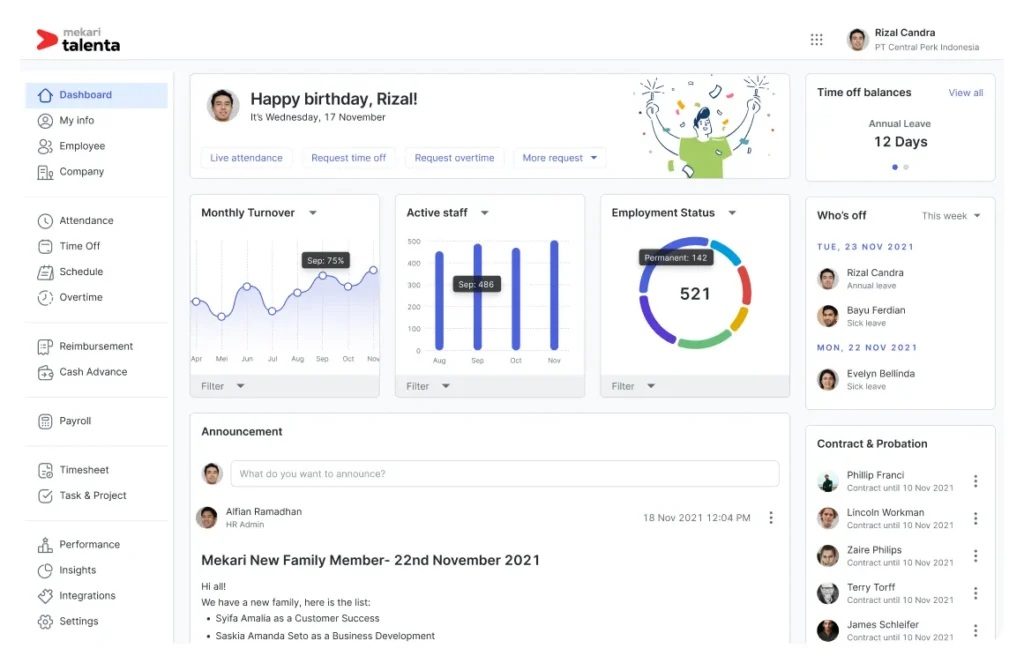
Mekari Talenta provides a comprehensive set of features that help HR teams operationalize employee engagement in a measurable and scalable way, including:
- HR Dashboard & Analytics to monitor engagement signals, workforce trends, and identify early indicators of disengagement
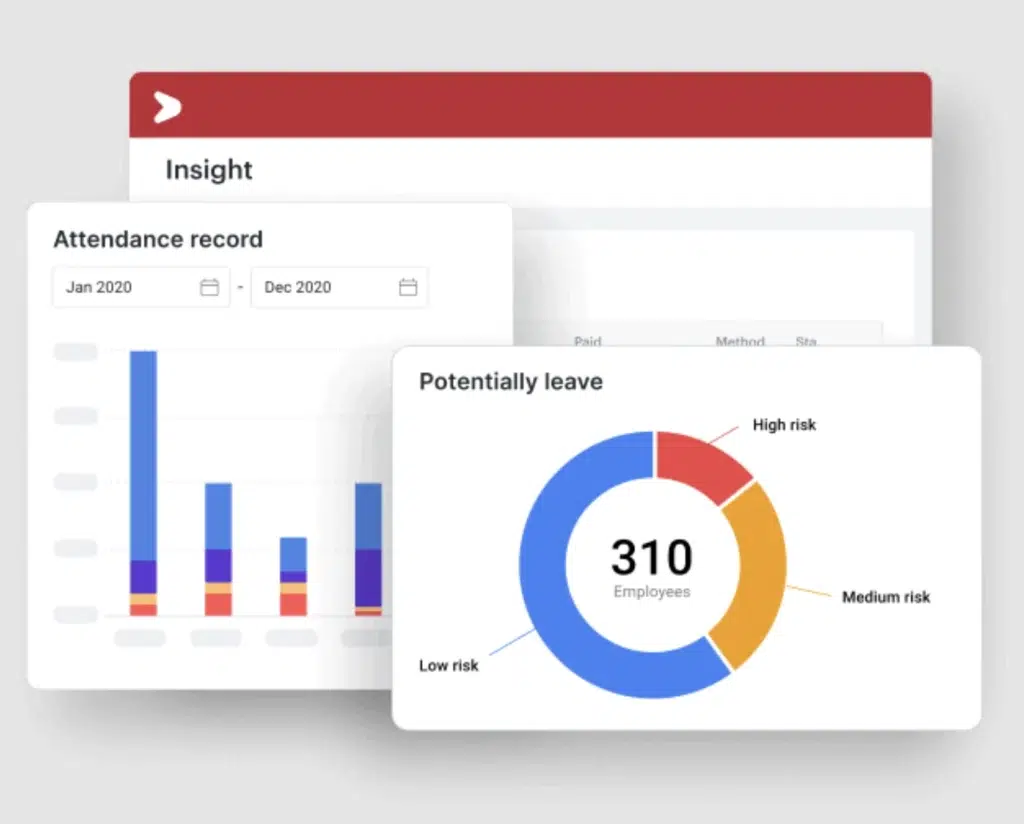
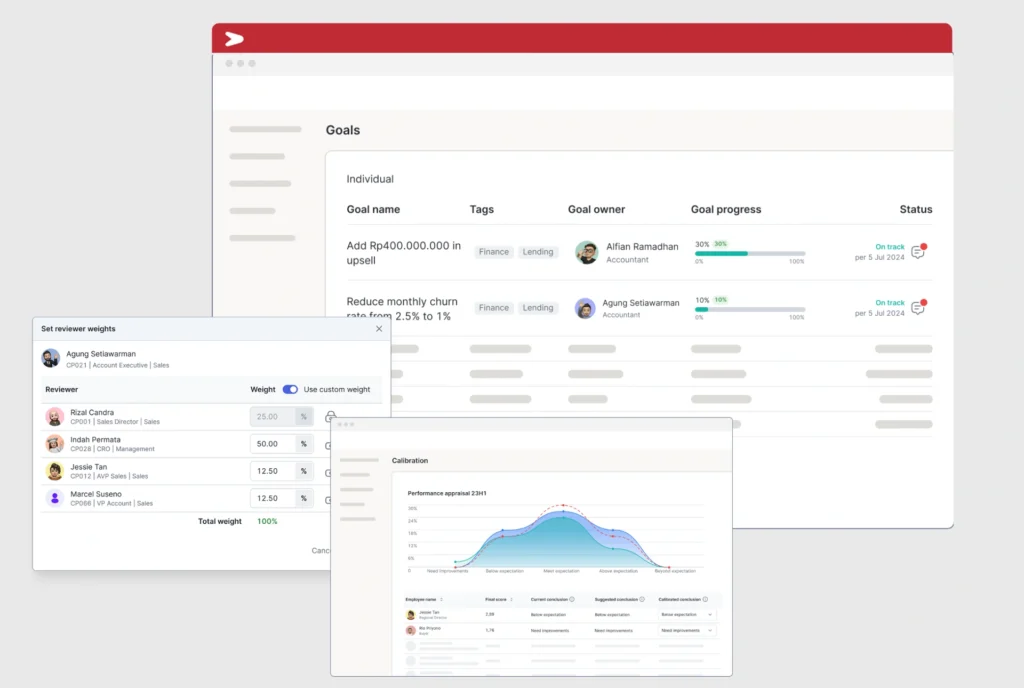
- Performance Management System to align goals, standardize feedback, and ensure clarity of expectations across teams
- Employee Self Service (ESS) to improve transparency and give employees greater control over their HR interactions
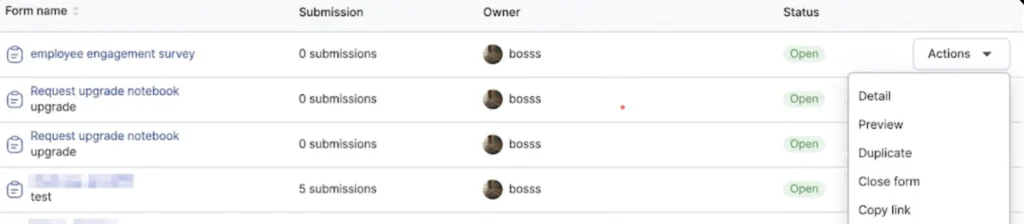
- Forms & Survey Tools to capture structured employee feedback through engagement surveys and pulse checks
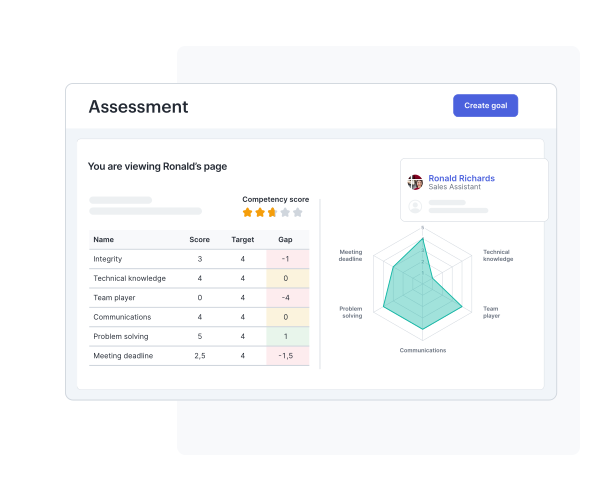
- Talent Development & Individual Development Plan (IDP) to create clear growth pathways and strengthen long-term engagement
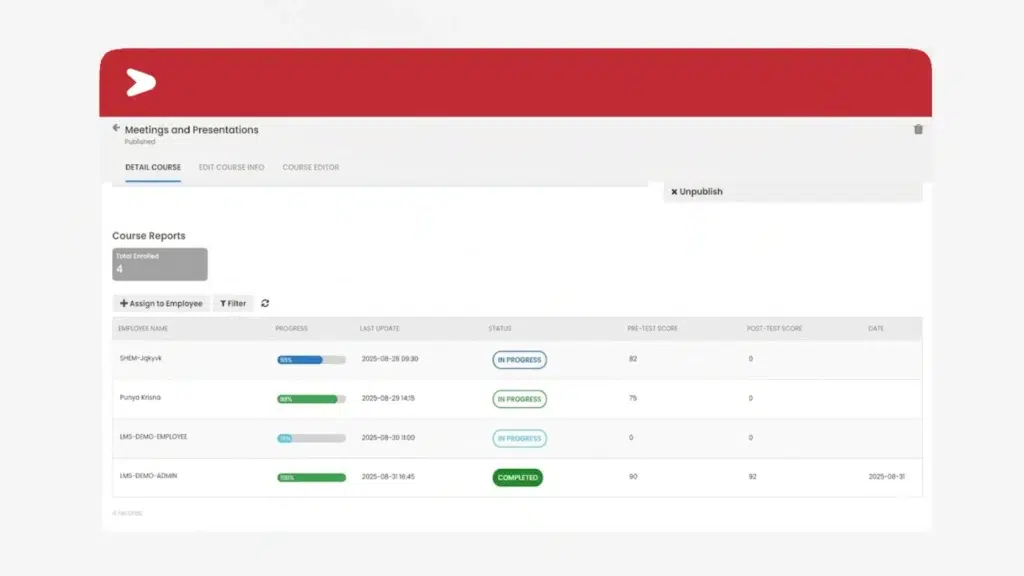
- Learning Management System (LMS) to support continuous learning and capability building aligned with business needs
- Succession Planning & Talent Management to provide visibility into career progression and reinforce internal mobility

With a centralized HCM platform, organizations can ensure that employee engagement is not treated as a separate initiative, but embedded into how employees are managed, developed, and supported in daily operations.
Interested in exploring Mekari Talenta? Schedule a demo with our team and see how it can help you build a more consistent, scalable, and outcome-driven employee engagement strategy.
Reference
Frequently Asked Questions (FAQs)
How is employee engagement different from employee satisfaction?
How is employee engagement different from employee satisfaction?
Employee satisfaction reflects how employees feel about their work environment, while engagement reflects how they act and contribute. Satisfaction can exist without strong performance, but engagement consistently translates into execution. Organizations that rely only on satisfaction metrics often overlook gaps in accountability and ownership. Engagement provides a more reliable indicator of performance outcomes.
How often should employee engagement be measured?
How often should employee engagement be measured?
Engagement should be monitored continuously through a combination of pulse surveys and operational indicators. Quarterly measurement is common, but high-performing organizations complement this with ongoing feedback loops and manager check-ins. The focus should be on identifying trends rather than relying on one-time snapshots. Consistency in measurement enables faster response to emerging issues.
What role does leadership communication play in engagement?
What role does leadership communication play in engagement?
Leadership communication sets direction, reinforces priorities, and builds trust. Engagement improves when communication is consistent, transparent, and aligned with actual decisions. Misalignment between messaging and action quickly reduces credibility. Clear communication also reduces ambiguity, enabling faster and more accurate execution across teams.
Can employee engagement improve without increasing compensation?
Can employee engagement improve without increasing compensation?
Yes, engagement is more strongly influenced by clarity, growth opportunities, and management quality than compensation alone. While compensation remains important, it does not sustain engagement without supportive work structures. Employees are more likely to stay engaged when they see progression, receive consistent feedback, and understand expectations. Organizations that focus only on compensation often see short-term improvements without long-term impact.
What are early signs of declining employee engagement?
What are early signs of declining employee engagement?
Early signs include slower decision-making, reduced initiative, and increased dependency on direction. Teams may still meet basic expectations but show less ownership and collaboration. Another signal is declining participation in feedback processes or internal initiatives. These patterns often appear before turnover increases, making them critical for early intervention.