





-
A hiring freeze is a temporary pause on new recruitment and open role fulfillment, typically implemented to control labor costs and stabilize workforce planning during periods of uncertainty.
-
Organizations usually consider a hiring freeze when economic conditions become unpredictable, workforce growth outpaces business performance, or leadership priorities shift toward profitability, operational efficiency, and long-term workforce restructuring.
Across industries, companies are becoming more selective about workforce expansion as they face profitability pressure, operational cost concerns, and rapid shifts driven by AI and automation.
As a result, hiring freezes are increasingly being considered as a strategic workforce decision rather than simply an emergency cost-cutting measure.
However, before implementing one, organizations need to understand the operational, productivity, and retention risks that can emerge if hiring restrictions are poorly managed.
This article explores when a hiring freeze may make sense, the hidden risks organizations often underestimate, and the practical strategies HR teams can use to maintain workforce stability during periods of hiring slowdown.
What Is a Hiring Freeze?
A hiring freeze is a temporary policy in which a company suspends the creation of new headcount and halts the filling of open or vacated positions.
It is distinct from a layoff: employees are not let go, but the organization stops adding new people. Roles that become vacant (through resignation, retirement, or natural attrition) may remain unfilled for the duration of the freeze.
A hiring freeze typically affects specific divisions, business units, or the entire company at once.
In some cases, it includes a ban on contractor and freelance engagements as well as restrictions on internal promotions that would trigger a new headcount requisition.
While the immediate intention is financial preservation, the downstream effects on workforce capacity, morale, and organizational capability are often more consequential than the short-term savings.
Understanding those effects and managing them proactively is what separates companies that recover quickly from those that don’t.
Read also: A Comprehensive Guide to Manpower Planning: Process and Best Practices
When Should Companies Consider a Hiring Freeze?
Hiring freezes are rarely random decisions. In large organizations, they are typically triggered by specific operational, financial, or strategic signals that indicate workforce growth needs to slow, temporarily or selectively.
Recognizing these signals early is critical. A well-timed hiring freeze can help stabilize costs, preserve flexibility, and avoid more disruptive workforce actions later.
1. When Economic Conditions Become Unpredictable
Macroeconomic uncertainty is one of the most common triggers for hiring freezes.
When organizations face slowing economic growth, persistent inflation, rising interest rates, currency instability, or geopolitical disruption, leadership priorities often shift from aggressive expansion toward financial resilience and cost control.
Because workforce expenses represent one of the largest operating cost categories in most enterprises, hiring is typically among the first areas reviewed.
Rather than immediately reducing existing headcount, many companies implement temporary hiring freezes as a lower-risk mechanism to slow spending while maintaining operational continuity.
This pattern became especially visible between 2024 and 2026, a period many labor market observers referred to as the “Great Freeze,” during which hiring activity slowed significantly across sectors including technology, financial services, and professional services despite relatively stable unemployment levels.
This usually becomes relevant when:
- business forecasting becomes less reliable,
- finance teams begin tightening discretionary spending,
- revenue visibility weakens, or
- leadership shifts focus from growth to profitability preservation.
2. When Revenue Growth Slows or Financial Targets Are Missed
Hiring freezes are often used as an early financial control measure when company performance begins falling below expectations.
If quarterly revenue misses forecast, customer acquisition slows, or margins begin deteriorating, leadership teams may pause hiring to prevent fixed labor costs from scaling faster than revenue.
This is particularly common in publicly traded or investor-backed companies, where leadership faces pressure to demonstrate cost discipline and operational efficiency.
By pausing recruitment, leadership can stabilize margins while assessing whether revenue challenges are temporary or indicative of broader structural issues.
3. When Organizational Restructuring or M&A Activity Is Underway
Mergers, acquisitions, and large-scale organizational restructuring often create a temporary period where workforce visibility becomes limited while organizational complexity increases significantly.
In these situations, continuing recruitment too aggressively can create unnecessary workforce expansion before leadership gains clear visibility into overlapping functions, reporting lines, and long-term operational requirements.
A temporary hiring freeze gives HR and finance teams the opportunity to conduct workforce mapping, evaluate potential redundancies, redefine roles, and align hiring plans with the future-state organization.
Without this pause, companies risk duplicating positions, inflating labor costs, or hiring into functions that may later be consolidated.
In large enterprise M&A environments, hiring freezes are often less about immediate cost-cutting and more about governance, workforce control, and ensuring that headcount decisions support broader integration and synergy objectives.
4. When Headcount Growth Begins Outpacing Business Performance
A hiring freeze often becomes relevant when workforce growth starts moving faster than the company’s underlying business performance.
This situation commonly emerges during periods of aggressive expansion, where organizations scale hiring in anticipation of future demand or sustained high growth.
However, if revenue growth slows while labor costs continue increasing, companies can quickly find themselves carrying workforce expenses that are no longer aligned with operational realities.
Many enterprise technology companies experienced this dynamic following the post-pandemic hiring surge, when rapid headcount expansion was later followed by hiring slowdowns, workforce restructuring initiatives, and layoffs as market conditions normalized.
In these situations, a hiring freeze can serve as an early corrective mechanism that allows leadership to reassess workforce allocation, productivity levels, and long-term hiring assumptions before more disruptive cost-cutting measures become necessary.
Industry analysts have repeatedly identified pandemic-era overhiring as one of the major contributors to the wave of workforce restructuring seen across the technology sector from 2023 onward.
5. When Leadership Prioritizes Efficiency Over Expansion
In many organizations, hiring freezes emerge not from immediate financial distress, but from a broader shift in leadership priorities.
In many large enterprises, boards, private equity firms, and executive leadership teams establish financial targets tied to EBITDA improvement, labor-cost optimization, productivity metrics, or cash-flow performance.
In these situations, slowing recruitment becomes a strategic lever for controlling costs without immediately reducing existing headcount.
Rather than viewing workforce growth as the primary driver of scale, many organizations are increasingly focused on improving output through process optimization, automation, and operational efficiency initiatives.
As a result, hiring freezes are often used to create space for leadership teams to reassess workforce productivity, evaluate operational redundancies, and determine whether business growth can be supported without continuous headcount expansion.
6. When Workforce Priorities Are Being Reallocated
HR leaders should also consider targeted hiring freezes when the organization is undergoing a major shift in strategic priorities.
Not all hiring freezes are driven by financial distress. In many cases, companies intentionally pause recruitment in selected functions while redirecting investment toward higher-priority initiatives such as AI adoption, automation, digital transformation, cybersecurity, or expansion into new business areas.
In this context, the hiring freeze acts less as a cost-cutting measure and more as a workforce rebalancing strategy.
It allows leadership teams to reassess future skill requirements, evaluate which roles may become automated or deprioritized, and ensure that hiring plans remain aligned with the company’s long-term direction.
This creates an important strategic consideration: whether current hiring demand still reflects future business priorities, or whether workforce investment needs to be redistributed toward capabilities that will become more critical over the next phase of growth.
The Hidden Risks You Must Evaluate Before Implementing a Hiring Freeze
A hiring freeze should never be viewed as a purely financial decision. While pausing recruitment may reduce short-term labor costs, it can also create operational and workforce risks that become significantly more expensive over time if left unmanaged.
The challenge is that most of these risks do not appear immediately. They emerge gradually through declining productivity, rising burnout, increasing attrition, and weakened workforce stability.
1. Workload Redistribution Can Quietly Reduce Team Performance
One of the first hidden effects of a hiring freeze is workload redistribution.
When positions remain unfilled, the work itself rarely disappears. Instead, responsibilities are absorbed by existing employees and managers, often without corresponding adjustments to timelines, staffing models, or performance expectations.
The risk is not simply heavier workloads. It is the cumulative operational strain that develops when multiple teams operate understaffed for extended periods.
Over time, organizations may begin to see:
- slower execution,
- declining service quality,
- increased error rates,
- project delays, and
- rising employee dissatisfaction.
In large organizations environments where hiring freezes may affect hundreds of open requisitions simultaneously, even small productivity declines across teams can compound into significant operational disruption.
2. Hiring Freezes Can Accelerate the Loss of High Performers
Here is the counterintuitive risk that catches most enterprises off guard: a hiring freeze, over time, drives out the very people you most need to retain.
High performers are the most mobile segment of any workforce. They have options. When they see a stagnant organizational chart, no new roles to move into, and increasing pressure from understaffed teams, they quietly begin their job search.
For mid-level and senior roles, the positions most likely to turn over during a freeze, the cost frequently exceeds 125% of annual salary.
For a 5,000-person enterprise losing even a modest 8% of its top performers during a freeze period, the math becomes alarming fast.
3. The Burnout Crisis Hidden in HR Overtime Data
When teams run lean for months, the first visible sign in HR data is not resignation, it’s overtime.
Shifts get extended, eeekend approvals spike, people bank hours they’ll never take back, burnout follows, and then voluntary turnover accelerates.
The enterprise has essentially traded a short-term freeze on new headcount costs for a longer-term liability of burned-out and departing employees.
4. Institutional Knowledge Loss Becomes More Difficult to Recover
Hiring freezes can also increase the risk of organizational knowledge erosion.
In large enterprises, experienced employees often carry years of undocumented operational context, customer history, system knowledge, and cross-functional expertise.
If these employees leave during a hiring freeze, whether due to burnout, limited growth opportunities, or workload fatigue, the organization may lose capabilities that are difficult and expensive to rebuild.
The impact is especially significant in specialized, managerial, or highly collaborative roles where institutional knowledge cannot be easily replaced through external hiring alone.
This means succession planning and knowledge transfer become even more important during periods of hiring restraint.
5. Recruitment Pipelines Can Deteriorate Faster Than Expected
A hiring freeze can also weaken long-term talent acquisition capabilities if external engagement stops entirely.
While internal hiring activity may pause, the external talent market continues moving. Candidates accept competing offers, recruiter relationships weaken, and employer visibility gradually declines.
When hiring eventually resumes, organizations often discover that restarting recruitment is slower and more difficult than expected because talent pipelines, sourcing momentum, and employer brand familiarity have already cooled.
This creates an important strategic consideration: a hiring freeze does not necessarily mean all recruitment activity should disappear.
In many cases, maintaining selective employee engagement, workforce planning, and pipeline nurturing can significantly reduce recovery time once hiring resumes.
Read also: Strategic Workforce Planning: How HR Teams Prepare for Business Change
What HR Should Do During A Hiring Freeze
A hiring freeze is not a time to go quiet. It is, counterintuitively, one of the highest-leverage periods in the entire HR calendar, if HR teams treat it strategically.
1. Activate Internal Mobility as the Primary Talent Strategy
When external hiring slows or becomes restricted, workforce flexibility increasingly depends on how effectively organizations can mobilize existing talent internally.
Rather than relying solely on new headcount requests, companies often need to identify which employees can step into business-critical roles through lateral movement, expanded responsibilities, accelerated development, or cross-functional redeployment.
In many cases, this also requires a stronger focus on upskilling and reskilling initiatives.
Employees may not immediately meet every requirement for high-priority roles, but targeted development programs can help close capability gaps faster and more cost-effectively than external hiring during a freeze period.
This is especially relevant when organizations are simultaneously shifting workforce priorities toward areas such as AI adoption, digital operations, automation, cybersecurity, or data-driven functions.
To support this effectively, organizations need more than manager recommendations or informal visibility into talent.
A structured talent inventory becomes critical: a centralized view of employee skills, performance history, growth potential, role readiness, and development pathways across business units.
Without reliable workforce data, internal mobility and reskilling efforts become reactive and inconsistent. With stronger visibility, HR teams can present leadership with practical internal talent solutions that reduce dependency on external hiring while preserving workforce continuity during periods of hiring constraint.
Read also: Organizations Are Investing More in Internal Talent Mobility Frameworks — Here's Why and How
2. Conduct a Deep Workforce and Operations Audit
A freeze creates the conditions —and the organizational mandate— for a serious audit of how work is actually distributed across the organizations.
Which teams are structurally understaffed? Which roles are performing work that could be automated, consolidated, or eliminated? Which processes are creating unnecessary headcount demand?
This audit is both a risk management exercise and a strategic investment. The organizations that use a freeze to genuinely redesign their workforce architecture emerge leaner, more efficient, and better prepared for the post-freeze growth phase.
3. Invest in Retention of High-Potential and Business-Critical Employees
Not all employees are equally at risk of leaving during a freeze.
The ones most likely to go are precisely the ones the organizations most needs to keep: high performers, people in critical technical roles, and senior managers with deep organizational context.
You should identify this cohort explicitly and create differentiated retention plans, whether through accelerated development programs, stretch assignments, recognition, or targeted compensation adjustments. The cost of a focused retention investment is a fraction of the cost of replacing these individuals.
4. Build and Maintain a Passive Talent Pipeline
Even during a freeze, the recruiting function should not disappear. Its mandate simply shifts: from active sourcing and closing to passive pipeline cultivation.
This means staying in contact with candidates who were in process when the freeze was declared, nurturing relationships with future talent, and maintaining employer brand presence.
When the freeze lifts, the organizations with warm pipelines will restart hiring in weeks. Those that went completely dark will take months to rebuild momentum, during which competitors will have already captured the talent.
5. Prepare Workforce Plans Before Hiring Resumes
A hiring freeze eventually ends, but many organizations wait too long to prepare for that transition.
Instead of restarting hiring reactively, you should use the freeze period to clarify future workforce priorities, identify critical capability gaps, and determine which roles will become most urgent once growth resumes.
This means competition for skilled talent can return very quickly once market confidence improves.
Organizations that prepare workforce plans early—rather than after the freeze lifts—are usually in a stronger position to scale hiring efficiently, retain key employees, and compete for talent when the market becomes active again
How to Optimize a Hiring Freeze with Mekari Talenta
Most HR teams manage a hiring freeze reactively, such as approving or rejecting individual requests, monitoring overtime anecdotally, and hoping the talent pipeline doesn’t erode too badly.
We can give you a more structured and data-driven path.
Here’s how leading organizations use Mekari Talenta to turn a hiring freeze into a strategic advantage:
Step 1: Map Your Internal Talent Landscape with Performance Management (KPI & OKR)
Before you can execute internal mobility, you need to know who your best people are, and where they are.
Mekari Talenta’s Performance Management feature provides a centralized, real-time view of employee performance across the enterprise, tracking KPIs and OKRs from the company level down to individual contributors.
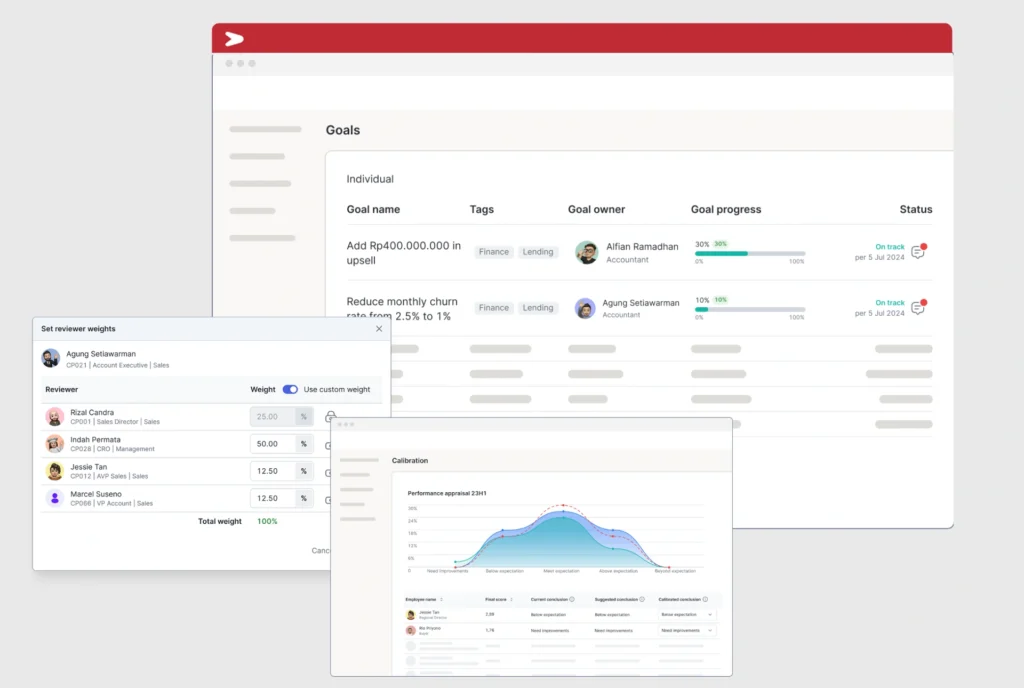
During a hiring freeze, this means HR and business unit heads can quickly identify which employees are performing above expectations, who has the skills and trajectory to step into a more senior or cross-functional role, and where the genuine talent concentrations sit in the organization.
Instead of defaulting to seniority or visibility when making internal mobility decisions, leaders have objective performance data to inform them.
This reduces the risk of promoting the wrong people into critical roles — a mistake that is both costly and difficult to reverse.
For organizations with hundreds or thousands of employees across multiple entities, having this data in one system (rather than scattered across spreadsheets and manager memory) is not a convenience. It is the difference between an internal mobility strategy that works and one that exists only on paper.
Step 2: Achieve Full Labor Cost Visibility with HR Analytics & Dashboard
The single most important conversation you must have during a hiring freeze is with the CFO. To have it credibly, HR needs a real-time, accurate picture of total labor cost, not just base salary, but overtime, allowances, benefits, and the true cost-per-headcount across business units.
Mekari Talenta’s HR Analytics & Dashboard gives you exactly that: a consolidated view of headcount, labor cost, and workforce cost trends, updated in real time, and filterable by department, entity, role, or cost center.
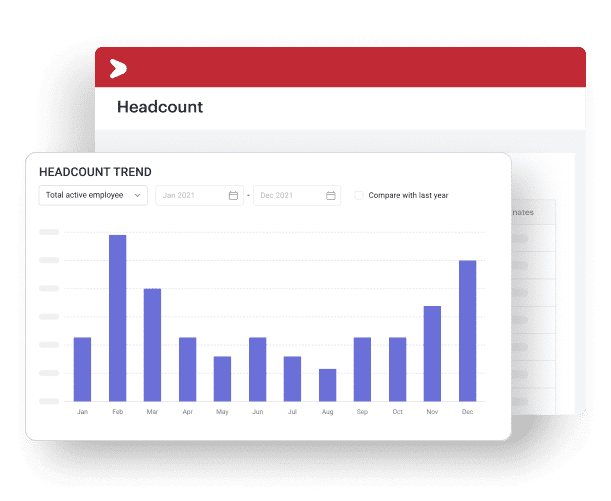
This enables HR to present the CFO with precise data on the financial impact of the freeze: how much has been saved in avoided headcount costs, where labor costs are rising due to overtime, and where there is capacity versus constraint.
This kind of financial-grade workforce visibility also enables more intelligent decision-making about which freeze exceptions are justified.
Instead of negotiating headcount requests on the basis of urgency alone, business leaders can quantify the cost of keeping a role vacant against the cost of filling it, and make the business case in numbers the finance team can act on.
Step 3: Monitor Burnout Risk with Attendance, Shift & Overtime Management
The most dangerous outcome of a hiring freeze is not the talent pipeline erosion. It’s the burnout of your existing workforce.
And burnout doesn’t announce itself. It shows up first in data: rising overtime approvals, shrinking leave utilization, shifts that consistently run long, and recurring absences from specific individuals.
Mekari Talenta’s Attendance Management features give enterprise HR the granular visibility to catch these signals early.
Managers can see in real time which employees are consistently working beyond scheduled hours, which teams have the highest overtime concentration, and where workload distribution is becoming structurally unsustainable.
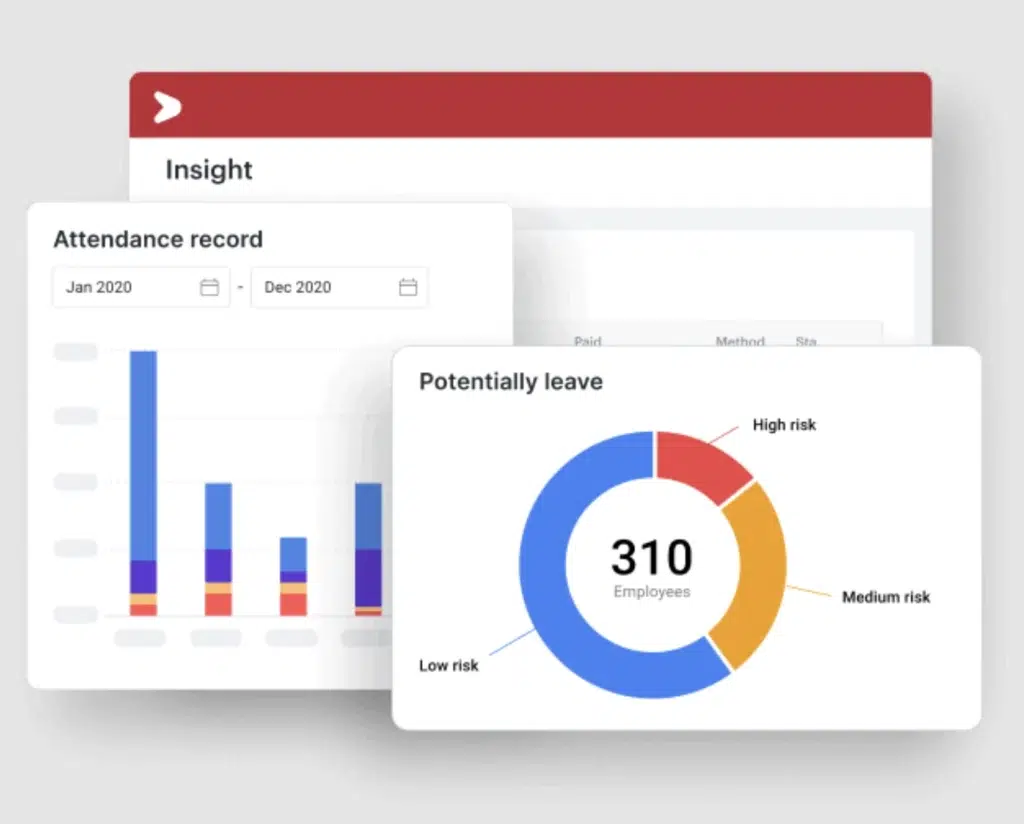
This is not just a wellbeing issue. It’s a retention and financial risk issue.
With overtime data centralized and trackable, HR can also make a data-backed case for targeted headcount exceptions: showing leadership not just that a team is understaffed, but precisely what it is costing the business in premium labor to keep that position vacant.
Step 4: Keep Your Talent Pipeline Warm with Mekari Recruitment (ATS & Talent Pool)
The worst thing a recruiting function can do during a hiring freeze is go completely dark. The second-worst is losing track of the candidates who were already engaged when the freeze was declared.
Mekari Recruitment’s ATS and Talent Pool capabilities allow HR teams to continue building and managing a structured pipeline of pre-qualified candidates, even when no active requisitions are open.
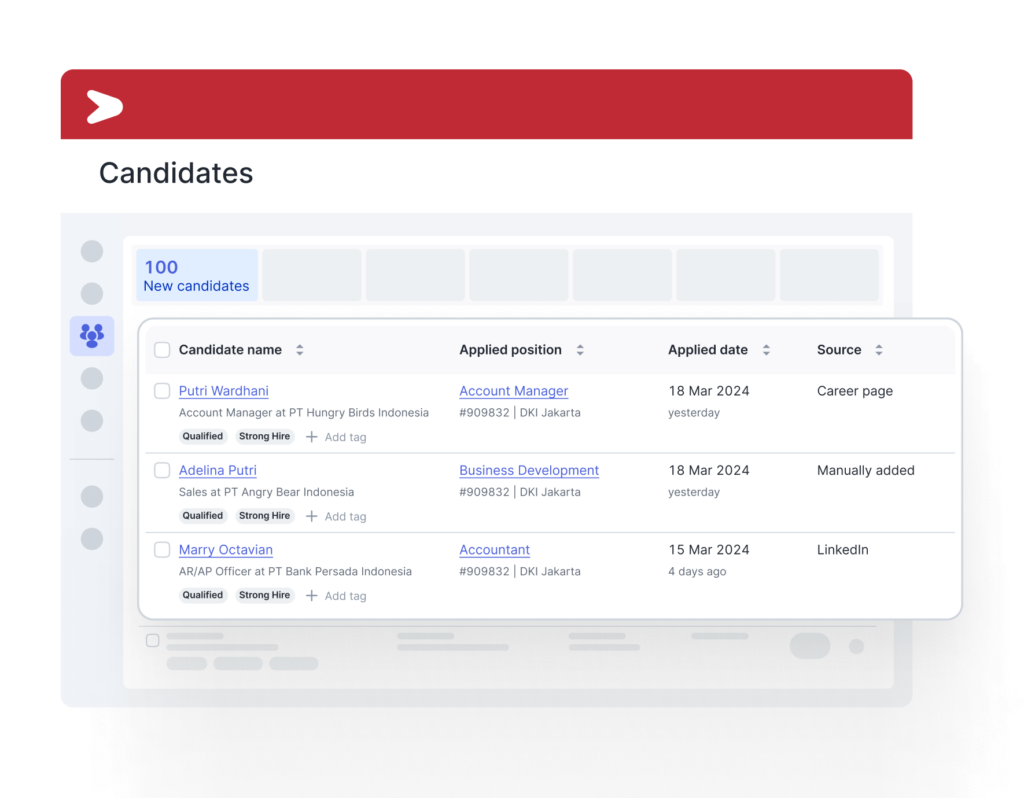
Candidates can be tagged, categorized by role type and skill profile, and re-engaged systematically when the freeze lifts.
This is the operational foundation of a “prepare for the thaw” strategy. When hiring restrictions ease, organizations with a structured talent pool can accelerate from zero to closing offers in a fraction of the time it takes a company that let its pipeline go cold.
In a competitive talent market, which is precisely what follows an industry-wide freeze, weeks of time-to-hire advantage can translate directly into competitive talent acquisition outcomes.
The ATS also maintains the integrity of the employer-candidate relationship during the freeze. Rather than candidates feeling ghosted or forgotten, HR can keep them warm with targeted communications, employer brand content, and structured check-ins, all managed through a single platform without requiring full recruiter bandwidth.
How to Measure the Financial and Efficiency Impact of a Hiring Freeze
One of the most persistent challenges for HR during a hiring freeze is demonstrating value to the C-suite. Not just in terms of cost avoided, but in terms of risks managed and opportunities captured.
Here is a practical framework for measuring what actually matters.
1. Vacancy Cost per Role per Month
Calculate the loaded cost of each frozen role remaining vacant: include the overtime premium being paid to cover the work, the productivity gap relative to full capacity, and any project delays that can be attributed to the understaffing.
For critical roles, this figure often exceeds the cost of filling the position, which is precisely the argument HR needs to make when requesting freeze exceptions.
Formula (USD): (Monthly overtime cost for team) + (Estimated productivity gap as % of full output × average output value) + (Project delay cost, if quantifiable)
For example:
A company freezes hiring for a senior backend engineer role with an annual salary of USD 72,000 (USD 6,000/month).
To maintain delivery timelines, the existing engineering team absorbs the workload through overtime and task redistribution:
- Monthly overtime compensation increases by USD 2,200
- Product release delays are estimated to create approximately USD 3,500 in operational impact and missed revenue opportunity per month
- Team productivity is estimated to decline by 10%, equivalent to roughly USD 1,500 in lost output value monthly
The estimated monthly vacancy cost becomes:
USD 2,200
- USD 3,500
- USD 1,500
= USD 7,200 per month
In this scenario, the operational cost of leaving the role vacant exceeds the monthly cost of hiring the employee.
Calculations like this help shift hiring freeze discussions away from “headcount reduction” alone and toward broader operational efficiency and business continuity considerations.
2. Annualized Turnover Cost During Freeze Period
Track voluntary attrition rates during the freeze and calculate the replacement cost for each departure.
Using SHRM’s benchmark of $4,700 in direct hiring costs per new hire (plus the 50–200% of salary in total replacement costs for mid-to-senior roles) you can quantify exactly how much the freeze is costing in talent loss relative to what it’s saving in new headcount spend.
If the attrition cost during the freeze period approaches or exceeds the avoided headcount cost, leadership has a compelling, financially grounded argument for targeted hiring exceptions or a faster freeze exit.
3. Internal Mobility Fill Rate
During a hiring freeze, one of the clearest indicators of workforce resilience is how effectively the organization can fill critical gaps using existing talent.
Internal Mobility Fill Rate measures the percentage of frozen or restricted vacancies that are successfully filled through internal transfers, promotions, role expansions, or cross-functional movement instead of remaining vacant or waiting for external hiring to resume.
This metric helps you evaluate whether the organization has a sustainable internal talent pipeline or whether operational continuity still depends heavily on external recruitment.
A strong internal mobility fill rate typically indicates:
- good visibility into employee skills and performance,
- effective succession planning,
- stronger manager collaboration across departments,
- and successful investment in employee development programs.
For example, if 100 roles are frozen during a hiring slowdown and 35 of them are ultimately filled through internal movement, the organization’s internal mobility fill rate would be 35%.
In many organizations, this metric also becomes a proxy for workforce agility. Teams that can redeploy talent quickly during hiring constraints are generally able to maintain productivity more effectively while reducing dependency on urgent external hiring once the freeze ends.
Benchmark data from workforce studies suggests that internal hires typically account for roughly 24–32% of all hires, while organizations with mature internal mobility programs often exceed 30% and may reach 40% or higher in selected job families.
Companies using structured systems for performance tracking, skills mapping, and succession planning also tend to outperform organizations that still rely heavily on manual workforce visibility and manager-driven talent identification.
4. Overtime Cost as a Percentage of Total Labor Cost
One of the clearest ways to identify whether a hiring freeze is creating hidden operational strain is by tracking overtime cost as a percentage of total labor cost over time.
During a freeze, organizations often continue operating at similar output expectations despite having fewer active employees or unfilled positions.
The result is that existing teams absorb additional responsibilities, extend working hours, or rely more heavily on temporary workload redistribution.
You should monitor whether overtime spending begins rising consistently across departments during the freeze period.
A gradual increase may indicate manageable short-term pressure, but sustained increases over multiple months often signal that teams are compensating for structural understaffing rather than temporary gaps.
For example, if monthly overtime costs increase from 4% to 9% of total labor cost over a six-month freeze period, this may indicate that the organization is indirectly paying for labor capacity through overtime rather than through planned hiring.
This metric becomes especially valuable in conversations with finance and executive leadership because it helps quantify the hidden operational cost of prolonged hiring restrictions.
Instead of framing the discussion solely around reduced headcount spending, you can use this trend to demonstrate whether the freeze is creating rising labor inefficiencies, burnout risk, or long-term workforce sustainability concerns that may eventually offset the intended cost savings.
5. Pipeline Health Index at Freeze Exit
Many organizations focus heavily on controlling active recruitment costs during the freeze period, but fail to measure whether their talent pipeline remains recoverable once hiring resumes.
As a result, recruitment teams often discover too late that candidate engagement has weakened, sourcing momentum has disappeared, and time-to-hire has increased significantly after the freeze ends.
A Pipeline Health Index helps HR leaders evaluate how prepared the organization is to restart hiring effectively once recruitment restrictions are lifted.
Rather than relying on a single metric, this index should combine several indicators, including:
- the number of qualified “warm” candidates still active in the ATS,
- recruiter response and candidate re-engagement rates,
- time-to-first-interview after requisitions reopen,
- offer acceptance rates during the first post-freeze hiring cycle,
- and the speed at which critical roles return to pipeline-ready status.
For example, two organizations may end a six-month hiring freeze at the same time, but experience very different recovery outcomes.
A company that maintained candidate engagement, employer branding activity, and passive sourcing throughout the freeze may restart hiring within weeks.
Meanwhile, an organization that paused all recruitment activity entirely may need several additional months to rebuild sourcing momentum and candidate trust.
This metric becomes especially important in competitive talent markets where hiring recovery periods are often compressed and high-quality candidates move quickly once market confidence returns.
Turn Your Hiring Freeze Into a Workforce Advantage with Mekari Talenta
A hiring freeze is rarely a moment of organizational strengt, but it doesn’t have to be a moment of organizational drift, either.
The organizations that use this window to deepen their understanding of their workforce, protect their best people, and build the infrastructure for a fast recovery are the ones that emerge with a structural talent advantage.
What most companies lack is not intent. It is visibility. Without real-time data on performance, labor cost, burnout risk, and pipeline health, HR is navigating the freeze with instruments that are months out of date.
Decisions get made on intuition rather than evidence. Risks compound invisibly. And when the thaw finally comes, HR is behind.
Mekari Talenta gives you the visibility to manage a hiring freeze with the same rigor that finance brings to a cost restructuring.
From performance data that powers internal mobility, to overtime analytics that surface burnout risk before it becomes attrition, to a talent pool that stays warm even when hiring is paused, Mekari Talenta connects the data points that you needs to make decisions that hold up under CFO scrutiny.
If your organization is navigating a hiring freeze right now or preparing for one, the right time to build this infrastructure is before the pressure peaks, not after.
You can explore Mekari Talenta’s full feature suite or speak with our team to discuss your workforce strategy and hiring management needs.