
How Workforce Visibility Helps HR Teams Make Faster Operational Decisions

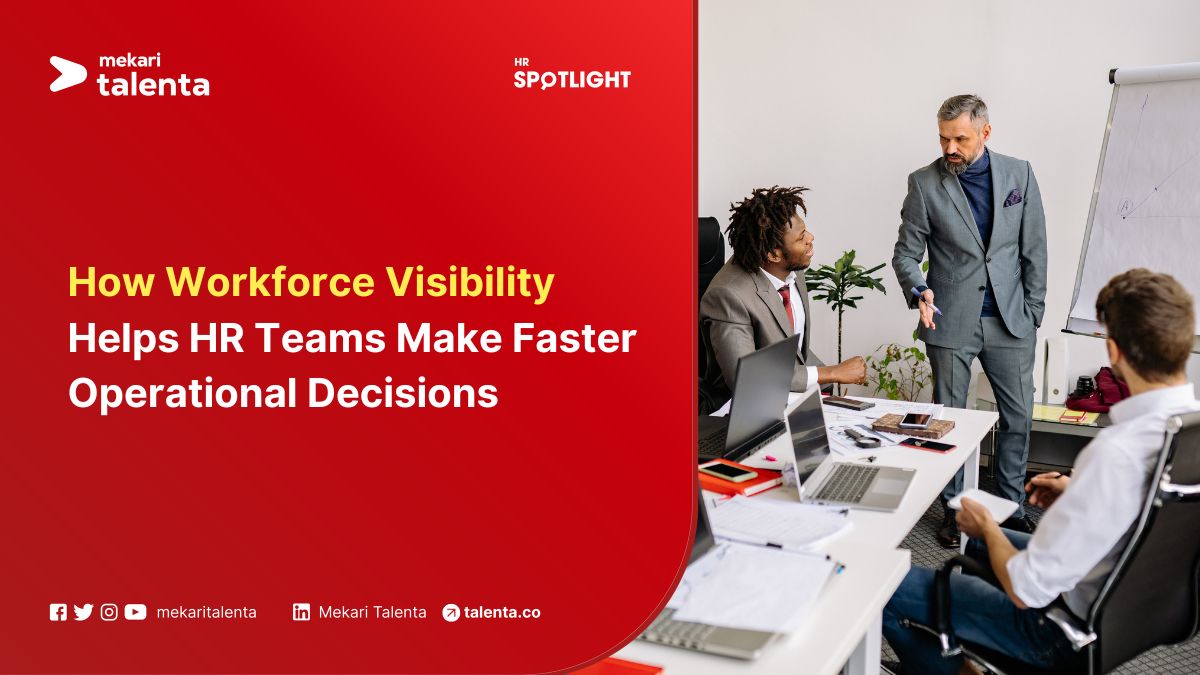
HR teams are expected to make fast, well-informed decisions about their workforce—but the data they need is often scattered, delayed, or buried in manual processes. When a department head asks “how many of my team members are on approved leave next week?” or “has attendance improved since last month?”, the answer should be immediate. In many organizations, it is not.
According to data compiled in the Gartner HR Technology Priorities Survey, 77% of organizations still manage employee data across multiple disconnected HR systems, while 71% actively struggle to share critical workforce information between those individual platforms.
As organizations grow—adding more branches, managing hybrid workforces, and involving more managers in daily operations—the cost of poor workforce visibility compounds significantly. Delayed operational responses, inconsistent administrative follow-ups, and uncoordinated workforce management quickly transform from occasional inconveniences into deeply rooted, systemic problems.
This guide serves as a practical manual to understanding what true workforce visibility means, why it breaks down as an organization scales, and how connected HR operations can restore the real-time operational awareness required to make faster, evidence-based business decisions.
What Is Workforce Visibility?
Workforce visibility is the ability of HR teams and managers to access accurate, up-to-date information about their workforce — including attendance, performance, leave, and task status — without relying on manual data collection.
It represents a major operational shift away from simply looking at a passive headcount index. True visibility encompasses a comprehensive view of ongoing activities across all functional teams: identifying who is physically present, tracking who is assigned to specific deliverables, and uncovering where operational capacity gaps or compliance risks are beginning to emerge.
In an enterprise environment, workforce visibility should never be categorized as a reporting luxury or a premium corporate dashboard addon. It is the core information infrastructure that makes agile, well-coordinated HR decisions possible. Without this foundation, an organization remains structurally blind, forcing its leadership to guess resource allocations rather than projecting them using a stable, unified dataset.
Workforce Visibility vs. Spreadsheets and Manual Tracking
To implement this infrastructure successfully, your technology team must clearly separate modern visibility architectures from legacy manual tracking methods:
| Operational Dimension | Legacy Manual Tracking | True Connected Workforce Visibility |
| Data Extraction Speed | Requires days of manual compilation, spreadsheet consolidation, and email follow-ups. | Instantly accessible on-demand through an automated corporate dashboard interface. |
| Information Integrity | High risk of human entry error; data is often fragmented across separate department files. | Single source of truth; data is synchronized across attendance, payroll, and core profiles. |
| Operational Relevancy | Retrospective data tracking; reports show what occurred weeks or months in the past. | Near-real-time updates; reveals current attendance shifts and ongoing resource constraints. |
| Systemic Integration | Siloed information; payroll data cannot interface with attendance or leave logs. | Connected streams where scheduling changes automatically update payroll components. |
Most organizations possess data, but that information is trapped in disconnected silos—payroll calculations live in one offline engine, daily clock-in records sit on a branch biometric device, and performance notes are scattered inside a manager’s email inbox. This fragmentation makes critical data effectively invisible when a department head needs to make an immediate operational decision.
Why Manual HR Reporting Is No Longer Enough
Relying on traditional manual consolidation cycles introduces hidden operational drag that slows down corporate execution speeds and weakens overall software protections.
1. Delayed Visibility Creates Delayed Action
When attendance data is trapped in manual recapitulation loops, HR leaders only see absenteeism trends weeks after they have occurred. By the time a retrospective report is compiled and delivered to management, the optimal window for early intervention has already closed. An under-resourced field team could suffer from low capacity for a full fortnight before anyone at headquarters flags the operational gap.
Furthermore, when leave requests, overtime approvals, and roster changes are stuck in manual email chains, they create massive planning blind spots. Administrative follow-up becomes entirely dependent on an individual remembering to send a reminder rather than system-driven triggers. To protect these backend processes from administrative security oversights during fast-paced changes, establishing clear protocols via robust HRIS security management is a non-negotiable operational shield.
2. Inconsistent Data Leads to Inconsistent Decisions
When individual department heads track team output in different ways—or fail to maintain records altogether—the company loses the ability to recognize top performers or manage underperformance consistently. Decisions based on partial, unverified data create severe operational friction. One branch may expand its headcount based on localized assumptions, while another unit is already facing severe capacity surpluses that HR remains unaware of.
Teams spend valuable hours reconciling conflicting records instead of acting on them. According to a workforce optimization study from McKinsey & Company, data inconsistencies across business units represent a primary source of wasted administrative hours in enterprise organizations. The data exists, but it is locked in formats that cannot be compared or acted on quickly.
Growing Organizations Often Lose Workforce Visibility
As an enterprise expands its operational footprint, the informal communication channels that previously sustained the business naturally break down, demanding a more resilient system architecture.
When Teams and Locations Multiply, So Does Complexity
In a multi-branch corporate model, each geographic office frequently develops its own informal reporting rhythms and localized database formats. Consolidating this fragmented data requires significant, repetitive manual effort from the central HR team.
The rise of hybrid work adds another layer of coordination complexity. Tracking who is working remotely versus who is present in the office, and verifying whether operational milestones are being met, requires either constant manual check-ins or a highly connected system. For companies managing distributed workforces, project-based field teams, or operations across multiple legal entities, maintaining a unified view of workforce activity becomes structurally impossible using manual tools.
Manager Overload and Coordination Gaps at Scale
As the number of departments and approval layers grows, critical information flows slowly and easily gets lost across corporate silos. Frontline and middle managers face immense cognitive overload; they are expected to simultaneously track team attendance, approve complex leave configurations, evaluate individual performance, and escalate operational issues.
Without an integrated platform, these managers resort to personal spreadsheets and memory, creating massive data gaps. HR cannot rely on personal relationships to stay informed as the business expands; they require automated systems that surface workforce information automatically without waiting for someone to manually compile it.
How Connected HR Operations Improve Workforce Visibility
Transitioning toward connected HR operations restores complete operational awareness by anchoring your company’s processes inside an integrated, digital-first infrastructure.
1. Centralized Employee Data as the Foundation
When all workforce information—including baseline employment records, active contracts, structural role histories, and core profiles—resides within a single pangkalan data, the HR team can answer complex organizational questions instantly. Centralization ensures that every line manager, compliance officer, and HR admin evaluates the exact same live record, eliminating the discrepancies that develop when data is maintained locally.
This unified environment allows companies to display a real-time structural org chart map, allowing management to analyze headcount distribution, evaluate reporting boundaries, and execute accurate gap analysis. To structure this master data layer cleanly while meeting regulatory standards, organizations should implement a comprehensive HR data governance framework across all corporate divisions.
2. Attendance Tracking and Performance Monitoring as Visibility Layers
Connected systems transform attendance logs and appraisal records from separate, end-of-month historical archives into active layers of operational insight:
- Real-Time Attendance Monitoring: Daily clock-in workflows provide immediate visibility into actual field presence, letting managers adjust shifts and address unexpected absences before they disrupt customer service.
- Standardized Performance Review Cycles: Consolidating evaluation scores consistently across multiple periods allows HR to discover talent patterns, manage retention risks, and maintain standard evaluation criteria. Merging these workflows helps organizations maximize the alignment between talent management and performance tracking systems.
- Automated Approval Workflows: Routing leave metrics, overtime requests, and roster shifts through automated tracks grants HR full visibility into the status of every request, eliminating data leaks and ensuring nothing falls through the cracks.
- On-Demand HR Reporting: When all transactional workforce data is connected natively, generating compliance summaries or operational metrics transitions from a multi-day data entry project into a simple data retrieval task.
Workforce Visibility Helps Organizations Respond More Proactively
By establishing complete operational visibility, an enterprise can move away from a model of delayed reaction and adopt a highly proactive operational stance.
1. From Delayed Reaction to Earlier Follow-Up
When workforce metrics are visible in real time, management can identify operational anomalies early—such as flagging a localized team’s recurring absence patterns in week two of a quarter rather than discovering the cost leak at the end of the year.
An integrated platform automatically flags operational exceptions, such as missed check-ins or overdue performance inputs, allowing HR to intervene before minor operational errors grow into major coordination problems. This systemic visibility reduces dependency on individual initiative, ensuring that tracking and follow-up remain consistent across all departments while enabling teams to quickly diagnose and mitigate underlying employee attrition patterns.
2. Consistent Visibility Supports Cross-Team Coordination
A shared database allows HR to coordinate resource allocations across multiple business units efficiently, removing the need to schedule long sync meetings to gather updates from individual team lines. Standardized processes for time tracking, leave management, and appraisals reduce the operational variation in how different managers handle identical workforce scenarios.
This consistent data environment enables the core people team to spot cross-departmental trends—such as detecting a shared spike in turnover across specific job families—that would remain hidden if each unit tracked its data in isolated spreadsheets. Leveraging advanced HR analytics across these combined streams turns fragmented records into predictive operational assets.
Why Workforce Visibility Matters Beyond HR Reporting
The business value of maintaining high workforce visibility extends far beyond the human resource department, impacting the execution speed of your entire corporate engine.
1. Fragmented Workforce Data Slows the Whole Organization
When the HR division cannot supply immediate, accurate answers regarding overall headcount capacity, real-time availability, or team skill density, it creates operational bottlenecks for other departments. Essential business activities—such as project resource planning, client delivery schedules, and corporate budget forecasting—are stalled while waiting for human capital data.
Decisions made using stale or incomplete information carry significant corporate risk; managers are forced to plan using assumptions instead of verified facts, and correcting those operational misalignments requires significant time and cost. Incorporating real-time capacity logs directly into your strategic headcount planning models ensures that future resource investments remain securely matched to actual business outputs.
2. Operational Awareness as an Organizational Capability
Organizations that can quickly extract and analyze their workforce data are better positioned to respond to sudden market shifts, adjust resource allocations, and handle unexpected disruptions without operational downtime. According to research from the Brandon Hall Group, companies that treat talent metrics as a core corporate asset log significantly higher agility scores during economic transitions.
Investing in a connected HR system gives your people team the exact same level of operational awareness over your workforce that modern financial ERP systems supply to accounting teams regarding corporate cash flow. To ensure your systems can consistently deliver this data during regulatory reviews, running your parameters against a formalized HRIS audit checklist is a vital best practice.
Improve Workforce Visibility With Connected HR Operations
To achieve high workforce visibility, an organization requires an enterprise-grade platform capable of connecting all its operational human capital data into a single source of truth.
Mekari Talenta provides a unified, cloud-based infrastructure engineered to eliminate fragmented workflows, secure data integrity, and streamline administrative reporting across growing, multi-entity corporate structures.
Through the capabilities of Mekari Talenta Attendance Management, your enterprise gains real-time visibility into daily attendance, automated shift patterns, and geofenced field operations. This eliminates manual data compilation and cuts down tracking errors.
Furthermore, this operational layer integrates with Mekari Talenta Performance Management, allowing your HR leaders to track core appraisal metrics, align individual KPIs with corporate goals, and monitor talent development pathways within a single ecosystem.
By choosing Mekari Talenta as your primary cloud software solution, your organization establishes a resilient foundation for long-term growth. To ensure your platform data meets the highest enterprise security standards during expansion, your IT leads can validate the architecture using an independent vendor evaluation security framework built to satisfy strict information protection requirements.
Discover how to streamline your operations and optimize your workforce visibility. Learn more about our technical features by visiting the Mekari Talenta Hub, or connect directly with our enterprise software consultants to schedule a tailored system demonstration through the Mekari Talenta Contact Portal.