




-
People analytics is the process of analyzing workforce data to support better, data-driven decisions across the organization.
-
Solutions like Mekari Talenta, Workday, and Visier help organizations centralize HR data and generate actionable workforce insights at scale.
In complex organizations, workforce decisions don’t happen in isolation, because they affect multiple teams, entities, and even countries at once.
As the organization grows, managing people becomes more challenging due to scattered data, different systems, and varying policies across units. Without clear visibility, it’s easy for leaders to rely on incomplete or outdated information.
This is where people analytics plays an important role in bringing together data and turning it into actionable insights.
In this article, we will discuss how people analytics helps organizations manage complexity, improve decision-making, and scale their workforce strategies effectively.
What Is People Analytics?
People analytics refers to the process of collecting, analyzing, and interpreting employee-related data to support better decision-making within an organization.
It goes beyond basic HR reporting by connecting data from multiple sources across the employee lifecycle management, such as recruitment, performance, engagement, and turnover, into a more complete and structured view.
In more complex organizations, people analytics is not only about tracking metrics, but also about understanding patterns across different entities, business units, and regions.
This includes identifying workforce trends, measuring productivity, and evaluating how people-related decisions impact overall business performance.
Rather than relying on assumptions, people analytics enables leaders to make decisions based on data that reflects the organization as a whole.
With the right approach, it becomes a key foundation for managing workforce complexity and aligning HR strategies with business goals.
Why People Analytics is Important?
Business processes are often spread across multiple entities, systems, and layers of decision-makers. This makes it harder to maintain consistency, visibility, and alignment, especially when it comes to managing people.
If people analytics is used effectively, organizations can turn scattered workforce data into a single source of truth that supports more accurate and timely decisions.
Here are several reasons why people analytics becomes essential:
- Improves decision-making across entities. Leaders gain access to consistent, real-time data across business units, reducing reliance on assumptions or fragmented reports.
- Increases visibility in complex workforce structures. Organizations can monitor headcount, performance, and turnover across regions or subsidiaries without losing context.
- Supports scalability as the organization grows. Standardized metrics and centralized insights make it easier to manage workforce expansion without increasing complexity.
- Aligns HR strategy with business goals. Data-driven insights help ensure that hiring, development, and retention strategies are directly tied to organizational priorities.
- Enhances operational efficiency. Data-driven insights help ensure that hiring, development, retention, and broader talent management strategies are directly tied to organizational priorities.
- Reduces risk from inconsistent data and processes. A structured analytics approach minimizes discrepancies across systems and improves compliance with internal policies.
Benefits of People Analytics That Drive Impact in Organizations
When workforce data is connected across entities and systems, organizations gain deeper control over operations that are otherwise difficult to manage.
Below are several key benefits that become especially critical in large, multi-layered environments.
1. Enabling Predictive Workforce Strategy
People analytics allows organizations to shift from reactive to predictive workforce management. Instead of responding to issues after they happen, leaders can anticipate trends such as turnover, skill gaps, or hiring demand using historical and real-time data.
This is particularly important in organizations where decisions in one entity can impact multiple others. Predictive models can identify employees at risk of leaving, enabling early intervention before disruption occurs.
In complex environments, this level of foresight helps maintain continuity across regions and functions without over-relying on manual monitoring.
2. Driving Measurable Business Performance
People analytics connects workforce decisions directly to business outcomes, making HR a more strategic function. By linking employee data with operational and financial metrics, organizations can evaluate how talent impacts productivity, revenue, and cost efficiency.
This is especially valuable in organizations with multiple business units, where performance can vary significantly. With analytics, leaders can identify which teams or regions are outperforming and replicate those practices elsewhere.
It also enables organizations to refine their talent development strategy by identifying which skills and roles contribute most to business outcomes.
Over time, this creates a more standardized and scalable approach to performance management.
3. Reducing Workforce Costs and Operational Inefficiencies
Workforce costs represent one of the biggest expenditures, and often the most complex to manage. People analytics helps break down these costs into actionable insights, from overtime patterns to hiring inefficiencies and underutilized talent.
By identifying inefficiencies, organizations can optimize workforce allocation without compromising output.
This becomes even more critical when managing multiple entities with different cost structures, where small inefficiencies can scale into significant financial impact.
4. Strengthening Talent Quality and Hiring Outcomes
Recruitment in complex organizations often involves high volume, multiple stakeholders, and varying standards across entities.
People analytics brings consistency by identifying which hiring strategies actually lead to high-performing employees.
Organizations can analyze data across the entire recruitment funnel, from sourcing channels to long-term performance outcomes.
This allows organizations to standardize hiring practices without losing flexibility across different markets or business units, ensuring better talent quality at scale.
5. Improving Organizational Alignment and Transparency
One of the biggest challenges in complex organizations is maintaining alignment across different layers and entities.
People analytics creates a single, consistent view of workforce data that can be accessed by leaders at various levels. This reduces discrepancies caused by siloed systems or inconsistent reporting methods.
It also improves transparency, allowing leaders to base decisions on the same set of data rather than conflicting versions of the truth.
Over time, this fosters stronger alignment between HR and business strategy, ensuring that workforce decisions support broader organizational goals.
In environments where coordination is critical, this clarity becomes a key driver of both speed and accuracy in decision-making.
Common Challenges in Adopting People Analytics in Organizations
Several studies have consistently highlighted the barriers organizations face when adopting people analytics at scale.
Research published in the International Journal of Information, Engineering & Management (IJIREM) (2025) and Springer (2025) emphasize that challenges such as data fragmentation, capability gaps, cultural resistance, and governance issues are among the most common obstacles.
These findings are especially relevant for complex organizations, where multiple systems, stakeholders, and regulatory environments intersect.
1. Fragmented Data Across Systems and Entities
One of the most persistent challenges is the fragmentation of workforce data across different systems and entities. In large organizations, HR data is often distributed across recruitment platforms, payroll systems, performance tools, and local databases that are not fully integrated.
This creates inconsistencies in definitions, duplication of records, and gaps in reporting that make it difficult to generate reliable insights.
As highlighted in IJIREM research, data quality and integration remain foundational barriers to effective analytics adoption.
In multi-entity environments, this issue becomes more complex as each unit may operate with different tools or standards.
Without a unified data architecture, organizations risk making decisions based on incomplete or misaligned information. Over time, this limits the ability to scale analytics initiatives beyond basic reporting.
2. Lack of Analytical Skills Within HR Teams
Another key challenge identified in both IJIREM and Springer studies is the shortage of analytical capabilities within HR functions.
While demand for data-driven insights continues to grow, many HR teams are still developing the skills required to interpret and apply analytics effectively.
This includes not only technical skills such as data analysis and visualization, but also the ability to translate data into business-relevant insights.
In complex organizations, this gap is more pronounced due to the need to understand workforce dynamics across multiple entities and markets. Without sufficient capability, analytics efforts often remain descriptive rather than predictive or prescriptive.
This limits the organization’s ability to fully leverage people analytics for strategic decision-making. As a result, investments in tools may not deliver the expected impact.
3. Resistance to Change and Organizational Culture
Cultural resistance is another recurring theme in research on people analytics adoption. Many organizations still rely heavily on experience-based or intuition-driven decision-making, particularly at the leadership level.
According to findings from Springer, resistance to change is often linked to a lack of understanding, trust in data, or perceived complexity of analytics tools.
In multi-layered organizations, this resistance can vary significantly across business units, creating uneven adoption. Some teams may embrace data-driven approaches, while others continue to rely on traditional methods.
This inconsistency makes it difficult to standardize practices and scale analytics initiatives effectively. Overcoming this challenge requires not only tools, but also strong change management and leadership alignment.
4. Data Privacy, Ethics, and Compliance Complexity
As organizations expand their use of employee data, concerns around privacy, ethics, and compliance become more critical.
Springer research highlights that organizations often struggle to balance data utilization with regulatory requirements and employee trust.
This challenge is amplified in multinational environments, where different countries have varying data protection laws and standards.
Organizations must ensure that data collection, storage, and analysis comply with all relevant regulations while remaining transparent to employees.
Ethical considerations also play a role, particularly when analytics is used for monitoring behavior or predicting outcomes.
Without clear governance frameworks, organizations risk damaging employee trust and facing legal consequences. This makes data governance a central component of any people analytics strategy.
Read also: HR Data Governance: A Practical Guide to Managing Employee Data
5. Limited Alignment Between HR and Business Leaders
A final challenge lies in aligning people analytics initiatives with broader business objectives. Research from IJIREM indicates that lack of leadership support and unclear strategic direction often hinder successful implementation.
In complex organizations, this misalignment is further complicated by multiple layers of leadership and differing priorities across entities.
HR metrics may not always be directly connected to business outcomes, making it difficult to demonstrate value. Without a shared understanding of how analytics supports organizational goals, adoption can remain limited.
This often results in people analytics being treated as a reporting function rather than a strategic capability. Strengthening alignment between HR and business leaders is essential to unlocking its full potential.
Types of People Analytics for HR optimization
People analytics ievolves in stages, each providing a deeper level of insight and business value. Understanding these types is important to ensure analytics efforts move beyond reporting and start driving strategic decisions across entities.
Each type builds on the previous one, creating a more complete and actionable view of the workforce.
1. Descriptive Analytics (What Happened)
Descriptive analytics focuses on summarizing historical workforce data to understand what has already occurred. This includes metrics such as headcount, turnover rates, absenteeism, and hiring numbers across different entities or regions.
Descriptive analytics often serves as the foundation for standardizing reporting across business units. For example, organizations use descriptive analytics to monitor monthly attrition rates across subsidiaries or track hiring progress against workforce plans
It is also commonly used in dashboards for leadership reporting, providing visibility into workforce distribution and trends.
This type helps ensure that leaders are working with consistent definitions and metrics, which is critical when managing multiple systems.
However, its role is primarily retrospective: it tells the story of past events without explaining underlying causes.
While essential, relying solely on descriptive analytics can limit an organization’s ability to respond proactively. That’s why it is typically the starting point, not the end goal.
2. Diagnostic Analytics (Why It Happened)
Diagnostic analytics goes a step further by identifying the root causes behind workforce trends. Instead of just reporting high turnover, it analyzes contributing factors such as manager effectiveness, compensation gaps, engagement scores, or workload distribution.
This type often involves combining data from multiple systems to uncover patterns across entities. For example, HR teams may use diagnostic analytics to understand why a specific region has higher attrition compared to others, or why certain teams consistently underperform.
It is also used to evaluate the effectiveness of HR programs, such as learning initiatives or engagement strategies.
This type of analysis enables more targeted interventions because decisions are based on evidence rather than assumptions. However, it requires stronger data integration and analytical capabilities to produce reliable insights.
3. Predictive Analytics (What Might Happen)
Predictive analytics uses statistical models and historical data to forecast future workforce trends. This can include predicting which employees are at risk of leaving, forecasting hiring needs based on business growth, or identifying future skill gaps.
In multi-entity organizations, predictive analytics is often used for workforce planning across regions, helping leaders anticipate demand and avoid talent shortages.
For example, organizations may use predictive models to flag high-risk employees and implement retention strategies before they resign.
It is also widely used in succession planning to identify potential future leaders.
Additionally, predictive insights support scenario planning, allowing organizations to simulate the impact of expansion, restructuring, or market changes. However, its effectiveness depends heavily on data quality and model accuracy.
4. Prescriptive Analytics (What Action to Take)
Prescriptive analytics represents the most advanced stage, providing recommendations on what actions organizations should take based on data insights.
It combines predictive models with business rules to suggest optimal decisions, such as retention strategies, workforce allocation, or hiring plans.
In complex environments, this helps leaders navigate multiple variables across entities and make consistent decisions.
For example, prescriptive analytics can recommend specific interventions to retain high-performing employees, such as compensation adjustments or career development plans. It can also suggest the most efficient workforce allocation across projects or regions to maximize productivity.
In recruitment, it may recommend the best sourcing channels or candidate profiles based on past success rates.
Rather than just highlighting risks, prescriptive analytics offers clear, data-backed actions to address them. When implemented effectively, it transforms people analytics into a true decision-making engine.
Key Components of People Analytics
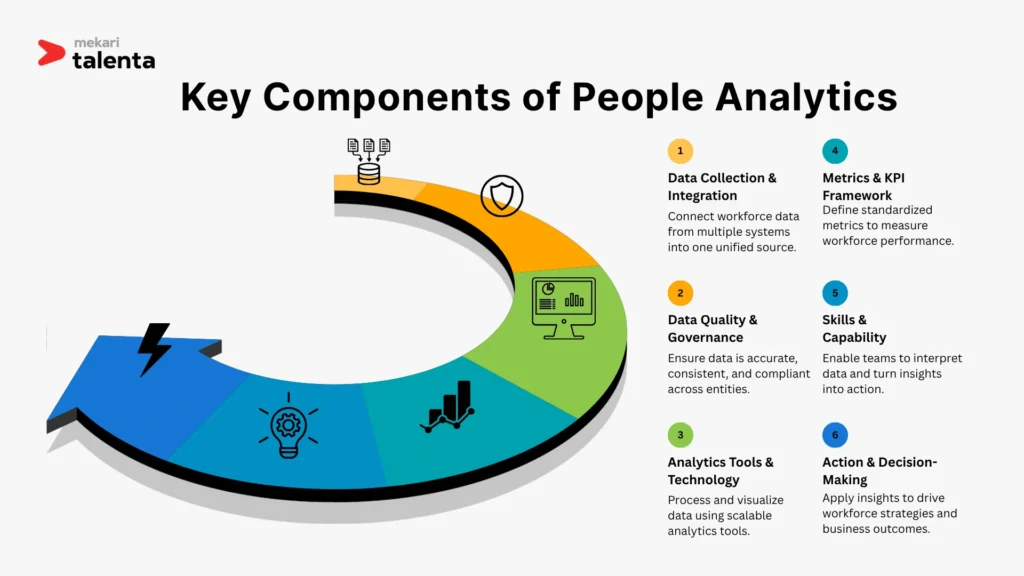
To make people analytics effective, it is built on several interconnected components that ensure data is accurate, insights are meaningful, and decisions can be executed across entities. Without these components in place, analytics initiatives often remain fragmented and fail to scale.
1. Data Collection and Integration
The foundation of people analytics lies in how data is collected and connected across the organization. This includes data from various sources such as HRIS, payroll, recruitment systems, performance management systems, and even engagement platforms.
In complex organizations, these systems are often spread across entities or regions, making integration a critical challenge.
A strong data integration layer ensures that all workforce data is standardized and consolidated into a single, reliable source.
This allows organizations to eliminate data silos and reduce inconsistencies in reporting. Without proper integration, even advanced analytics will produce incomplete or misleading insights.
2. Data Quality and Governance
High-quality data is essential for generating accurate and trustworthy insights. This involves ensuring that data is clean, consistent, and up to date across all systems.
In addition, governance frameworks must be in place to define data ownership, access controls, and compliance with regulations.
For multinational organizations, governance becomes even more important due to varying legal requirements across countries.
Clear data standards and validation processes help maintain integrity as data flows between systems. Without strong governance, organizations risk making decisions based on flawed or non-compliant data.
3. Analytics Tools and Technology
People analytics relies on the right technology to process, analyze, and visualize workforce data. This includes tools for data warehousing, business intelligence, advanced analytics such as machine learning, as well as integration with a talent management system to ensure seamless data flow across HR functions.
In complex environments, these tools must be scalable and capable of handling large volumes of data from multiple entities. They should also support real-time or near real-time reporting to enable faster decision-making.
The choice of tools plays a significant role in how easily insights can be generated and shared across the organization. However, technology alone is not enough—it must be aligned with business needs and user capabilities.
Read also: How to Choose the Right HRIS Vendor: A Practical HR Guide
4. Metrics and KPI Framework
Defining the right metrics is crucial to ensure that people analytics aligns with business objectives. Organizations need a clear framework that standardizes how key workforce indicators, such as turnover, productivity, engagement, and cost, are measured.
In multi-entities organizations, this helps maintain consistency across entities while still allowing for local context.
A well-defined KPI framework ensures that leaders are evaluating performance based on the same benchmarks. It also enables comparisons across teams, regions, or business units.
Without clear metrics, analytics efforts can become inconsistent and difficult to interpret.
5. Skills and Organizational Capability
People analytics requires a combination of technical, analytical, and business skills. This includes data analysts, HR professionals, and leaders who can interpret insights and translate them into action.
In many organizations, building this capability is one of the biggest challenges. Teams need to understand not only how to analyze data, but also how to connect it to business outcomes.
Training and upskilling play a key role in developing a data-driven HR function. Without the right capabilities, even the best tools and data infrastructure will not deliver meaningful impact.
6. Action and Decision-Making Processes
The final component—and often the most overlooked—is how insights are translated into action.
People analytics only creates value when it informs real business decisions, such as hiring strategies, workforce planning, or retention initiatives.
This requires clear processes that connect analytics outputs with decision-making at different levels of the organization.
In complex environments, this also means ensuring alignment across entities so that actions are consistent and scalable.
Organizations need to embed analytics into regular workflows, rather than treating it as a separate function. Without this connection, insights remain theoretical and fail to drive measurable outcomes.
Key People Analytics Metrics That Matter in Complex Organizations
In complex organizations, metrics serve as tools to drive decisions across entities, functions, and regions rather than functioning solely as reporting outputs.
The main challenge lies in selecting the right metrics that deliver consistent, comparable, and actionable insights at scale, given the abundance of available data.
Effective people analytics therefore prioritizes metrics that move beyond surface-level reporting and directly inform workforce strategy and overall business performance.
- Workforce Distribution and Headcount Composition: Tracks how employees are allocated across entities, roles, and locations to support better workforce planning.
- Turnover and Retention by Segment: Identifies where attrition happens (by role, entity, or tenure) to enable targeted retention strategies.
- Time-to-Hire and Quality-of-Hire: Measures recruitment efficiency and effectiveness to ensure scalable and high-quality hiring.
- Employee Performance and Productivity Metrics: Evaluates individual and team output to align performance with business goals.
- Employee Engagement and Experience: Captures employee sentiment to detect risks related to retention and organizational culture.
- Workforce Cost and Efficiency Metrics: Monitors labor costs and productivity to balance financial efficiency with workforce performance.
Using People Analytics Insights for Various Scenarios
People analytics becomes most valuable when applied to real, high-impact scenarios. These are situations where decisions involve multiple entities, large volumes of data, and significant business consequences.
By leveraging analytics, organizations can move from reactive decisions to more structured, data-driven actions.
1. Managing Mass Hiring Across Entities
Mass hiring often involves multiple business units, locations, and recruitment channels running simultaneously. Without proper visibility, this can lead to inconsistent hiring standards, delays, or overhiring in certain areas.
People analytics helps organizations track hiring demand, monitor pipeline conversion rates, and identify bottlenecks across entities in real time.
For example, leaders can compare time-to-hire and source effectiveness between regions to optimize recruitment strategies. It also enables better workforce forecasting, ensuring that hiring aligns with actual business needs.
As a result, organizations can scale hiring efforts while maintaining quality and consistency.
2. Identifying and Preventing High-Impact Turnover
In large organizations, turnover is not equally distributed, losing employees in critical roles or key entities can have a disproportionate impact.
People analytics allows organizations to identify high-risk groups by analyzing patterns in engagement, performance, tenure, and compensation. This helps HR teams detect early warning signs before turnover occurs.
For instance, predictive models can flag employees who are more likely to leave, enabling proactive retention strategies.
Organizations can then implement targeted interventions such as career development, internal mobility, or compensation adjustments. This approach reduces disruption and protects business continuity.
3. Supporting Workforce Restructuring and Resource Allocation
Restructuring decisions, such as reallocating teams, merging entities, or adjusting workforce size, are common in complex organizations.
These decisions require a clear understanding of workforce distribution, performance, and cost across the organization. People analytics provides a data-driven foundation to evaluate different scenarios before taking action.
For example, leaders can assess which teams are over- or under-resourced, or how changes may impact productivity and costs.
It also helps ensure that restructuring decisions are consistent and aligned across entities. With the right insights, organizations can make more balanced decisions that minimize risk and maximize efficiency.
Strategies to Maximize the Value of People Analytics
To fully realize the value of people analytics, organizations need a clear strategy that ensures insights are actionable, scalable, and aligned with business priorities.
1. Tie Every Analysis to a Specific Decision
Avoid running analysis without a clear outcome. Start with a concrete question tied to business impact, such as: “Which roles are causing hiring delays?” or “Which teams are at risk of high turnover in the next 3 months?” This ensures that insights are directly usable.
For example, instead of reporting overall attrition, break it down by critical roles and link it to retention actions.
In practice, this helps leaders move from “knowing” to “deciding.” It also prevents analytics from becoming passive reporting. Every dashboard or report should answer: what decision will this support?
2. Build a Single Source of Truth (Even If It’s Not Perfect Yet)
Don’t wait for perfect system integration, start by consolidating key data into one usable dataset. For example, combine headcount, turnover, and hiring data into a centralized dashboard, even if it’s initially semi-manual. This immediately improves visibility across entities.
Over time, you can automate and refine the data pipeline. The key is consistency, not perfection. Many organizations fail because they wait too long to “fix everything” before starting. A usable single source of truth is far more valuable than fragmented perfect data.
3. Focus on 3–5 Core Metrics First
Instead of tracking dozens of metrics, prioritize a small set that directly impacts business performance. For example: turnover in critical roles, time-to-hire, headcount vs. plan, and workforce cost.
Use these metrics consistently across all entities. This makes it easier for leadership to align and take action. Once these are stable, you can expand into more advanced metrics.
In practice, this reduces noise and increases clarity. Complex organizations benefit more from focus than from volume.
4. Turn Insights into Standard Actions
Analytics should lead to repeatable actions, not one-off decisions. For example, if data shows high turnover in a specific role, define a standard response: manager review, compensation benchmarking, and career path discussion.
Document these actions as playbooks that can be applied across entities. This ensures consistency and speed in execution.
Without this step, insights often stop at the reporting stage. In complex organizations, playbooks help scale decisions without relying on individual judgment every time.
5. Run Monthly Workforce Reviews Using Data
Make people analytics part of a regular business rhythm. For example, conduct monthly reviews with leaders using a standardized dashboard covering hiring, turnover, and performance.
Focus the discussion on gaps and actions, not just numbers. This creates accountability across entities. Over time, leaders become more comfortable using data in decision-making.
It also ensures that insights are continuously acted upon, not ignored. Embedding analytics into routines is one of the fastest ways to increase adoption.
6. Prioritize High-Impact Areas
Start with areas where complexity creates the biggest risk or cost, such as mass hiring, high turnover roles, or workforce cost inefficiencies.
For example, if hiring delays are affecting multiple entities, focus analytics efforts on recruitment funnel performance first.
This delivers visible impact quickly. Once results are proven, expand to other areas. Trying to solve everything at once often leads to slow progress and low adoption. Targeted focus drives faster ROI.
What to Look for in a People Analytics Solution
Choosing a people analytics solution in a complex organization is about whether the system can handle scale, fragmentation, and real decision-making needs.
Many tools offer dashboards, but not all are built to support multi-entity operations or cross-functional visibility. The right solution should simplify complexity, not add another layer of it.
Here are key things to evaluate:
1. Ability to Integrate Across Multiple Systems
In complex organizations, employee data lives in different systems: HRIS, payroll, recruitment, performance tools, and more.
A strong people analytics solution must be able to integrate with these systems and consolidate data into a single view. Without this, insights will remain fragmented and unreliable.
Look for solutions that support flexible integrations (API-based or native connectors). This is critical for creating a single source of truth. The easier the integration, the faster you can generate value.
2. Multi-Entity and Multi-Level Reporting
The solution should support organizational structures with multiple entities, subsidiaries, or regions. This includes the ability to view data at both global and local levels.
For example, leaders should be able to compare metrics across entities while still drilling down into specific teams or locations.
This flexibility is essential for maintaining both standardization and local context. Without it, reporting becomes either too broad or too limited. A good system adapts to your structure, not the other way around.
Read also: Enterprise HRIS: Managing Multi-Entity Workforce with Centralized Control
3. Real-Time or Near Real-Time Data Visibility
In fast-moving environments, delayed data can lead to delayed decisions. A people analytics solution should provide real-time or near real-time updates, especially for critical metrics like hiring progress or turnover.
This allows leaders to respond quickly to emerging issues. For example, identifying a hiring bottleneck early can prevent delays in business operations. Timely data is key to making analytics actionable. Static or outdated reports reduce the value of insights.
4. Customizable Metrics and Dashboards
Every organization has different priorities, especially across multiple entities. The solution should allow customization of metrics, dashboards, and reporting views.
This ensures that different stakeholders—HR, business leaders, executives—can access relevant insights. It also supports alignment with internal KPI frameworks.
Rigid systems that cannot be customized often fail to meet complex needs. Flexibility is essential for scaling analytics across diverse teams.
5. User Accessibility and Ease of Use
A powerful system is useless if people don’t use it. The platform should be intuitive enough for HR teams and business leaders, not just data specialists. This includes clear dashboards, easy navigation, and minimal reliance on manual data processing.
In complex organizations, adoption across multiple users is critical. If the system is too technical, it will remain underutilized. Ease of use directly impacts how widely analytics is embedded into decision-making.
6. Data Governance and Security Capabilities
Handling employee data requires strict governance and compliance. The solution should support role-based access control, data privacy settings, and compliance with relevant regulations.
This is especially important for multinational organizations with varying legal requirements. Strong governance ensures that sensitive data is protected while still being accessible to the right stakeholders.
It also builds trust among users and employees. Without proper security, analytics initiatives can create significant risk.
7. Scalability to Support Growth
As organizations grow, their analytics needs become more complex. The solution should be able to handle increasing data volume, additional entities, and evolving business requirements. This includes the ability to add new data sources and expand reporting capabilities over time.
A scalable solution ensures that you won’t outgrow the system as your organization evolves. Choosing a tool that only fits current needs can lead to limitations later. Long-term scalability is a key consideration.
People Analytics Software Example
As organizations scale, the need for a reliable people analytics solution becomes more critical. The right software helps consolidate workforce data, standardize reporting, and deliver insights that can be used consistently across entities and functions.
Below are several people analytics solutions that support complex organizational needs, from integrated HCM software to specialized analytics tools.
1. Mekari Talenta
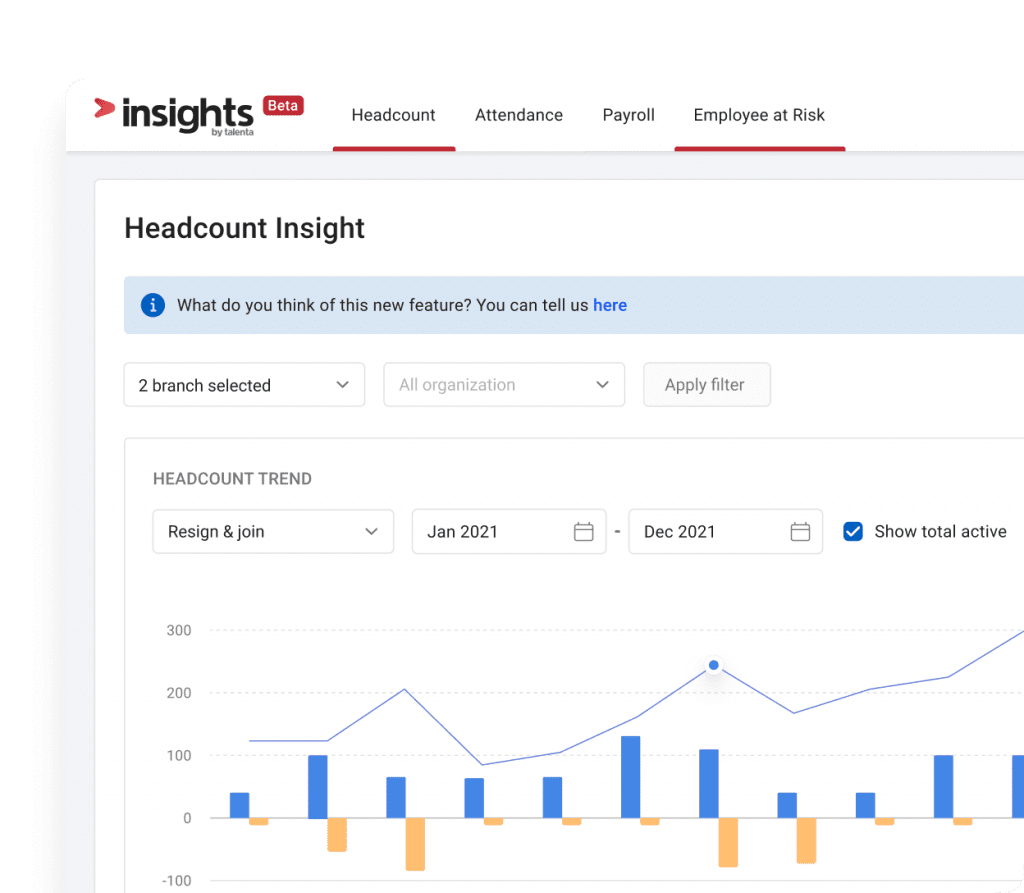
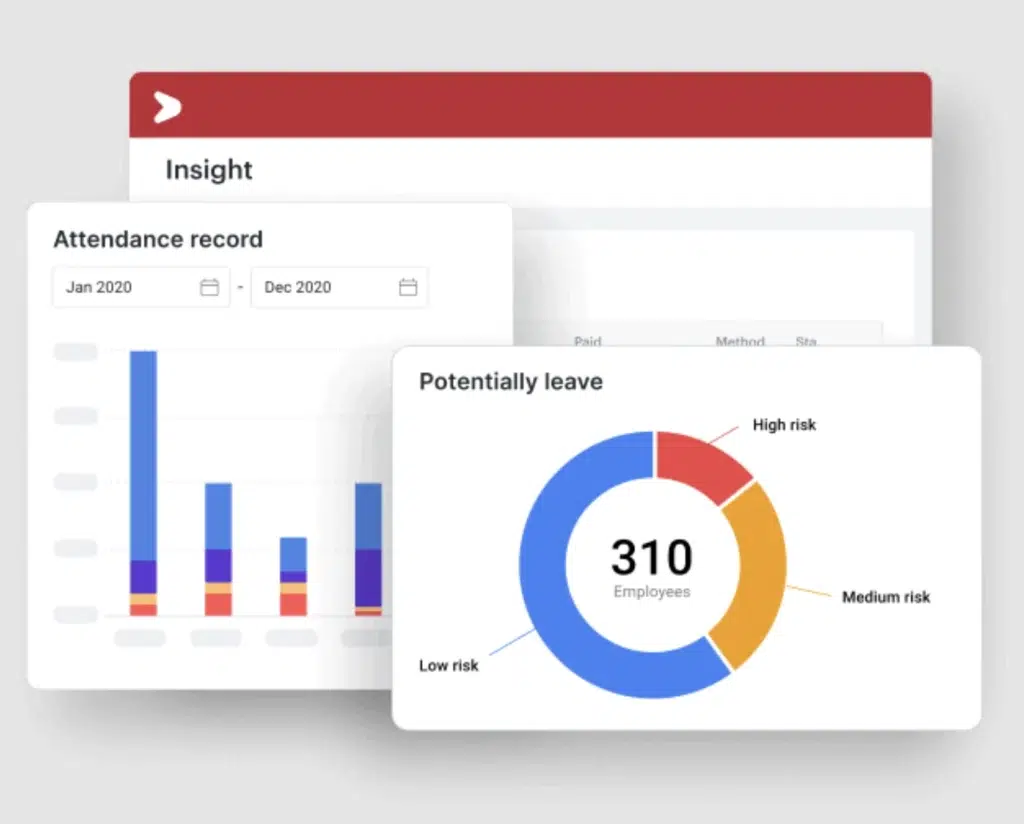
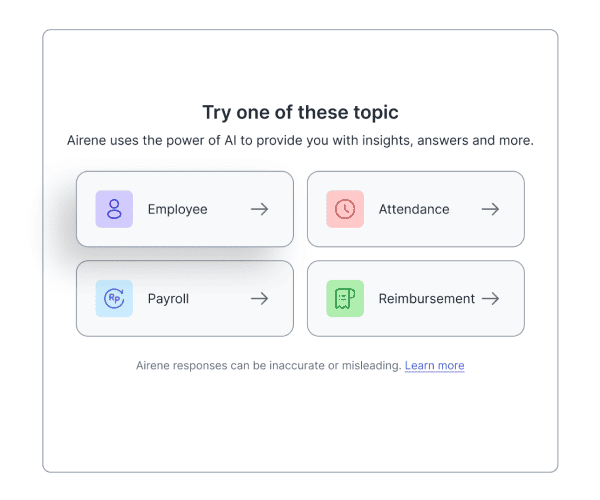
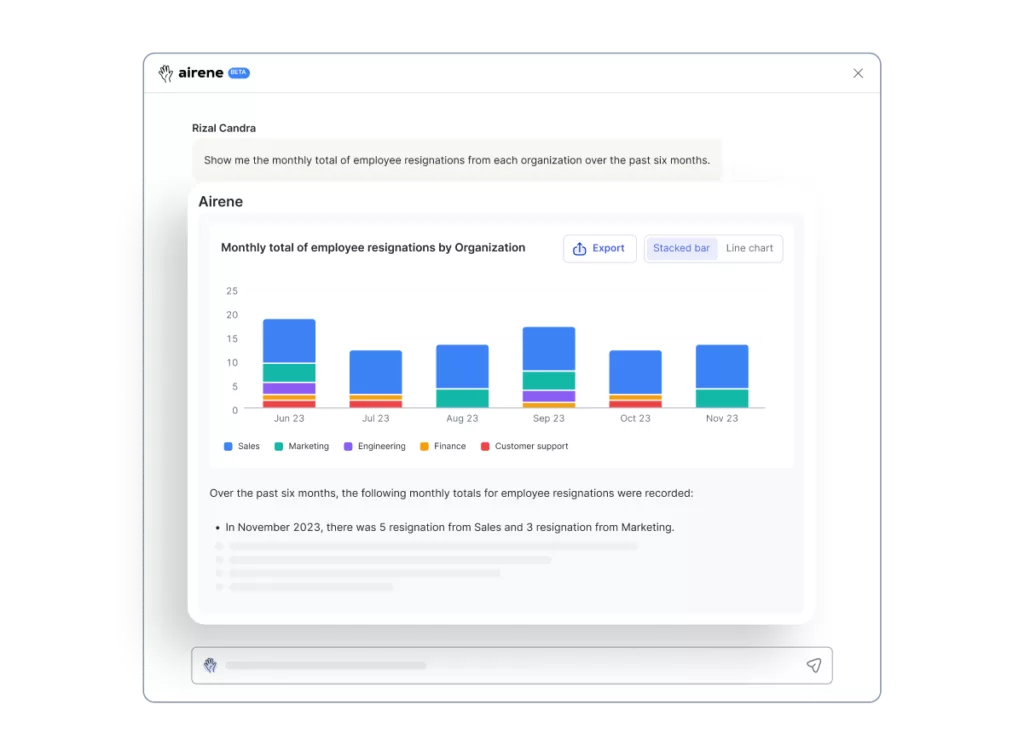
Mekari Talenta is an AI-centric cloud-based human capital management (HCM) solution that integrates core HR processes—such as payroll, attendance, recruitment, and performance—into a single platform.
It is designed to support organizations with complex structures, including those operating across multiple entities, branches, or large workforces.
From a people analytics perspective, Mekari Talenta provides built-in analytics capabilities through Talenta Insight, enabling organizations to transform HR data into clear, actionable insights across the organization.
This means data from different HR functions is automatically synchronized and visualized in one dashboard, reducing fragmentation and manual reporting.
Here’s how it supports people analytics in practice:
- Integrated HR Data for a Single Source of Truth
All employee data—ranging from headcount, attendance, to payroll—is centralized within one system, enabling more consistent and reliable analysis. - AI-Powered Insights with Airene
With Airene, Mekari Talenta enhances people analytics through AI-driven insights that automatically analyze HR data and generate summaries, patterns, and actionable recommendations. This helps HR teams quickly identify trends, detect potential issues, and respond faster without manual data processing. - Pre-Built and Customizable Analytics Dashboards
Organizations can access standard insights (e.g., headcount, attendance, payroll) while also customizing dashboards based on specific business needs or KPIs. - Real-Time Workforce Visibility
Since data is integrated across modules, HR and business leaders can monitor workforce trends in near real-time, supporting faster and more informed decisions. - Multi-Entity and Scalable Structure
The system is built to support organizations with multiple branches or business units, allowing centralized management while maintaining flexibility across entities. - End-to-End Workforce Insights
By covering the full employee lifecycle—from recruitment to performance—Mekari Talenta enables organizations to connect different data points and generate more holistic insights.
For enterprise, tools like Mekari Talenta—enhanced with AI capabilities like Airene—help bridge the gap between fragmented HR operations and actionable insights, making people analytics more accessible, intelligent, and scalable across the business.
If you’re looking to streamline your workforce data and make faster, more accurate decisions, contact us to explore how Mekari Talenta can support your organization.
2. Workday HCM
Workday HCM is widely used by large, global organizations for its strong analytics and planning capabilities. It combines HR, finance, and workforce data into a unified platform.
- Advanced workforce planning and forecasting
- Strong real-time analytics and reporting
- Built for global, multi-entity organizations
- Embedded AI and machine learning insights
3. SAP SuccessFactors
SAP SuccessFactors offers comprehensive HR analytics integrated with its broader enterprise ecosystem, making it suitable for organizations with complex operational structures.
- Deep analytics integration with enterprise systems
- Robust workforce analytics and benchmarking
- Supports multi-country compliance and reporting
- Flexible data modeling and reporting tools
- Strong talent and performance analytics
4. Oracle HCM Cloud
Oracle HCM Cloud provides end-to-end HR analytics with strong data visualization and predictive capabilities, designed for large-scale organizations.
- Unified data across HR and business functions
- Built-in predictive analytics capabilities
- Advanced workforce modeling and simulations
- Strong data security and governance features
- Scalable for complex organizational structures
5. Visier People
Visier People is a specialized people analytics platform focused on delivering deep workforce insights through pre-built models and visualizations.
- Purpose-built for people analytics use cases
- Pre-built metrics and data models
- Strong predictive and prescriptive insights
- Easy-to-use visual dashboards for leaders
- Integrates with multiple HR systems
Conclusion
People analytics is no longer optional for organizations operating in complex, multi-entity environments. It is a necessary capability to ensure consistency, visibility, and control at scale.
As workforce data becomes more distributed across systems, regions, and functions, organizations that fail to consolidate and utilize this data risk making slow or misaligned decisions.
In contrast, those that adopt a structured approach to people analytics can unify data, standardize insights, and respond more effectively to workforce challenges.
Ultimately, the value of people analytics lies in its ability to turn complexity into clarity. When supported by the right data foundation, tools, and organizational alignment, it enables faster decisions, stronger workforce strategies, and more sustainable business growth.