




In today’s competitive talent market, retaining top performers requires delivering a seamless and modern employee experience from day one.
Today’s workforce expects instant access to their payslips, mobile leave applications, and transparent performance reviews, all at their fingertips.
An HRIS (Human Resource Information System) bridges this gap, transforming clunky, paper-based processes into a sleek, self-service mobile experience.
It empowers your employees to manage their own admin tasks, freeing up your HR team to focus on culture and strategy.
Here is a comprehensive look at what an HRIS is and why it is essential for a people-first organization.
Read also: 10 Enterprise HRIS Software to Increase Operational Efficiency by 40%
What Is HRIS?
At its simplest, an HRIS is a software solution that acts as the central command center for your business’s workforce. It replaces the need for manual spreadsheets and physical paperwork by digitizing the entire employee lifecycle.
Think of an HRIS as a 24/7 digital assistant for your HR department that is super-efficient and never sleeps.
This assistant automatically files every employee’s personal details into a secure cabinet, calculates monthly payroll with zero errors, reminds you when a probation period is ending, and answers employees when they ask, ‘How many leave days do I have left?’
An HRIS is simply software that does all of that for you. It moves your HR operations from dusty filing cabinets and messy spreadsheets into one secure, online platform.
Read also: HRIS Total Cost of Ownership (TCO): Components & 5-Year ROI
HRIS vs HCM vs HRMS
If you have been looking for software to automate your HR tasks, you have likely seen these three acronyms–HRIS, HCM, and HRMS–used almost interchangeably.
While the lines are blurring in modern software, there is a hierarchy in what they typically cover.
1. HRIS (Human Resource Information System)
This is the base layer. An HRIS is primarily about managing people, policies, and procedures. It is the digital version of your filing cabinet.
- Primary Focus: Static data and core records.
- Key Features: Employee database (profiles), organizational charts, leave management, and benefits administration.
- Best for: Companies that simply need to get organized and move away from paper files.
2. HRMS (Human Resource Management System)
An HRMS includes everything in an HRIS but adds the critical “operational” components that involve money and time. It manages the actions of HR, not just the information.
- Primary Focus: Daily operations and accurate calculation.
- Key Features: Everything in HRIS plus Payroll processing, Time & Attendance tracking (shifts/overtime), and Claims management.
- Best for: SMEs and growing businesses that need to pay people accurately and track attendance automatically.
3. HCM (Human Capital Management)
HCM is the broadest category, often geared toward large enterprises or multinationals. HCM treats employees not just as workers to be paid, but as “capital” to be invested in.
- Primary Focus: Long-term workforce strategy and ROI.
- Key Features: Everything in HRMS plus complex Talent Management, Succession Planning, Workforce Analytics, and Global Learning Management Systems (LMS).
- Best for: Large enterprises focused on talent development and global workforce planning.
Read Also: HRIS Implementation: A Practical Guide from Data Cleansing to Hyper-Care
The Evolution of HRIS
Human Resource Information Systems (HRIS) have evolved significantly over the past few decades.
What was once a basic system for storing employee records has transformed into a strategic platform that enables data-driven decision-making, automation, and workforce optimization.
Understanding the evolution of HRIS helps organizations recognize how HR technology supports not only operational efficiency, but also long-term business growth.
1. Early Stage: Manual HR and Basic Digital Records
Before HRIS existed, human resource management was largely manual and paper-based. Employee data, payroll calculations, attendance records, and performance reviews were stored in physical files or spreadsheets.
This approach was time-consuming, prone to errors, and difficult to scale as organizations grew.
The first generation of HR systems emerged when companies began using basic computer databases to digitize payroll and employee records.
However, these systems were fragmented, lacked integration, and served purely administrative purposes.
2. Integrated HRIS (1990s)
As organizations expanded and workforce complexity increased, companies began adopting integrated HRIS solutions in the 1990s.
Key characteristics of this phase:
- Centralized employee databases
- Integration of core HR functions such as payroll, attendance, and benefits
- Reduced data duplication and improved accuracy
At this stage, HRIS helped HR teams become more efficient administratively, but the systems were still largely on-premise, costly to maintain, and accessible only to HR professionals.
3. Web-Based and Cloud HRIS (2000s–2010s)
The rise of the internet and cloud computing marked a major turning point in HRIS evolution. HR systems shifted to web-based and cloud-based platforms, making HR technology more accessible to organizations of all sizes.
Major advancements included:
- Remote access through browsers
- Lower infrastructure costs via SaaS (Software-as-a-Service) models
- Faster implementation and regular system updates
This era also introduced Employee Self-Service (ESS), allowing employees to manage personal data, submit leave requests, and access payslips independently. HRIS was no longer used only by HR teams, but by the entire workforce.
This shift also positioned HRIS as a foundational system for companies managing distributed teams. As a result, many organizations are now searching for an HRIS that supports hybrid workforce and remote-first environments.
4. HRIS for Automation, Analytics, and Strategic Enablement (2015–Present)
Today’s HRIS has evolved into a strategic platform that combines automation, analytics, and intelligent insights to support modern workforce management, including remote and hybrid work environments.
Modern HRIS capabilities include:
- Automated workflows for recruitment, onboarding, payroll, and a built-in performance management system that supports goal tracking, evaluations, and continuous feedback.
- Real-time HR dashboards and people analytics
- AI-powered features such as resume screening, skill matching, and predictive insights
- Seamless integration with recruitment systems, performance tools, and finance platforms
With these capabilities, HR teams can move beyond administrative tasks and focus on strategic initiatives, such as workforce planning, talent development, and employee engagement.
Platforms like Mekari Talenta exemplify this stage of HRIS evolution by providing an integrated ecosystem that connects recruitment, core HR, performance management, and HR analytics in one platform.
By centralizing data and automating key HR processes, HR teams gain better visibility and can make faster, more data-driven decisions.
In addition, modern HRIS plays a critical role in supporting distributed teams through digital onboarding, online performance reviews, and centralized employee data management.
This ensures consistency, compliance, and productivity across different locations and work arrangements.
Benefits of HRIS
According to data from Rectec.io, over 90% of Fortune 500 companies use Human Resources Information Systems (HRIS). This figure isn’t suprising. In fact, it is entirely expected.
Why? Because the business benefits of an HRIS are truly significant. Whether for a global conglomerate or a growing SME, the operational impact of moving from manual work to a digital system is immediate.
Here are 8 proven ways an HRIS transforms your business operations:
1. Automating Repetitive Admin Tasks
Think about the cost of manual work. If your HR staff spends 10 days a month manually reconciling attendance, processing payroll, and calculating tax/CPF/EPF, you are essentially paying 30% of their monthly salary just for data entry.
An HRIS automates these tasks instantly. Instead of hiring a second HR administrator to handle the growing paperwork, you can handle the same workload with your existing team and a fraction of the cost in software subscription fees. It stops you from burning cash on administrative headcount.
2. Minimizing Human Error & Compliance Risks
A single mistake in salary calculation or tax deduction can lead to disputes with employees or penalties from government bodies.
An HRIS creates a closed loop where calculations are automated based on preset regulations, protecting your business from costly fines and re-work.
3. Drastically Reducing Operational Costs
Beyond saving on headcount, an HRIS cuts down the “hidden costs” of running a business.
You can eliminate the cost of physical storage for thousands of paper files, reduce printing costs for payslips and forms, and significantly cut down on HR overtime pay.
When payroll takes 2 hours instead of 5 days, your operational overhead drops immediately.
4. Flexible Data Access (Anytime, Anywhere)
Modern business is mobile. HRIS platforms like Mekari Talenta are cloud-based, meaning your data is secure yet accessible online 24/7.
Whether you are a business owner travelling for meetings or an HR manager working remotely, you can approve leave and inspect workforce data instantly. You are no longer tied to a desk computer.
5. Improving Decision Making with Real-Time Data
You cannot manage what you cannot measure. A good HRIS centralizes all your people data into a “Single Source of Truth.”
This allows business owners to see critical metrics—like turnover rates or overtime spending—instantly. You can make strategic decisions based on live data, not on a report that is three weeks old.
6. Better Performance Control & Monitoring
An HRIS allows you to set Key Performance Indicators (KPIs), monitor progress, and compare actual performance against targets.
This gives management a clear, objective view of who your top performers are, helping you justify bonuses or identify training needs.
7. Streamlining Recruitment & Onboarding
In a competitive talent market, speed is everything. An HRIS gives you visibility into hiring needs and streamlines the workflow—from tracking applicants to digital onboarding.
This ensures new hires are productive from Day 1, rather than spending their first week filling out paper forms.
8. Boosting Employee Satisfaction & Retention
Retention is cheaper than recruitment. An HRIS improves employee satisfaction by providing transparency and autonomy.
When employees can easily access their own payslips via a mobile app, apply for leave without chasing their boss, and trust that their salary is accurate, they are happier. This reduces turnover, saving you the high cost of recruiting and training replacements.
What Are the Key Functions/Feature of an HRIS?
Now that we understand the benefits, let’s take a look at what exactly an HRIS handles on a daily basis.
A robust Human Resource Information System is designed to be the operational backbone of your company. It replaces disconnected tools like Excel files, paper forms, and WhatsApp chats with a single, integrated workflow.
In short, here are the 7 Key Functions of an HRIS (like Mekari Talenta) and how they streamline your operations:
| HRIS Function | Description |
| Employee Data Management | Stores and manages personal details, job titles, employment contracts, and employment history. |
| Attendance Tracking | Tracks working hours, daily attendance logs, and overtime calculations. |
| Leave Management | Manages annual leave, sick leave, time-off requests, and leave balances. |
| Automated Payroll | Automates the calculation of salaries, deductions, allowances, and generates payslips. |
| Recruitment & Onboarding | Manages job applications, interviews, candidate selection, and the hiring process. |
| Performance Review Management | Sets and evaluates KPIs, gathers feedback, and manages promotions or training needs. |
| HR Reporting | Generates HR data reports for audits, legal compliance, and strategic planning. |
Below is a more detailed explanation of these core HRIS capabilities:
1. Employee Data Management
Managing employee data manually can be a risk. As your company grows, digging through physical filing cabinets to find a contract or an emergency contact becomes impossible.
So, an HRIS acts as a secure digital vault for all personal details, employment contracts, job history, and banking information.
You get a source of data that is organized, searchable, and secure. It ensures that you are always ready for an audit and no employee file ever goes missing again.
2. Smart Time & Attendance Tracking
For companies using manual timesheets or punch cards, recapitalizing attendance data at the end of the month is a nightmare. It is time-consuming and prone to disputes over late arrivals or overtime.
An HRIS offers mobile-based attendance (via Android/iOS) with GPS or Face ID validation. It records clock-in/out times in real-time and automatically syncs this data with the payroll system.
By using an HRIS, you can stop paying for “estimated” hours and start paying for actual work. It eliminates time theft and saves HR days of manual data entry every month.
3. Seamless Leave Management
Managing leave via email or paper forms often leads to confusion for employees like “How many days do I have left?” or “Who approved this?”
With HRIS, employees can check their leave balance and submit requests via a mobile app. Managers receive a notification to approve or reject it instantly. The system automatically updates the leave balance and syncs with payroll (for unpaid leave).
It also removes the administrative bottleneck. You have full visibility over who is working and who is away, preventing understaffing issues during holiday seasons.
4. Automated Payroll Processing
This is often the most critical function for any business. Manual payroll calculation is high-risk. A small calculation error in taxes or deductions can lead to unhappy employees and compliance penalties.
An HRIS system automatically calculates basic salary, allowances, overtime (based on attendance data), and deductions (taxes/statutory contributions). It generates accurate payslips instantly.
You can also ensure 100% accuracy, avoid costly overpayments, and ensure every employee is paid on time, every time.
5. Recruitment and Onboarding
Traditional recruitment involves messy stacks of CVs and disorganized email threads. This slows down hiring and creates a poor impression on candidates.
An HRIS tracks the entire applicant journey, from job posting to interview scheduling. Once hired, the “Onboarding” feature allows new staff to submit their personal data digitally before their first day.
With this benefit, you can hire faster and smarter. By digitizing the process, you secure top talent before competitors do and ensure new hires feel professional and welcomed from Day 1.
Read also: Recruitment & Selection: Hiring Process & Talent Acquisition
6. Performance Management (KPIs & Reviews)
How do you know who your top performers are? Relying on memory or subjective feelings leads to unfair evaluations.
The HRIS system allows you to set clear KPIs (Key Performance Indicators), schedule review sessions, and record feedback digitally within the employee’s profile.
It transforms performance reviews from a “formality” into a growth engine. You can make data-driven decisions on promotions, bonuses, and training needs based on tracked performance history.
7. Strategic HR Reporting & Analytics
Business owners often fly blind regarding their workforce costs.
An HRIS generates comprehensive reports in seconds, from headcount turnover and absenteeism rates to total payroll costs per department.
You can analyze trends, spot inefficiencies, and make strategic decisions backed by real data, not just gut feeling.
How Does an HRIS Work?
You might be wondering, “How exactly does this software replace my spreadsheets?”
An HRIS works by permanently connecting your company’s static policies with your employees’ daily actions in real-time.
Instead of disjointed files, the system creates a continuous flow of information through four distinct stages: Configuration, Data Input, Processing, and Output.
1. Configuration & Setting
The process begins with configuration, which effectively acts as the digital brain of your operations.
Instead of referring to a physical employee handbook or an Excel formula every time a calculation is needed, the HR division inputs the company’s specific policies into the system during the initial setup.
This is where you define the logic that the software will follow forever.
For example, you will program your official working hours (such as 9 AM to 6 PM), define the specific leave quotas for different job levels (like 14 days for staff and 18 days for managers), and set up the payroll components, including basic salary, fixed allowances, and statutory deduction rates like CPF or EPF.
Once these rules are saved, the system “knows” your company policy as well as you do.
2. Data Input
Once the rules are set, the second phase is Data Input, which shifts the administrative burden away from the HR team.
In a manual setting, HR often spends days chasing employees for timesheets or leave forms.
With an HRIS, this process is decentralized through Employee Self-Service (ESS). Data is collected automatically and instantly via the employee’s mobile app.
When an employee clocks in for work using their phone, that attendance data flows directly into the system.
Similarly, when they submit a reimbursement claim or a leave request, that data is captured immediately.
This means HR no longer has to type data into a spreadsheet because the employees are essentially doing the data entry for you, simply by going about their daily work.
3. Automatic Processing
The third and most critical phase is automatic processing, where the system applies your “Rules” (from Step 1) to the incoming “Data” (from Step 2).
This is where the heavy lifting happens. The system continuously analyzes the data against your policies without human intervention.
For instance, if the system detects that Employee A clocked in at 9:30 AM but the rule says work starts at 9:00 AM, it automatically flags this as “Late.”
More importantly, when the payroll cycle arrives, the system pulls all these attendance records, approved leave days, and overtime hours to calculate the final salary.
It instantly computes the correct taxes and deductions based on the latest government regulations, completing complex math that would usually take an HR professional days to finish manually.
4. Output
Finally, the workflow concludes with the output phase, where the HR manager steps back in to review the results. The system aggregates all the processed data into final documents and reports for approval.
The HR Manager receives a generated “Ready to Pay” payroll report that summarizes the total salary cost.
Once the manager reviews and clicks “Approve,” the system automatically generates and distributes digital payslips to all staff, produces the bank file needed for salary disbursement, and compiles the necessary tax reports for the government.
The Types of HRIS
If you start searching for HR software, you will quickly realize that not all systems are created equal. The market is flooded with options ranging from simple attendance trackers to complex enterprise suites.
To make the right choice for your company, it helps to understand the two main categories of HRIS based on how they are deployed (the infrastructure) and what they focus on (the scope).
1. Type of HRIS Based on Deployment
This deployment choice is the most critical decision regarding your IT infrastructure. The choice depends on your organization’s specific needs for accessibility versus internal control.
a. Cloud-Based HRIS (SaaS)
A Cloud-based HRIS (Software-as-a-Service) is hosted by the provider on external servers. You access the system via the internet using a web browser or mobile app.
Usually, this type of HRIS requires a monthly subscription. As a result, it offers high flexibility and accessibility.
Updates are handled automatically by the provider, and employees can access the system from anywhere. A cloud-Based HRIS will be highly suitable for companies with remote teams or multiple branches.
b. On-Premise HRIS
An On-Premise HRIS is software that is installed locally on your company’s own hardware and servers. The data and the application reside physically within your organization’s premises.
Typically, it involves a one-time perpetual license fee, plus costs for hardware and ongoing maintenance. It provides granular control over data and infrastructure.
This model is often preferred by organizations with specific compliance requirements that mandate data must never leave their internal network, or those with extensive internal IT resources to manage security and maintenance.
2. Type of HRIS Based on Functional Scope
Once you have decided on the deployment model, you need to consider the functional depth of the system.
HRIS platforms can also be categorized based on the depth of their function and how they assist the HR team in decision-making. Here are the four main types:
a. Operational HRIS
As the name suggests, this type is heavily focused on fulfilling the HR team’s operational needs. In an operational HRIS, the HR manager holds full access to view employee data and make decisions related to daily workforce management.
It consists of 5 key components:
- Employee Information System: Acts as the central database containing all employee records, from names and personal details to work history and experience.
- Position Control System: Monitors all job positions within the company. It helps HR and Leaders identify vacant roles and determine the requirements for hiring new staff.
- Performance Management Information System: Captures performance data, allowing HR and Leaders to view and assess the productivity levels and performance reviews of every employee.
- Applicant Selection and Placement Information System: Facilitates the recruitment process, ensuring candidates are selected and placed according to the specific needs of the company.
- Government Reporting and Compliance System: Assists the HR team in managing and complying with government regulations related to employment and labor laws.
b. Tactical HRIS
The second type is tactical HRIS. This system is designed to help the HR team make tactical decisions regarding resource allocation, such as manpower planning, recruitment strategies, and training.
It consists of 4 key components:
- Job Analysis and Design Information System: Stores data regarding the specific duties, responsibilities, and requirements for each role in the company.
- Recruiting Information System: Allows HR to formulate recruitment strategies so that the hiring process is tailored to the company’s growth needs.
- Compensation and Benefit Information System: Enables HR to plan, strategize, and make decisions regarding employee compensation structures and benefit packages within the system.
- Employee Training and Development System: Manages the learning process, making it easier for HR to identify training needs and execute development programs for employees.
c. Strategic HRIS
This type of HRIS functions to align the company’s broader business strategy with its workforce management. It ensures that the organization supports the work of every employee to achieve long-term goals.
Strategic HRIS also plays a critical role in strategic workforce planning, helping organizations forecast talent needs, identify skill gaps, and align workforce capabilities with long-term business objectives.
It consists of 3 key components:
- Information System Supporting Workforce Planning: Assists in long-term planning by providing deep insights into the quality and capability of the current human resources.
- Specialized Human Resource Information System Software: Specialized tools designed to support specific, high-level HR management functions.
- Information System Supporting Labor Negotiation: Facilitates smoother negotiations between HR and third parties (such as vendors or labor unions) as well as with the company’s upper management.
d. Comprehensive HRIS
The final type is the comprehensive HRIS. This is an all-in-one solution that integrates all the functions mentioned above.
Modern systems like Mekari Talenta are often categorized as comprehensive HRIS solutions because they support end-to-end employee lifecycle management, from recruitment and onboarding to performance tracking, payroll processing, and workforce development.
It unifies the entire employee lifecycle by connecting employee data, payroll processing, attendance tracking, training, and recruitment, all while ensuring alignment with government labor regulations.
Tips for Implementing a Successful HRIS
You might be wondering, “What are the elements that are important for a successful HRIS implementation?”
In general, it consists of preparing your workforce, ensuring competent technological infrastructure, maintaining strict data integrity, and committing to continuous system adaptation.
Here are the four critical pillars you need to focus on to ensure your investment pays off:
1. Preparing Your Human Capital
The first and most critical step is preparing the people who will actually use the system. An HRIS is only as effective as the humans driving it. Without user adoption, even the most expensive software becomes useless.
Therefore, you must prepare your workforce by organizing dedicated training sessions or town halls to introduce the new workflow.
This ensures that every employee, from the manager to the front-line staff, has the necessary skills to operate the system confidently.
A smart strategy is to identify employees who are already tech-savvy and assign them to assist colleagues who might be struggling. This peer-to-peer support system significantly speeds up the transition process.
2. Ensuring Competent Infrastructure
Beyond human readiness, the technology itself must be robust enough to support your operations. A competent digital infrastructure is required to maximize the software’s performance, which is why modern businesses are moving away from physical servers.
Implementing cloud-based technology or SaaS HRIS is often the best route, as it acts as a secure, virtual container for your company’s data.
Cloud infrastructure has proven capable of effectively handling vast amounts of digital records while ensuring the system remains fast, accessible, and scalable as your business grows.
3. Maintaining Data Confidentiality and Integrity
While technology handles the processing, the responsibility for privacy ultimately lies with the human operators.
Once an HRIS is implemented, it will house your company’s most sensitive secrets, from salary structures to personal identification numbers.
No matter how sophisticated the system’s security features are, the integrity of the HR team managing this data is paramount.
You must foster a culture of strict confidentiality and integrity, ensuring that access rights are respected and that sensitive data is handled in accordance with company goals and privacy regulations.
4. Committing to Continuous Adaptation
Finally, the key to long-term success is maintaining the quality of the technology through constant adaptation.
Technology undergoes continuous updates and improvements. For your business to remain competitive, your system must evolve alongside these changes, whether it is a software update to improve speed or a configuration change to match new government tax regulations.
This means the organization must be open to continuous learning.
Full acceptance of the HRIS requires the entire team to understand not just how the system works today, but the long-term benefits and efficiency it brings to the company’s future.
Key Features of Mekari Talenta, a Comprehensive HRIS System Application for Companies
As we said before, a Human Resource Information System, or HRIS, is the foundation of a robust and efficient work system in employee management.
Many HR tasks can be handled seamlessly with an HRIS. Therefore, many companies choose to utilize HRIS applications or software such as Mekari Talenta to support their daily HR operations.
Mekari Talenta is an HRIS software solution designed based on real business needs, with the goal of becoming a comprehensive solution for human resource management within companies through powerful and reliable features, such as payroll applications, reimbursement management, and employee attendance tracking.
One of the key advantages of Mekari Talenta HR software is its cloud-based system, allowing HR teams and employees to access information and personal data anytime and anywhere with greater flexibility and convenience.
The following are the main features available in Mekari Talenta HR software:
Payroll Feature
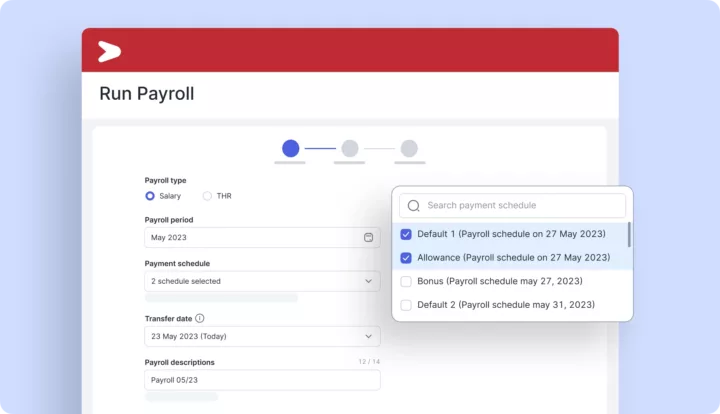
The first feature is Payroll, which helps HR teams run payroll processes for all employees more efficiently.
This feature is fully integrated with employee attendance data, enabling automatic calculations, eliminating manual work, and significantly reducing the risk of payroll errors while ensuring accuracy and compliance.
Live Attendance Feature (Online Attendance)
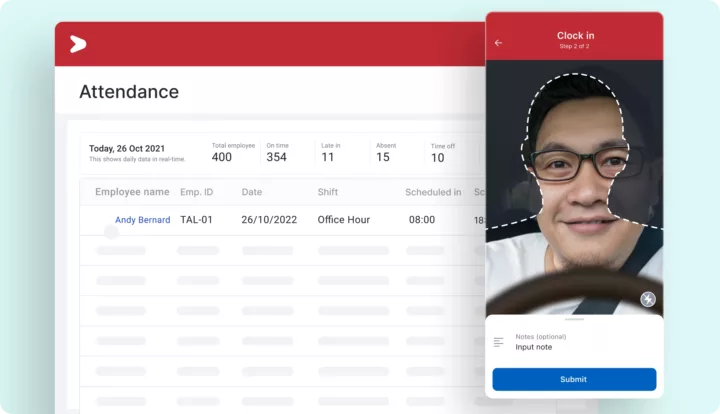
The Live Attendance feature allows employees to record their attendance in real time using GPS directly from their mobile phones.
This makes it easier for both employees and HR teams to collect more accurate, valid, and trustworthy online attendance data across various work locations.
Payslip Feature
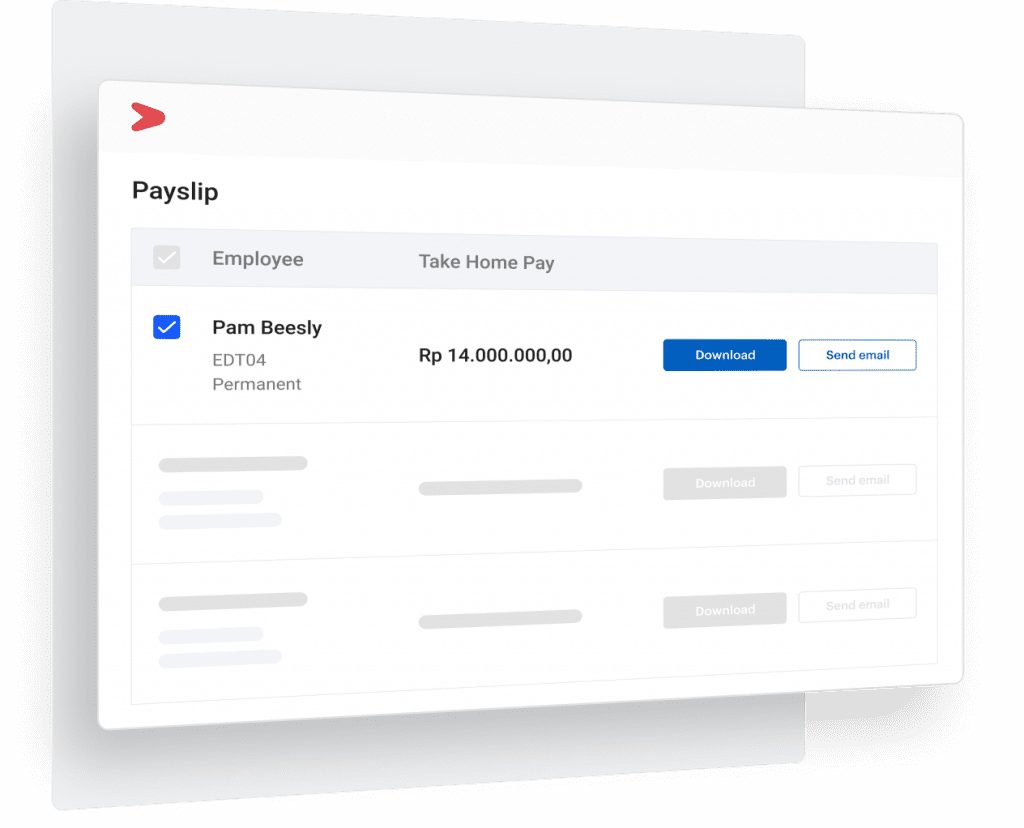
The next feature is My Payslip, where this digital payslip feature enables employees to access their salary slips anytime and anywhere.
With online payslips, transparency is improved and HR no longer needs to handle repetitive administrative requests related to payroll information.
Reimbursement Feature
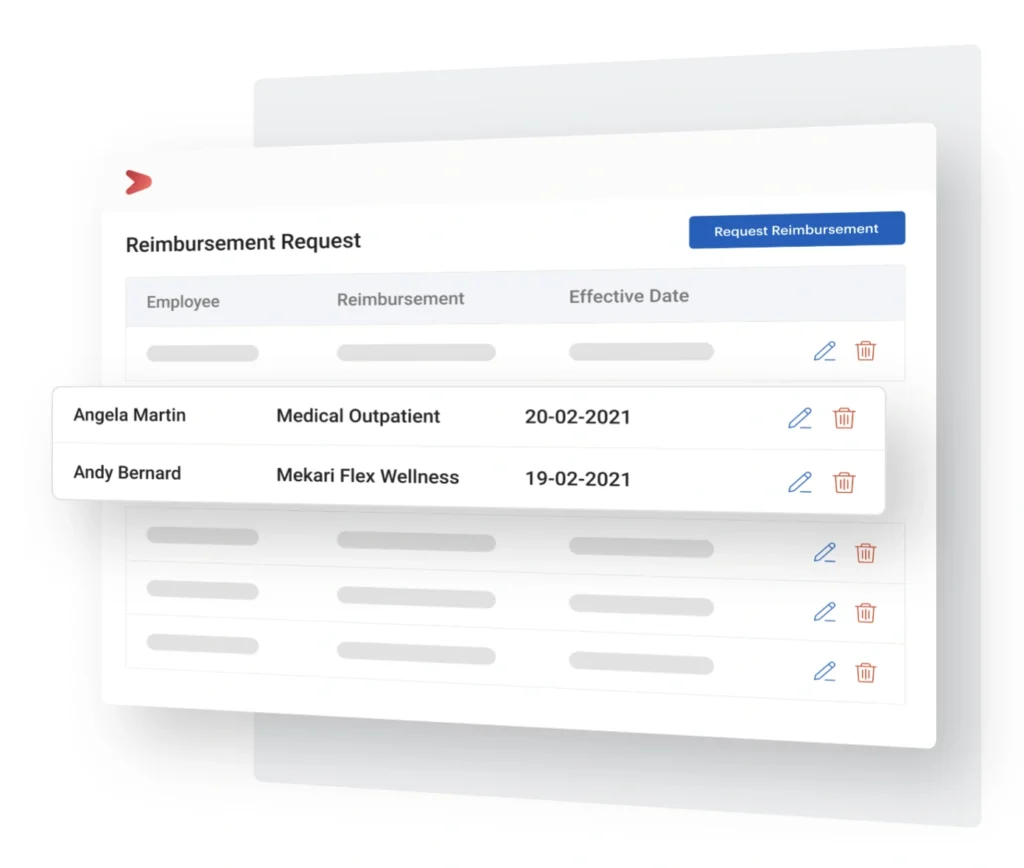
Previously, reimbursement processes were often time-consuming and complex. With Mekari Talenta’s Reimbursement feature, reimbursement administration can be significantly streamlined, making the process faster, more transparent, and easier for both employees and HR teams to manage.
Time Off Feature
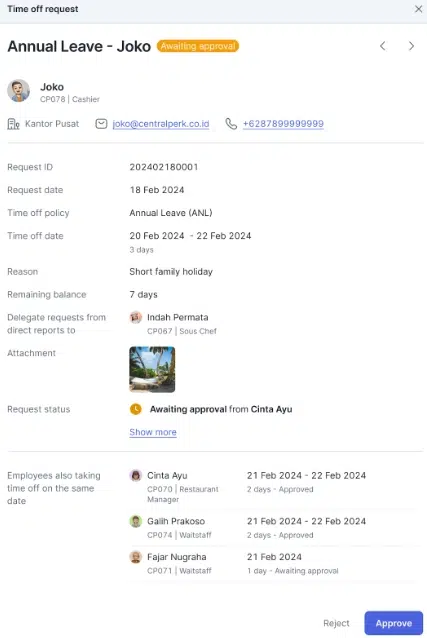
The Time Off feature allows employees to manage and submit leave requests independently anytime and anywhere using their mobile phones.
Compared to traditional leave applications that involve multiple approval layers and lengthy processes, this feature simplifies and accelerates leave management efficiently.
Over Time Feature
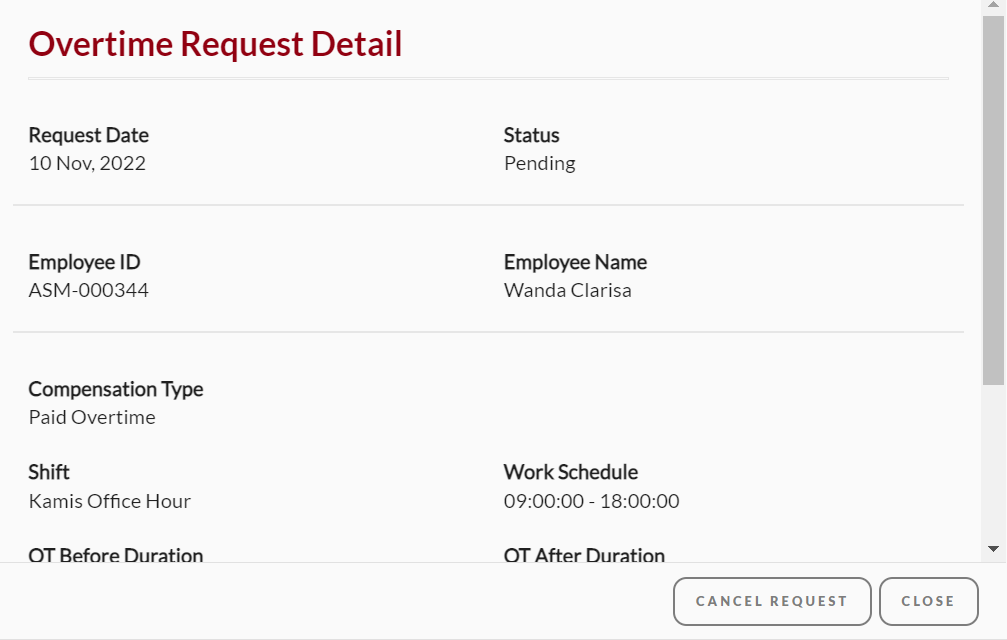
Overtime pay is an employee’s right for work performed beyond regular working hours. However, overtime submission processes are often complicated and inefficient.
With Mekari Talenta’s Over Time feature, employees can submit overtime requests easily, while HR teams can calculate overtime pay accurately and transparently in one integrated system.
Calendar Feature
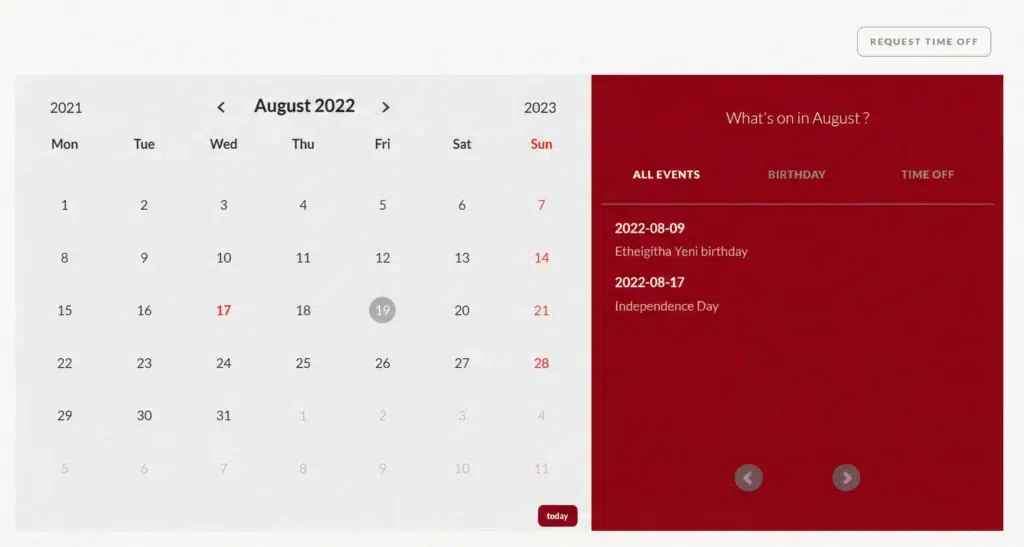
Information related to company events, working schedules, and public holidays can be easily accessed by employees through the Calendar feature in Mekari Talenta, ensuring better communication and alignment across the organization.
Attendance Feature
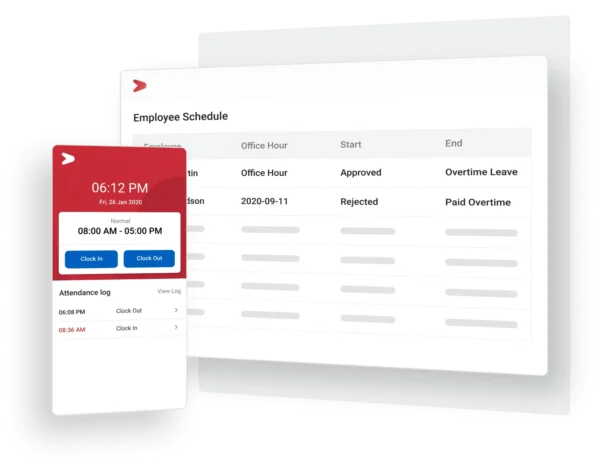
Employee attendance data is essential for HR, especially for payroll processing and as a basis for company policy decisions.
Therefore, the Attendance feature helps HR teams obtain more complete, accurate, and reliable attendance data to support operational efficiency.
Read also: What is Attendance Management System? Meaning, Types, and Benefits
Before choosing the right HRIS software, HR teams must first understand the features offered and the concept of HRIS itself.
It is important to evaluate whether the payroll software features are comprehensive and capable of meeting company needs.
Talenta is an HR and payroll software solution designed to simplify employee data management within an HRIS system.
Interested in trying Talenta? Schedule a demo with our Mekari Talenta sales team and consult your HR challenges directly with us.