



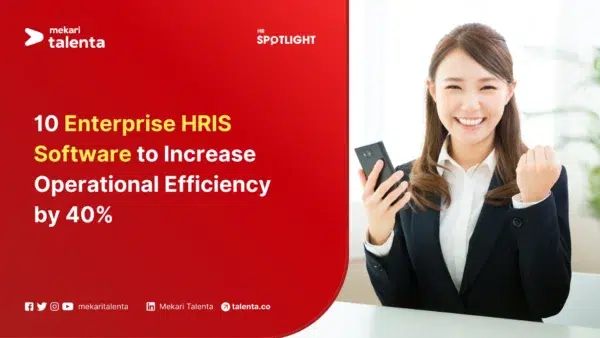
- Enterprise HRIS requires scalability, integration, and data security that are ready to support large organizations.
- Mekari Talenta is one of the HRIS applications recommended for enterprise thanks to its end-to-end capabilities and scalable system.
Human Resource Management (HRM) is the most important function in any company, especially in enterprise-scale organizations with complex structures and large numbers of employees.
Without proper HR management, no matter how much capital a company has, it will face difficulties surviving competition and growing to achieve its goals.
As operational complexity continues to increase, many enterprise companies are shifting from manual processes to systems supported by Human Resources Information System (HRIS) software to handle various HR administrative and operational activities in a more structured and integrated way.
In this article, we will further discuss recommendations for the best HRIS applications for enterprise that can help companies manage the employee lifecycle effectively.
Read also: HRIS Total Cost of Ownership (TCO): Components & 5-Year ROI




Criteria for HRIS Software Suitable for Enterprise
Although investment in HR technology continues to grow, adoption rates remain relatively low.
A surprising number for a system that is supposed to be the backbone of HR management.
The biggest problem in HRIS implementation at the enterprise level is not technology, but human behavior. No matter how sophisticated a system is, it will not deliver ROI if HR teams, managers, and employees are reluctant to use it consistently.
Therefore, choosing an HRIS for enterprise cannot rely solely on features, but must meet the following strategic criteria.
1. High Adoption Rate and User Experience
HRIS for enterprise must be designed with an intuitive user experience (UX), whether for HR teams, managers, or employees.
Low HRIS adoption is often caused by complex interfaces and workflows that are not aligned with user habits.
Systems that support self-service, mobile access, and simple workflows have proven to increase active usage and accelerate ROI.
Read also: HRIS Implementation: A Practical Guide from Data Cleansing to Hyper-Care
2. Scalability for Thousands to Tens of Thousands of Employees
Enterprise organizations require an HRIS that can handle organizational growth, both in terms of employee numbers, business entities, and geographic locations.
Large companies that use HR systems that are not scalable generally experience rising operational costs and integration complexity within the first 2–3 years.
Therefore, enterprise HRIS must support multi-company, multi-branch, and multi-policy structures without requiring separate systems.
3. End-to-End HR Process Automation
Therefore, enterprise HRIS should ideally automate processes from upstream to downstream, starting from employee data, attendance, payroll, to reporting, in order to minimize human error and repetitive manual work.
4. Integration Capabilities with Other Systems
Enterprise HRIS does not stand alone. The system must be easy to integrate with ERP, finance, accounting, and BI systems.
For example, employee data in the HRIS can be directly integrated into ERP or finance systems to calculate labor costs per business unit in real time, without manual reconciliation processes.
Organizations that fail to integrate HRIS with core business systems risk losing data visibility and slowing down strategic decision-making.
5. Data Security and Regulatory Compliance
Enterprise organizations manage sensitive data at a large scale, ranging from employee identity data, salary information, tax records, to performance history and employment contracts.
Therefore, HRIS must have high security standards, such as audit trails, role-based access, and compliance with labor regulations and data protection policies, so that access and data changes can be tracked and information leakage can be prevented.
For that reason, look for HRIS that already has data security and compliance certifications, such as ISO/IEC 27001 (information security management standard) and end-to-end encryption.
6. Reporting & Analytics for Strategic Decisions
More than just administration, enterprise HRIS must provide dashboards and analytics that support workforce planning.
Organizations that consistently leverage HR analytics tend to drive higher operational efficiency and productivity compared to those that do not.
Read also: HRIS Due Diligence Checklist: How to Evaluate HR Software Vendors
Comparison Table of HRIS Software for Enterprise
Before determining the most suitable HRIS software, it is important for enterprise-scale companies to compare various solutions available in the market.
Each HRIS has different focuses and advantages, ranging from payroll, workforce management, to analytics and system integration, and the level of suitability may vary depending on organizational complexity.
The following table presents a comparison of several HRIS software commonly used by enterprise companies, viewed from key features, advantages, supported platforms, and their suitability for large-scale organizational needs.
This comparison can serve as an initial reference before moving into the evaluation and recommendation stage for the most appropriate HRIS.
| Software | Key Features | Advantages | Platform | Enterprise Suitability |
|---|---|---|---|---|
| Mekari Talenta | Automated payroll, GPS attendance & face recognition, leave & overtime management, Employee Self Service (ESS), recruitment (ATS), performance management (KPI & 360°), reimbursement, HR analytics. | Integrated HR modules, scalable for large organizations, ISO/IEC 27001 security, Mekari ecosystem integration, Open API support. | Android, iOS, Web (cloud) | Highly suitable for enterprise with complex HR processes and integrated system needs |
| Workday | Core HCM, global payroll, talent management, workforce planning, AI-driven analytics | Single data model, advanced analytics, designed for global enterprise | Android, iOS, Web (cloud) | Highly suitable for large-scale multinational enterprise |
| SAP SuccessFactors | Core HR, recruiting, learning, performance, succession, payroll integration | Modular & scalable, strong SAP ecosystem | Android, iOS, Web (cloud) | Suitable for multinational enterprise with complex organizational structures |
| Oracle HCM Cloud | End-to-end HCM, payroll, talent management, AI-driven HR analytics | Strong integration with Oracle ERP & finance | Android, iOS, Web (cloud) | Suitable for large enterprise, especially Oracle ecosystem users |
| ADP Workforce Now | Payroll, HR core, benefits administration, time & attendance | Strong cross-country payroll & compliance capabilities | Android, iOS, Web (cloud) | Suitable for enterprise focusing on payroll and regulatory compliance |
| UKG Pro | Workforce management, scheduling, payroll, HR analytics | Strong for shift-based workforce management | Android, iOS, Web (cloud) | Highly suitable for retail, manufacturing, and healthcare enterprise |
| Infor HCM | Core HR, payroll, talent management, workforce experience | Integrated with Infor ERP, scalable for large organizations | Android, iOS, Web (cloud) | Suitable for enterprise using Infor ERP |
| Bitrix24 | Basic HR, time tracking, workflow automation, collaboration tools | All-in-one platform, efficient for large user bases | Android, iOS, Web (cloud) | Fairly suitable for enterprise needing basic HR and collaboration |
| isolved People Cloud | Payroll, benefits administration, HR core, talent management | Unified HCM with integrated payroll | Android, iOS, Web (cloud) | Suitable for enterprise seeking all-in-one HCM without global complexity |
| TimeTrex | Time & attendance, scheduling, payroll, job costing | Cost-efficient, focused on workforce management | Android, iOS, Web (cloud) | Suitable as an attendance/payroll module within enterprise HR ecosystems |
Best HRIS Software Recommendations for Enterprise
After understanding the differences in features, capabilities, and focus of each HRIS, the next step is determining the solution that is most relevant to enterprise needs.
Not all HRIS software are suitable for large-scale organizations. Factors such as scalability, system integration, data security, and the ability to support end-to-end HR processes become the main differentiators.
Below are recommendations for the best HRIS software for enterprise, based on system readiness to handle organizational complexity, long-term operational support, and the ability to support strategic decision-making in large-scale companies.
1. Mekari Talenta
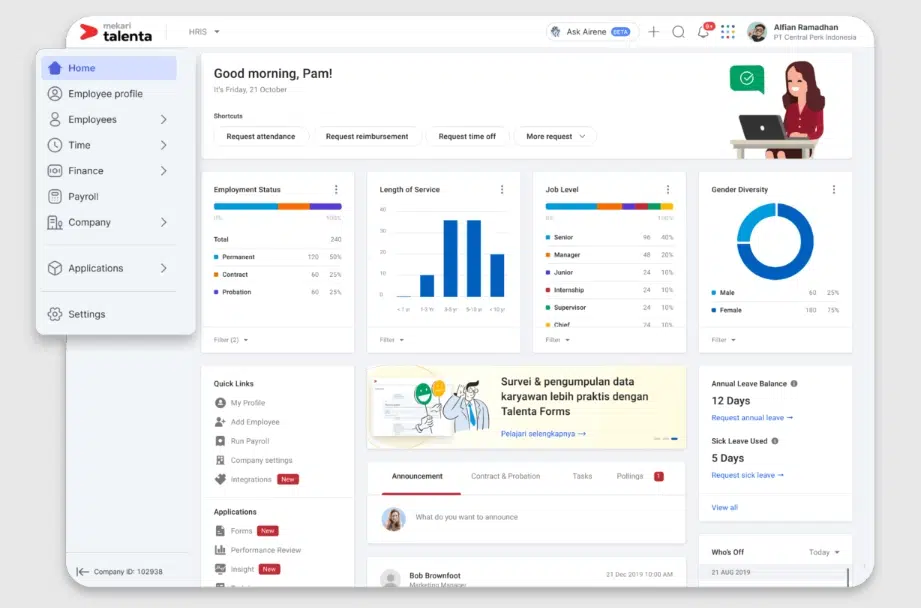
Mekari Talenta is a cloud-based HR software and part of Mekari’s integrated software ecosystem, designed to support end-to-end workforce management for large enterprise companies, ranging from thousands to tens of thousands of employees.
With its connected modules and scalable architecture, the platform helps large organizations manage HR processes in a more unified and structured way as they grow.
With comprehensive features and a scalable system, Mekari Talenta helps companies simplify HR operational complexity while improving efficiency and decision-making accuracy.
Its cloud-based architecture allows companies to adjust usage scale without installation, maintenance, or complex system development burdens.
As a mature HR solution, Mekari Talenta has received global recognition. Talenta was named a “Strong Performer” in Gartner® Voice of the Customer™ 2024 and is listed in the Gartner® Market Guide 2025, confirming its capability as an HRIS platform relevant for modern enterprise needs.
Used by more than 35 thousand companies, Mekari Talenta offers a stable system foundation to support organizational growth across industries.
You can read our client success case studies after using Mekari Talenta: Our Clients: How Businesses Grow with Mekari Talenta
Key Mekari Talenta Features for Enterprise Supporting End-to-End HR Processes
Mekari Talenta supports the entire employee lifecycle within one integrated system, such as:
1. Recruitment (Advanced Recruitment / ATS)
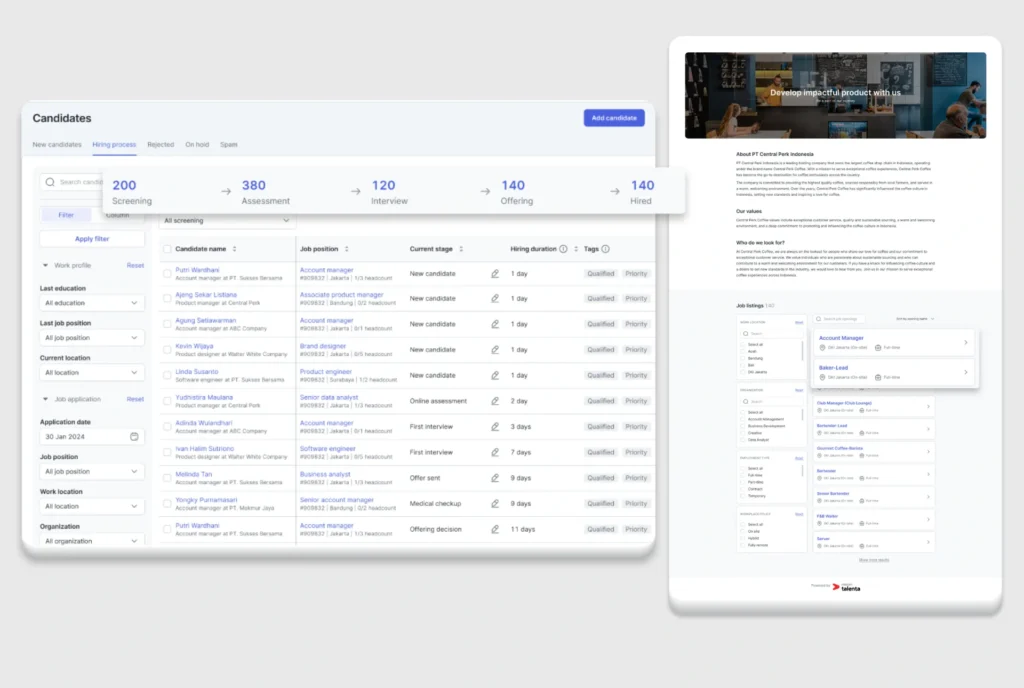
Talenta Recruitment provides an integrated ATS for job posting, AI-based candidate screening, pipeline management, interviews, and onboarding within a transparent and well-documented workflow.
This feature helps enterprise accelerate large-scale hiring with an integrated recruitment flow from job posting to onboarding, while maintaining data consistency, process transparency, and control across multiple business units.
2. Attendance Management
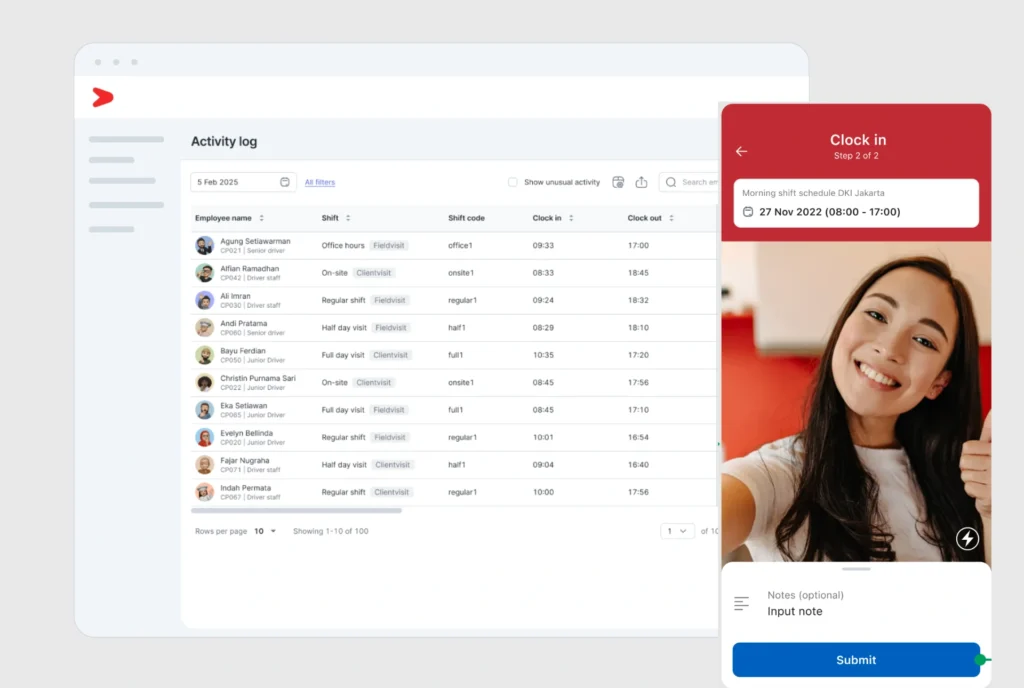
The attendance management feature allows companies to monitor attendance, manage shifts, overtime, and leave across locations through a centralized system automatically synchronized with payroll.
With online attendance and GPS-based biometric verification, enterprise organizations can maintain data accuracy while reducing fraud risk in large-scale operations.
3. Payroll Management
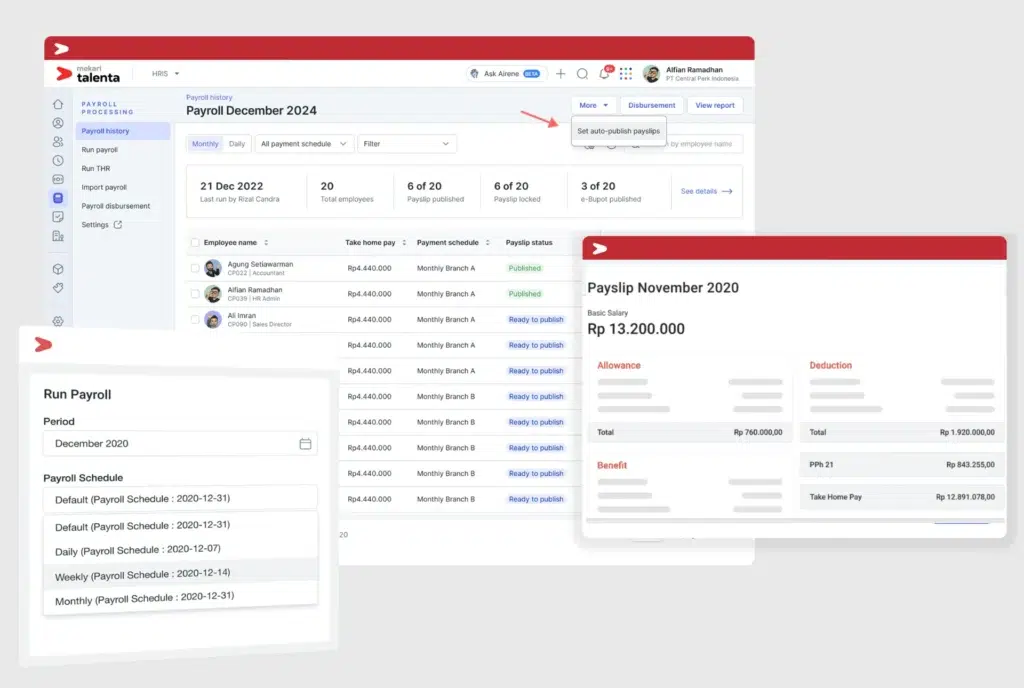
Mekari Talenta payroll software integrates attendance, leave, overtime, and allowance data into one automated payroll system configurable according to company policies.
Through this system, companies can automatically calculate salary components, process centralized salary payments, and distribute digital payslips directly to employees without manual processes.
This approach helps enterprise process payroll for thousands of employees consistently, on time, and with minimal risk of calculation errors.
4. Leave Management
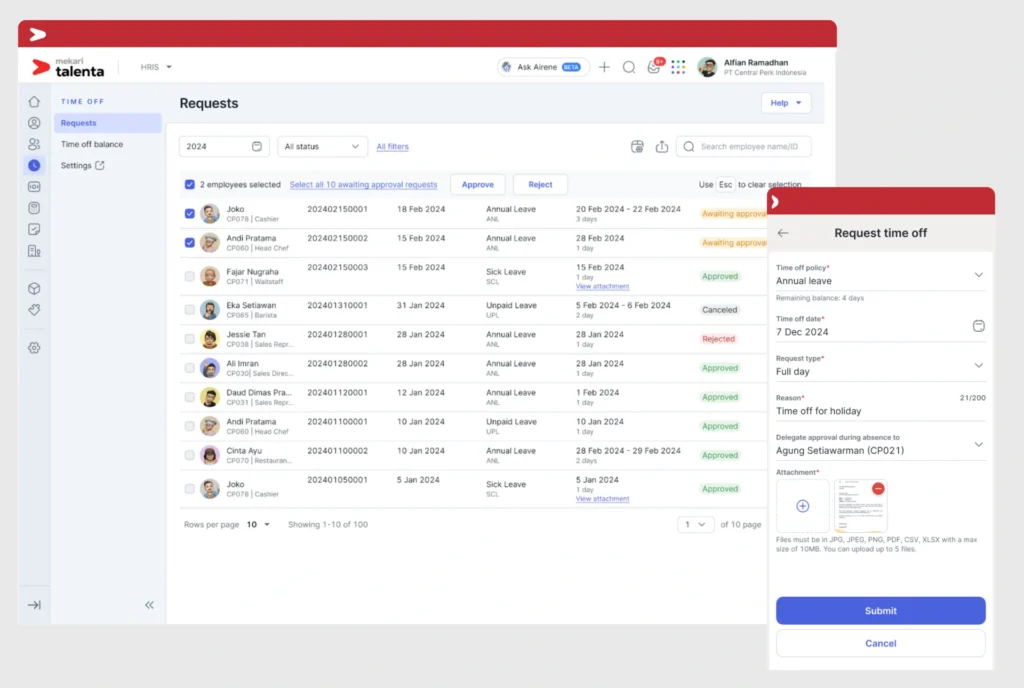
The employee leave application feature simplifies leave requests and approvals through standardized digital workflows that are easy to monitor.
For enterprise, real-time visibility into leave balances and schedules helps maintain optimal workforce planning without disrupting business operations.
5. Reimbursement Management
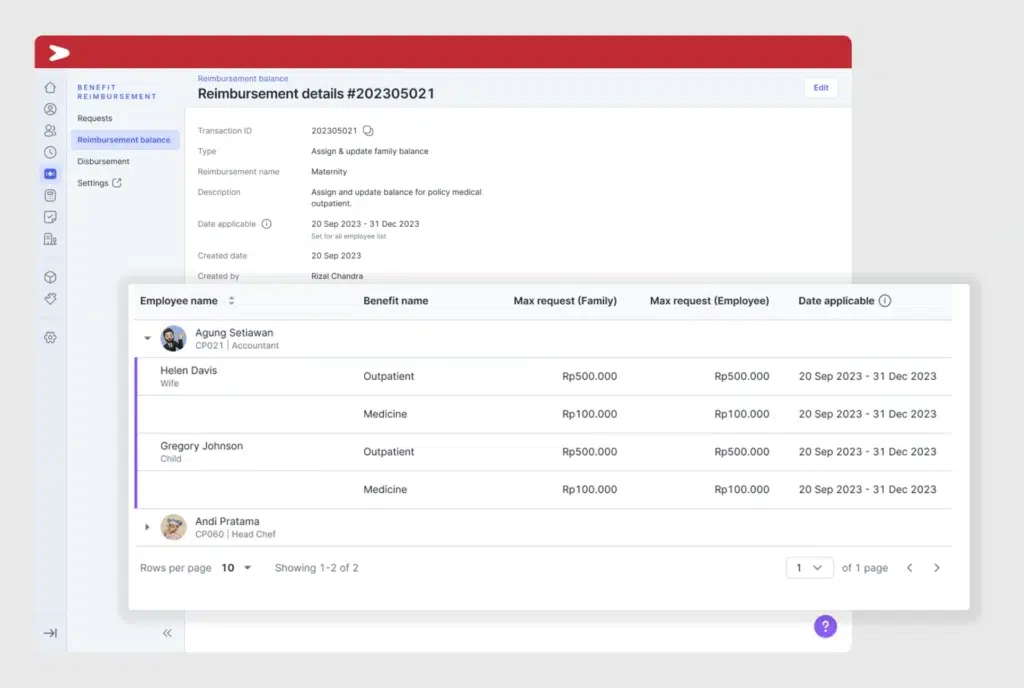
Digital reimbursement submission through a mobile app with receipt uploads, controlled approvals, and automatic recording minimizes administrative errors.
This reimbursement management feature allows enterprise to maintain transparency of employee expenses while accelerating internal verification and audit processes.
6. Database Management
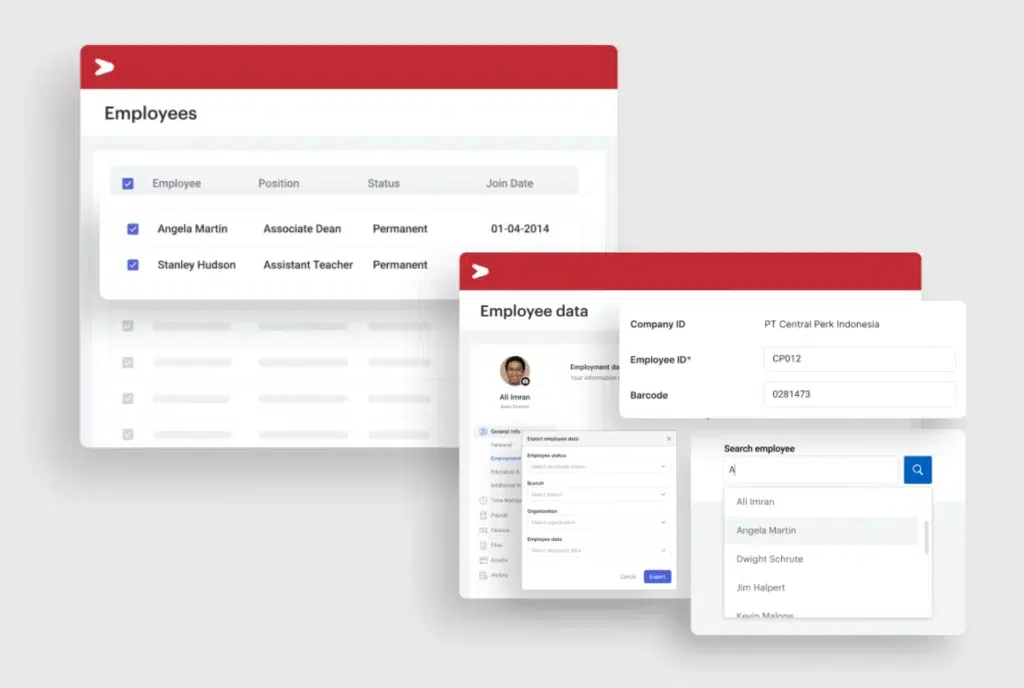
Talenta provides centralized employee database management as a single source of truth for all HR processes.
With consistent and always-updated data, enterprise can run HR operations across divisions without duplication or data inconsistency.
7. Performance Management
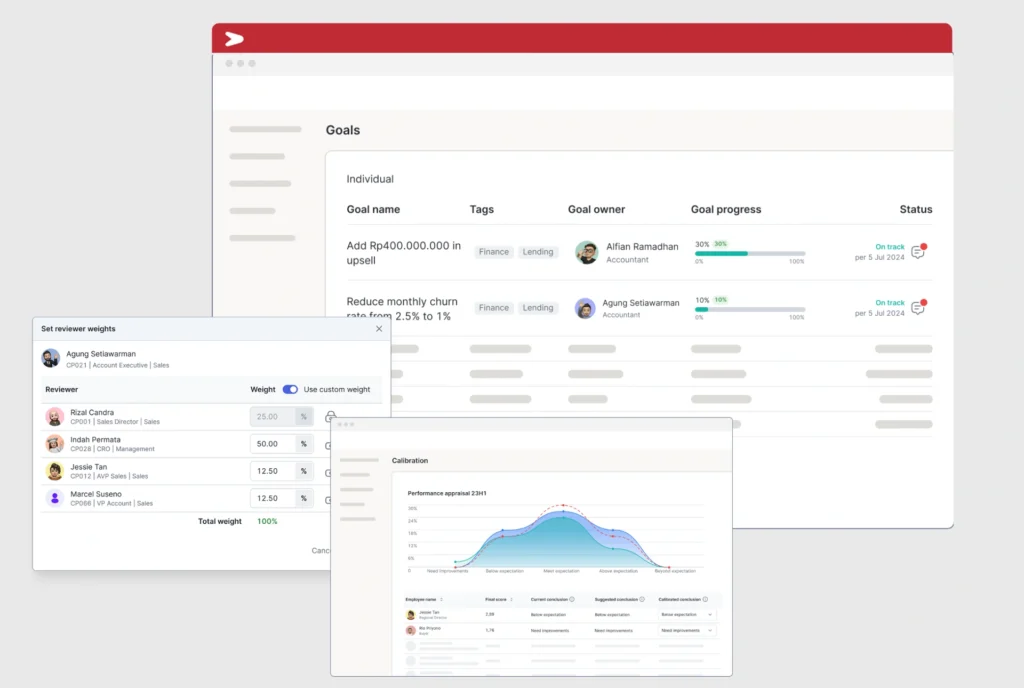
Performance management supports performance tracking through KPI, OKR, and other evaluation methods adaptable to organizational structures.
This feature helps enterprise align individual performance with company strategic goals in a more measurable way.
8. HR Analytics Dashboard with Airene Support
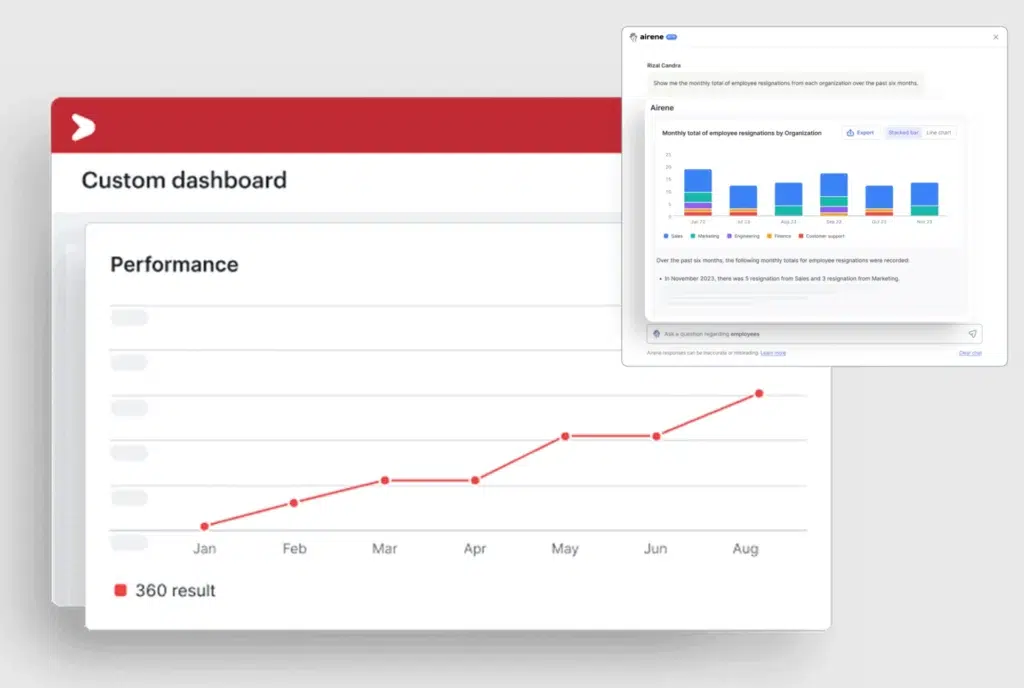
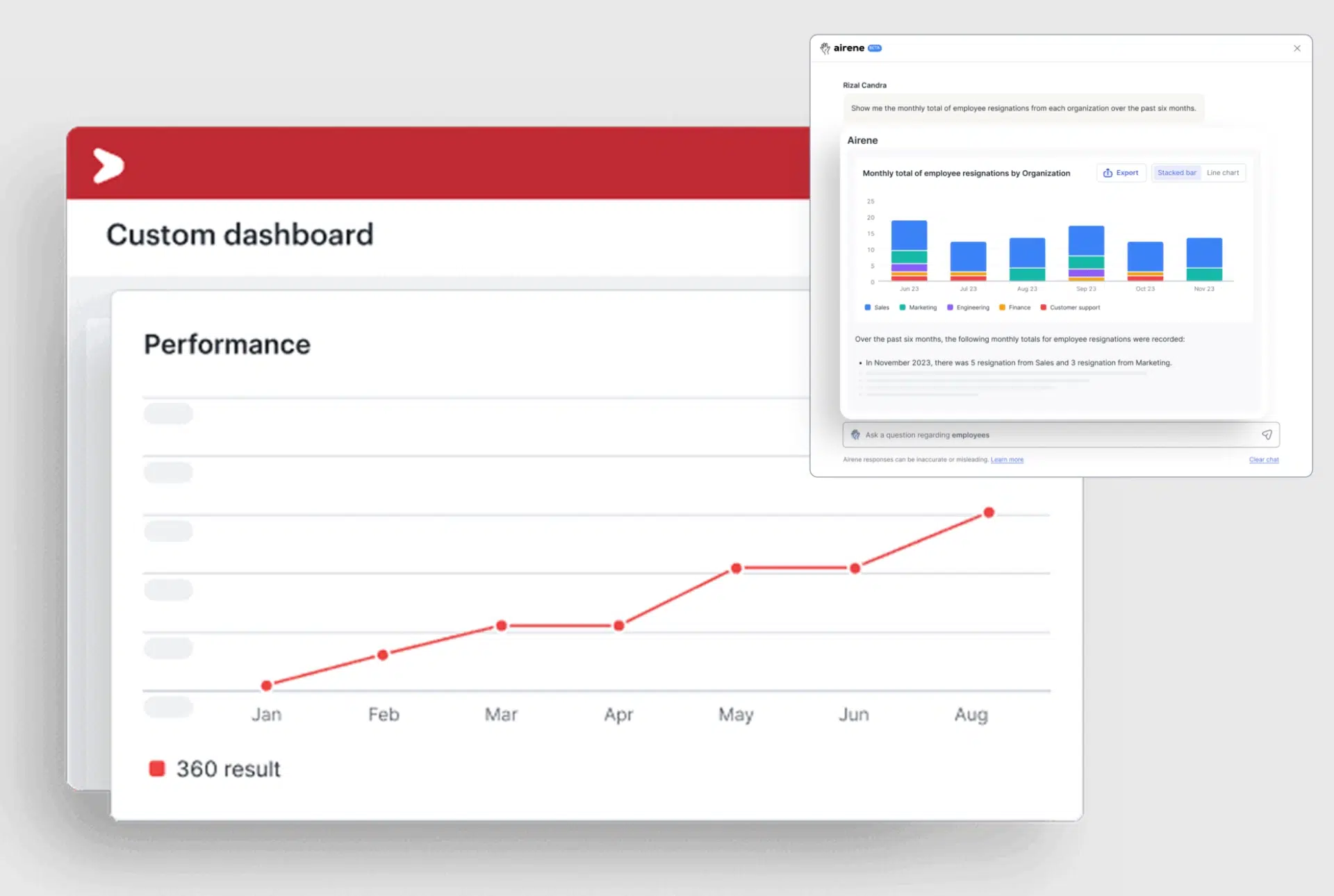
The HR Analytics feature in Mekari Talenta presents operational HR data in easy-to-understand and real-time dashboards.
With centralized insights, enterprise management can make data-driven decisions without relying on manual reports from multiple sources.
Supported by Airene (AI-powered HR analytics), Talenta helps HR and management extract descriptive insights, automated summaries, and actionable recommendations from attendance, work, and payroll data more quickly and strategically.
9. Talent Development
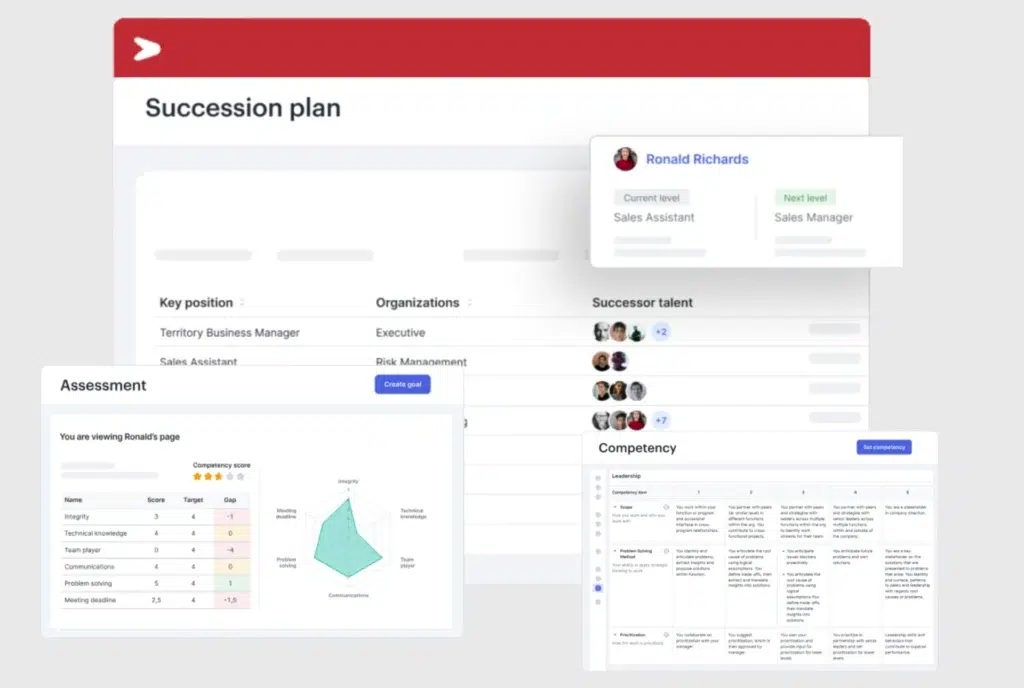
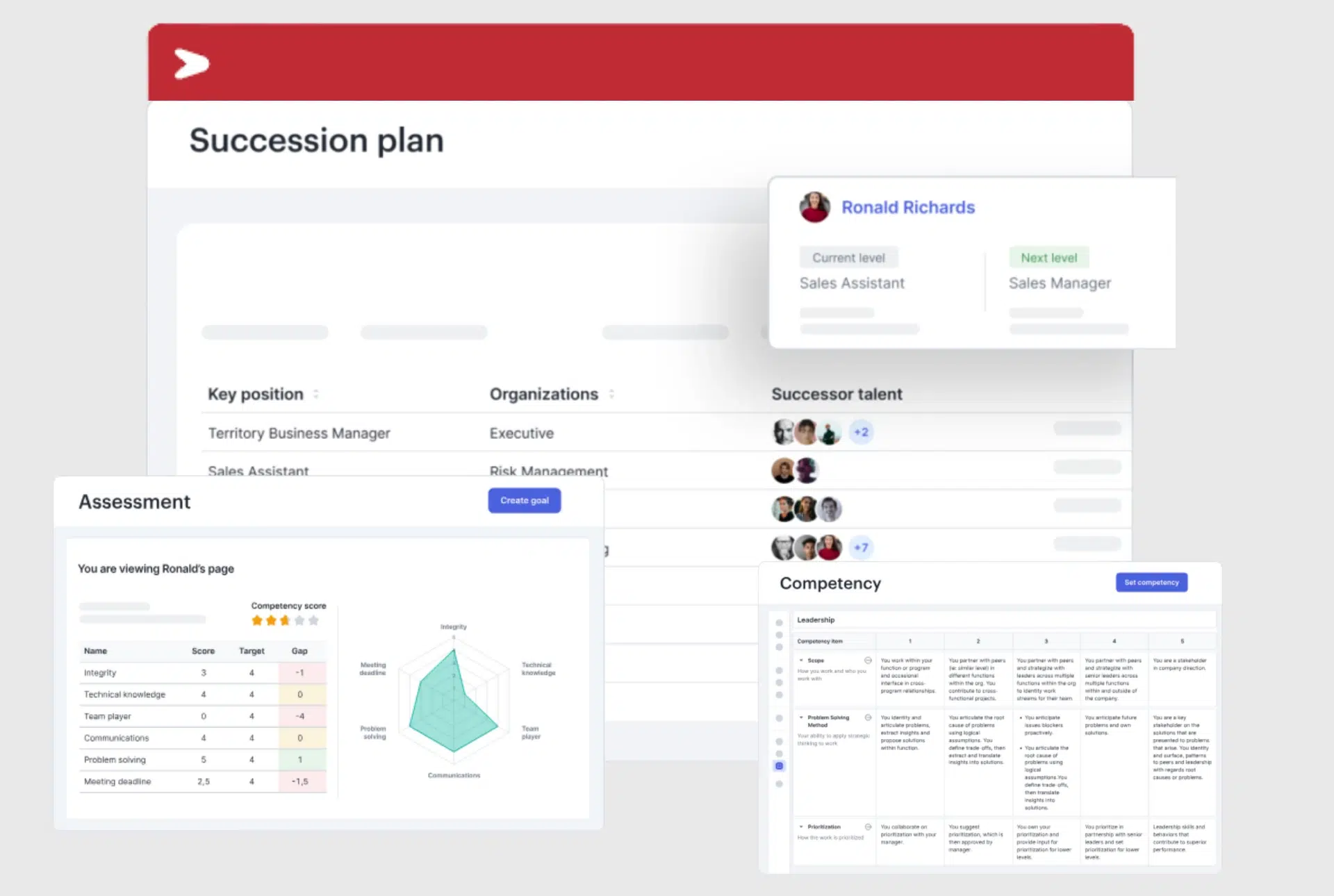
The talent development feature helps companies plan employee development and succession systematically.
This approach allows enterprise to maintain leadership continuity and organizational readiness during structural changes.
10. Forms
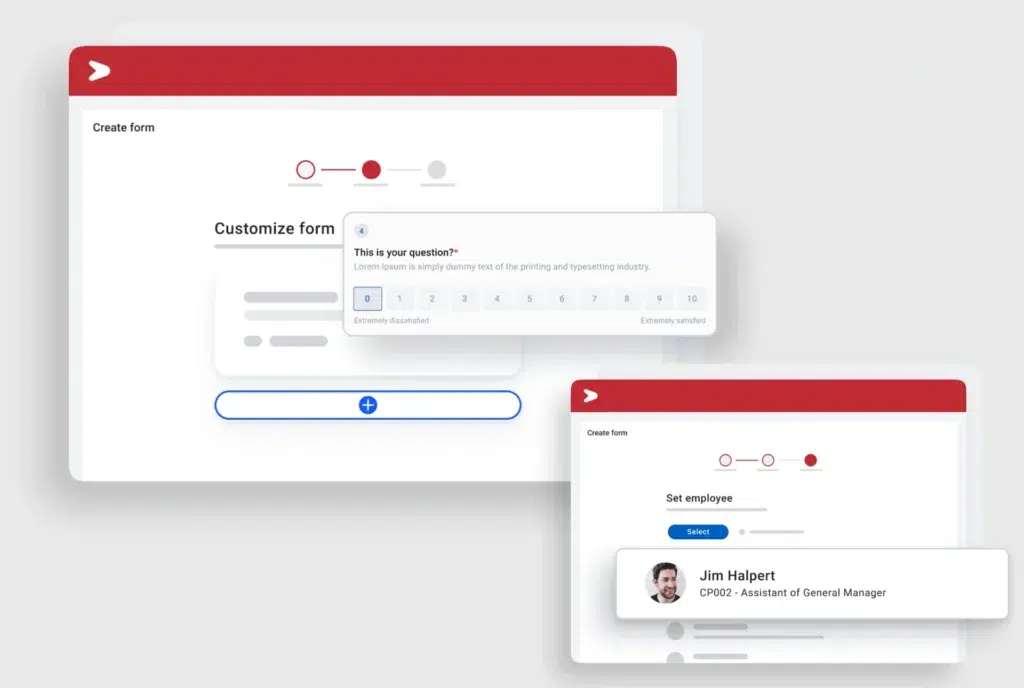
Mekari Talenta also simplifies the creation and distribution of forms, surveys, and employee feedback directly from the HR system.
For enterprise, this process accelerates internal data collection while maintaining data security and consistency.
11. Employee Self Service (ESS)
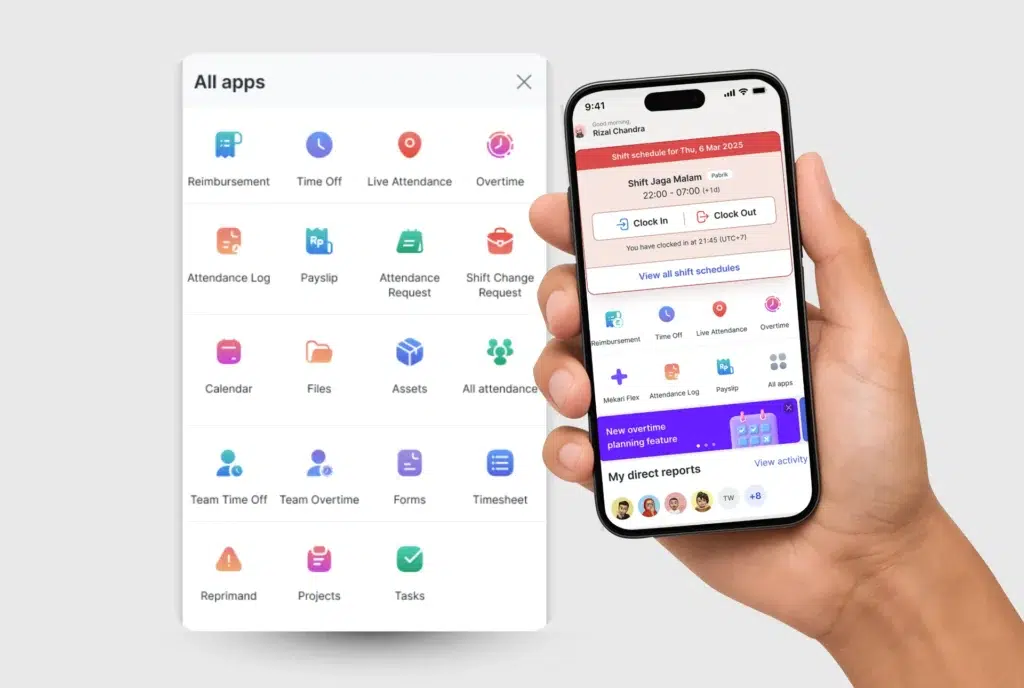
Employee Self Service (ESS) is a self-service portal that allows employees to manage administrative needs directly within the HR system, from leave requests and attendance to payslip access.
For enterprise, this reduces HR operational workload without losing control because all requests still follow structured approval workflows.
Integration with Enterprise Ecosystems and Systems
To support complex enterprise needs, Mekari Talenta is designed with broad integration capabilities, both within the Mekari ecosystem and with third-party systems, such as:
- Mekari Jurnal – Automatic payroll synchronization with accounting
- Mekari Flex – Flexible employee financial benefits management
- Mekari Sign – Digital signing of contracts, employee documents, and offer letters
- Mekari Expense – Automation of reimbursements and business travel
- Mekari Flow – Design and automation of HR workflows
- Mekari Klikpajak – Generation of PPh 21/26 tax documents in one platform
In addition, Mekari Talenta supports integration with ERP and LMS systems such as SAP S/4HANA, SAP Business One, Oracle NetSuite, Microsoft Dynamics 365 Business Central, Odoo, Acumatica, as well as HR support solutions like Talentics, Nusa LMS, Cakap, and Hikvision attendance devices.
These integrations allow HR data to connect directly with financial, operational, and learning systems without repeated manual input.
Security, Architecture, and Enterprise Support
To ensure enterprise readiness, Mekari Talenta is built with the following technology foundations and services:
- Cloud-based – No installation and maintenance costs, ready to scale according to needs
- Data security assurance – ISO/IEC 27001-certified security system with encryption at rest and in transit
- Dedicated customer support – Consultation, implementation assistance, and after-sales services
- Easy-to-use UI – Intuitive interface for HR, managers, and employees
- Integration & flexible API support – Easily adapted to existing company systems
- HR ecosystem – Community support and HR networking for sharing best practices
Advantages
- End-to-end HRIS that is HCM-ready and scalable for enterprise.
- Integrated payroll, attendance, recruitment, performance, and analytics in one platform.
- ISO 27001-certified data security and local support.
- Extensive integration with Mekari ecosystem and enterprise ERP.
Limitations
- Requires initial configuration to align with enterprise policies.
Why choose Mekari Talenta?
2. Workday
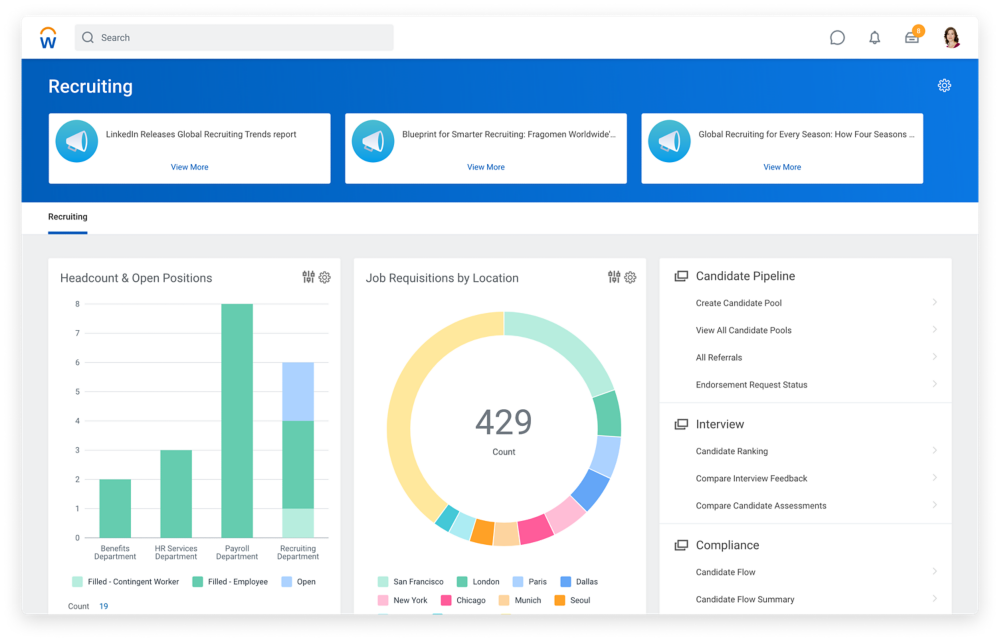
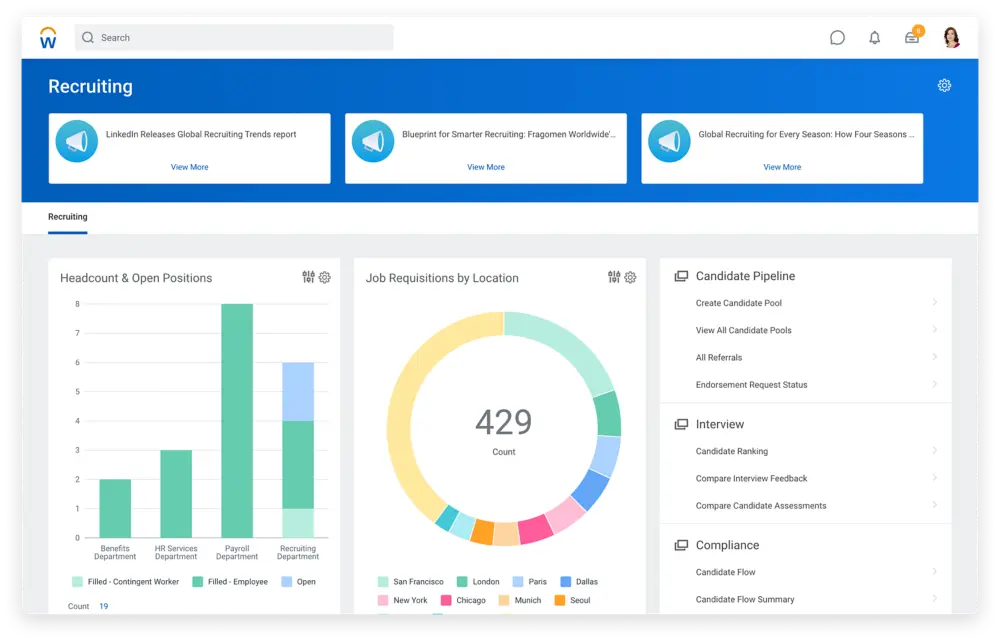
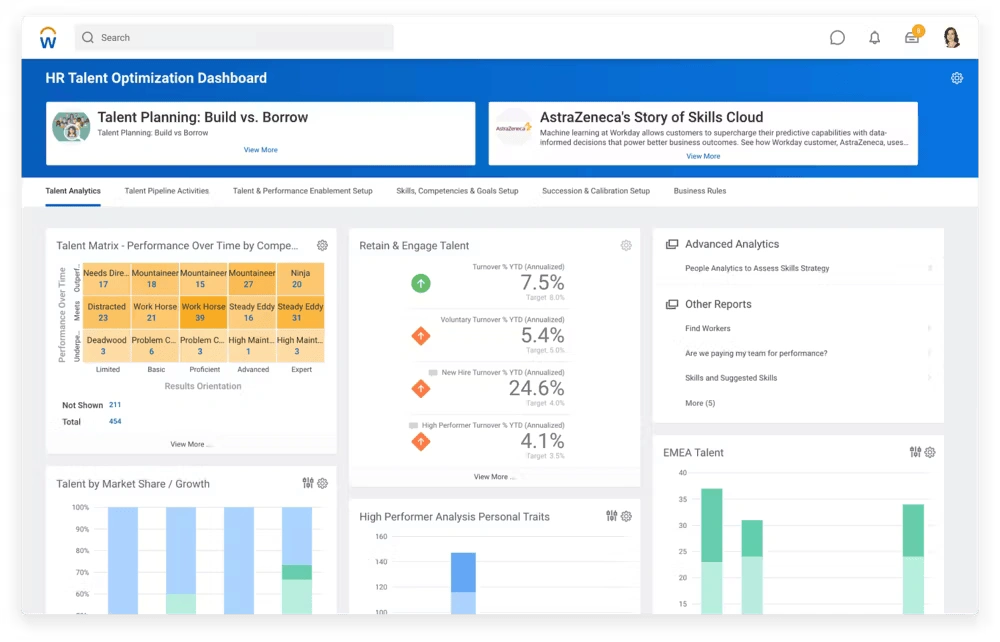
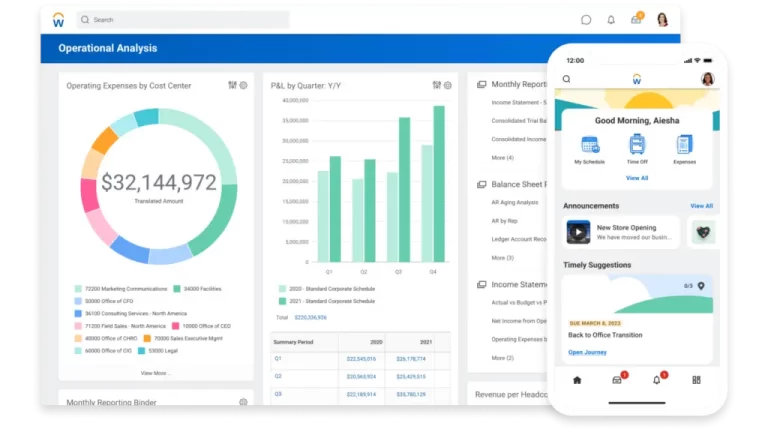
Workday is a cloud-based HRIS and Human Capital Management (HCM) solution designed specifically for enterprise and multinational companies.
This platform unifies HR management, finance, and organizational planning in a centralized system with a single data model, allowing HR and business data to be accessed consistently and in real time.
For enterprise, Workday helps simplify the complexity of managing thousands to tens of thousands of employees across business units and regions.
Companies can manage employee data, payroll, talent management, and workforce planning with better visibility for strategic decision-making.
Price: $34–$150+ PEPM
Key Workday features for enterprise:
- Integrated Human Capital Management (HCM) for core HR, talent, and workforce planning.
- Learning & talent management connected directly with performance and development data.
- Real-time analytics and reporting based on a single source of data for strategic management needs.
- HR and finance integration in one platform for more accurate workforce and cost planning.
- Mobile access for employees and managers to manage daily HR activities.
Advantages
- Unified data model for HR and finance at global scale.
- Advanced analytics and workforce planning capabilities.
- Built specifically for enterprise and multinational organizations.
Limitations
- Higher implementation and licensing costs.
- Customization and adoption may require longer deployment time.
Why choose Workday?
3. SAP SuccessFactors
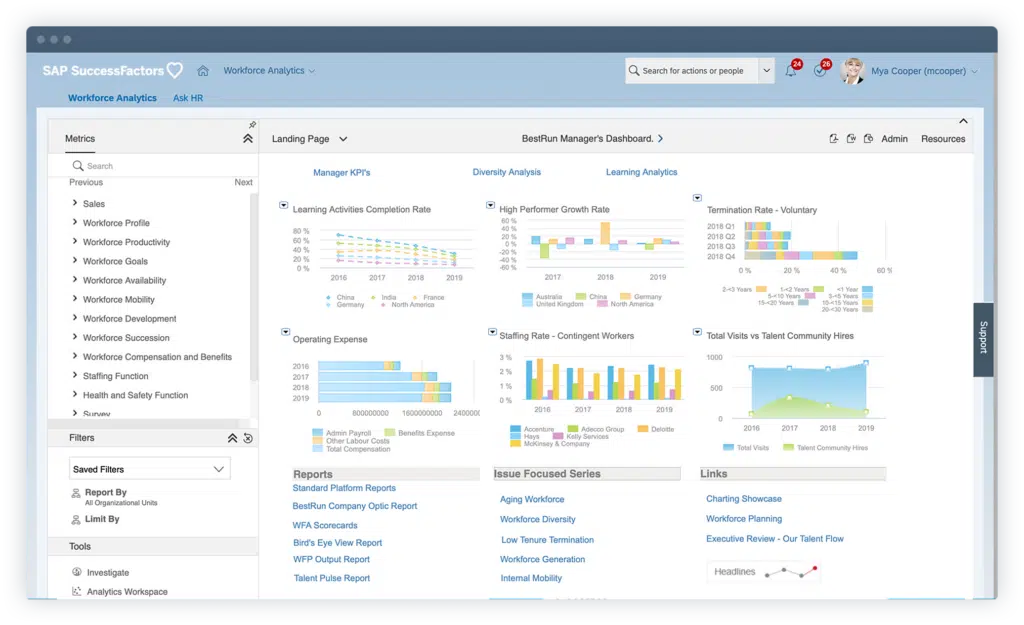
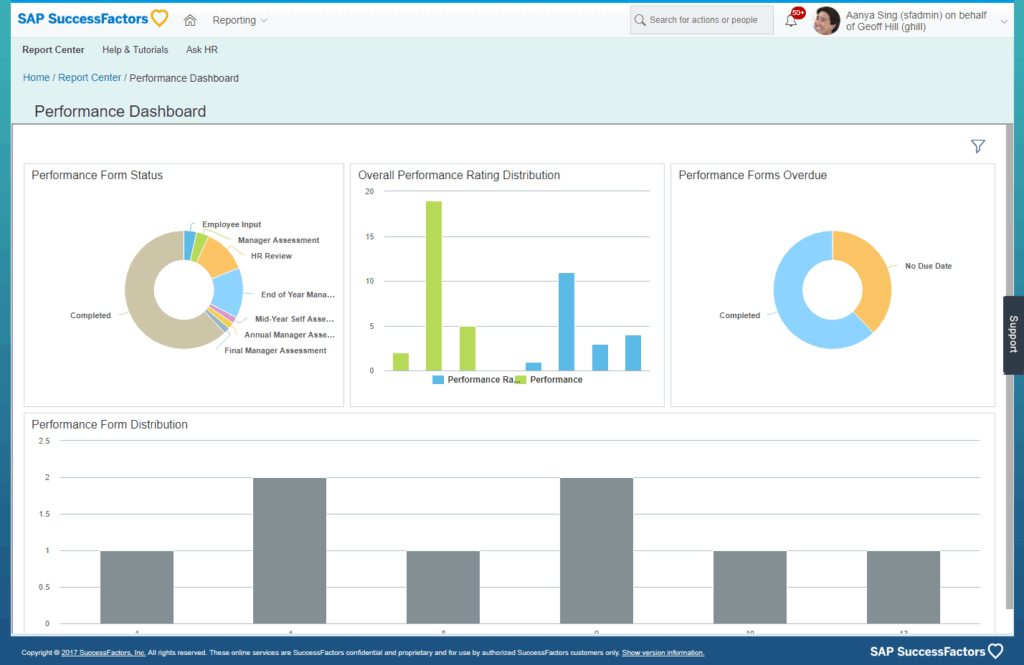
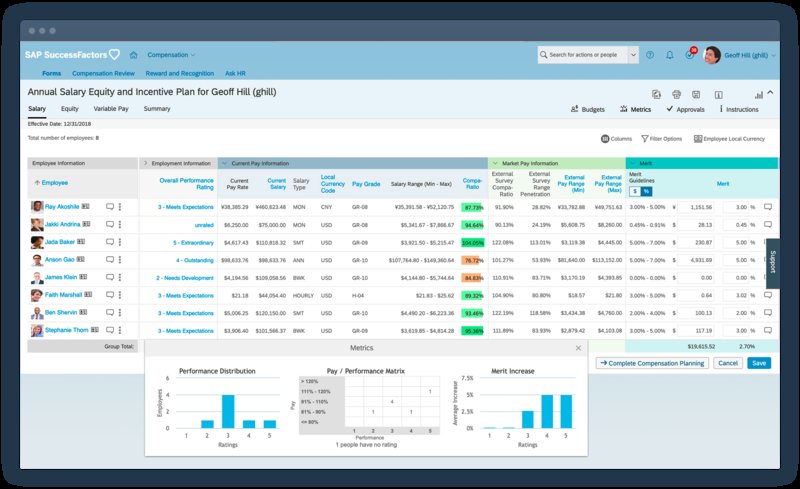
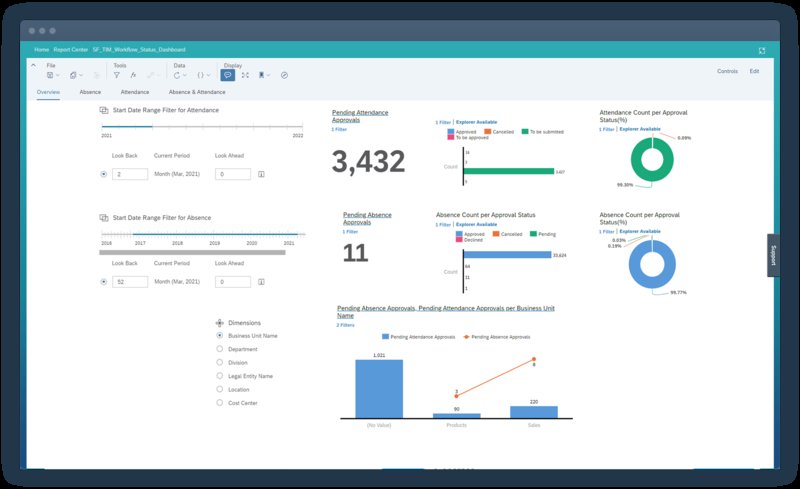
SAP SuccessFactors is an HRIS application designed for enterprise and multinational companies with complex organizational structures.
The platform focuses on managing the employee lifecycle comprehensively, from recruitment to talent development and retention.
SAP SuccessFactors also supports HR process standardization across business units and countries while remaining flexible to local needs through configuration and payroll integration.
Price: $28–$38 PEPM
Key SAP SuccessFactors features for enterprise:
- Core HR & Employee Central for centralized employee data management.
- Talent management (recruiting, performance, succession, learning).
- Workforce analytics & reporting for strategic needs.
- Integration with SAP ERP and other enterprise systems.
- High scalability for global organizations.
Advantages
- Modular and scalable architecture for multinational organizations.
- Strong integration with SAP ERP ecosystem.
- Supports HR standardization across countries.
Limitations
- Implementation and configuration can be complex.
Why choose SAP SuccessFactors?
4. Oracle HCM Cloud
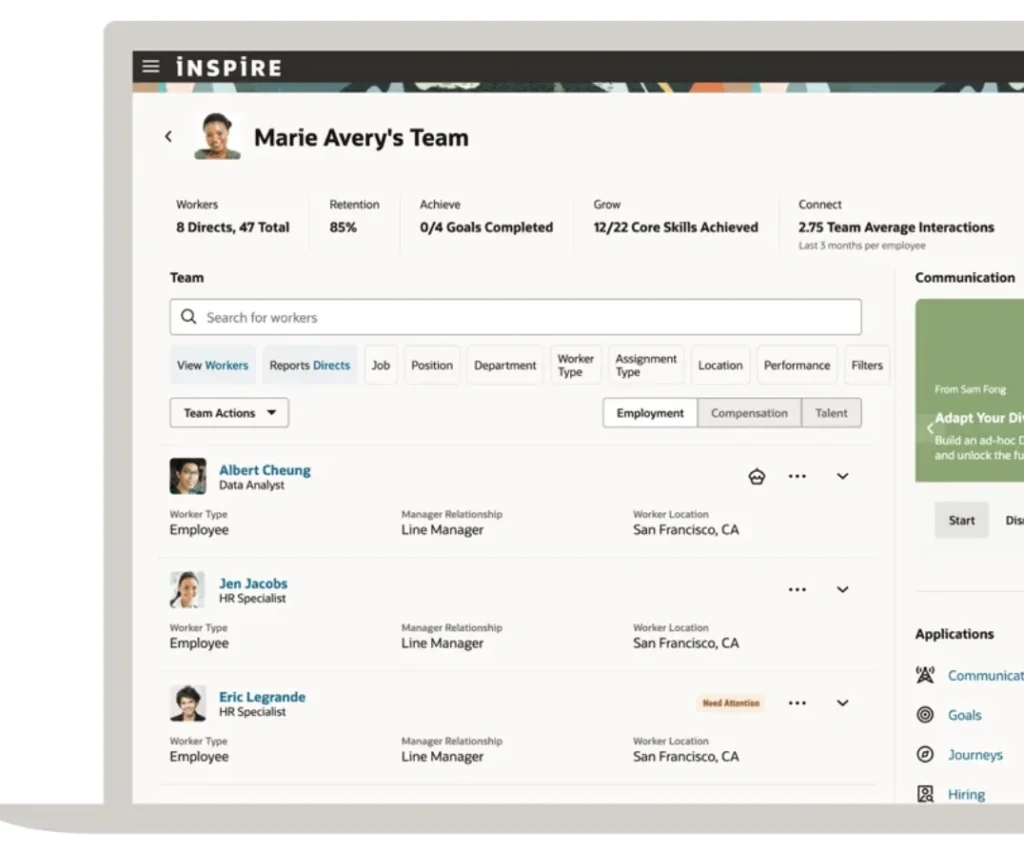
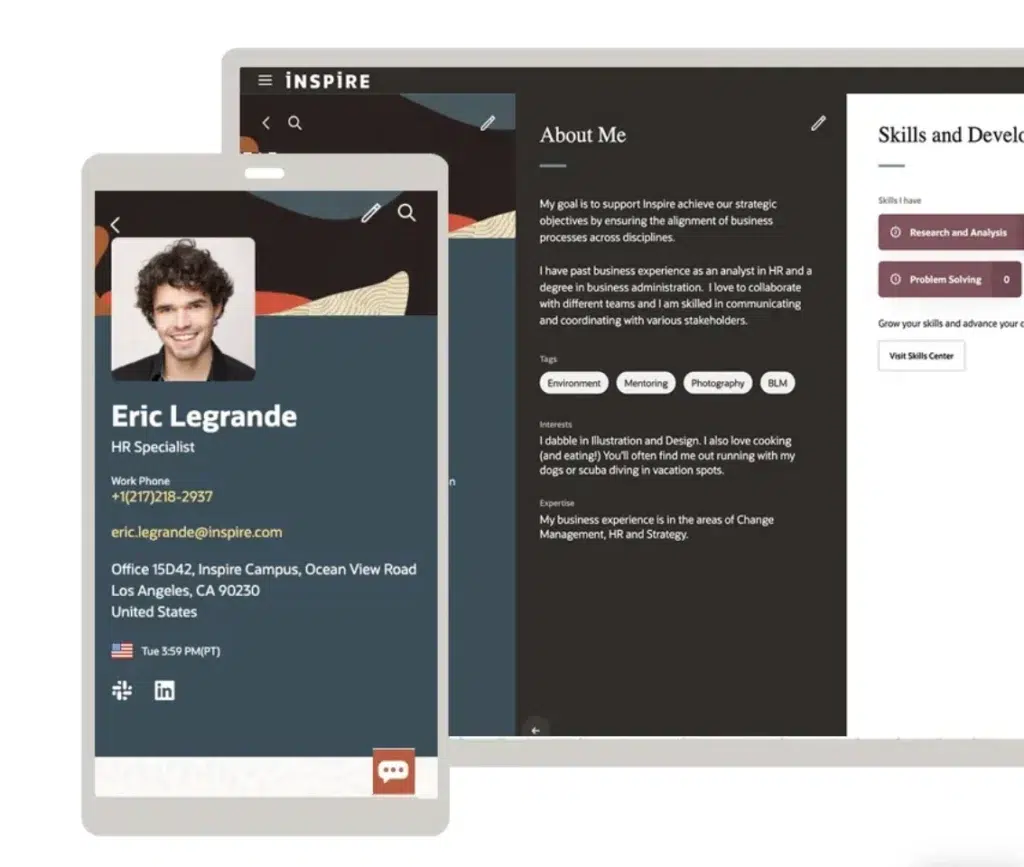
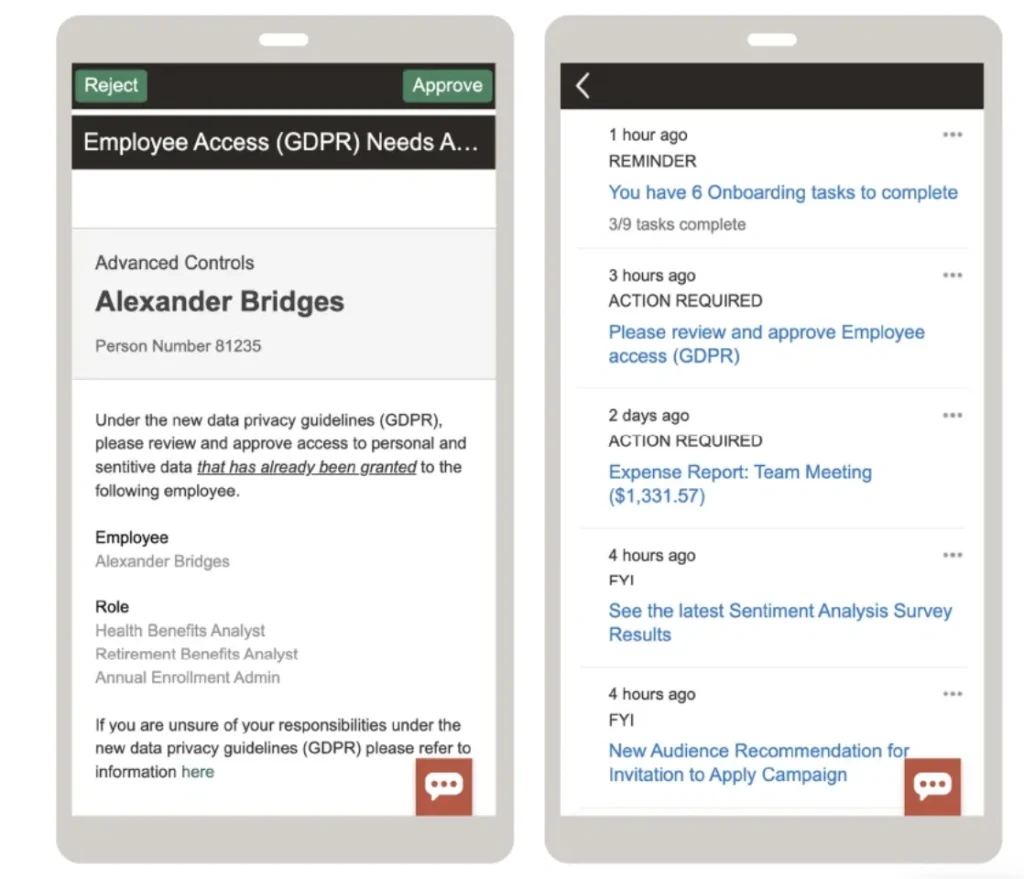
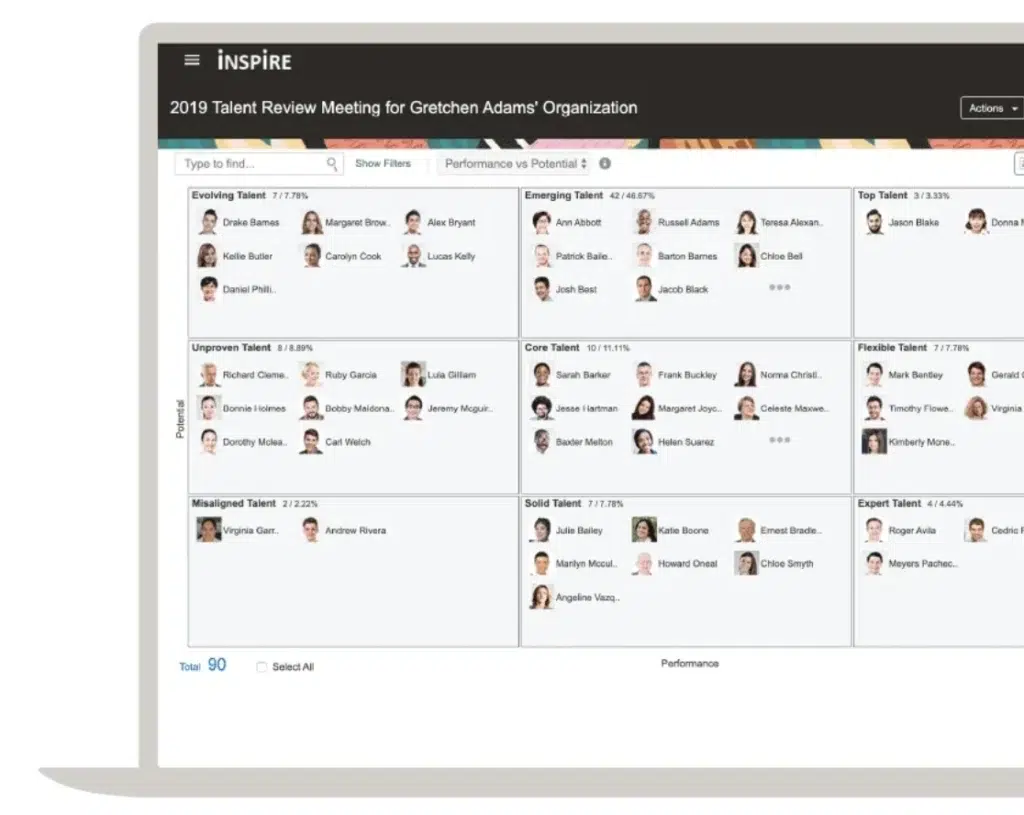
Oracle HCM Cloud is an enterprise HRIS solution that unifies core HR, talent management, payroll, and workforce analytics in a single cloud platform. The system uses a single data model so HR data remains consistent across the organization.
Oracle HCM Cloud is highly relevant for enterprise that require close integration between HR and finance, especially organizations already using the Oracle ecosystem.
Price: starting at approximately $15 PEPM, customized based on modules and enterprise needs.
Key Oracle HCM Cloud features for enterprise:
- Global core HR with complex organizational structures.
- Integrated talent & performance management.
- Workforce analytics and AI-driven insights.
- Integration with Oracle ERP & Finance.
- Supports large-scale multinational enterprise.
Advantages
- End-to-end HCM platform with AI-driven analytics.
- Strong integration with Oracle ERP and finance systems.
Limitations
- Less flexible for organizations outside the Oracle ecosystem.
Why choose Oracle HCM Cloud?
5. ADP Workforce Now
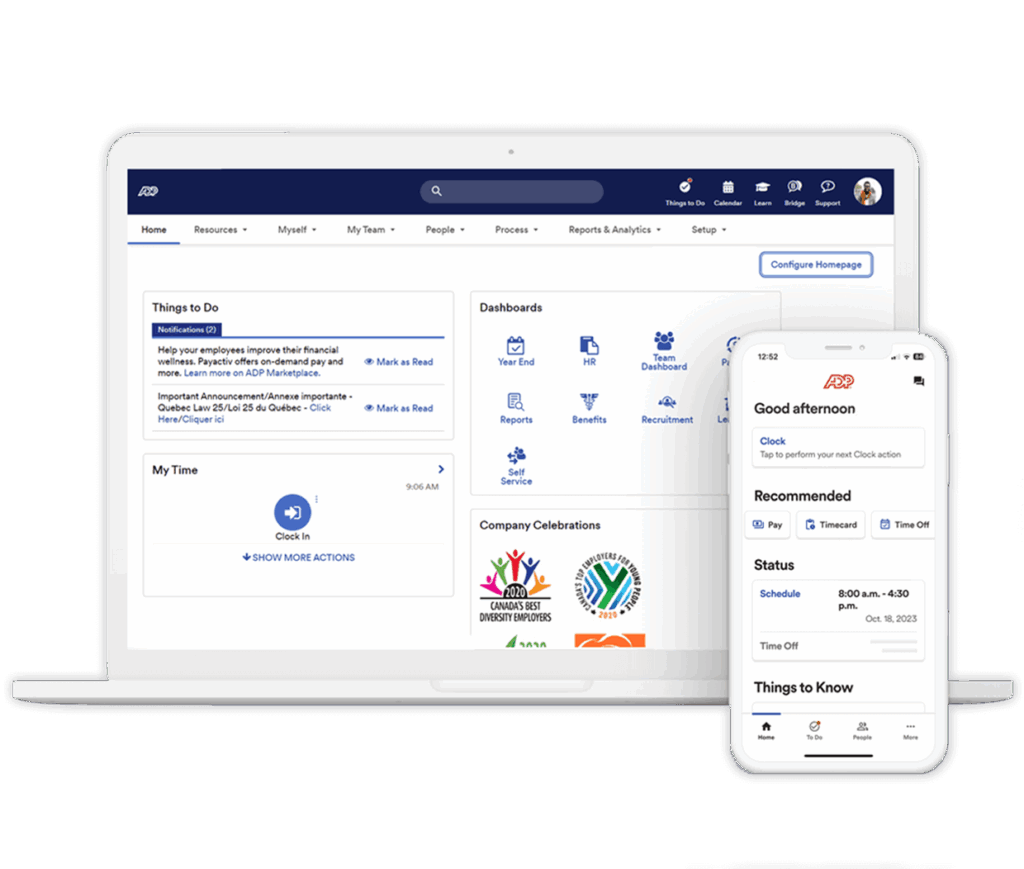
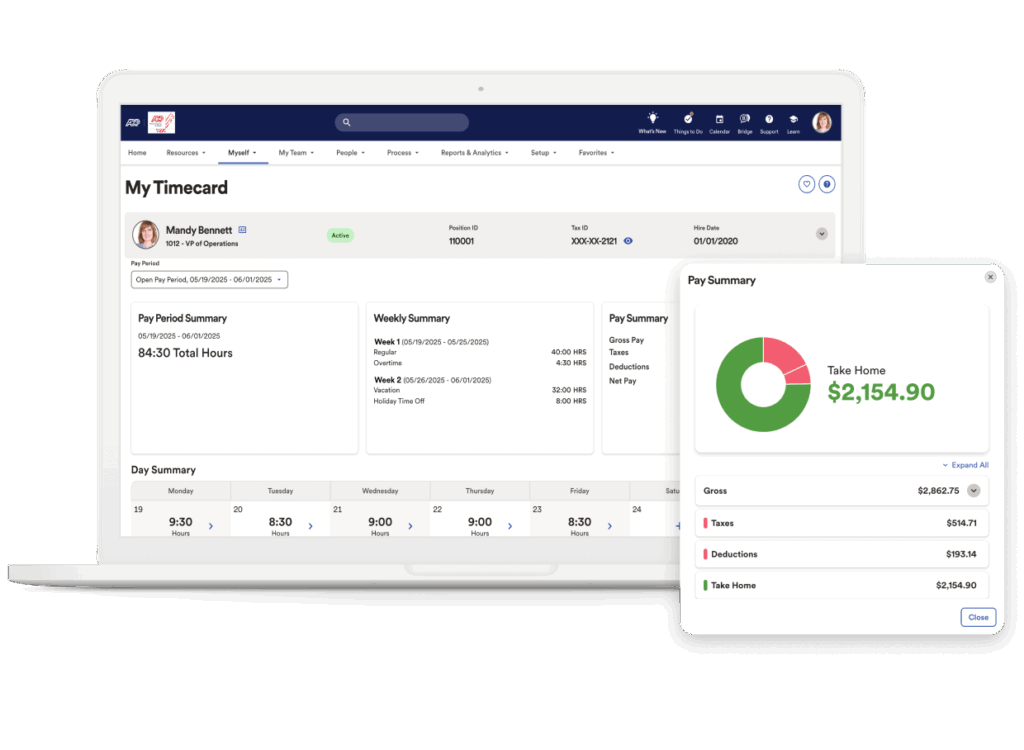
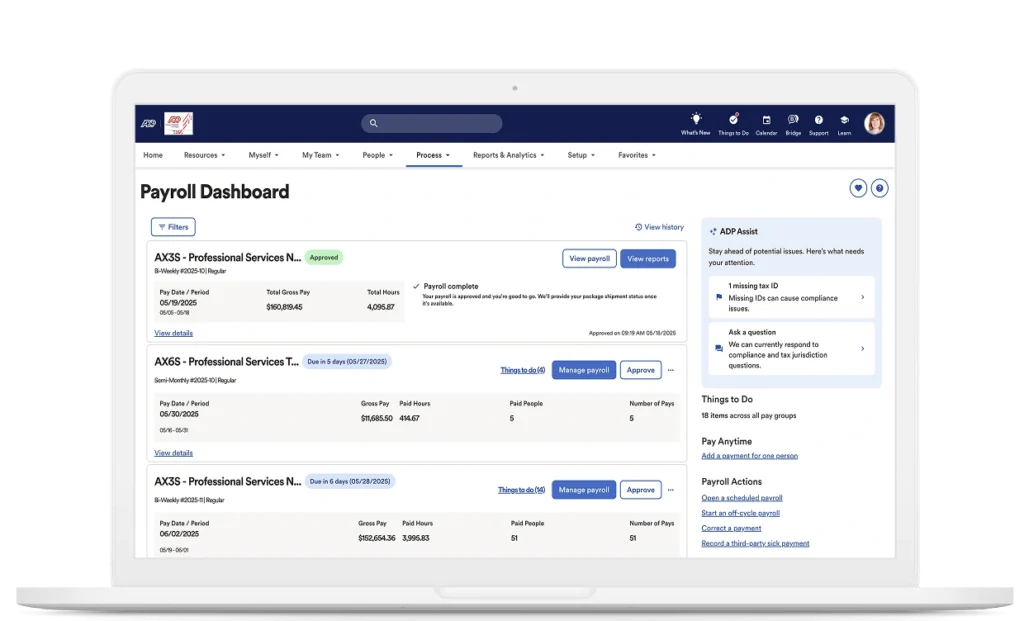
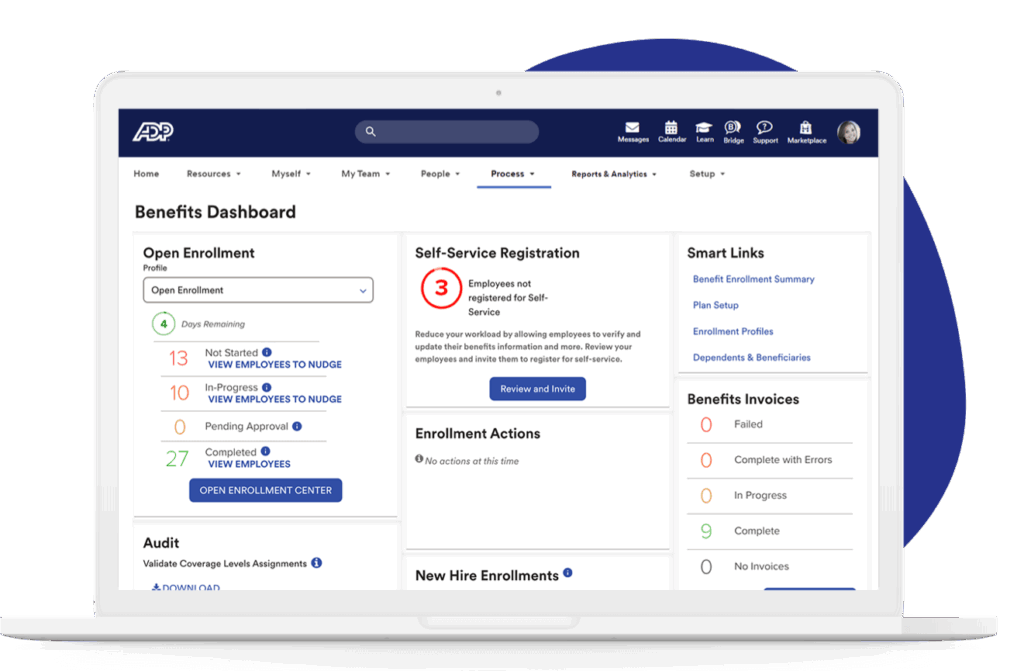
ADP Workforce Now is an HRIS and payroll platform widely used by enterprise companies, especially those with cross-regional payroll and compliance needs. ADP is known for strong payroll, tax, and compliance management.
For enterprise, ADP Workforce Now helps reduce HR administrative complexity through standardized and automated payroll processes.
Price: $19–$28 PEPM, depending on company size and HR/payroll modules.
Key ADP Workforce Now features for enterprise:
- Integrated payroll and tax management.
- Core HR and employee self-service.
- Time & attendance and workforce management.
- Compliance tools for various regulations.
- HR & payroll reporting for management.
Advantages
- Strong payroll and cross-country compliance capabilities.
- Reliable for organizations with complex regulatory needs.
Limitations
- Talent management features are less advanced compared to some enterprise HCM suites.
Why choose ADP Workforce Now?
6. UKG Pro
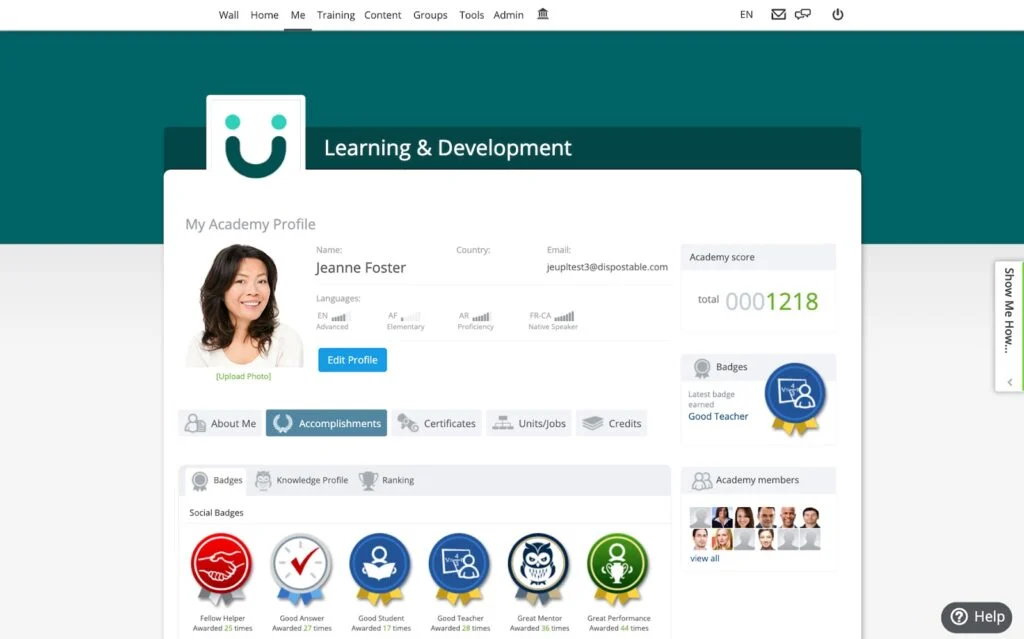
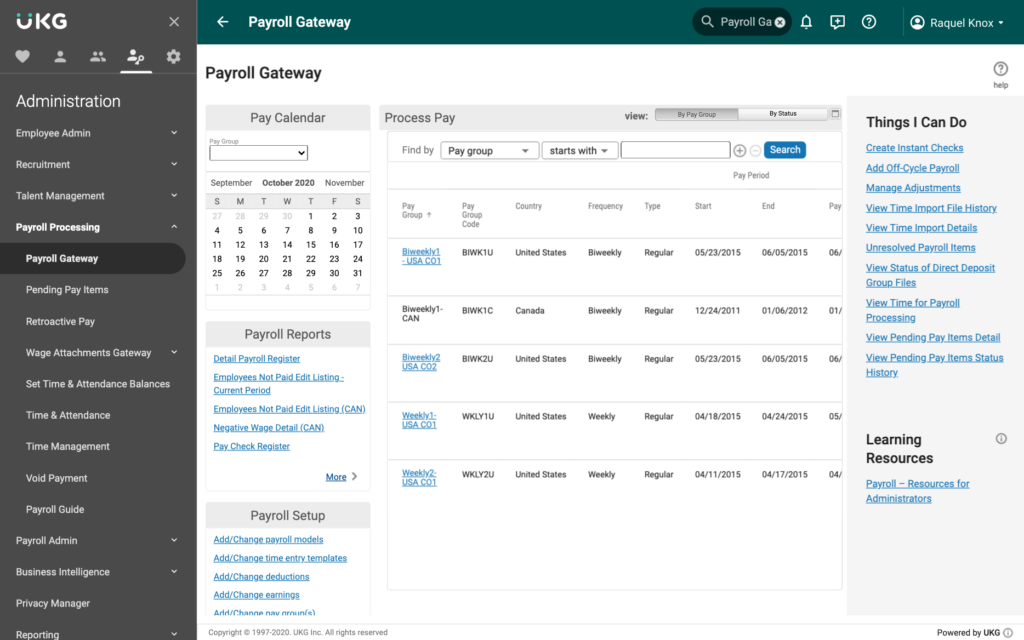
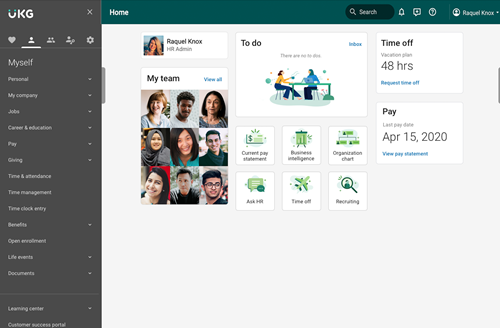
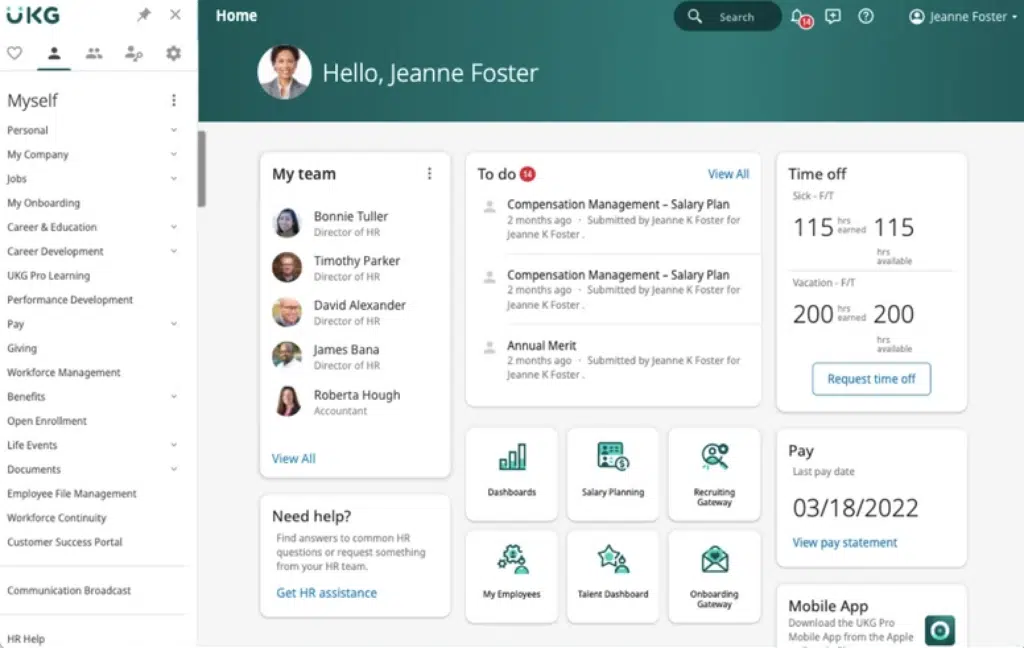
UKG Pro (Ultimate Kronos Group) is an enterprise HRIS strong in workforce management, especially for organizations with shift-based operations. The platform is widely used in retail, manufacturing, healthcare, and service sectors.
UKG Pro helps enterprise manage large workforces with a focus on productivity, scheduling, and employee engagement.
Price: $27–$37 PEPM + initial implementation cost around 40–70% of annual software fees.
Key UKG Pro features for enterprise:
- Complex time & attendance and scheduling.
- Integrated payroll and HR core.
- People analytics for workforce insights.
- Employee self-service and mobile access.
- Suitable for shift-based organizations.
Advantages
- Highly capable for shift-based workforce management.
- Well-suited for retail, manufacturing, and healthcare industries.
Limitations
- Initial implementation cost can be relatively high.
Why choose UKG Pro?
7. Infor HCM
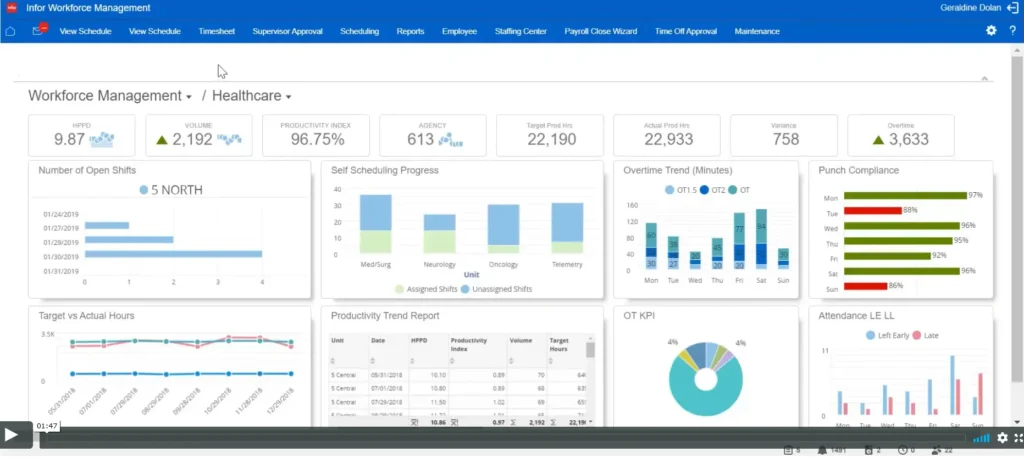
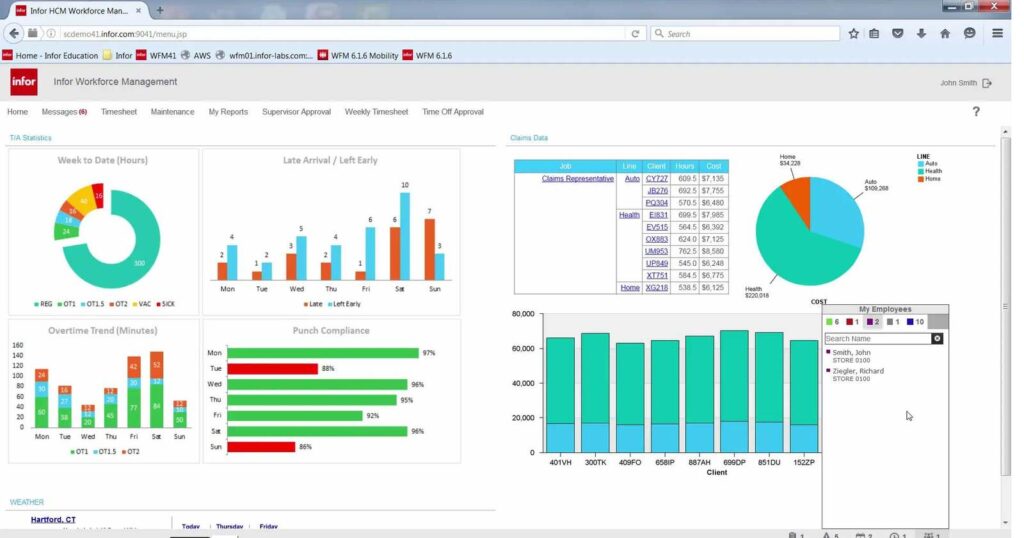
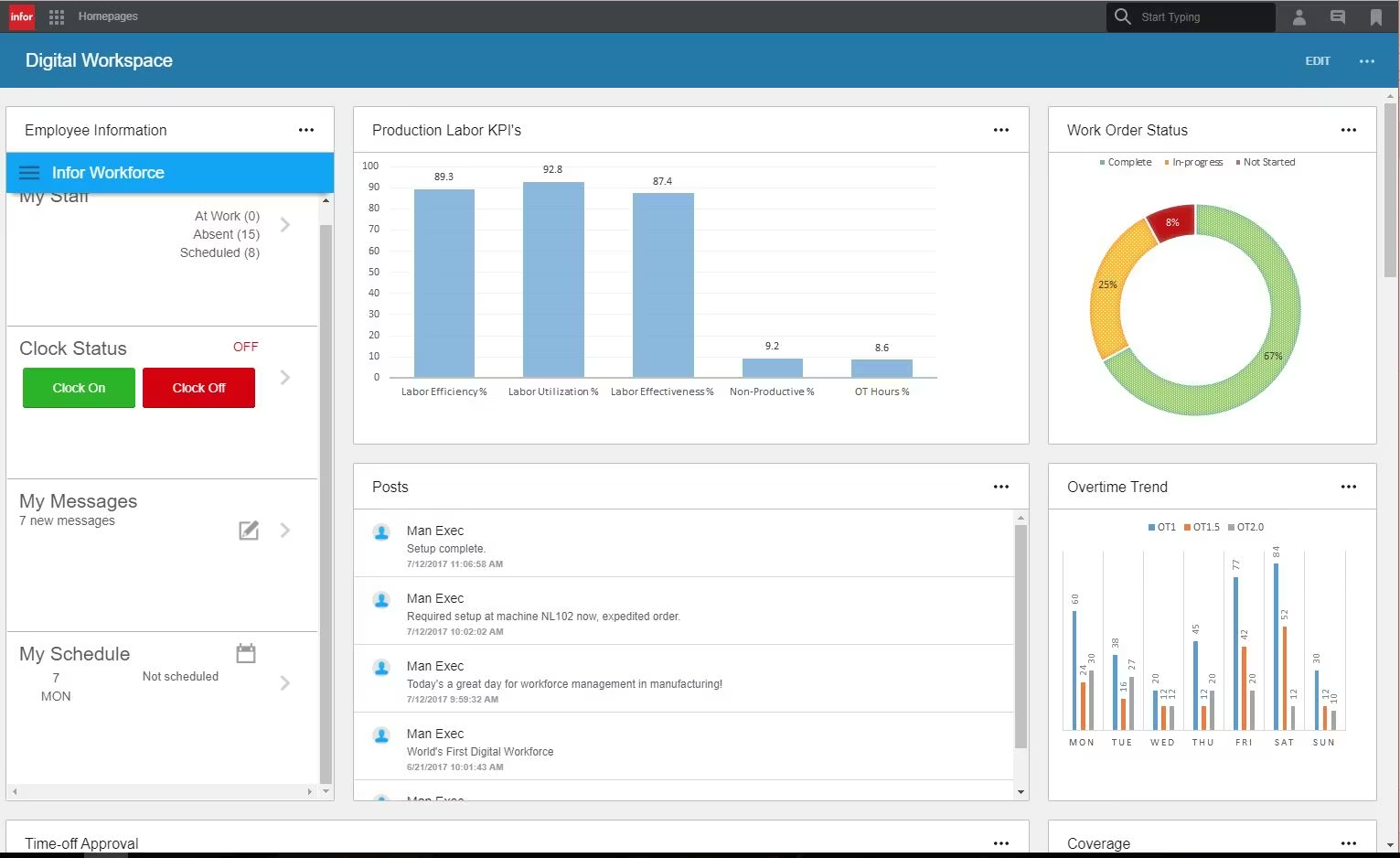
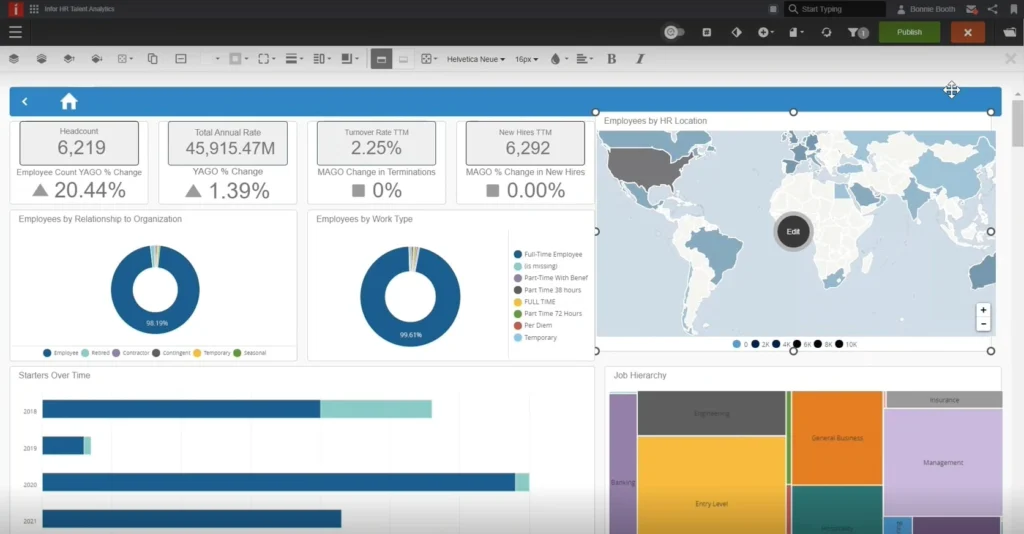
Infor HCM is a cloud HRIS solution designed for enterprise with modern HR needs and employee experience that emphasizes a balance between HR process automation and user experience.
The system integrates tightly with Infor ERP, making it relevant for organizations already within the Infor ecosystem.
Price: custom quote (not publicly listed), tailored to enterprise size and module requirements.
Key Infor HCM features for enterprise:
- Core HR and workforce management.
- Talent management and learning.
- Analytics for workforce planning.
- Integration with Infor ERP.
- Scalability for large organizations.
Advantages
- Integrated with Infor ERP for enterprise operations.
- Focus on employee experience and HR automation.
Limitations
- Less commonly used outside the Infor ecosystem.
Why choose Infor HCM?
8. Bitrix24
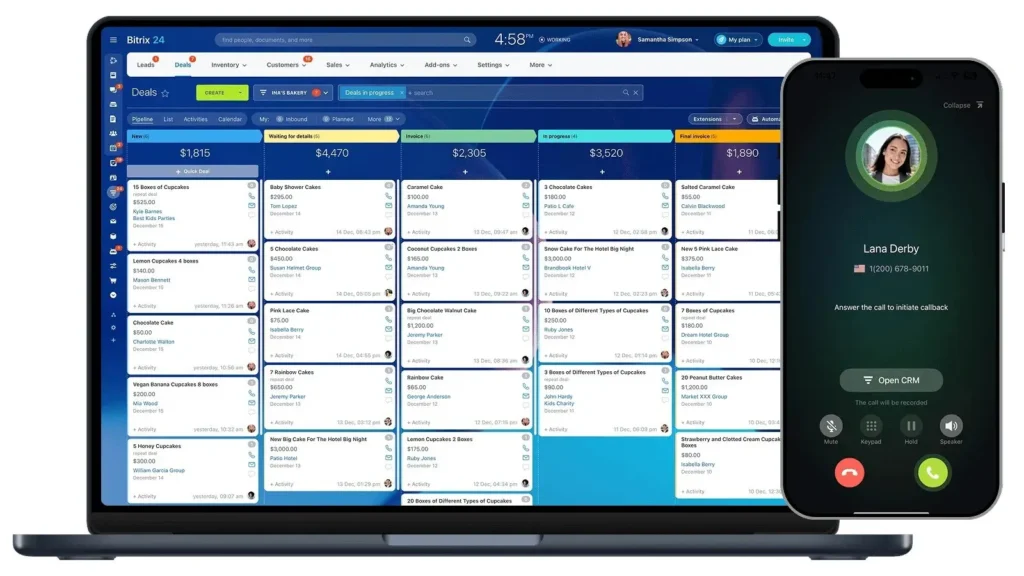
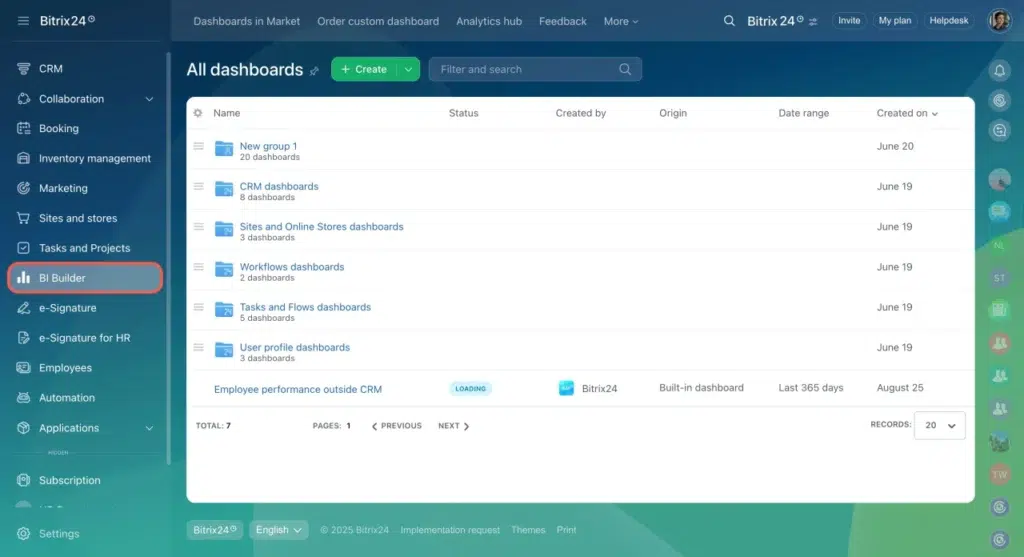
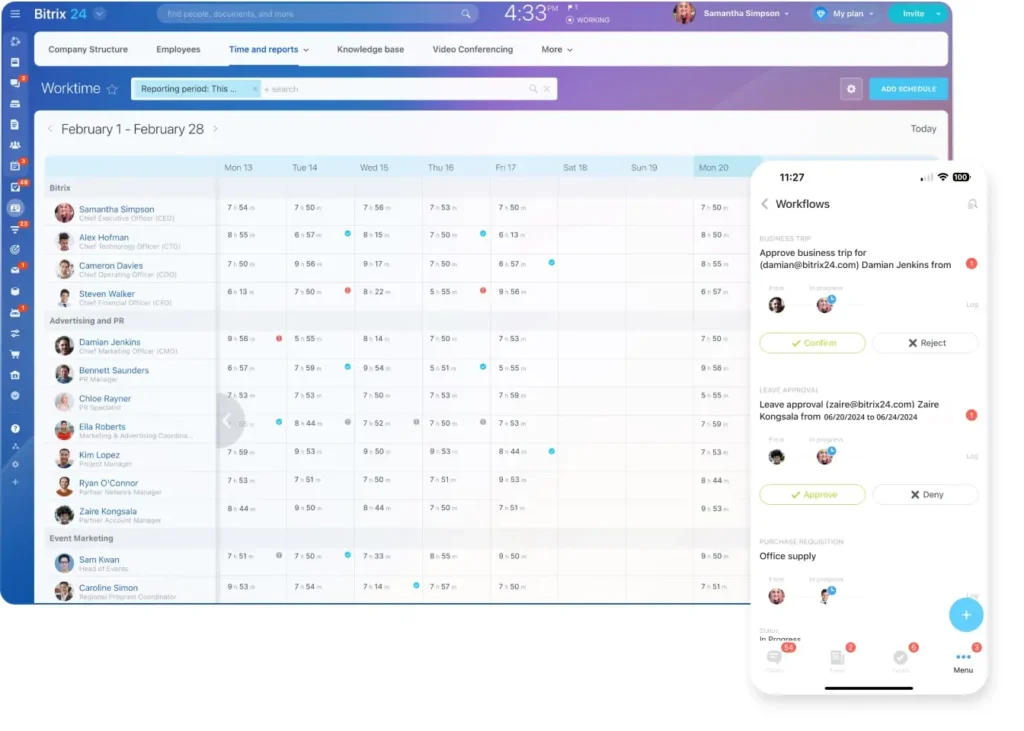
Bitrix24 is an all-in-one platform combining basic HR, workflow automation, and collaboration tools in one system.
For enterprise, Bitrix24 is often used when organizations need a centralized platform for collaboration and internal processes, including basic HR functions.
However, Bitrix24 focuses more on flexibility and collaboration rather than deep enterprise HCM capabilities.
Price: $49–$399 / organization / month, flat pricing based on package.
Key Bitrix24 features for enterprise:
- Employee directory and time tracking.
- Workflow & approval automation.
- Team collaboration (chat, task, project).
- API integration with other systems.
Advantages
- All-in-one platform for collaboration and workflow management.
- Cost-efficient for large user bases.
Limitations
- Not a deep enterprise HCM suite for advanced talent analytics.
Why choose Bitrix24?
9. iSolved People Cloud
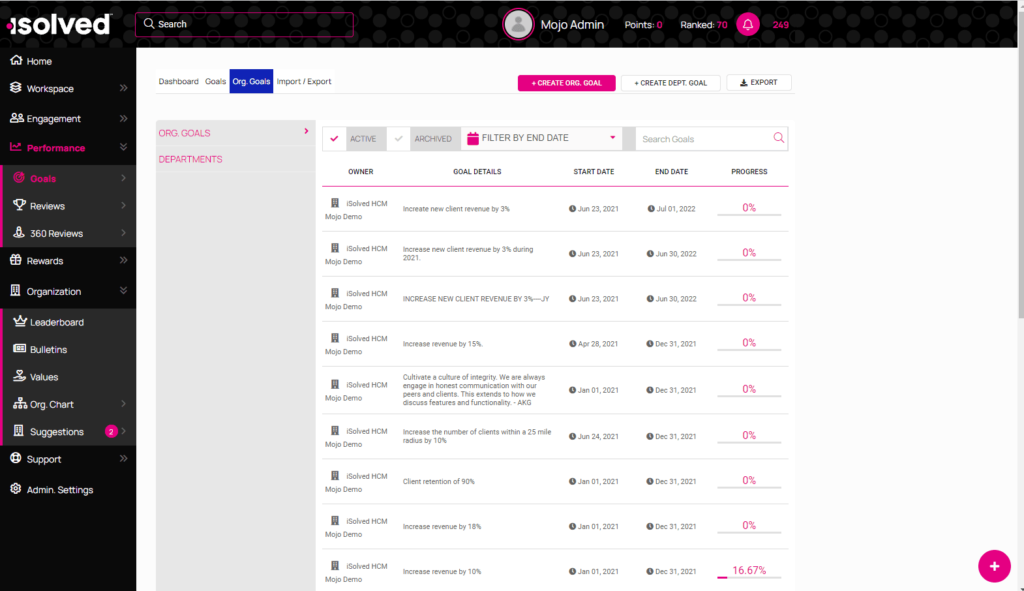
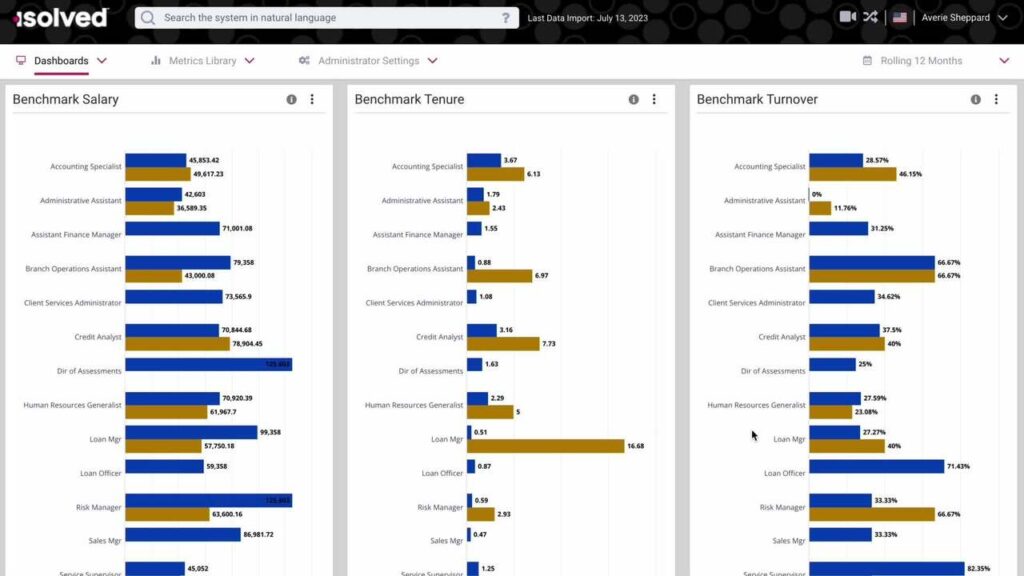
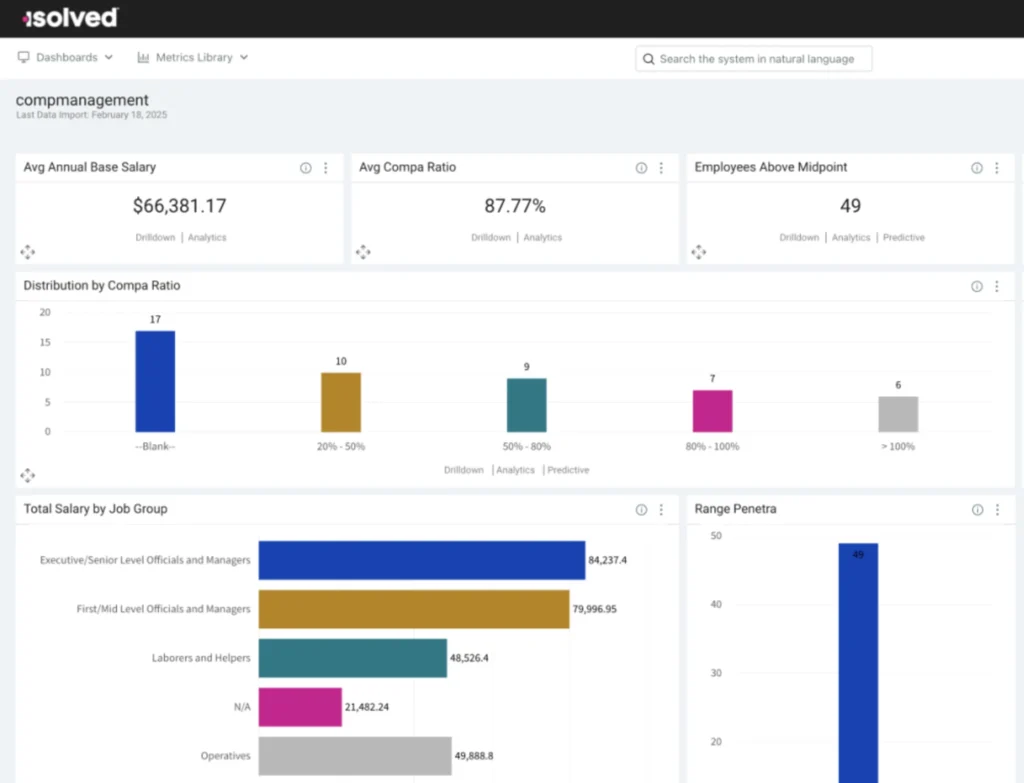
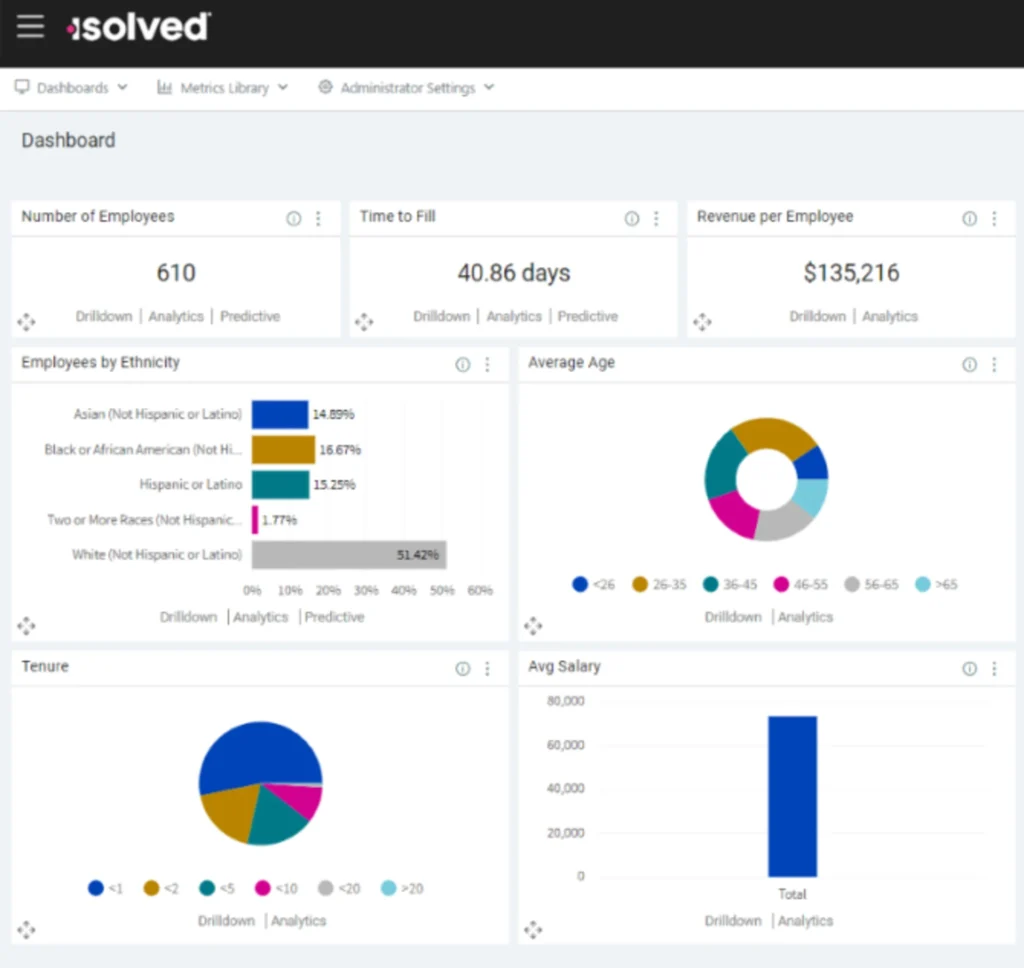
isolved People Cloud is a Human Capital Management (HCM) platform from the United States that unifies HR, payroll, benefits, and talent management in one system.
This solution is designed for organizations needing an integrated HRIS without the complexity of large global system implementations.
Price: starting at approximately $9 PEPM, depending on modules and organizational scale.
Key isolved features for enterprise:
- Payroll and benefits administration.
- Core HR and employee lifecycle management.
- Talent management and performance tools.
- Integrated reporting and analytics.
- Unified HCM approach.
Advantages
- Unified HCM with integrated payroll and benefits.
- Simpler approach compared to large global HCM suites.
Limitations
- Less suited for very large multinational enterprise structures.
Why choose iSolved?
10. TimeTrex
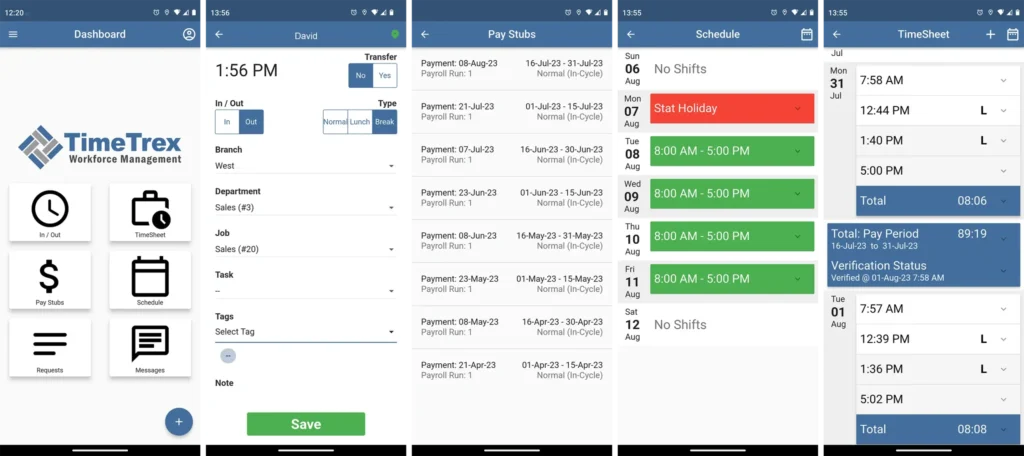
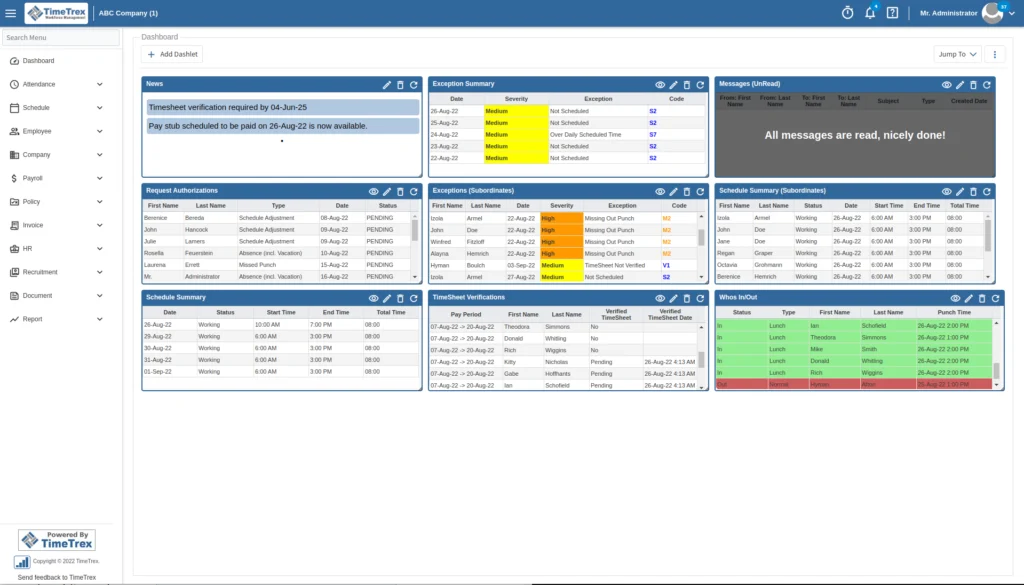
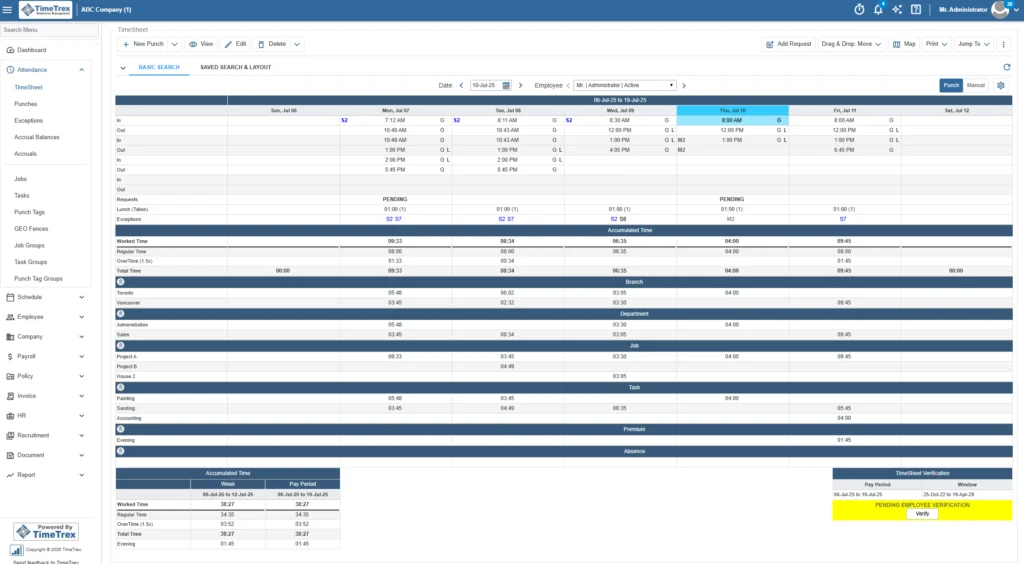
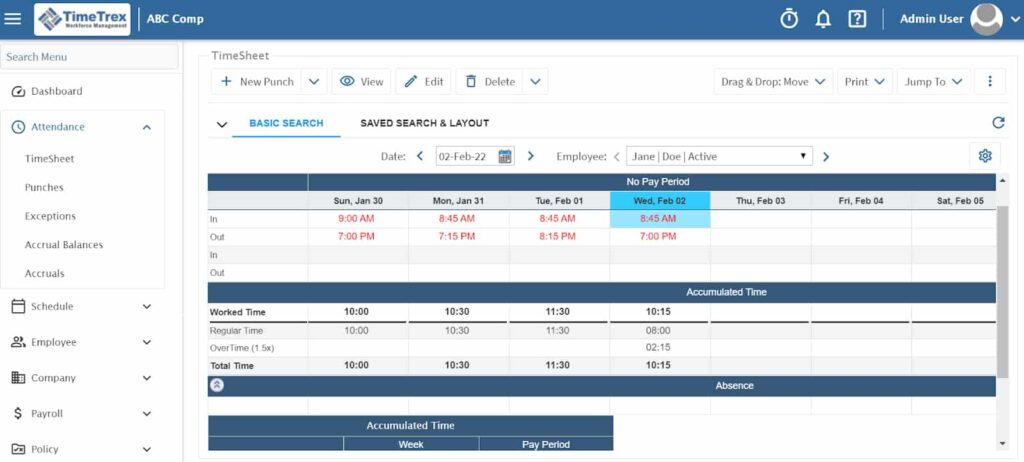
TimeTrex is an HRIS solution strong in time & attendance, payroll, and job costing. The platform is often used as part of enterprise HR systems, especially for organizations focused on workforce hours and labor cost management.
TimeTrex is more commonly positioned as a workforce management system rather than a full enterprise HCM suite.
Price: starting at approximately $50 / month; some packages equal to around $3 / user / month depending on features.
Key TimeTrex features for enterprise:
- Time & attendance and scheduling.
- Payroll and job costing.
- Employee self-service.
- Integration with other systems.
- Suitable for enterprise with operational focus.
Advantages
- Strong in time and attendance and job costing.
- Cost-efficient solution for workforce management.
Limitations
- Not a full enterprise HCM suite for advanced talent and analytics.
Why choose TimeTrex?
Read also: How to Choose the Right HRIS Vendor: A Practical HR Guide
Your HR Activities Getting More Complex? Use Mekari Talenta HRIS That Is Ready to Scale!
As the number of employees, business units, and regulatory requirements continues to grow, many enterprise companies face challenges in keeping HR processes organized, accurate, and efficient.
Manual systems or HRIS not designed for large-scale use often create new problems, from payroll error risks to low employee adoption.
Mekari Talenta comes as an end-to-end HRIS solution designed to help enterprises simplify HR management complexity.
As part of Mekari’s integrated software ecosystem, Talenta connects HR processes with finance, tax, expense management, and workflow automation, enabling a more unified operational environment.
With a scalable and integrated system designed to adapt to diverse business needs and compliance requirements, Talenta enables organizations to run HR processes more consistently, securely, and with greater control.
A modern HRIS should not only streamline administrative work but also improve the employee experience through intuitive interfaces, flexible workflows, and centralized data management that can support distributed teams across regions.
By reducing manual processes and providing real-time visibility into workforce data, Mekari Talenta helps organizations strengthen decision-making and maintain operational efficiency as they grow.
If you are currently evaluating an HRIS for enterprise, trying a Mekari Talenta demo can be a strong first step.
Through a free demo, you can see firsthand how Talenta supports payroll automation, attendance management, and data-driven HR decisions aligned with your organization’s needs.
By exploring the platform directly, you can gain a clearer understanding of whether the system fits your operational structure and long-term business goals.
Schedule a Mekari Talenta demo today or consult with our team about your enterprise HR challenges and discover how a scalable, integrated HRIS can help streamline operations, improve compliance, and support your organization’s long-term growth.