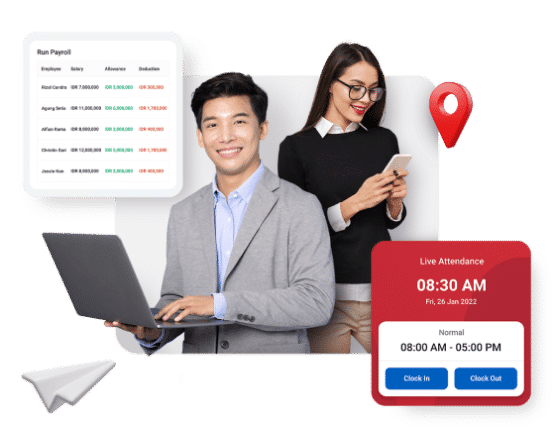
- Cloud HCM software is a cloud-based system that manages the full employee lifecycle. from hiring to payroll and performance, in one platform.
- Some of the best cloud HCM software include Mekari Talenta, Deel, Oracle HCM Cloud, and UKG Pro, each offering end-to-end HR capabilities tailored to different business sizes and needs.
Cloud HCM (Human Capital Management) software has become increasingly popular among companies to assist in end-to-end employee management processes. This includes recruitment, payroll, efforts to retain employees, and even the resignation process.
In addition to being more practical than on-premise solutions, cloud HCM software can cater to companies of various scales, making it suitable for startups and small to medium-sized enterprises.
However, not all cloud HCM software may be suitable for your business. This article explores how cloud HCM software works, the key factors to consider when selecting a solution, and a comparison of leading platforms to help you identify the right fit for your organization.
What Is Cloud HCM Software?
Cloud HCM (Human Capital Management) software is a comprehensive, cloud-based solution designed to manage and optimize the entire employee lifecycle within an organization.
It centralizes all core HR functions, such as recruitment, onboarding, payroll, attendance, performance management, learning and development, and offboarding, into a single, integrated platform that can be accessed anytime and from anywhere.
Unlike traditional on-premise systems, cloud HCM software operates on a subscription-based model and does not require complex infrastructure or manual maintenance.
This makes it more flexible, scalable, and cost-efficient, allowing businesses of all sizes, from startups to large enterprises, to adapt the system based on their evolving workforce needs.
Beyond administrative efficiency, cloud HCM software also plays a strategic role in modern organizations. It provides real-time data and analytics that help HR teams and business leaders make informed decisions related to workforce planning, employee engagement, and talent development.
Many platforms are also equipped with automation and AI capabilities to streamline repetitive tasks, reduce human error, and enhance overall productivity.
In today’s fast-paced and increasingly digital business environment, cloud HCM software enables organizations to move beyond manual HR processes and focus on building a more agile, data-driven, and employee-centric workforce.
Key Criteria When Selecting Cloud HCM Software
Choosing the right cloud HCM software involves ensuring the system can support complex organizational structures, evolving workforce needs, and long-term growth.
Here are the key criteria to consider:
1. Scalability and Flexibility
The system should be able to grow alongside your organization without requiring major reconfiguration or system replacement.
It needs to support increasing employee volumes, expanding business units, and evolving organizational structures over time.
A flexible architecture ensures that new workflows, policies, and processes can be adapted as business needs change. This is critical for maintaining long-term efficiency as operations become more complex.
2. Multi-Entity and Multi-Country Support
The software must be capable of managing multiple entities, subsidiaries, and regions within a single unified platform.
It should accommodate different regulatory requirements, currencies, and local labor laws without creating data silos.
Having centralized control with localized adaptability helps ensure consistency across the organization. This capability is essential for organizations operating across diverse jurisdictions and structures.
3. Depth of Features and Customization
A robust HCM platform should go beyond basic HR functions and provide comprehensive capabilities across the employee lifecycle.
It needs to support advanced processes such as workforce planning, performance management, and talent development.
Customization is equally important to align the system with internal workflows and approval structures. This allows organizations to maintain operational consistency while adapting to unique business requirements.
4. Integration Capabilities
The system should integrate seamlessly with other core business applications such as finance, ERP, and collaboration tools.
Strong integration ensures that data flows consistently across departments without duplication or manual intervention.
This helps improve operational efficiency and reduces the risk of errors caused by disconnected systems. A well-integrated ecosystem also enables better cross-functional decision making.
5. Data and Analytics Capabilities
Access to real-time data and comprehensive reporting is essential for managing a complex workforce. The platform should provide dashboards and analytics that support strategic decision making across different levels of the organization.
It should also allow for deep insights into workforce trends, performance, and productivity. Strong analytics capabilities enable organizations to move from reactive to proactive HR strategies.
6. User Experience and Adoption
An intuitive and user-friendly interface is crucial to ensure adoption across all user groups. Employees, managers, and HR teams should be able to navigate the system without extensive training.
Self-service features also play a key role in reducing administrative workload and improving efficiency. A positive user experience encourages consistent usage and maximizes the value of the system.
7. Security and Compliance
The platform must meet high standards of data security to protect sensitive employee information. It should support compliance with various regulations across different regions where the organization operates.
This includes data privacy, access control, and audit capabilities. Strong security and compliance features help minimize risks and ensure trust in the system.
8. Vendor Support and Implementation Capability
Reliable vendor support is essential for handling complex implementations and ongoing system optimization. The provider should offer structured onboarding, training, and continuous assistance as the organization evolves.
Strong implementation capabilities help ensure that the system is configured correctly from the beginning. Ongoing support also ensures that the platform continues to deliver value over time.
Top Cloud HCM Software Comparison
Some solutions are designed to handle global workforce management, while others focus on simplifying HR processes for growing businesses.
There are also platforms that extend beyond HR, integrating finance, IT, or employee engagement into a broader ecosystem.
To help you evaluate these options more clearly, the table below provides a side-by-side comparison of key HCM platforms based on their core features, differentiators, pricing models, and ideal use cases.
| Platform | Core Feature | Key Differentiator | Pricing | Suitable For |
|---|---|---|---|---|
| Mekari Talenta | End-to-end HCM (payroll, HRIS, talent, manpower planning) | Balanced platform combining operational HR and strategic workforce planning | Custom | Mid to large companies needing scalable, integrated HCM |
| Deel | Global payroll & EOR | Hire globally without setting up local entities | $49–$599+/user/month | Companies hiring remote/global teams |
| Paycor | Payroll & HRIS | Strong payroll automation & compliance | $99–$299+/month + $5–$16 PEPM | Payroll-focused organizations |
| Rippling | HR + IT + Finance | Manage employees, devices, and apps in one system | ~$8 PEPM + base fee | Distributed teams with IT needs |
| Arcoro | Industry-specific HRIS | Built for construction & field workforce | Custom | Construction, manufacturing, mining |
| Eddy | Core HR + payroll + hiring | Simple and easy-to-use HRIS | $4 PEPM + $50 base | SMBs digitizing HR |
| eXo Platform | Employee engagement & intranet | Social collaboration platform | $4–$5/user/month | Engagement-focused organizations |
| Oracle HCM | Global HCM + payroll + talent | Deep ERP integration | $28–$38 PEPM | Large enterprises |
| Sage People | HRIS + analytics + talent | Highly configurable (Salesforce-based) | $12–$16 PEPM + implementation | Mid-enterprise global companies |
| Workday | HCM + finance + analytics | Skills-based workforce planning | $40–$100+ PEPM | Mid to large enterprises |
– Most vendors use a custom pricing model and do not publicly disclose detailed pricing structures.
– It is recommended to visit each provider’s official website or request a demo to get accurate and up-to-date pricing based on your organization’s needs.
Read also: Human Capital Management Strategy: Definition, Benefits & Examples
Best Cloud HCM Software Recommendation
With a wide range of solutions available, each platform offers different strengths depending on business needs, organizational complexity, and growth plans.
Below are some of the best cloud HCM software options that can support end-to-end HR management and help streamline your workforce processes.
1. Mekari Talenta


Mekari Talenta is cloud HCM software designed to help organizations manage the entire employee lifecycle through a single, integrated platform.
It combines core HR functions such as payroll, attendance, and employee administration with more strategic capabilities like talent management, performance evaluation, and workforce planning.
Built to accommodate growing organizational needs, Mekari Talenta supports businesses with increasing operational complexity, including multi-entity structures and evolving workforce requirements.
Key Features:
- Talent management and performance management capabilities that support goal setting, continuous performance evaluation, and structured employee development planning.
- Talent management capabilities that support end-to-end employee lifecycle processes, including recruitment, onboarding, and structured talent tracking across the organization.
- Talent development and performance management features that enable goal setting, continuous feedback, performance reviews, and structured employee growth and career progression.
- Manpower planning tools that help organizations plan headcount needs, identify hiring priorities, and ensure the right number of employees are in place to support business operations.
- Employee experience features including self-service access, transparency in performance and feedback, and streamlined HR interactions.
- Data-driven HR analytics that provide insights into workforce performance, engagement, and productivity to support strategic decision making.
- Operational HR capabilities such as payroll management and attendance that serve as a foundation for accurate data and seamless employee lifecycle management.
Pricing: Custom pricing based on organizational size, number of employees, selected modules, and specific business requirements.
Suitable for: Organizations of various sizes, particularly mid-sized to large companies with growing operational complexity, multiple business units, or expanding workforce needs that require a scalable and flexible HCM solution.
Advantages
- Integrated HCM platform covering talent management, payroll, and attendance in one system.
- Scalable solution that supports growing organizational needs and increasing workforce complexity.
- Strong localization for Indonesia with compliance to local labor regulations.
- Seamless integration with ERP, accounting, and collaboration tools.
Limitations
- Geographic coverage is still limited compared to global HCM platforms.
Why choose Mekari Talenta?
2. Deel


Deel is a cloud-based HCM platform with a strong multinational focus, designed to help organizations hire, manage, and pay a global workforce without the need to establish local entities.
It combines global payroll, compliance, and talent management into a single platform, enabling companies to scale internationally while staying aligned with country-specific regulations.
Key Features:
- Global payroll system that supports multi-country salary calculations, tax compliance, and statutory reporting across different jurisdictions.
- Immigration and mobility services to support visa processing and legal employment requirements for international hires.
- Contractor and Employer of Record (EOR) management, enabling companies to hire globally without setting up local entities while minimizing compliance risks.
- Talent management capabilities including global hiring, performance tracking, and workforce visibility across regions.
Pricing: Modular pricing depending on the service, starting from $49 per contractor per month and $599 per employee per month for Employer of Record services. Pricing may vary based on country, employment type, and additional features.
Suitable for: Companies needing remote or international workforce solutions like freelancers or remote workers, or multinational companies operating in different countries.
Advantages
- Extensive global coverage across 150 countries for hiring, payroll, and compliance.
- Strong Employer of Record (EOR) and contractor management capabilities for global workforce expansion.
- Built-in compliance and local labor law support reducing cross-border employment risks.
- Flexible modular pricing allowing companies to scale services based on needs.
Limitations
- Advanced HR features such as performance management may require additional paid modules.
- Pricing can be relatively high for companies with large global headcount.
Why choose Deel?
3. Paycor


Paycor is a long-established cloud HCM platform designed to support organizations in managing their workforce through a combination of operational efficiency and regulatory compliance.
It offers a well-rounded suite of features covering payroll, HRIS, benefits administration, and talent management, making it suitable for organizations with evolving workforce needs and increasing operational complexity.
Key Features
- Payroll processing with automated salary calculations, tax deductions, and compliance with local and federal regulations.
- HRIS capabilities that centralize employee data, including attendance tracking, timesheets, leave management, and employee records.
- Benefits administration that simplifies compensation management, including employee benefits enrollment and tracking.
- Talent management tools supporting performance evaluations, employee engagement surveys, and workforce insights.
Pricing: Paycor does not publicly disclose its pricing. However, based on third-party sources, pricing typically ranges from $99 to $299+ per month, plus $5 to $16+ per employee per month, depending on the selected plan and company size.
Suitable for: Organizations of various sizes seeking a reliable and adaptable HCM solution with strong payroll, compliance, and workforce management capabilities.
Advantages
- User-friendly interface with easy navigation for payroll, attendance, and employee management.
- Strong payroll and tax management capabilities, including automated multi-state tax filing.
- Efficient onboarding and employee self-service features that improve day-to-day HR operations.
Limitations
- Customer support can be inconsistent with slow response times and limited account management.
- Implementation and initial setup may be challenging for complex organizational needs.
- Limited customization and advanced features for more complex workforce requirements.
Why choose Paycor?
4. Rippling


Rippling is a cloud-based HCM platform that extends beyond traditional HR systems by integrating HR, IT, and finance into a single unified platform.
It enables organizations to manage not only employee data and payroll, but also devices, applications, and system access, making it particularly valuable for companies with distributed teams and complex operational environments.
By combining multiple functions into one system, Rippling helps organizations streamline workflows, improve operational efficiency, and maintain better control over both workforce and infrastructure. Its modular architecture allows businesses to scale and customize the platform based on their specific needs.
Key Features
- Payroll management with automated salary calculations, tax compliance, and alignment with local labor regulations.
- HR workflow automation to manage employee data, onboarding, offboarding, and administrative processes more efficiently.
- Device and IT management capabilities that allow organizations to control employee devices, software access, and security policies from a centralized system.
- Talent management tools including performance evaluations, employee training, and engagement surveys.
Pricing: Rippling does not publicly disclose its pricing. However, based on third-party sources, it uses a modular per-employee pricing model starting at around $8 per employee per month for the core platform, with an additional base fee typically ranging from $35 to $70 per month.
Suitable for: Growing organizations with distributed teams and multiple systems, particularly those seeking to unify HR, IT, and finance operations within a single platform while maintaining flexibility and scalability.
Advantages
- All-in-one platform combining HR, payroll, IT, and finance in a single system.
- Highly customizable and modular architecture that scales with business needs.
- Strong automation capabilities through workflow management to reduce manual tasks.
- Unique IT and device management features for distributed and remote teams.
Limitations
- Pricing can increase quickly due to modular add-ons and separate feature costs.
- Initial setup and learning curve can be challenging due to feature complexity.
- Some advanced features and workflows are limited to higher-tier plans.
Why choose Rippling?
5. Arcoro


Arcoro is a cloud-based HCM software purpose-built for industries with complex, project-based work environments such as construction, manufacturing, and mining.
It is designed to address workforce challenges unique to these sectors, including compliance with safety regulations, field workforce management, and project-driven labor planning.
Unlike general HCM platforms, Arcoro combines end-to-end HR capabilities with industry-specific functionality, enabling organizations to manage both workforce operations and safety requirements within a single system.
This makes it particularly effective for companies that rely on distributed, site-based employees and require tighter alignment between HR processes and project execution.
Key Features
- Hiring and recruitment management tailored to industry requirements, including applicant tracking, screening, onboarding, and compliance with workplace safety standards.
- HRIS capabilities that support shift rostering, automated timesheets for field workers, and reimbursement management to streamline on-site workforce operations.
- Talent management features focused on safety, compliance tracking, and workforce performance in high-risk environments.
Pricing: Offers custom pricing based on company size, industry requirements, and selected modules.
Suitable for: Construction, manufacturing, and mining companies that require specialized HCM solutions to manage field workers, ensure safety compliance, and optimize project-based workforce operations.
Advantages
- Industry-specific solution designed for construction and field-based workforce management.
- Strong compliance management capabilities aligned with safety and regulatory requirements.
- Comprehensive workforce data management that improves operational efficiency.
- End-to-end HR features including recruitment, onboarding, performance, and learning management.
Limitations
- Customer support experience may be inconsistent based on user feedback.
- Customization options can be limited compared to more advanced HCM platforms.
- Steeper learning curve due to feature depth and industry-specific complexity.
Why choose Arcoro?
Read also: HRIS vs HRMS vs HCM: What’s the Difference & What to Consider?
6. Eddy


Eddy is an all-in-one cloud HCM software designed to simplify HR operations for growing businesses through an intuitive and accessible platform.
It combines core HR functions such as recruitment, onboarding, payroll, and employee management into a single system that can be accessed across desktop and mobile devices.
With a strong focus on usability and affordability, Eddy enables organizations to digitize HR processes quickly without heavy implementation complexity.
Its streamlined interface and integrated workflows make it particularly effective for companies transitioning from manual or fragmented HR systems to a more centralized and structured approach.
Key Features:
- Automated payroll processing with integrated tax filings, direct deposits, and compliance support.
- Document management system for storing employee records, contracts, onboarding forms, and compliance-related documentation.
- Time and attendance tracking including scheduling, PTO requests, shift management, and mobile access.
- Hiring and applicant tracking system that supports job postings, candidate pipeline management, and onboarding workflows.
Pricing: Eddy offers transparent pricing starting at $4 per employee per month with a $50 monthly base fee for the Starter plan, while more advanced features and payroll are available through higher-tier plans and add-ons.
Suitable for: Small to medium-sized businesses looking for an easy-to-use and cost-effective HCM solution to digitize HR processes and improve operational efficiency.
Advantages
- Highly user-friendly interface with simple navigation and fast adoption.
- Affordable pricing model suitable for small to mid-sized businesses.
- Strong customer support experience with responsive and helpful assistance.
Limitations
- Limited customization options for more complex organizational needs.
- Some advanced features and integrations are still developing.
- Reporting and data handling can be less flexible for advanced use cases.
Why choose Eddy?
7. eXo Platform


eXo Platform is a digital workplace and employee engagement solution designed to enhance collaboration, communication, and knowledge sharing across organizations.
Unlike traditional HCM software, it focuses more on employee experience and engagement rather than core HR operations such as payroll or compliance.
The platform acts as a centralized social intranet where employees can connect, collaborate, and access company resources in a more interactive and engaging way.
This makes it particularly useful for organizations looking to strengthen internal communication, improve engagement, and build a more connected workforce culture.
Key Features
- Social intranet platform that serves as a central hub for company news, documents, tasks, and internal communication.
- Collaboration tools that enable team discussions, peer-to-peer interaction, feedback, and project visibility across departments.
- Employee engagement features including gamification, quizzes, and interactive onboarding experiences to improve participation and retention.
- Knowledge management capabilities that support document sharing, content organization, and internal learning.
Pricing: eXo Platform offers a free Community edition, while paid Enterprise plans typically start at around $4 to $5 per user per month, with options for both cloud and on-premise deployment.
Suitable for: Organizations that prioritize employee engagement, internal communication, and digital workplace experience, particularly those complementing existing HR or HCM systems rather than replacing them.
Advantages
- Strong employee engagement and digital workplace capabilities with social intranet features.
- Facilitates collaboration and knowledge sharing across teams and departments.
- Flexible deployment options including cloud and on-premise.
- Cost-effective solution with a free community edition available.
Limitations
- Not a full end-to-end HCM solution as it lacks core HR features like payroll.
- Some features such as media and content tools are relatively limited.
- Requires integration with other systems for complete HR management.
Why choose eXo Platform?
8. Oracle HCM Cloud


Oracle HCM Cloud is a comprehensive, enterprise-grade HCM platform designed to manage complex, global workforce operations within a unified system.
As the modern successor to legacy systems like PeopleSoft, it delivers a full suite of HR capabilities while integrating seamlessly with Oracle’s broader ecosystem, including ERP and financial systems.
Built for organizations with large-scale and multi-entity structures, Oracle HCM Cloud enables centralized workforce management across regions while maintaining compliance with local regulations.
Its AI-driven capabilities further enhance employee experience, automate workflows, and support more data-driven decision-making across the organization.
Key Features
- Global HR capabilities that support multi-country workforce management, including localization for compliance with regional labor laws and policies.
- Comprehensive HRIS covering attendance tracking, leave management, automated timesheets, and workforce scheduling.
- Payroll management that handles salary calculations, tax compliance, and global payroll processing.
- Talent management suite including recruitment, onboarding, Learning Management System, compensation planning, and talent gap analysis.
- AI-powered features that enhance employee experience, automate workflows, and provide predictive insights for workforce planning.
Pricing: Oracle does not publicly disclose its pricing. However, based on third-party sources, Oracle HCM Cloud typically ranges from $28 to $38 per employee per month, depending on company size and selected modules, with additional implementation costs.
Suitable for: Large, multinational organizations with complex workforce structures, especially those already using Oracle ERP or requiring a fully integrated, enterprise-grade HCM ecosystem.
Advantages
- Comprehensive end-to-end HCM platform with strong global capabilities.
- Seamless integration with Oracle ERP and enterprise systems.
- Advanced AI-driven features for automation and employee experience.
- Robust recruiting and talent acquisition capabilities.
Limitations
- Complex and time-consuming implementation process that may require external consultants.
- Limited flexibility for integration with third-party HR tools.
- Some talent management modules may be less robust compared to specialized solutions.
Why choose Oracle HCM Cloud?
9. Sage People


Sage People is a mid-to-enterprise HCM solution designed to support complex, global workforce management with a strong emphasis on people analytics and system flexibility.
Built on the Salesforce platform, it offers a highly configurable environment that enables organizations to manage HR processes while maintaining a single source of truth across regions and entities.
Unlike traditional all-in-one HCM systems, Sage People takes a more modular and integration-first approach, allowing businesses to connect with best-of-breed payroll and HR tools.
This makes it particularly suitable for organizations that prioritize data visibility, customization, and scalability over rigid, bundled systems.
Key Features:
- Global HR management supporting multi-country operations with localized compliance and workforce tracking.
- HR analytics dashboard providing insights into workforce trends, employee engagement, performance, and headcount planning.
- AI-powered recruitment tools to streamline candidate sourcing, screening, and hiring workflows.
- Time and attendance management including scheduling, shift rostering, and workforce tracking.
- Talent management covering onboarding, performance, compensation, and employee lifecycle tracking.
Pricing: Sage People pricing is not publicly disclosed and is typically customized based on business needs and modules. However, third-party sources estimate pricing around $12 to $16 per employee per month, with additional implementation fees starting from approximately $35,000 depending on complexity.
Suitable for: Mid-to-large enterprises (typically 250–2,500 employees), especially multinational organizations that require strong analytics, flexibility, and integration with external payroll or HR systems.
Advantages
- Highly configurable platform built on Salesforce architecture.
- Strong analytics and reporting capabilities for data-driven HR.
- Excellent integration capabilities with third-party HR and payroll systems.
- Scalable solution for global and multi-entity organizations.
Limitations
- Does not offer a native payroll module and relies on integrations.
- Implementation costs and setup can be relatively high.
- May feel less unified compared to fully integrated HCM platforms.
Why choose Sage People?
10. Workday


Workday is a leading enterprise HCM platform that extends beyond traditional HR systems by combining human capital management with financial management capabilities.
This unified architecture allows organizations to manage workforce operations, financial data, and business planning within a single, cloud-based platform.
Positioned as an HCM + ERP hybrid, Workday is particularly known for its strong focus on skills intelligence, workforce planning, and real-time analytics.
Its architecture enables organizations to move beyond administrative HR and toward more strategic, data-driven decision-making.
Key Features
- End-to-end HCM capabilities covering recruitment, onboarding, talent management, performance evaluation, and employee engagement.
- Global payroll and workforce management supporting multi-country operations and compliance.
- Workforce management tools including attendance tracking, scheduling, and shift rostering powered by machine learning.
- Advanced analytics and reporting with customizable dashboards and thousands of pre-built reports for workforce insights.
- Skills Cloud platform that maps employee skills, recommends learning paths, and supports internal mobility and workforce planning.
- AI-powered features for recruitment, workforce forecasting, and employee experience personalization.
Pricing: Workday does not publicly disclose pricing. However, based on third-party estimates, pricing typically ranges from $40 to over $100 per employee per month (PEPM), depending on company size, modules (HCM, Finance), and complexity.
Suitable for: Mid-sized to large enterprises, especially those seeking a unified HCM and financial platform with strong analytics, workforce planning, and skills-based talent management capabilities.
Advantages
- Unified HCM and financial management platform in a single system.
- Strong skills-based talent management through Skills Cloud.
- Advanced analytics with customizable dashboards and reporting.
- Highly scalable for growing mid-to-enterprise organizations.
Limitations
- Premium pricing compared to most HRIS solutions.
- Steep learning curve for new users and smaller teams.
- Implementation and setup can be complex and time-consuming.
Why choose Workday?
11. UZIO


UZIO is an all-in-one cloud HCM platform designed to streamline HR operations with a strong emphasis on compensation and benefits administration.
The platform is particularly relevant for organizations working closely with brokers, such as insurance, financial, or real estate agents, where benefits management plays a central role.
Unlike traditional HCM systems that primarily focus on payroll or talent management, UZIO positions itself as a solution that simplifies the entire benefits lifecycle, from proposal creation to employee enrollment and real-time tracking, within a single, integrated system.
Key Features
- End-to-end HR and payroll management including payroll processing, tax filing, HRIS, attendance tracking, and leave management.
- Advanced compensation and benefits administration covering proposal creation, employee enrollment, and real-time benefits tracking.
- AI-powered automation and chatbot to streamline HR workflows and provide employee support.
- Time and attendance management including scheduling, PTO tracking, and workforce monitoring.
- Modular add-ons such as expense management, 401(k) integration, compliance tools, and training modules.
Pricing: Around $13 per employee per month + base fee, with higher plans adding benefits, time tracking, and advanced features. Additional modules are available as paid add-ons depending on business needs.
Suitable for: Small to medium-sized businesses, particularly those working with brokers (insurance, financial, or real estate) and organizations prioritizing benefits administration alongside core HR processes.
Advantages
- Strong focus on compensation and benefits administration.
- User-friendly interface for both HR teams and employees.
- Flexible modular pricing that scales with business needs.
- Centralized platform for payroll, benefits, and HR data management.
Limitations
- Limited advanced analytics compared to enterprise HCM platforms.
- Integration with external systems may require additional configuration.
- Less suitable for large, complex, multi-country enterprises.
Why choose UZIO?
12. SAP SuccessFactors


SAP SuccessFactors is a cloud-based HCM solution offered by SAP, designed to support end-to-end workforce management within a unified enterprise ecosystem.
As part of SAP’s broader suite of enterprise planning tools, it enables organizations to align HR processes with overall business operations, including finance and resource planning.
The platform is particularly known for its scalability and deep integration capabilities, making it a strong choice for organizations with complex structures, multiple entities, and global operations.
Key Features
- Core HR and payroll capabilities including salary calculations, HRIS, document management, and compliance support.
- Talent management covering recruitment, onboarding, performance evaluation, succession planning, and Learning Management System (LMS).
- Employee engagement tools such as collaboration features, learning hubs, and knowledge sharing with internal and external stakeholders.
- Workforce analytics and planning providing insights into employee performance, headcount, and organizational trends.
- Sales performance management to support incentive planning, compensation structures, and commission tracking.
Pricing: Uses a subscription-based pricing model starting from approximately $6.30 per user per month, depending on modules and contract terms. Implementation typically requires certified SAP partners and may add additional costs.
Suitable for: Medium to large enterprises, particularly multinational organizations or companies already using the SAP ecosystem that require scalable, integrated HCM capabilities.
Advantages
- Comprehensive and scalable HCM suite suitable for enterprise organizations.
- Strong integration with SAP ecosystem including ERP and finance.
- Robust talent management and learning capabilities.
- Advanced workforce analytics and planning features.
Limitations
- User interface can feel complex and less intuitive for new users.
- Implementation and configuration often require expert support.
- Customization and reporting flexibility can be limited in some areas.
- Higher total cost due to implementation and enterprise complexity.
Why choose SAP SuccessFactors?
13. Primepay


PrimePay is an all-in-one cloud HCM platform designed to support small to mid-sized businesses in managing core HR operations efficiently.
The platform focuses on simplifying payroll, compliance, and workforce administration through automated processes and centralized data management.
With a strong emphasis on payroll accuracy and tax compliance, PrimePay helps organizations reduce manual workload while maintaining operational control over employee data and HR activities.
Key Features
- Automated payroll processing including salary calculations, tax filings, and digital pay stubs.
- Benefits administration to manage employee enrollments, coverage, and compensation components.
- HRIS capabilities including attendance tracking, timesheets, leave requests, and employee records.
- HR reporting tools providing insights into workforce data and compliance metrics.
- Position management to monitor employee lifecycle changes such as hiring, turnover, and workforce gaps.
Pricing: Custom pricing model based on a per-employee-per-month structure, typically estimated at around $19 to $25 per user per month depending on company size and selected features.
Suitable for: Small to medium-sized businesses seeking a reliable and straightforward HCM solution with strong payroll and compliance capabilities.
Advantages
- Strong payroll automation with reliable tax filing and compliance.
- User-friendly system suitable for small to mid-sized businesses.
- Comprehensive core HR features including benefits and HRIS.
- Helps reduce manual workload through automation.
Limitations
- Customer support experience can be inconsistent.
- Limited flexibility in certain configurations and modifications.
- Handling complex organizational structures can be challenging.
- May lack advanced features for larger enterprise needs.
Why choose PrimePay?
14. PeopleGuru


PeopleGuru is an all-in-one cloud HCM platform designed to support growing businesses in managing core HR processes with a straightforward and centralized system.
The platform focuses on simplifying HR operations, particularly payroll and workforce administration, while providing enough functionality to support companies transitioning from manual to digital processes.
With its emphasis on usability and automation, PeopleGuru helps organizations streamline recruitment, onboarding, payroll, and reporting without the complexity typically found in enterprise-grade systems.
Key Features
- End-to-end HCM capabilities covering recruitment, onboarding, payroll processing, and employee lifecycle management.
- Automated payroll calculations with built-in compliance and tax handling.
- HRIS functionality including employee data management, attendance tracking, and administrative workflows.
- Automated HR reporting to support visibility into workforce data and operational metrics.
Pricing: Customized pricing model based on company needs, typically structured as a per-employee-per-month (PEPM) fee with minimum monthly charges and additional service-based costs.
Suitable for: Small to medium-sized businesses in growth mode that require a simple, reliable HCM system without heavy implementation complexity.
Advantages
- Easy-to-use platform suitable for growing businesses.
- Strong payroll automation that simplifies HR operations.
- Responsive customer support highlighted by users.
- Helps centralize HR processes into a single system.
Limitations
- Reporting features can be difficult to navigate and customize.
- User interface may require time to learn for new users.
- Customer support experience can be inconsistent.
- Limited advanced features for larger or more complex organizations.
Why choose PeopleGuru?
15. Mitratech Trakstar


Mitratech Trakstar is an HCM platform with a strong focus on performance management, compliance, and structured HR governance.
Rather than positioning itself as a purely operational HR system, Trakstar emphasizes aligning employee performance, engagement, and organizational goals through data-driven processes.
As part of the broader Mitratech ecosystem, the platform can be bundled with additional modules such as applicant tracking (ATS), learning management (LMS), and workforce analytics, making it a flexible solution for organizations aiming to build a more structured and compliant HR environment.
Key Features
- Performance management tools including goal setting, performance reviews, check-ins, and 360-degree feedback.
- HRIS capabilities covering employee administration, leave management, remote work tracking, and expense or reimbursement processes.
- Employee engagement features such as surveys, feedback loops, and performance alignment tools.
- Workforce analytics and benchmarking to evaluate employee performance, engagement, and retention trends.
- Talent lifecycle management including onboarding, offboarding, and continuous performance evaluation.
- Additional capabilities such as asset tracking and administrative workflow management to support operational HR needs.
Pricing: Mitratech Trakstar does not publicly disclose pricing and typically uses a custom quote model based on company size and modules. Third-party estimates suggest certain modules (e.g., ATS) may start from around $300+ per month, with total costs varying based on bundle and scope.
Suitable for: Medium to large organizations that prioritize performance management, compliance, and structured HR governance, particularly those looking to align employee performance with business objectives.
Advantages
- Strong performance management capabilities with goal alignment and feedback tools.
- Robust analytics and benchmarking for data-driven HR decisions.
- Employee engagement features integrated within performance management.
- Flexible modular approach with ATS, LMS, and analytics integration.
Limitations
- Pricing is not transparent and requires vendor consultation.
- May require multiple modules to achieve full HCM functionality.
- Limited out-of-the-box templates for engagement surveys.
- Less focused on core HR operations compared to full-suite HCM platforms.
Why choose Mitratech Trakstar?
16. Dayforce


Dayforce is a comprehensive, enterprise-grade Human Capital Management (HCM) platform designed to manage the entire employee lifecycle within a single system.
It combines core HR functions such as payroll, benefits, time tracking, and compliance with more strategic capabilities like talent management and workforce planning.
Known for its strong payroll engine and workforce management capabilities, Dayforce is particularly effective for organizations with complex operational needs, including multi-location teams, shift-based workforces, and strict compliance requirements.
Its unified architecture ensures real-time data synchronization across modules, reducing manual processes and improving accuracy.
Key Features:
- End-to-end HCM suite covering payroll, benefits administration, HRIS, recruiting, onboarding, and talent management.
- Real-time payroll processing with a single database architecture, ensuring accuracy and compliance across jurisdictions.
- Workforce management tools including time tracking, scheduling, and attendance monitoring for shift-based employees.
- Global payroll capabilities supporting multiple countries with built-in compliance and tax handling.
- Employee experience features such as Dayforce Wallet, enabling on-demand access to earned wages.
- Advanced analytics and reporting to support workforce planning, compliance monitoring, and performance insights.
Pricing: Uses a per employee per month (PEPM) pricing model, typically ranging from $24 to $31 PEPM, depending on company size and modules. Implementation fees usually range from 40% to 70% of the first-year subscription cost.
Suitable for: Mid-sized to large organizations (typically 350–10,000+ employees), especially those with complex payroll structures, shift-based workforces, or multi-country operations requiring strong compliance and workforce management.
Advantages
- Strong payroll and workforce management capabilities with high accuracy and compliance.
- Unified single-database architecture reducing data duplication and errors.
- Supports global payroll and multi-jurisdiction compliance.
- Innovative features like on-demand pay (Dayforce Wallet) for employee experience.
Limitations
- User interface may feel less intuitive compared to modern HCM platforms.
- Implementation process can be rigid and require process adjustments.
- May be too complex for companies with simple HR needs.
- Additional customization and services can increase overall cost.
Why choose Dayforce?
17. Viventium


Viventium is a cloud-based HCM platform focused on payroll, workforce management, and compliance-driven HR operations.
It is designed to help organizations streamline payroll processing, automate tax compliance, and integrate time tracking with HR functions into a single system.
The platform is particularly known for its strength in handling complex payroll scenarios, including multi-state compliance and industry-specific requirements such as healthcare and staffing.
Key Features:
- Payroll management with automated tax calculations, filings, and multi-jurisdiction compliance.
- Time and attendance tracking with real-time data capture, overtime monitoring, and scheduling integration.
- Core HRIS capabilities including employee data management, onboarding, document storage, and benefits administration.
- Employee self-service portal for accessing pay stubs, tax documents, and benefits information.
- Compliance management tools supporting ACA reporting, tax submissions, and audit trails.
- Custom reporting and dashboards to track payroll, HR metrics, and workforce insights.
- Integration capabilities with accounting systems and third-party HR or benefits platforms.
Pricing: Viventium does not publicly disclose its pricing. Costs are typically customized based on company size, payroll complexity, and required modules.
Suitable for: Small to mid-sized organizations, particularly in industries with complex payroll requirements such as healthcare, staffing, construction, and multi-state operations.
Advantages
- Strong multi-state payroll and tax compliance automation.
- Integrated payroll, HR, and time tracking in one platform.
- Employee self-service portal improving HR efficiency.
- Well-suited for industries with complex workforce structures.
Limitations
- User interface may feel outdated compared to modern HCM platforms.
- Limited advanced analytics and reporting customization.
- Integration options with third-party tools are relatively limited.
- Mobile functionality is less robust than desktop experience.
Why choose Viventium?
18. ADP Workforce Now


ADP Workforce Now is a cloud-based HCM platform designed to help organizations manage core HR processes such as payroll, benefits, time tracking, and talent management within a single system.
As part of ADP’s broader ecosystem, it is widely recognized for its reliability in payroll processing and compliance support.
The platform focuses on simplifying administrative HR tasks while providing essential tools for workforce management.
With strong payroll capabilities and a user-friendly interface, ADP Workforce Now enables organizations to streamline HR operations and reduce manual workloads, allowing teams to focus on more strategic initiatives.
Key Features
- Payroll management with automated calculations, tax filing, and error detection alerts.
- Employee self-service portal for managing personal data, pay slips, and benefits information.
- Benefits administration tools to handle enrollment, tracking, and employee compensation packages.
- Time and attendance tracking including scheduling, timekeeping, and labor compliance.
- Talent management features covering recruitment, onboarding, and basic performance tracking.
- Compliance management to support adherence to labor laws and regulatory requirements.
- Integration ecosystem via ADP Marketplace and API support for connecting with third-party tools.
Pricing: ADP Workforce Now pricing is not fully transparent and typically requires a custom quote. Entry-level plans are reported to start from around $60+ per month, with total costs varying based on features, number of employees, and add-ons.
Suitable for: Small to mid-sized businesses looking for a reliable, payroll-focused HCM platform with essential HR functionalities and strong compliance support.
Advantages
- Strong and reliable payroll processing with built-in compliance support.
- User-friendly self-service portal for employees and HR teams.
- Wide integration ecosystem through ADP Marketplace and APIs.
- Comprehensive core HR features covering payroll, benefits, and time tracking.
Limitations
- Advanced features often require additional modules or add-ons.
- Pricing is not transparent and can increase with customization.
- Talent management features are less integrated compared to modern HCM platforms.
- Limited flexibility for advanced workflow and report customization.
Why choose ADP Workforce Now?
19. BambooHR


BambooHR is a cloud-based Human Resource Information System (HRIS) designed to help small and medium-sized businesses manage employee data, onboarding, and core HR processes within a centralized platform.
It is widely recognized for its simplicity, intuitive interface, and strong focus on employee experience.
Unlike more complex enterprise HCM systems, BambooHR emphasizes ease of use and quick implementation.
It enables organizations to digitize HR processes such as recruitment, onboarding, time-off tracking, and performance management without requiring heavy technical setup, making it particularly appealing for growing companies transitioning from manual systems.
Key Features
- Centralized employee database serving as a single source of truth for employee records, documents, and history.
- Applicant Tracking System (ATS) to manage job postings, candidate pipelines, and hiring workflows.
- Onboarding and offboarding automation with digital forms, checklists, and e-signatures.
- Time tracking and payroll integration to support attendance management and accurate compensation.
- Employee self-service portal for managing personal data, PTO requests, and benefits access.
- Performance management tools including goal tracking, feedback cycles, and regular check-ins.
- HR reporting and analytics with pre-built dashboards for turnover, attendance, and workforce insights.
- Employee engagement tools such as eNPS surveys to monitor satisfaction and company culture.
Pricing: BambooHR offers tiered pricing starting from around $10–$25 per employee per month (PEPM), depending on features. Additional modules such as payroll, benefits, and time tracking are priced separately and require custom quotes.
Suitable for: Small to medium-sized businesses (typically 50–500 employees) that prioritize ease of use, employee experience, and quick HR digitalization without complex customization needs.
Advantages
- Strong and reliable payroll processing with built-in compliance support.
- User-friendly self-service portal for employees and HR teams.
- Wide integration ecosystem through ADP Marketplace and APIs.
- Comprehensive core HR features covering payroll, benefits, and time tracking.
Limitations
- Advanced features often require additional modules or add-ons.
- Pricing is not transparent and can increase with customization.
- Talent management features are less integrated compared to modern HCM platforms.
- Limited flexibility for advanced workflow and report customization.
Why choose ADP Workforce Now?
20. UKG Pro


UKG Pro (by Ultimate Kronos Group) is an enterprise-grade Human Capital Management (HCM) platform designed to manage complex workforce operations across HR, payroll, and workforce management in a single, integrated system.
It is built for organizations that require deep functionality, compliance control, and scalability across large and distributed teams.
Positioned as a full-suite HCM solution, UKG Pro combines core HR, payroll, talent management, and workforce planning with advanced analytics and AI-driven capabilities.
Its strength lies in handling complex operational environments, such as multi-location scheduling, compliance-heavy industries, and large-scale workforce planning.
Key Features
- Comprehensive HRIS for managing employee records, organizational structures, and workforce data in a centralized system.
- Advanced payroll engine with automated tax calculations, compliance support, and real-time payroll validation alerts.
- Workforce management tools including time tracking, attendance, scheduling, and labor forecasting.
- Recruitment and onboarding tools with built-in ATS, candidate tracking, and automated onboarding workflows.
- Benefits administration supporting complex plans with guided enrollment and cost visibility for employees.
- Performance management and learning tools for goal tracking, continuous feedback, and employee development.
- Advanced reporting and analytics with hundreds of pre-built reports and customizable workforce insights.
- AI-powered capabilities (UKG Bryte) for employee support, insights, and automation of HR processes.
Pricing: UKG Pro uses a custom pricing model and does not publicly disclose exact costs. However, third-party estimates suggest pricing typically ranges from $26 to over $100 per employee per month (PEPM) depending on modules, scale, and complexity.
Suitable for: Mid-sized to large enterprises (typically 350+ employees) with complex HR, payroll, and workforce management needs, especially those operating across multiple locations or requiring strong compliance and scheduling capabilities.
Advantages
- Comprehensive all-in-one HCM platform covering HR, payroll, and workforce management.
- Strong payroll and compliance capabilities for complex organizations.
- Advanced analytics and reporting with extensive pre-built reports.
- Scalable platform suitable for large and multi-location workforces.
Limitations
- Steep learning curve due to feature-heavy interface.
- Implementation process can be long and complex.
- Higher cost compared to simpler HRIS solutions.
- Some modules (such as ATS) are less intuitive compared to specialized tools.
Why choose UKG Pro?
Read also: A Guide to Choosing HCM Software for Enterprise Companies
Conclusion
HCM software assists HR managers in fulfilling their responsibilities by:
- Streamlining HR operational processes and enabling a focus on strategic matters such as employee development and retention strategies.
- Facilitating informed strategic decisions based on data provided by HCM software.
- Enhancing employee satisfaction, leading to happier and more engaged employees.
Especially now, according to Forbes, one of HR’s primary focuses currently and in the future is on human resource development strategies. From mental health, filling talent gaps, employee engagement with the company, leadership and skills, to social inclusivity.
Moreover, today’s business environment moves quickly and is volatile. If your HCM processes still rely on conventional methods, your business could stagnate or fall behind in the existing business ecosystem.
However, it’s crucial to choose cloud-based HCM software according to your current business needs and conditions to ensure effective implementation.
Transform your current conventional HCM system with a digital HCM system to achieve your business goals faster.