




-
Talent management is a strategic approach to developing and preparing workforce capabilities for future needs, while performance management is a continuous process to measure, align, and improve current employee performance against business objectives.
-
While talent management focuses on long-term capability building, performance management drives short-term performance, making both essential and interdependent systems.
Talent management and performance management are often implemented together, yet they serve fundamentally different roles within an organization.
One focuses on building future capability, while the other ensures consistent execution against current business priorities.
For organizations operating at scale, the ability to connect both systems determines whether strategy can be translated into measurable results.
Without this alignment, companies risk developing talent without direction or driving performance without sustainability.
When integrated effectively, these two systems create a continuous cycle of execution, development, and growth.
This article explores how talent management vs performance management differ, how they work together, and how organizations can leverage both to build a high-performing and future-ready workforce.
What Is Talent Management?
Talent management is a structured, end-to-end approach organizations use to manage people across their entire journey, from workforce planning and hiring to development, performance, succession, and retention.
This approach is closely aligned with employee lifecycle management, ensuring that every stage of the employee journey is strategically managed to support long-term business outcomes.
For large organizations, this approach is a core part of how the business ensures it has the right capabilities, in the right roles, at the right time to execute strategy at scale.
It is also a key component of a broader human capital management strategy, where talent decisions are directly aligned with long-term business priorities.
At its core, talent management connects multiple systems that are often treated separately. It aligns hiring decisions with future capability needs, links performance outcomes to development actions, and ensures that high-potential employees are identified and prepared for more critical roles.
This integration is what allows organizations to move from reactive people management to a more deliberate, forward-looking approach.
In practice, talent management answers a set of fundamental questions:
- Where are our most critical roles, and do we have the talent to sustain them?
- Which employees have the potential to grow into future leadership positions?
- How do we continuously develop capabilities as business needs evolve?
- How do we retain high-performing and high-potential talent over time?
In complex organizations, this becomes significantly more challenging. Talent decisions must be consistent across business units, geographies, and functions, while still adapting to local context.
Without a structured system, efforts quickly become fragmented: teams hire based on immediate needs, development programs run without clear priorities, and succession planning happens too late.
This is why leading organizations treat talent management as a system rather than a set of activities. It typically includes:
- Strategic workforce planning to anticipate future talent demand
- Recruitment, selection, and onboarding to bring in the right capabilities
- performance management to evaluate and guide contribution
- learning and development to build required skills
- succession planning to ensure leadership continuity
- retention strategies to keep critical talent engaged
When these elements are aligned, talent management becomes a strategic lever. It enables organizations to scale more effectively, respond faster to change, and reduce dependency on external hiring.
Ultimately, talent management shifts the organization from asking, “Do we have enough people?” to “Do we have the right capabilities to win—now and in the future?”
Read also: A Comprehensive Guide to Manpower Planning: Process and Best Practices
Objectives of Talent Management
Talent management plays a critical role in enabling organizations to manage employee potential in a more structured and strategic way.
It goes beyond addressing current performance by ensuring that the workforce is continuously developed through a clear talent development strategy aligned with future business demands and evolving organizational priorities.
Below are the key objectives of talent management:
1. Identify High-Potential Talent
One of the primary objectives of talent management is to systematically identify high-potential employees who can take on more complex and strategic roles in the future.
Through structured talent assessments and mapping, organizations gain visibility into individuals who demonstrate strong leadership capability, learning agility, and the potential to drive long-term business impact.
This ensures that critical talent is recognized early and developed intentionally, rather than discovered too late.
2. Develop Workforce Capabilities
Talent management aims to continuously build employee capabilities through targeted development initiatives such as training, mentoring, and coaching.
These efforts are not generic, but aligned with both current performance needs and future role requirements.
In large organizations environments, this is typically guided by a defined framework to ensure development investments are prioritized, measurable, and directly linked to business outcomes.
3. Prepare Future Leaders
A well-structured talent management approach enables organizations to build a strong internal leadership pipeline.
Instead of relying heavily on external hiring, companies can prepare internal candidates to step into leadership roles through succession planning and structured development pathways.
This not only reduces transition risk but also ensures leaders are already aligned with the organization’s context, culture, and strategic direction.
4. Ensure Talent Sustainability and Retention
Another key objective is to ensure long-term talent sustainability within the organization.
By providing clear development pathways and growth opportunities, organizations can retain high-performing and high-potential employees while reducing the risk of critical talent loss.
Over time, this strengthens workforce stability and supports continuous business performance, especially in complex and rapidly changing environments.
Read also: Deep Understanding About Employee Sense of Belonging
What Is Performance Management?
Performance management is a structured, continuous process used to align individual performance with business objectives, improve outcomes, and build capabilities for long-term success.
In practice, this is typically operationalized through a performance management system that standardizes goal setting, evaluation, and feedback across the organization.
At its core, performance management connects three elements: goal alignment, performance visibility, and continuous development.
It translates strategy into measurable objectives, tracks progress in real time, and ensures feedback is applied to improve outcomes.
These processes are often supported by HR analytics, enabling more accurate, data-driven decisions.
Rather than relying on static annual reviews, organizations adopt a continuous approach through regular check-ins, performance tracking, and ongoing feedback.
This creates a feedback loop where performance is not only measured, but actively improved.
In complex environments, consistency at scale becomes critical. A structured approach ensures alignment across teams and functions while still allowing flexibility for local context.
It also provides the data needed to identify high performers, assess readiness, and support succession planning.
Ultimately, performance management shifts the focus from evaluating past performance to continuously improving it in ways that drive business results.
Objectives of Performance Management
Performance management plays a critical role in enabling organizations to drive sustained performance improvement at scale.
With a structured system in place, organizations can create clear alignment between individual contributions and business priorities, while continuously monitoring progress and guiding performance in real time.
Below are the key objectives of performance management:
1. Ensure Clarity of Goals and Expectations
Performance management ensures that every employee clearly understands what is expected of them and how their work contributes to broader business objectives.
By translating strategic priorities into measurable performance indicators, organizations create alignment across teams, functions, and levels.
This clarity is essential in complex environments where misalignment can lead to inefficiencies and diluted impact.
2. Monitor Performance Continuously
A structured performance management approach enables organizations to track performance on an ongoing basis, rather than relying on periodic reviews alone.
Through regular monitoring, leaders gain visibility into progress, identify performance gaps early, and take timely corrective actions.
This continuous insight is particularly important in fast-changing environments where priorities and targets may evolve quickly.
3. Provide Actionable Feedback and Evaluation
Performance management creates a framework for delivering consistent and meaningful feedback.
Rather than limiting feedback to formal review cycles, organizations can guide employees through ongoing conversations that highlight strengths, address gaps, and reinforce expectations.
This helps ensure that performance evaluation is not just retrospective, but actively contributes to improvement and capability development.
4. Drive Productivity and Organizational Performance
By establishing clear expectations, continuous feedback, and measurable outcomes, performance management directly supports higher levels of productivity.
Employees are more focused, accountable, and motivated when they understand how success is defined and how their contributions are measured.
At an organizational level, this leads to more consistent execution, stronger team performance, and improved business results over time.
Why Talent Management and Performance Management Matter for Organizations
Talent management and performance management are often not standalone HR practices because they are core systems that determine whether an organization can execute strategy, scale operations, and sustain performance over time.
1. They Directly Drive Business Performance and Productivity
At scale, performance does not improve by chance. It is engineered through alignment, measurement, and capability development.
Talent management ensures the organization has the right people, while performance management ensures those people are delivering against strategic priorities.
In practice, this means organizations should improve it through continuous feedback, capability building, and role alignment.
2. They Improve Retention and Reduce Talent Risk
One of the biggest risks for large organizations is losing high-performing or high-potential employees without a replacement pipeline.
Talent management addresses this by identifying, developing, and retaining critical talent, while performance management provides the data needed to recognize and reward contributions.
Read also: How to Improve Employee Satisfaction: Strategies and Benefits
3. They Enable Scalable, Data-Driven Workforce Decisions
In complex organizations, decision-making cannot rely on intuition. Talent and performance systems provide structured data to support decisions around promotions, succession, and workforce planning.
Organizations that treat talent as a strategic priority are better positioned to build a productive and adaptable workforce over time.
At the same time, structured talent management approaches support:
- strategic workforce planning
- leadership pipeline development
- better allocation of development investments
Without these systems, organizations often operate reactively: filling roles too late, developing the wrong capabilities, or misallocating talent.
Key Differences Between Talent Management vs Performance Management
Talent management and performance management are often implemented together as part of modern HR strategies.
However, they serve distinct purposes and operate at different levels within workforce management.
At a high level, talent management focuses on building future capability, while performance management focuses on driving current performance.
Understanding the distinction is critical to ensure both systems work together rather than in isolation.
Below is a structured comparison:
| Aspect | Talent Management | Performance Management |
| Primary Focus | Developing and managing talent | Measuring and improving performance |
| Strategic Objective | Build future workforce capability | Ensure achievement of current targets |
| Core Processes | Recruitment, development, succession planning | KPI setting, performance reviews, feedback |
| Approach | Long-term and strategic | Continuous and operational |
| Career Impact | Career growth and progression | Performance evaluation and improvement |
| Role in HR Strategy | Talent development and pipeline building | Performance alignment and execution |
Let’s take a closer look at the differences
1. Primary Focus
Talent management is centered on developing employee potential and ensuring the organization has the capabilities required for the future.
Performance management, on the other hand, focuses on how effectively employees are performing in their current roles and responsibilities.
2. Strategic Objective
The objective of talent management is to ensure the organization has the right talent pipeline to support growth, transformation, and long-term priorities.
Performance management ensures that employees are delivering against defined goals and contributing to immediate business outcomes.
3. Processes Involved
Talent management typically includes processes such as recruitment, capability development, and succession planning to build long-term readiness.
Performance management involves structured activities such as goal setting (KPIs), ongoing evaluations, and performance feedback to guide execution.
4. Approach to Workforce Management
Talent management takes a long-term, forward-looking approach focused on career development and future roles.
Performance management operates as a continuous process that monitors, evaluates, and improves performance in the present.
5. Impact on Career Development
Talent management supports employees in building skills, expanding capabilities, and preparing for more complex or leadership roles.
Performance management helps employees understand their current performance level and identify areas for improvement.
6. Role in Overall HR Strategy
Talent management acts as a strategic system for building and sustaining a strong talent pipeline.
Performance management ensures that day-to-day execution remains aligned with business objectives and performance expectations.
How They Work Together
While different in focus, talent management and performance management are highly interdependent.
Performance data provides the foundation for talent decisions, while talent management ensures that performance can be sustained and improved over time.
Organizations that integrate both effectively are able to:
- align current performance with future capability needs
- make more objective talent decisions
- build a workforce that can both deliver today and adapt for tomorrow
In practice, the real value comes not from choosing one over the other, but from ensuring both operate as a connected system.
Example of Talent and Performance Management in Practice from Google
Google is widely recognized as a leading example of how organizations can integrate performance management with talent management into a single, cohesive system.
Rather than treating them as separate processes, Google connects how employees perform today with how they are developed for future roles, ensuring both immediate execution and long-term capability building.
What They Do
Google operationalizes this integration through a combination of structured frameworks and continuous processes.
At the core is the use of OKRs (Objectives and Key Results), which align individual goals with company-wide priorities. This ensures that performance is directly tied to strategic outcomes, not just task completion.
Instead of relying on traditional annual reviews, Google applies a continuous performance management approach, where employees receive regular feedback, adjust goals dynamically, and stay aligned with evolving business needs.
Most importantly, performance data does not stop at evaluation. It is actively used across multiple talent processes, including:
- talent reviews to assess readiness and potential
- leadership assessments to identify future leaders
- internal mobility decisions to place the right talent in critical roles
This creates a system where performance becomes an input for broader talent decisions, rather than an isolated measurement.
Impact
This integrated approach enables Google to maintain strong alignment across teams while continuously building its talent pipeline.
Employees have clear visibility into how their work contributes to organizational goals, which increases accountability and engagement.
At the same time, high-performing individuals are systematically identified and developed, ensuring a steady pipeline of future leaders.
In practice, this results in:
- stronger alignment between strategy and execution
- faster identification of high-potential talent
- more effective internal mobility and leadership development
Why This Matters
Google’s approach demonstrates that performance management and talent management deliver the most value when they operate as a connected system.
Performance management functions as the execution engine, ensuring that employees are delivering against business priorities.
Talent management acts as the capability engine, ensuring that the organization continues to build the skills and leadership required for the future.
When these two systems are integrated, organizations are able to move beyond simply measuring performance and instead create a continuous cycle of performance, development, and advancement.
Turn Your Talent and Performance Strategy into Scalable Execution with Mekari Talenta
Designing a talent management and performance management strategy is only the first step.
The real challenge lies in executing it consistently across teams, functions, and locations, while maintaining alignment, visibility, and data accuracy.
Without the right system, organizations often face fragmented processes, inconsistent evaluations, and limited visibility into talent readiness and performance outcomes.
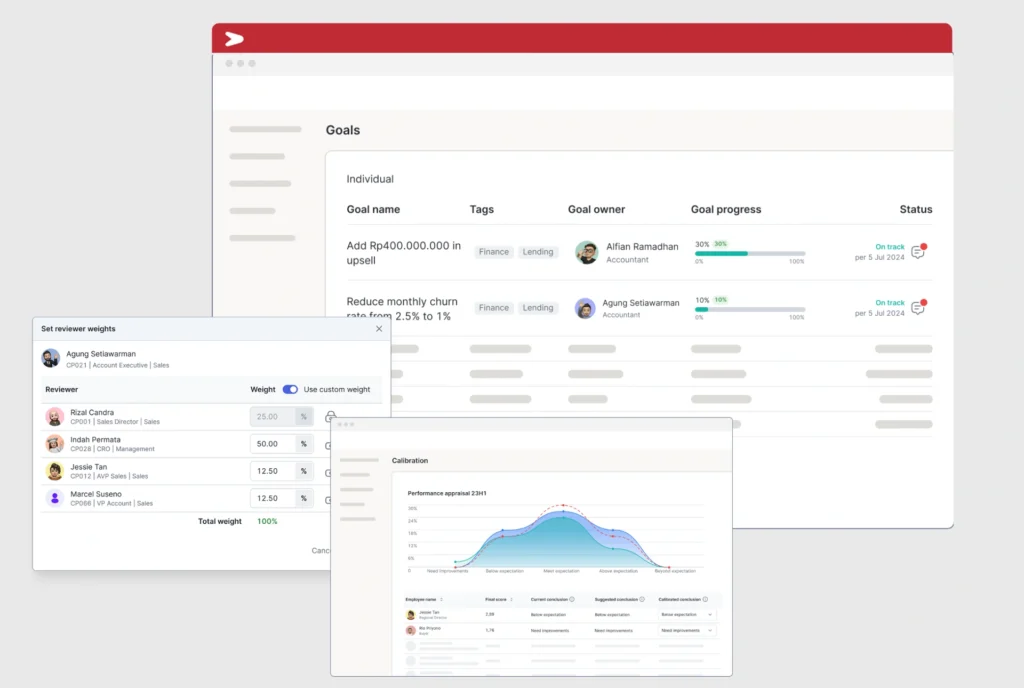
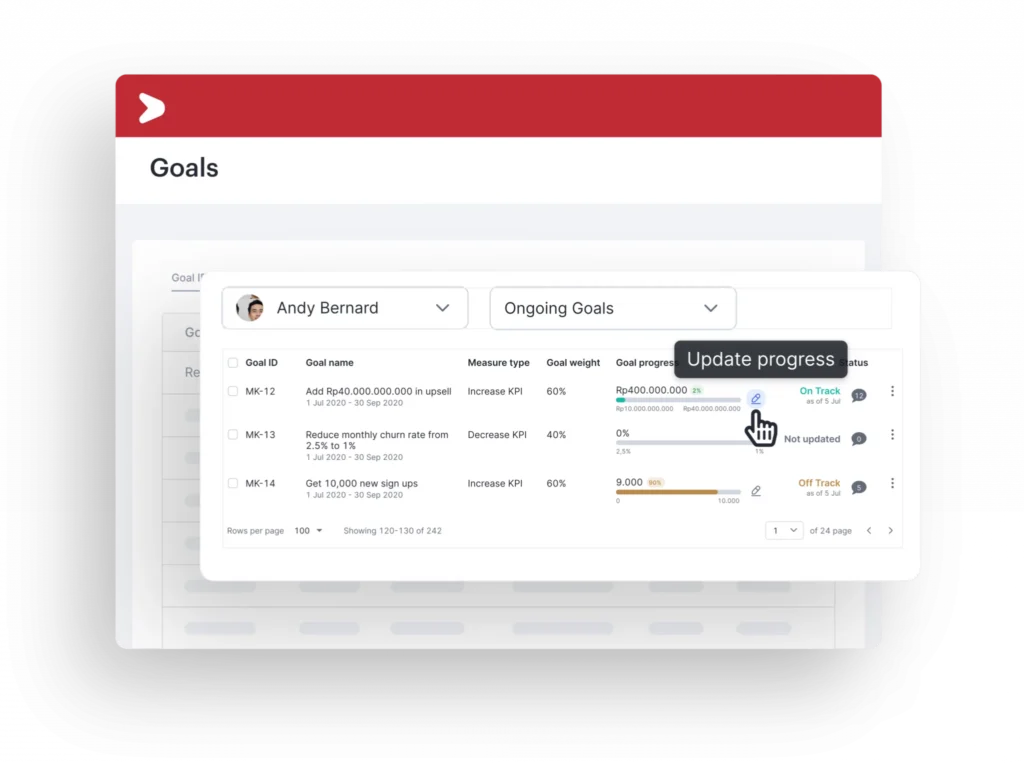
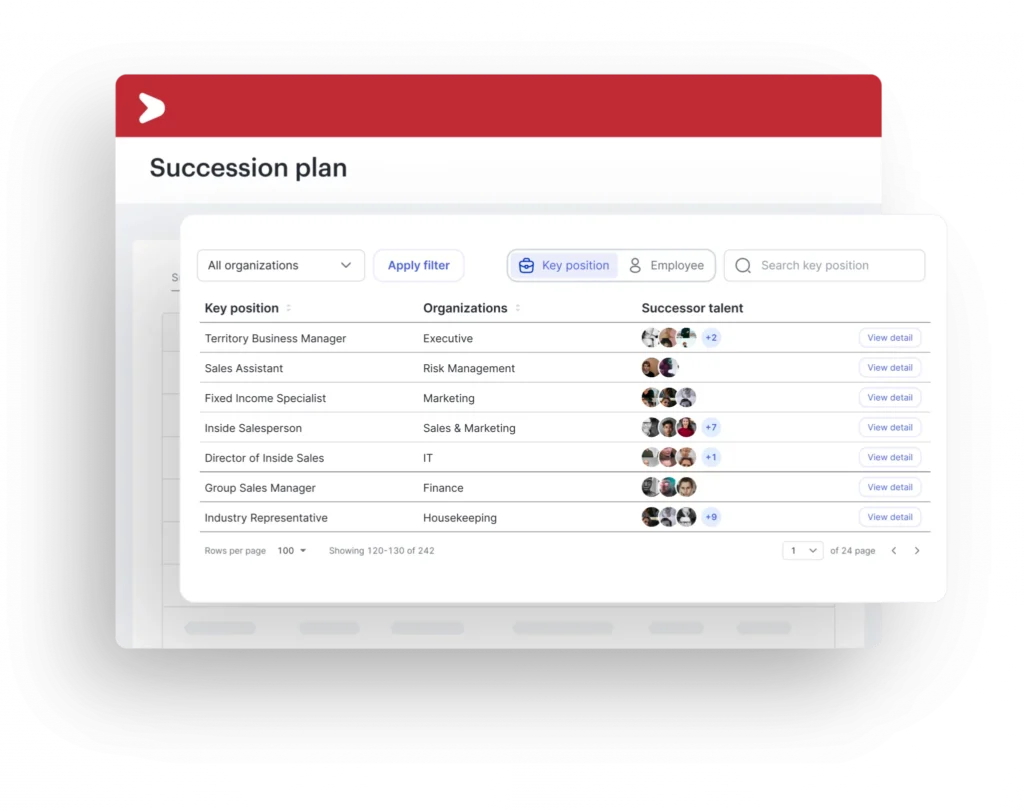
Mekari Talenta is a cloud-based HCM platform designed to help organizations manage performance and talent development in one integrated system, enabling a more structured, data-driven, and scalable approach to workforce management.
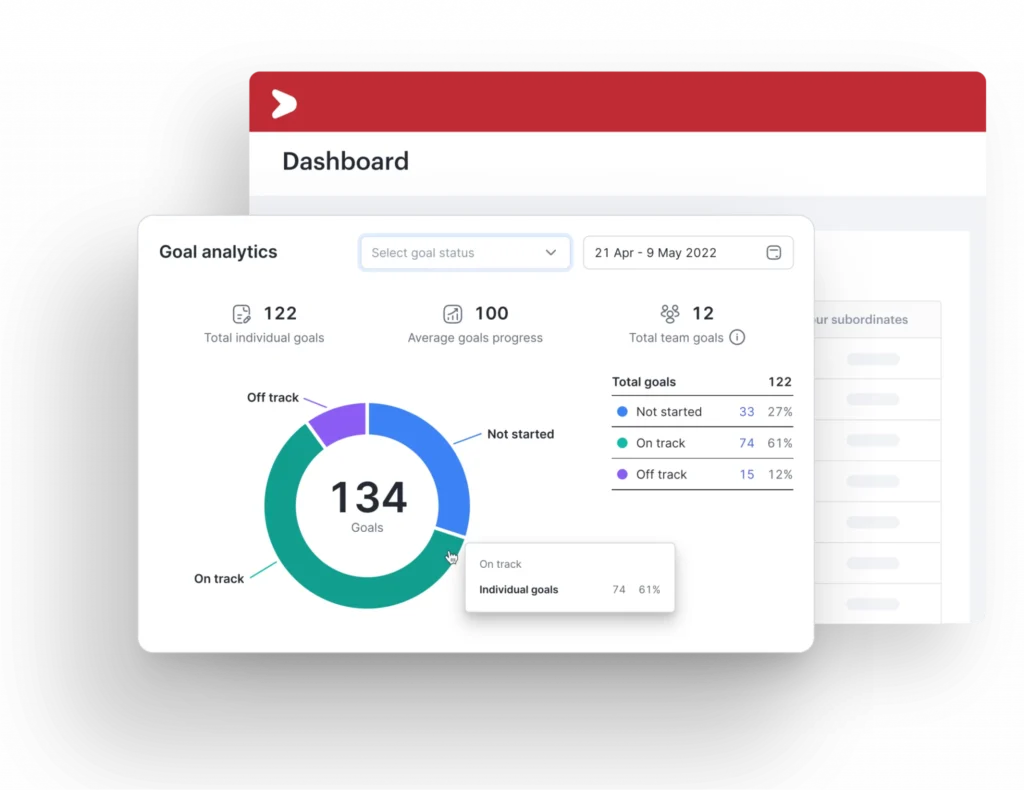
Mekari Talenta supports your talent and performance management strategy through capabilities such as:
- Performance Management System → align company goals with individual KPIs and OKRs, run structured performance reviews, and track progress in real time
- 360° Performance Reviews & AI Insights → conduct multi-source evaluations with AI-generated summaries for more objective and faster decision-making
- Talent Management & Succession Planning → identify high-potential employees, build talent pipelines, and prepare successors for critical roles
- Competency Assessment Framework → evaluate skill gaps and map employee capabilities against future role requirements
- Individual Development Plan (IDP) → create structured, measurable development plans aligned with both performance outcomes and future roles
- Learning Management System (LMS) → deliver and manage training programs at scale, from onboarding to advanced skill development
- Talent Mapping & 9-Box Matrix → visualize employee performance and potential to support objective talent decisions
- HR Analytics & Dashboards → gain real-time visibility into performance trends, talent readiness, and succession risks
- Cross-Functional & Multi-Entity Support → ensure consistent implementation across business units, locations, and organizational structures
- Integrated HR Ecosystem → connect performance, development, and workforce data into a single source of truth
With Mekari Talenta, organizations can move beyond disconnected HR processes and build a system where performance data continuously informs talent decisions, and talent development ensures sustained performance over time.
Request a demo or contact our team to explore how Mekari Talenta can support your workforce strategy.