



-
A talent management system is an integrated platform that helps organizations manage the entire employee lifecycle in a structured, scalable, and data-driven way.
-
The components typically consist of performance management, succession planning, learning & development, competency management, and career development planning to support end-to-end talent strategy.
Talent management has become a critical challenge for modern organizations. As businesses grow, managing people becomes a core part of a broader human capital management strategy.
Companies are not only expected to hire the right people, but also to ensure that employees continuously grow, stay engaged, and contribute meaningfully to long-term business objectives.
his highlights how a strategic and integrated approach to talent management plays a key role in retaining top performers while maintaining organizational stability.
As a result, many enterprises are increasingly adopting talent management systems to manage employee development in a more scalable, data-driven, and strategic way.
In this article, the Mekari Talenta blog will explore what a talent management system is, its key benefits for organizations, and examples of software solutions that companies can leverage.
What Is Talent Management System?
A talent management system (TMS) is an integrated platform that enables organizations to manage the entire employee lifecycle, from workforce planning and hiring to development, performance, succession, and retention, within a single, connected environment.
In enterprise contexts, it serves as the backbone for aligning people strategy with business objectives, especially in organizations with complex structures, multiple business units, and geographically distributed teams.
Rather than operating as a collection of disconnected HR tools, a TMS consolidates data into a unified system, giving leaders real-time visibility into workforce capabilities, performance trends, and future talent risks.
This level of integration is critical for scalability, allowing organizations to standardize processes while still accommodating local variations across regions or functions.
A mature TMS also embeds analytics and automation to support more informed decision-making, such as identifying high-potential employees, forecasting turnover risk, and planning succession pipelines at scale.
As organizations grow, the complexity of managing talent increases exponentially, and a TMS helps reduce that complexity by creating structured, repeatable frameworks for development and performance management.
Read also: Talent Management vs Performance Management: 6 Key Differences
Functions of Talent Management System
As organizations grow, managing talent becomes increasingly complex. It spanned multiple roles, teams, and geographies.
Without a structured system, this complexity often leads to fragmented processes and limited visibility.
A talent management system helps address this by bringing key talent functions into a unified, scalable framework.
1. Workforce Planning & Talent Acquisition
A talent management system enables organizations to plan workforce needs with greater precision and align hiring with long-term business strategy.
It helps enterprises manage hiring at scale across multiple roles, regions, and business units while maintaining consistency in how talent is assessed and selected.
By centralizing candidate data and recruitment workflows, leaders gain visibility into talent pipelines and can make more strategic hiring decisions.
2. Performance & Goal Management
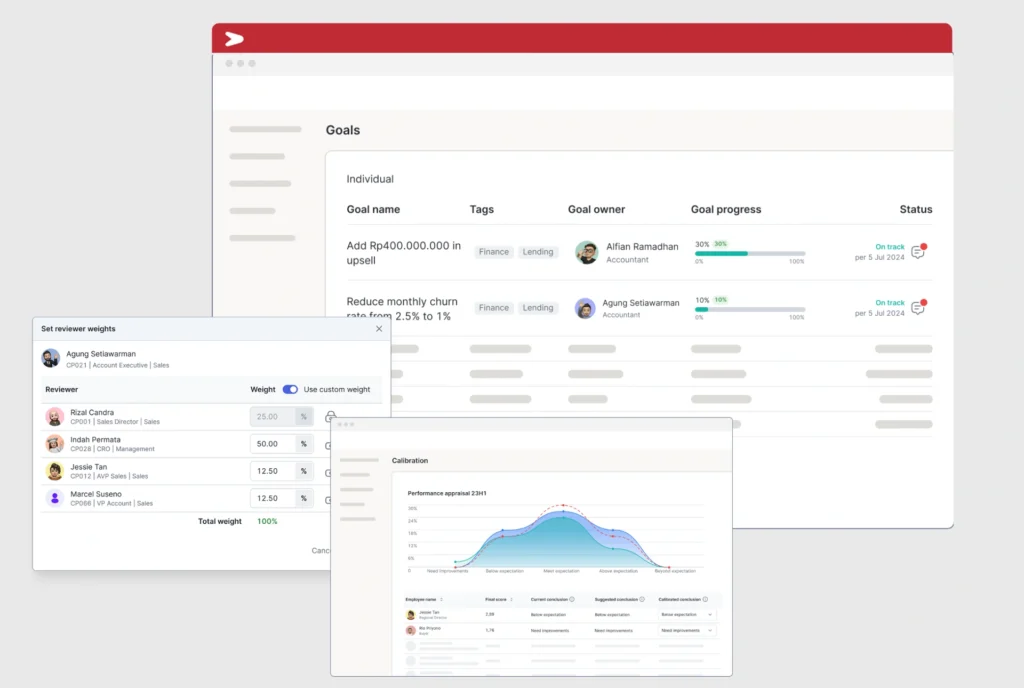
A TMS standardizes how performance is defined, tracked, and evaluated across the organization, ensuring alignment from executive objectives down to individual goals through a structured performance management system.
In complex organizations, this creates a shared framework that reduces subjectivity and enables more consistent performance conversations. It also allows leaders to monitor performance trends at scale and identify gaps early.
3. Learning & Employee Development
Through integrated learning and development capabilities, a TMS supports continuous skill-building aligned with evolving business needs.
It enables organizations to deliver personalized development paths while still maintaining structure across functions and regions.
This balance is essential for scaling capability development without losing relevance at the individual level.
4. Succession Planning & Talent Mobility
A TMS provides visibility into internal talent pools, making it easier to identify high-potential employees and prepare them for critical roles.
For large organizations, this reduces dependency on external hiring and ensures leadership continuity in the face of organizational complexity.
It also supports internal mobility, helping organizations deploy talent more effectively across teams and geographies.
5. Analytics & Workforce Insights
Beyond operational support, a TMS acts as a strategic layer by consolidating talent data into actionable insights.
Leaders can use these insights to forecast risks such as turnover, measure the impact of talent initiatives, and make data-driven decisions at scale.
This capability is key to managing workforce complexity while continuously optimizing organizational performance.
Benefits of a Talent Management System for Organizations
Implementing a structured talent management system delivers measurable value for organizations by enabling more effective talent development while improving overall business performance.
Beyond operational efficiency, it provides the foundation for managing workforce complexity, aligning people strategy with business goals, and making more consistent decisions at scale.
1. Improves Employee Retention
Talent management is strongly linked to employee retention.
In practice, this means that the more structured and consistent an organization’s talent management approach is, the higher its ability to retain top talent. It will reducing the cost and disruption associated with frequent turnover.
2. Enables Identification of High-Potential Talent
A talent management system helps organizations systematically identify high-potential employees by consolidating performance data, competency assessments, and multi-source feedback.
Without a structured system, organizations risk overlooking or underutilizing their most valuable talent.
3. Strengthens Succession Planning
Succession planning becomes significantly more reliable when it is based on structured data rather than periodic evaluation cycles.
A talent management system allows organizations to continuously map readiness levels, track leadership pipelines, and simulate different succession scenarios.
This is particularly important in enterprise environments where leadership gaps can create operational risk across multiple layers of the organization.
With clear visibility into internal talent, organizations can reduce dependency on external hiring while accelerating leadership transitions.
4. Enhances Workforce Productivity and Stability
Workforce productivity is closely tied to stability, continuity, and clarity of expectations. A talent management system reinforces these elements by standardizing goal-setting, performance tracking, and development planning across the organization.
Organizations with mature, data-driven talent practices can experience significantly lower turnover, which directly contributes to stronger team cohesion and sustained output.
Over time, this creates a more predictable operating environment where productivity is not disrupted by constant talent churn.
5. Supports Data-Driven HR Decision Making
As organizations grow, decision-making complexity increases across promotions, workforce planning, and capability development.
A talent management system addresses this by consolidating fragmented data into a single, reliable source of truth.
Leaders can evaluate talent using consistent metrics, compare performance across business units, and make decisions grounded in evidence rather than subjective judgment.
This shift toward data-driven decision-making improves fairness, reduces bias, and ensures that talent investments are aligned with long-term business priorities.
Read also: Data-Driven HR: Definition, Benefits, and Practical Implementation
Key Elements of a Talent Management System
A talent management system is built on several core elements that work together to manage talent in a structured, scalable way.
Each element plays a distinct role, but their real value emerges when they are integrated. It allows organizations to manage complexity while maintaining consistency across the workforce.
1. Performance Management
Performance management provides the foundation for how organizations define, measure, and align individual contributions with business objectives.
In complex environments, it involves continuous goal alignment, real-time feedback, and standardized evaluation frameworks across teams and regions.
This structure enables leaders to compare performance at scale, identify gaps early, and ensure that organizational priorities are consistently translated into individual accountability.
2. Succession Planning
Succession planning ensures that organizations are prepared for leadership transitions without disrupting operations.
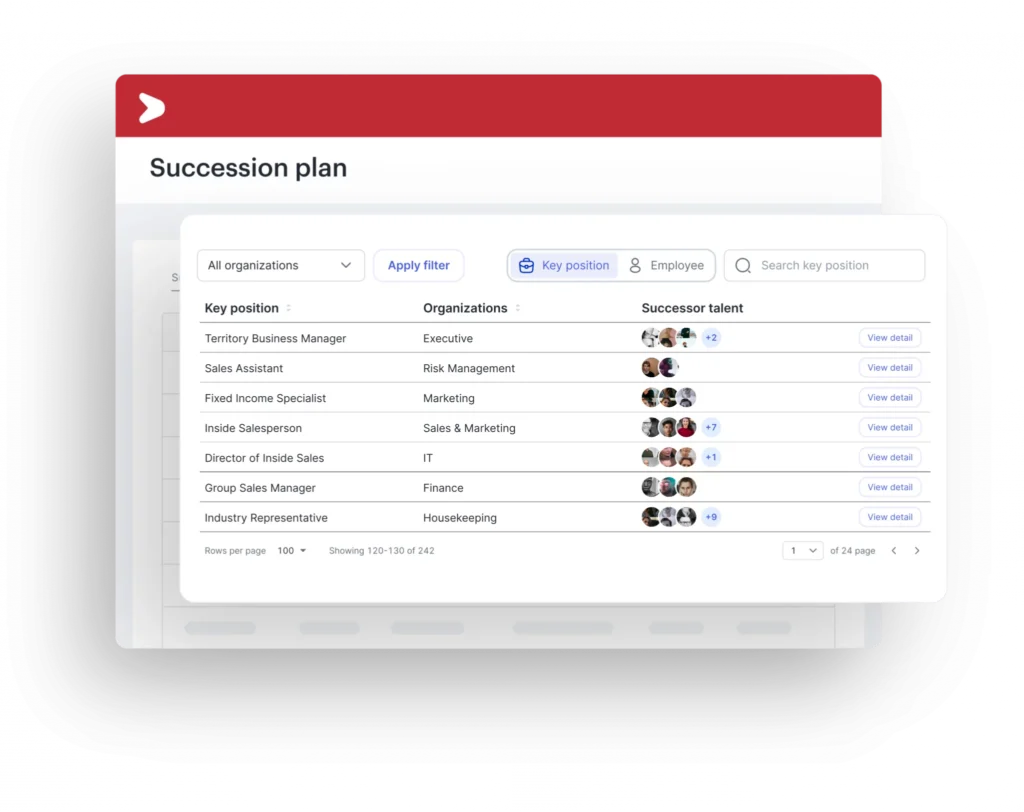
A structured system allows leaders to map critical roles, assess readiness levels, and build talent pipelines over time.
In complex organizations, this reduces dependency on external hiring and minimizes risk by ensuring that leadership continuity is supported by a visible, data-backed bench of internal candidates.
3. Learning & Development
Learning and development functions as the engine for building organizational capability over time.
A talent management system enables companies to deliver structured, role-based, and scalable development programs while still allowing for personalized learning paths.
This is particularly important in environments where skill requirements evolve quickly, requiring organizations to continuously reskill and upskill their workforce without losing alignment to business needs.
4. Competency Management
Competency management provides a standardized framework for defining the skills, behaviors, and capabilities required across roles.
It allows organizations to create a shared language for talent evaluation, making it easier to assess gaps, benchmark performance, and align development efforts.
At scale, this consistency is critical for ensuring that talent decisions—whether hiring, promotion, or development—are based on clearly defined and measurable criteria.
5. Career Development Planning
Career development planning connects individual growth with organizational needs, creating clearer pathways for progression within the company.
A talent management system enables visibility into potential career moves, required competencies, and readiness levels.
This helps organizations retain talent by providing structured growth opportunities, while also ensuring that internal mobility is aligned with strategic workforce priorities rather than driven by ad hoc decisions.
Tips for Choosing a Talent Management System
Selecting a talent management system is a long-term strategic decision, especially for organizations operating at scale.
The right system should adapt to growing organizational complexity, multi-entity structures, and evolving business priorities.
1. Prioritize Scalability and Organizational Fit
Choose a system that can scale alongside your organization across business units, geographies, and headcount growth.
This includes the ability to handle increasing data volume, more complex org structures, and localized requirements without requiring major system changes.
A solution that works for a single entity may break down when applied to a multi-entity or regionalized structure.
2. Look for Strong Integration Capabilities
In enterprise environments, a TMS rarely operates in isolation. It needs to integrate seamlessly with existing systems such as HRIS, payroll, and workforce planning tools.
Strong integration ensures data consistency across systems and eliminates fragmentation, which is often a major source of inefficiency and misalignment in large organizations.
3. Ensure Flexibility Without Losing Standardization
The system should allow flexibility to accommodate different workflows across departments or regions, while still maintaining a standardized framework.
This balance is critical, because too rigid, and the system won’t reflect real operational needs; too flexible, and it creates inconsistency that undermines data quality and decision-making.
4. Evaluate Data and Analytics Capabilities
A robust TMS should enable meaningful workforce insights. Look for capabilities such as predictive analytics, talent segmentation, and cross-functional reporting.
These features allow leaders to anticipate risks (like turnover), measure the effectiveness of talent initiatives, and make decisions based on evidence rather than assumptions.
5. Consider User Adoption at Scale
Even the most advanced system will fail if it is not widely adopted. Evaluate the user experience for different stakeholders like HR, managers, and employees across varying levels of digital maturity.
In large organizations, adoption challenges can multiply quickly, so intuitive design and clear workflows are essential to ensure consistent usage.
6. Assess Configuration and Change Management Requirements
Enterprise systems often require significant configuration to align with internal processes. It’s important to understand how easily the system can be configured without heavy technical dependency.
At the same time, consider the level of change management required. Implementation should support a smooth transition without disrupting ongoing operations.
7. Align with Long-Term Talent Strategy
Finally, ensure the system aligns with where your organization is heading. Whether the focus is on internal mobility, leadership development, or workforce agility, the TMS should support these priorities as they evolve.
In some cases, organizations may initially rely on KPI consultancy services to define performance frameworks and align metrics with business goals.
A system that aligns with long-term strategy becomes an enabler of transformation, rather than just an operational tool.
Read also: What Is a KPI Management System? Definition, Benefits, and Elements
Drive Workforce Performance with a Structured Talent Management System by Mekari Talenta
Managing talent in today’s organizations involves navigating scale, complexity, and the need for consistent decision-making across multiple entities, teams, and geographies.
Without a structured system, talent initiatives often become fragmented, limiting visibility and reducing their overall impact on business outcomes.
A well-implemented talent management system provides the infrastructure to bring these processes together.
It enables organizations to standardize how talent is developed, identified, and deployed, while still maintaining the flexibility required in dynamic environments.
This is particularly critical for enterprise organizations that need to balance centralized control with local execution.
Mekari Talenta is designed to support this balance by providing an integrated platform that helps organizations manage talent more strategically, with the structure and scalability required to sustain long-term growth.
With Mekari Talenta’s Talent Management features, organizations can move beyond fragmented HR processes and build a more structured, data-driven approach to managing talent at scale.
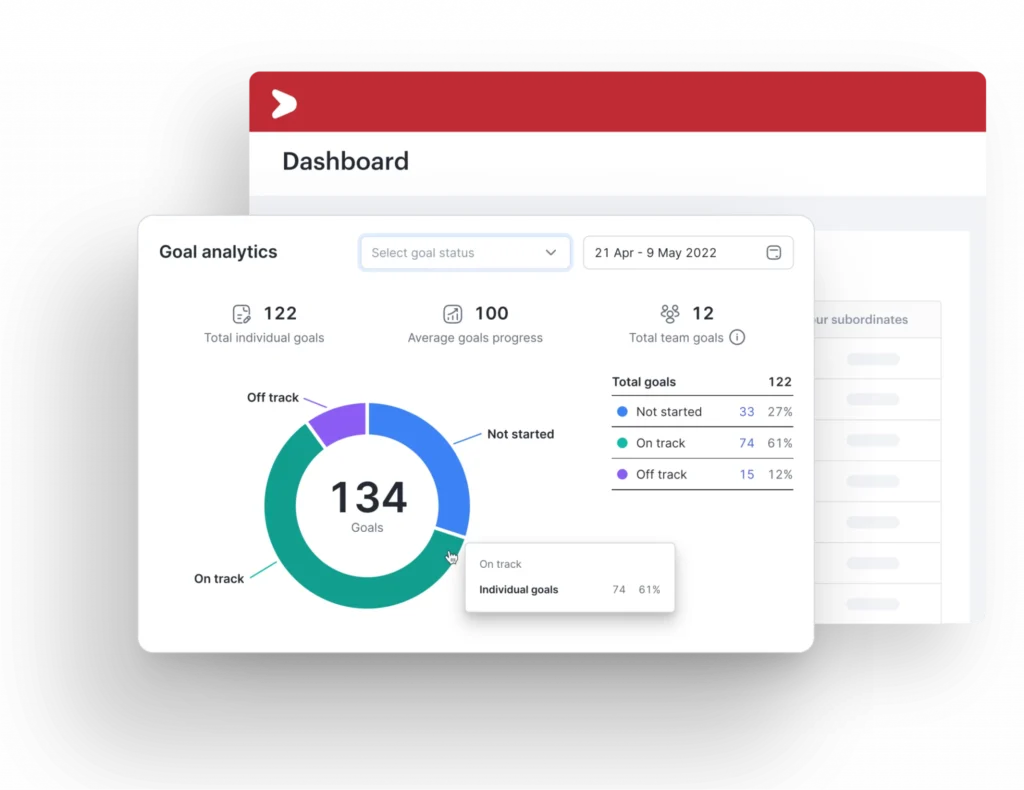
Key capabilities that support enterprise-level needs include:
- Succession Planning at Scale. Identify and prepare future leaders across multiple business units with clear visibility into talent pipelines and readiness levels.
- Competency Management Framework. Standardize how skills and competencies are defined and assessed across the organization, enabling more consistent talent evaluation and development.
- Individual Development Planning (IDP). Design structured, role-based development plans that align individual growth with organizational priorities.
- Targeted Learning & Skill Development. Address talent gaps with focused learning initiatives, including microlearning approaches that can be deployed efficiently across large teams.
- Data-Driven Talent Insights. Leverage centralized data to support more objective decisions in promotions, career progression, and workforce planning.
- Integrated Talent Processes. Connect performance, development, and succession into a unified system, reducing fragmentation and improving operational efficiency.
Ready to build a more scalable and strategic talent management approach? Speak with our team or request a demo to explore how Mekari Talenta fits your business needs.