




-
Succession planning is a strategic process to identify, develop, and prepare internal talent to fill critical roles and ensure leadership continuity.
-
The process of succession planning involves identifying critical roles, defining success criteria, building a talent pipeline, developing successors, and continuously evaluating readiness.
Succession planning is a critical safeguard for organizational continuity and long-term growth. In large organizations, the scale and complexity of operations make leadership gaps significantly more disruptive and harder to recover from.
When key roles are left unprepared for transition, decision-making slows, execution weakens, and strategic momentum is lost.
A structured approach ensures that leadership capability is continuously developed ahead of demand.
Organizations that embed succession planning into a broader human capital management strategy are better equipped to sustain performance, navigate change, and scale with confidence.
This article provides a practical, structured approach to succession planning, covering how to identify critical roles, build a strong leadership pipeline, and implement a process that can scale across the organization.
What Is Succession Planning?
Succession planning is a systematic process of identifying, developing, and preparing employees to fill critical roles in the future, ensuring continuity in leadership and key positions.
For people leaders, this means proactively building a pipeline of ready talent, so that when transitions happen, the organization is not reacting to gaps, but already prepared to fill them with capable internal successors.
This includes identifying high-potential employees, assessing their current capabilities, and equipping them with the skills and experiences needed to step into more strategic roles.
In practice, succession planning focuses on three core questions:
- Which roles are critical to business continuity and performance?
- Who has the potential to fill these roles in the future?
- What development is required to prepare them for that transition?
A strong succession planning approach is typically data-driven and integrated with performance and talent development processes.
It leverages performance insights, competency assessments, and career progression data to ensure decisions are based on readiness.
Without succession planning, organizations often face leadership gaps, disrupted operations, and increased reliance on external hiring.
With it, they can ensure smoother transitions, preserve institutional knowledge, and maintain long-term stability.
Ultimately, this systematic process shifts the mindset from reacting to vacancies to intentionally building future leadership capability as part of a broader talent development strategy.
What Is the Role of HR in Succession Planning?
HR plays a central role in succession planning as part of a broader talent management system that ensures leadership continuity and capability development at scale.
Rather than working in isolation, HR acts as the bridge between business strategy and talent development.
Key roles of HR in succession planning include:
- Aligning with business strategy: identify critical roles and define future leadership needs based on organizational goals
- Identifying high-potential talent: work with leaders to assess performance, potential, and readiness of employees
- Establishing assessment frameworks: implement structured tools such as competency assessments, performance reviews, and talent mapping
- Driving development initiatives: design leadership programs, mentoring, and Individual Development Plans (IDPs) to prepare successors
- Leveraging HR analytics: use data to track talent readiness, identify gaps, and support decision-making
- Ensuring governance and consistency: manage review cycles, align stakeholders, and ensure execution across teams
Read also: Data-Driven HR: Definition, Benefits, and Practical Implementation
Why Is Succession Planning Important?
Succession planning plays a critical role in ensuring organizational stability and long-term performance.
Without a structured approach, leadership transitions can quickly become disruptive, affecting decision-making, team alignment, and overall business continuity.
The following are the key reasons why succession planning is essential for organizations:
1. Ensures Business Continuity in Critical Roles
Without a succession plan, the departure of a key leader can create immediate operational gaps.
Critical decisions are delayed, teams lose direction, and performance can decline. Succession planning ensures that there are ready successors who can step in quickly and maintain stability.
This risk is more common than expected.
This means many organizations are exposed to sudden leadership gaps without a clear backup.
In contrast, proactive succession planning enables smoother transitions, preserves institutional knowledge, and minimizes disruption to business operations.
2. Reduces Risk and Dependency on External Hiring
Filling leadership roles externally is often time-consuming, costly, and uncertain. New hires also require time to understand the business context and internal dynamics before they can perform effectively.
Organizations without succession pipelines are more likely to rely on external hiring under pressure, increasing the risk of poor fit and slower ramp-up time.
By developing internal successors, organizations can significantly reduce this risk and ensure faster, more reliable transitions.
3. Strengthens Leadership Pipeline and Long-Term Growth
Succession planning is about building a continuous pipeline of future leaders. This allows organizations to scale more effectively and ensures leadership capability keeps pace with business growth.
By continuously developing leadership capability, companies avoid bottlenecks that can limit expansion or transformation initiatives.
In fast-changing environments, a strong leadership pipeline becomes a strategic advantage, not just a talent initiative.
4. Improves Retention of High-Potential Talent
High-performing employees are more likely to stay when they see clear career progression opportunities.
Succession planning signals that the organization invests in long-term growth, increasing engagement and reducing turnover.
This is because employees are more motivated to stay when they see a clear path to leadership and advancement.
Without this visibility, high-potential talent is more likely to seek opportunities elsewhere, increasing the risk of losing critical capabilities.
5. Enables More Strategic Workforce Planning
Succession planning plays a key role in strategic workforce planning by providing visibility into future leadership needs and capability gaps.
This allows organizations to align development efforts with long-term business strategy, rather than reacting to sudden vacancies.
Organizations that integrate succession planning into their broader workforce strategy are better positioned to maintain leadership continuity and organizational resilience. This enables more proactive decision-making, from talent development to resource allocation.
As a result, workforce planning becomes forward-looking and strategic, rather than reactive and short-term.
Risks of Not Having Succession Planning in an Organization
Without a structured succession planning approach, organizations face significant risks that not only disrupt operations but can also impact long-term business stability.
The following outlines the key risks in detail.
1. Leadership Gaps in Critical Roles
One of the most immediate risks is the sudden vacancy of key positions when a leader resigns, retires, or becomes unavailable unexpectedly.
Strategic roles such as CEOs, finance directors, heads of operations, or major project leaders play a crucial role in shaping business direction and performance.
When these roles are left vacant without a prepared successor, the organization can enter a state of uncertainty, lacking clear leadership and direction.
In such situations, companies are often forced to appoint replacements quickly, often without a thorough evaluation process. This can delay strategic decision-making and create instability across teams.
In addition, poorly managed leadership transitions can weaken relationships with key stakeholders, including investors, customers, and employees.
2. Suboptimal Emergency Decisions
Without succession planning, leadership transitions are often handled reactively and under time pressure.
In these situations, decisions are typically based on short-term considerations, such as availability or seniority, rather than actual readiness or capability.
Appointing leaders who are not fully prepared can result in performance decline, loss of employee trust, and internal conflicts.
In many cases, emergency successors may lack the necessary leadership experience, strategic understanding, or alignment with organizational culture.
This risk becomes even more critical for organizations undergoing growth, digital transformation, or market expansion.
Without a structured pipeline of future leaders, the likelihood of poor decision-making and its impact on business performance and reputation increases significantly.
3. Overdependence on Key Individuals
Organizations without succession planning often become highly dependent on a small number of key individuals.
When knowledge, expertise, and networks are concentrated in specific individuals without structured knowledge transfer, the organization becomes vulnerable if those individuals leave.
This creates a “single point of failure,” where the departure of one person can disrupt entire processes.
For example, if a long-tenured operations leader leaves without documented processes or trained successors, operational continuity can be severely affected.
Succession planning mitigates this risk by encouraging knowledge sharing, role rotation, and cross-training to ensure hat critical knowledge is distributed rather than concentrated.
4. Decline in Employee Performance and Motivation
The absence of clear career pathways and development opportunities can significantly impact employee motivation, especially among high-potential talent.
When employees do not see a future within the organization, they are more likely to feel disengaged and undervalued.
This can lead to decreased productivity, lower engagement, and increased turnover. Replacing talent is often more costly than developing internal employees, making this a significant organizational risk.
Succession planning helps address this by providing visibility into career progression and demonstrating that the organization is committed to employee growth.
As a result, it strengthens engagement and retention while enhancing the organization’s employer brand.
5. Loss of Institutional Knowledge
Institutional knowledge refers to the accumulated experience, processes, and insights developed over time within an organization.
Much of this knowledge is often undocumented and embedded in the day-to-day practices of experienced employees.
Without succession planning, knowledge transfer does not happen effectively. When senior employees leave without passing on their expertise, the organization loses valuable intellectual capital. This can negatively impact decision quality, innovation, and operational efficiency.
Succession planning addresses this by formalizing knowledge transfer through mentoring, coaching, job shadowing, and role rotation.
This ensures that critical knowledge is preserved and passed on to the next generation of leaders.
Key Components of an Effective Succession Planning Strategy
A strong succession planning process is not defined by a single activity, but by how well multiple components work together as a system.
Without these components in place, succession planning often becomes fragmented and difficult to scale.
At a minimum, an effective approach includes the following core elements:
Talent Mapping
Talent mapping provides a structured view of the workforce by assessing employees based on competencies, performance, and potential.
This creates a clear picture of where capability exists today and where gaps remain, enabling organizations to prioritize development and succession efforts more effectively.
Leadership Pipeline
A strong leadership pipeline defines a clear progression path from operational roles to executive positions.
It outlines the capabilities required at each level and the expected transition points, ensuring that career progression and succession are aligned and consistent across the organization.
Individual Development Plan (IDP)
The Individual Development Plan (IDP) translates succession strategy into actionable steps at the individual level.
It is built based on a gap analysis between current capabilities and the requirements of future roles, ensuring that development efforts are targeted, measurable, and aligned with business needs.
These processes are often supported by a structured performance management system that provides consistent data on employee performance, growth trends, and readiness for future roles.
Knowledge Transfer
Knowledge transfer ensures that critical expertise, especially tacit knowledge held by senior employees, is systematically passed on to successors.
This can be done through structured approaches such as job shadowing, mentoring, documented processes, and role rotations, reducing the risk of knowledge loss during transitions.
Succession Planning Process
While many organizations recognize the importance of succession planning, execution often remains a challenge.
According to Edsi, 68% of executives consider succession planning critical to business success, yet only 34% have a formal plan in place.
This gap highlights a common issue that succession planning is often understood conceptually, but not implemented systematically.
As a result, many organizations remain exposed to leadership disruptions, delayed decision-making, and loss of strategic momentum.
To close this gap, succession planning needs to be translated into a clear, structured process that can be consistently applied across the organization.
1. Identify Critical & Vulnerable Roles
The first step in succession planning is to identify which roles require immediate attention, because not all positions carry the same level of risk or impact.
The goal is to focus efforts on roles that are both critical to business performance and vulnerable to disruption.
This requires evaluating positions through two key lenses:
- Criticality: how essential the role is to achieving business objectives. Roles with high decision-making authority, specialized expertise, or direct impact on revenue and operations are typically considered critical. Importantly, these roles are not limited to senior leadership—they often include technical, operational, or hard-to-replace positions.
- Vulnerability: how exposed the role is to risk if the current holder leaves. This includes situations where there is no ready successor, limited internal bench strength, or difficulty sourcing talent externally.
By combining these two factors, organizations can prioritize roles that pose the highest risk.
Positions with high criticality and high vulnerability should be addressed first, as gaps in these roles can significantly disrupt operations and strategic execution.
In practice, this step should not be done at a single, centralized level. Each business unit or function should assess its own critical roles, as the impact and risk of positions often vary across teams.
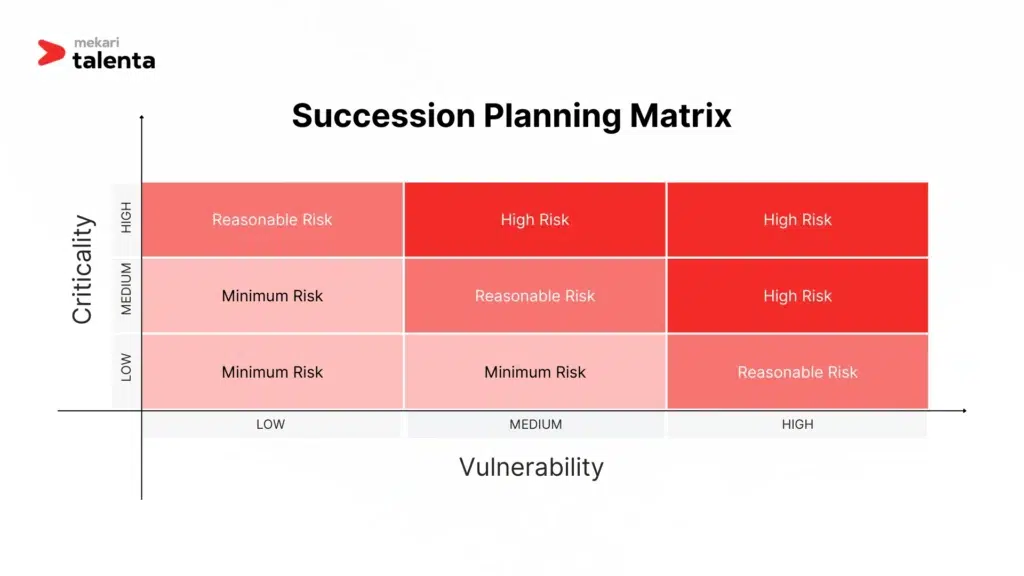
The matrix above helps visualize how to prioritize roles for succession planning. Each position can be mapped into one of four risk levels:
- High Criticality + High Vulnerability → Highest priority
These roles pose the greatest risk and should be addressed immediately, as any vacancy can significantly disrupt operations. - High Criticality + Low Vulnerability → Monitor closely
These roles are important but already have some level of succession readiness. - Low Criticality + High Vulnerability → Manage selectively
While less critical, these roles may still require attention if they are difficult to replace. - Low Criticality + Low Vulnerability → Lower priority
These roles carry minimal risk and typically do not require immediate succession planning.
2. Define Role Requirements and Success Criteria
Once critical roles are identified, the next step is to define what success in that role actually looks like. Without this clarity, succession planning becomes subjective and inconsistent.
Start by building a structured role profile that includes key responsibilities and decision scope, required competencies (technical, leadership, behavioral), performance expectations and success metrics, and experience thresholds (e.g., years, exposure, complexity handled).
Instead of relying on job descriptions alone, validate this with current role incumbents, direct managers and stakeholders, and also performance data from top performers in similar roles.
In practice, this step should answer:
- What differentiates a high performer in this role vs an average one?
- What capabilities will be required in the next 1–3 years (not just today)?
- Which requirements are non-negotiable vs trainable?
The output of this step is a clear, standardized benchmark that will be used to assess and develop successors.
3. Identify a Talent Pipeline
With a clear understanding of role requirements, the focus shifts to identifying where potential successors can come from.
Instead of immediately selecting individuals, this step is about building a structured pipeline of feeder roles and talent pools.
In practice, this involves mapping roles that have overlapping responsibilities or adjacent capabilities to the target position.
For example, a senior operational role may feed into a leadership position if it provides exposure to decision-making, cross-functional coordination, or strategic execution.
This step also requires identifying gaps. Even if certain roles appear aligned, there may still be missing capabilities that need to be developed.
Understanding these gaps early helps determine whether internal talent can realistically be prepared in time, or whether external hiring may still be required.
In larger organizations, this analysis should be done at the business unit or function level, as pipelines are rarely uniform across the organization. The goal is to create a reliable source of future candidates, not just a one-time list.
4. Nominate and Validate Successor Candidates
After defining the pipeline, the next step is to identify specific individuals who can be developed into successors.
This process should be structured and evidence-based, rather than relying solely on managerial judgment.
Organizations typically combine multiple inputs, including performance history, potential assessments, and feedback from talent reviews.
At the same time, it is equally important to consider employee aspirations, as readiness is not only about capability but also willingness to take on future roles.
To ensure consistency, candidates should be evaluated against the role requirements defined earlier.
This helps reduce bias and ensures that selection is based on objective criteria rather than visibility or proximity to leadership.
Candidates are usually categorized based on readiness. Those who can step in immediately, those who need targeted development, and those who are part of the longer-term pipeline. This distinction is critical because it directly shapes development priorities.
It is also important to set expectations clearly that being identified as a successor does not guarantee promotion Instead, it reflects an investment in development based on current performance and future potential.
Read also: What Is a KPI Management System? Definition, Benefits, and Elements
5. Create Structured Development Plans
Identifying successors is only the midpoint. The real impact comes from how effectively organizations prepare them for future roles.
At this stage, development should be tailored to close specific capability gaps identified earlier. Rather than relying on generic training programs, the focus should be on role-relevant experiences that accelerate readiness.
For example, if a potential successor lacks strategic decision-making experience, they can be assigned to participate in business planning discussions or lead a cross-functional initiative.
If stakeholder management is a gap, they may be given exposure to client-facing or executive-level interactions.
In practice, effective development typically combines:
- Experiential learning → involvement in strategic projects, cross-functional initiatives, or acting roles
- Leadership exposure → participation in decision-making processes and stakeholder discussions
- Mentorship and coaching → guidance from current role holders to transfer tacit knowledge and context
- Targeted learning programs → training aligned with specific capability gaps, not generic content
These approaches provide practical understanding that cannot be achieved through training alone.
Over time, they help reduce dependency on a single individual and ensure smoother leadership transitions.
The most effective development plans are those that are specific, measurable, and time-bound, allowing progress to be tracked and adjusted as needed.
Read also: Top 10 Employee Training Software to Boost Revenue per Worker Up to 218%
6. Evaluate and Continuously Improve the Plan
Succession planning should not be treated as a one-time initiative. To remain effective, it needs to be continuously evaluated and refined based on outcomes.
Organizations should regularly assess whether their succession efforts are actually strengthening the leadership pipeline.
This includes looking at indicators such as how many roles have ready successors, how quickly positions can be filled internally, and whether transitions are becoming smoother over time.
Beyond metrics, qualitative feedback is equally important. For example, are newly promoted leaders able to perform effectively in their roles? Are development efforts translating into real capability improvement? Are critical roles still exposed to risk?
Regular review cycles, typically annually or aligned with business planning, allow organizations to update priorities, reassess talent readiness, and refine development strategies.
Over time, this transforms succession planning into a dynamic and data-driven system, rather than a static exercise, ensuring it continues to support long-term business stability and growth.
Best Practices for Effective Succession Planning Strategy
Having a succession plan is not enough because how it is executed determines its impact. The following best practices highlight how to move from planning to effective execution.
1. Prioritize Critical Roles and Limit Focus
One common mistake in succession planning is trying to cover too many roles at once. In practice, organizations should focus on positions that have the highest business impact and risk.
Once these roles are identified, it is recommended to shortlist two to three potential successors for each role. This ensures there is sufficient backup without overextending development resources.
This focused approach allows organizations to invest more effectively in preparing the right candidates, rather than spreading efforts too thin across non-critical positions.
2. Use Objective and Data-Driven Assessment
Selecting successors requires a high level of objectivity. In many cases, the most capable candidates are not always the most visible ones.
Organizations should rely on structured evaluation methods such as performance data, competency assessments, and potential indicators to identify the right candidates.
Strong candidates are typically those who:
- consistently solve problems effectively
- adapt quickly to change
- demonstrate the ability to take on greater responsibility
Without objective criteria, succession planning risks being influenced by bias or limited visibility, which can weaken the overall talent pipeline.
3. Align Succession Planning with Employee Aspirations
Succession planning must also consider individual career goals. Leaders should actively engage in discussions with employees to understand their career ambitions, how they see their future within the organization, and what support they need to grow.
In practice, organizations may find that some high-potential employees are not interested in certain leadership paths. Ignoring this can lead to misalignment and wasted development efforts.
When done properly, this alignment not only improves readiness but also becomes a strong driver of employee retention and engagement.
4. Leverage Structured Tools for Better Decision-Making
Effective succession planning relies on tools that provide clarity, consistency, and data-backed insights.
Common tools used include:
- 9-Box Matrix to map employees based on performance and potential, helping identify high-potential talent
- Competency Gap Analysis to measure the gap between current capabilities and role requirements, guiding development priorities
- Performance Appraisal Data to evaluate consistency, growth trends, and readiness over time
These tools help organizations move away from subjective judgment and towards structured, evidence-based decisions, especially during talent review discussions.
5. Use an HCM Platform to Scale and Operationalize Succession Planning
As organizations grow, managing succession planning manually becomes increasingly complex and inefficient.
This is where a cloud-based HCM platform becomes essential. By centralizing employee data, performance records, and development plans, organizations can manage succession planning more systematically and at scale.
For example, platforms like Mekari Talenta enable organizations to:
- monitor employee performance and potential continuously
- integrate competency assessments with development plans
- track Individual Development Plans (IDP) in real time
- identify and manage succession candidates based on data
With integrated HR dashboards and analytics, decision-makers gain better visibility into talent readiness and pipeline strength.
This allows succession planning to shift from a periodic exercise into a continuous, data-driven process.
Examples of Successful Succession Planning
Strong succession planning is best understood through organizations that have successfully navigated leadership transitions without disrupting performance or strategy.
These examples illustrate how a structured and proactive approach can ensure continuity while sustaining long-term growth.
1. Apple Inc.
Apple’s transition from Steve Jobs to Tim Cook in 2011 is widely regarded as one of the most effective succession planning cases in modern business.
Strategy:
Rather than reacting to leadership change, Apple prepared years in advance. Tim Cook was gradually positioned into critical operational roles as Chief Operating Officer, giving him deep exposure to Apple’s supply chain, product execution, and decision-making processes.
At the same time, Apple institutionalized leadership development through initiatives like Apple University to ensure continuity of values, decision frameworks, and culture beyond any single leader.
Outcome:
The transition was executed without operational disruption. Under Cook’s leadership, Apple became the first company to reach a $3 trillion market capitalization, while continuing to expand its ecosystem and maintain product innovation.
Importantly, the company did not experience the strategic drift that often follows founder transitions.
What makes this effective:
Apple did not treat succession as a replacement exercise, but as long-term leadership continuity that embedding capability, culture, and decision-making into the system, not the individual.
2. JPMorgan Chase
Succession planning at JPMorgan Chase has been a continuous, structured process under CEO Jamie Dimon, rather than a one-time initiative.
Strategy:
The organization systematically develops internal leadership through programs like “Leadership Edge,” combined with deliberate executive rotations across key business units.
This ensures potential successors gain cross-functional exposure, commercial understanding, and crisis management experience—critical for leading a complex financial institution.
Outcome:
JPMorgan has maintained strong leadership stability and performance, reporting $54 billion in profit in 2025.
More importantly, the organization consistently maintains a visible bench of CEO-ready candidates across major divisions, reducing dependency on external hiring for top leadership roles.
What makes this effective:
Succession is treated as an ongoing pipeline strategy, not a reactive decision. By continuously rotating and evaluating leaders, the organization ensures multiple “ready-now” candidates at any given time.
Turn Your Succession Planning Strategy into Scalable Execution with Mekari Talenta
Designing a succession planning strategy is only the first step. The real challenge lies in executing it consistently across teams, functions, and locations, especially in large organizations where complexity, data fragmentation, and scale can slow down decision-making.
To make succession planning truly effective, organizations need a system that can centralize talent data, enable objective evaluation, and continuously track leadership readiness.
Mekari Talenta is a cloud-based HCM platform designed to support end-to-end talent management, helping organizations operationalize succession planning in a structured and scalable way.
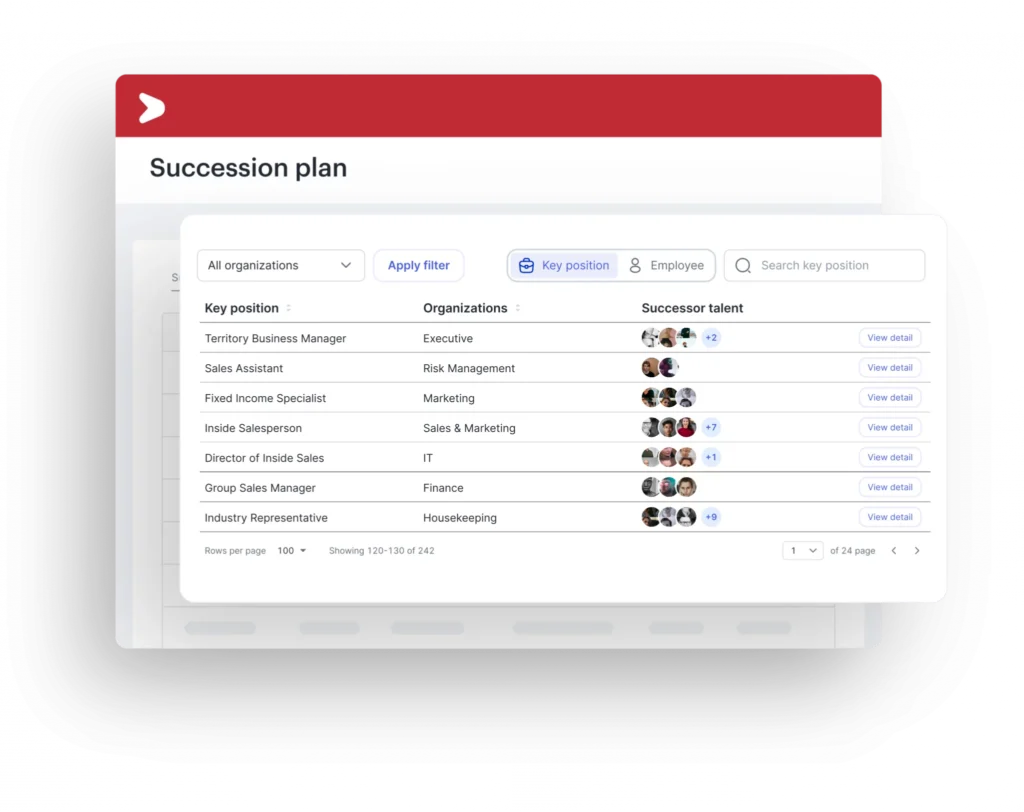
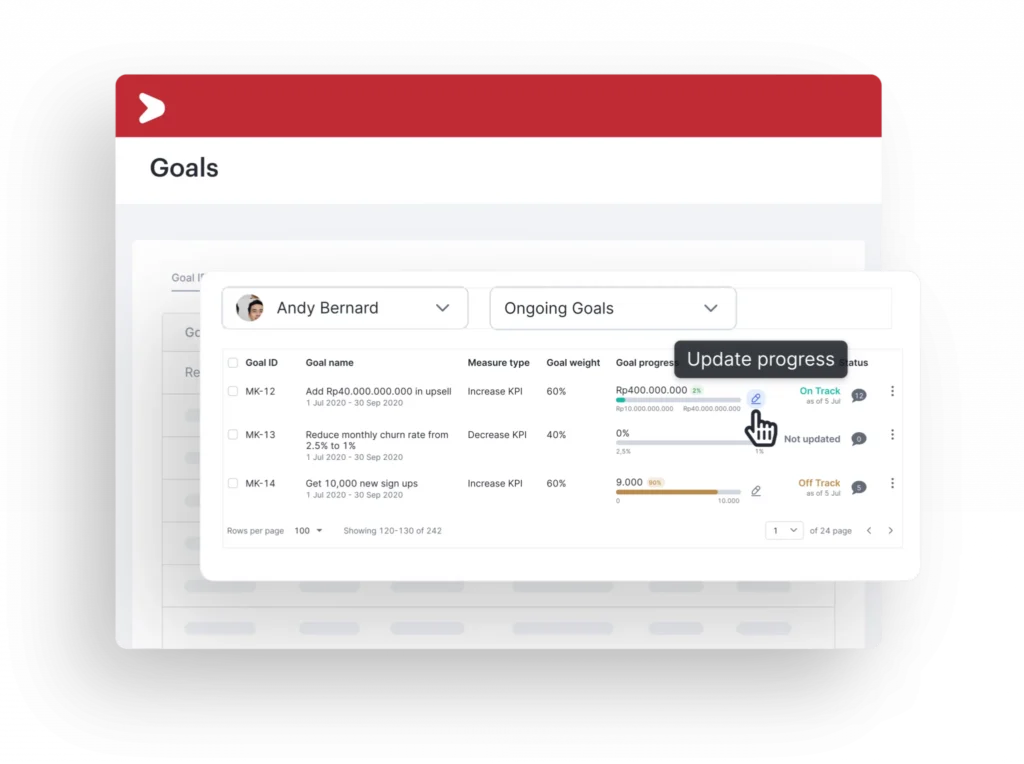
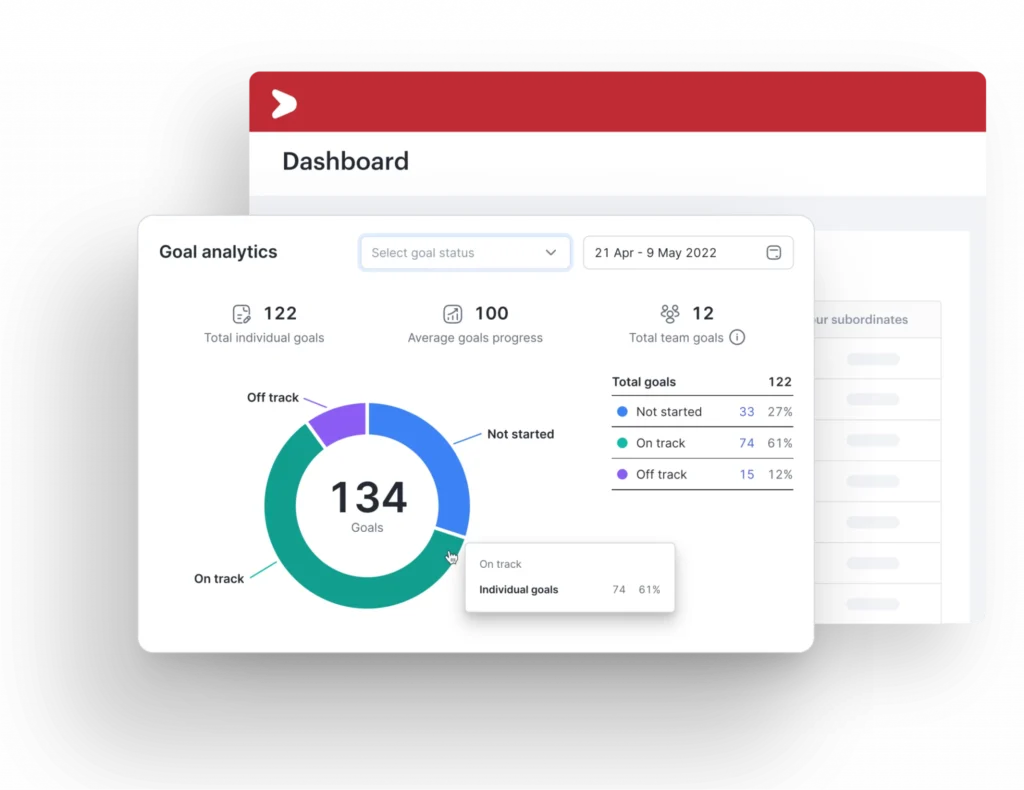
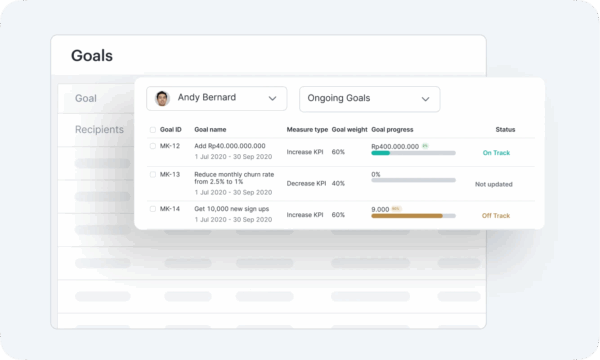
Mekari Talenta enables succession planning through capabilities such as:
- Centralized Employee & Talent Data: consolidate performance, competency, and career history into a single source of truth
- Performance Management System: track employee performance trends and identify high-performing, high-potential talent
- Competency Assessment Framework: evaluate skill gaps and align candidates with future role requirements
- Talent Mapping & 9-Box Matrix: visualize employee performance vs potential to identify succession candidates objectively
- Individual Development Plan (IDP): create and monitor structured development plans tailored to future leadership roles
- Succession Planning Module: identify successors, map talent pipelines, and track readiness levels for critical positions
- Learning Management System (LMS): deliver targeted training programs and ensure continuous capability development
- Analytics & HR Dashboards: gain real-time insights into bench strength, talent readiness, and succession risks
- Cross-Functional Visibility: align succession planning across business units, locations, and organizational levels
With Mekari Talenta, succession planning evolves from a periodic exercise into a continuous, data-driven system that ensure your organization always has the leadership capability needed to sustain growth and navigate change.
Speak with our team to explore how Mekari Talenta can support your succession planning strategy.