




-
A reliable HRIS for remote and hybrid workforce should be cloud-based, mobile-friendly, integrated with payroll and digital attendance, compliant with regulations, and equipped with employee self-service and strong data security.
-
Recommended HRIS solutions for distributed teams include Mekari Talenta, BambooHR, Gusto, and SAP SuccessFactors, each offering strengths in automation, performance management, compliance, and scalability.
In today’s era of flexible and digital work, managing a remote and hybrid workforce presents unique challenges for HR teams and management.
Companies must not only ensure that productivity remains high, but also comply with continuously updated labor and tax regulations issued by the government.
This is where a modern SaaS HRIS for remote and hybrid workforce becomes increasingly essential.
Unlike traditional systems that require heavy infrastructure, a SaaS-based HRIS allows companies to access HR tools via the cloud without installation or complex maintenance.
With the right implementation of HRIS for distributed workforce, companies can build an efficient, transparent, and compliant work ecosystem while supporting employee comfort in remote and hybrid environments.



What Is HRIS?
A Human Resource Information System (HRIS) is a digital system used by companies to manage all human resource data and administrative processes in an integrated manner.
An HRIS for remote workforce combines HR management, payroll, attendance tracking, and performance monitoring into one unified platform, enabling HR teams to work more efficiently and accurately.
With this system, companies can automate administrative tasks such as salary calculations, leave management, and income tax (PPh 21) processing without repetitive manual input.
For modern organizations with remote and hybrid employees, HRIS for hybrid workforce plays a critical role in maintaining data consistency and process transparency.
All activities—ranging from online attendance, leave approvals, overtime reporting, to employee data updates—can be carried out from anywhere through a cloud-based application.
This ensures that every employee, even when working from different locations, is recorded and monitored within the same standardized system.
Additionally, an HRIS provides employee self-service features, allowing staff to access payslips, submit leave requests, and update personal information without manual HR intervention.
This combination of features not only saves HR teams time but also enhances the employee experience through a more independent, transparent, and flexible digital work system.
Read also: HRIS vs HRMS vs HCM: What’s the Difference & What to Consider?
Benefits of Using HRIS for Remote and Hybrid Workforce
Implementing an HRIS for remote workforce provides a centralized, automated solution that simplifies HR operations while supporting seamless collaboration in hybrid settings, such as:
1. Efficient Employee Data Management
An HRIS for distributed workforce enables companies to manage all employee data automatically and in an integrated system, from personal information and employment history to tax status and attendance records.
All information is stored within a centralized cloud platform, accessible anytime without relying on multiple manual files or spreadsheets.
For HR teams managing remote or hybrid employees, this efficiency is crucial, as real-time updates can be made without location barriers.
2. Performance and Productivity Monitoring
Modern HRIS platforms often function as a comprehensive performance management system, helping managers monitor employee targets, track work progress, and evaluate outcomes consistently, including for remote staff.
In a recent empirical study, HRIS implementation was found to explain 33.5% of the variance in employee performance (R² = 0.335), indicating that structured digital HR systems have a measurable and meaningful impact on workforce outcomes
Through daily activity data, structured work reports, and periodic performance reviews, HR teams can measure productivity more objectively rather than relying on subjective assessments.
Some HRIS solutions also integrate KPI and OKR modules within their performance management system framework, enabling companies to conduct quantitative, transparent, and data-driven evaluations for their hybrid or distributed workforce.
2. Improved Communication and Team Collaboration
In remote and hybrid work environments, maintaining effective communication and coordination is a major challenge.
An HRIS for remote workforce provides features such as employee portals, automated notifications, and centralized communication dashboards that enhance transparency and reduce information silos.
Empirical research shows that Communication and Collaboration (CC) enabled through HRIS has a statistically significant positive effect on employee performance (β = 0.268, t = 3.106, p = 0.002), indicating that structured digital communication systems contribute meaningfully to workforce outcomes.
By centralizing announcements, policy updates, leave schedules, and performance information in a single system, cross-location collaboration becomes faster, more structured, and well-documented — especially for distributed teams.
4. Centralized Document Storage and Information Access
An HRIS for hybrid workforce serves as a digital storage hub for essential documents such as employment contracts, warning letters, payslips, and tax withholding certificates.
All files are securely stored within encrypted systems, reducing the risk of data loss or scattered documentation.
For remote employees, access to information becomes seamless, as documents can be downloaded or viewed directly through the employee portal without visiting the office.
This not only improves efficiency but also strengthens data security and regulatory compliance.
Recommended HRIS for Remote and Hybrid Workforce
After understanding the key benefits of implementing an HRIS for remote and hybrid workforce, the next step is choosing the right solution.
Not all HRIS platforms are built with distributed teams in mind, so it is important to select a system that aligns with your operational needs, compliance requirements, and long-term business growth.
The comparison below highlights several leading HRIS solutions designed to support remote and hybrid workforce management, outlining their key features, advantages, platform availability, and suitability for distributed operations.
| Software | Key Features for Remote & Hybrid Workforce | Advantages | Platform | Remote & Hybrid Suitability |
|---|---|---|---|---|
| Mekari Talenta | Automated payroll & tax reporting, GPS-based attendance, leave & overtime tracking, ESS, performance (KPI & OKR), recruitment & onboarding, HR analytics | End-to-end HR automation, compliant payroll processing, scalable architecture, Mekari ecosystem integration & API connectivity | Android, iOS, Web (cloud) | Highly suitable for medium-large organizations managing distributed teams with integrated payroll and compliance needs |
| BambooHR | Centralized employee database, digital onboarding, time-off tracking, performance reviews, reporting dashboards, employee self-service | Intuitive interface, quick implementation, strong core HR management, effective for structured hybrid workflows | Android, iOS, Web (cloud) | Suitable for small to mid-sized teams managing remote and hybrid employees with streamlined HR processes |
| Gusto | Automated payroll, contractor management, benefits administration, tax filing, employee self-service portal | Strong payroll automation, integrated benefits management, simplified tax compliance for remote employees | Android, iOS, Web (cloud) | Suitable for remote-focused teams prioritizing payroll, contractor payments, and benefits management |
| SAP SuccessFactors | Core HR, recruiting, learning management, performance & succession planning, workforce analytics, payroll integration | Comprehensive HCM capabilities, advanced analytics, scalable for complex distributed workforce structures | Android, iOS, Web (cloud) | Suitable for large and globally distributed organizations requiring structured governance and advanced workforce analytics |
To better assess how each platform supports real-world implementation, the following section provides a more detailed overview of each solution, starting with Mekari Talenta.
1. Mekari Talenta
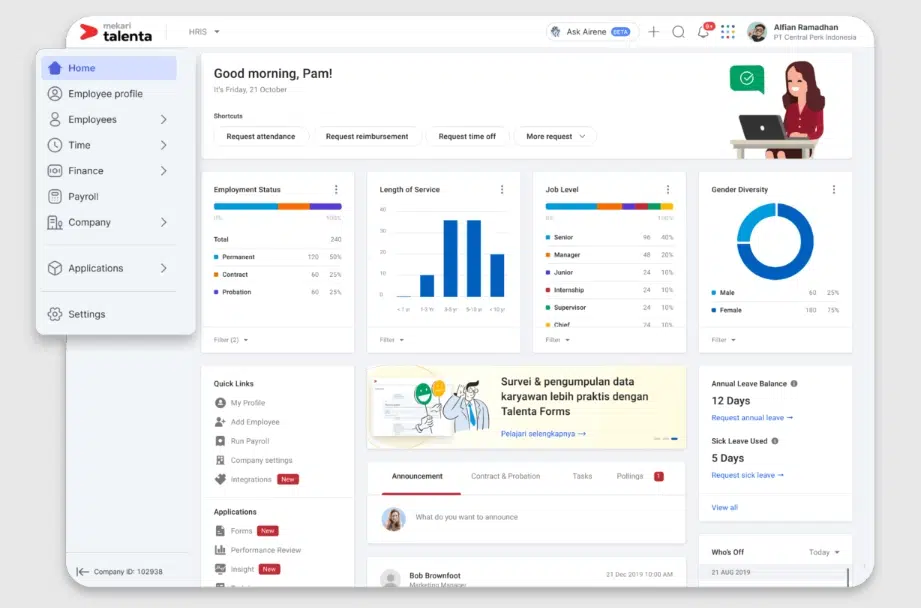
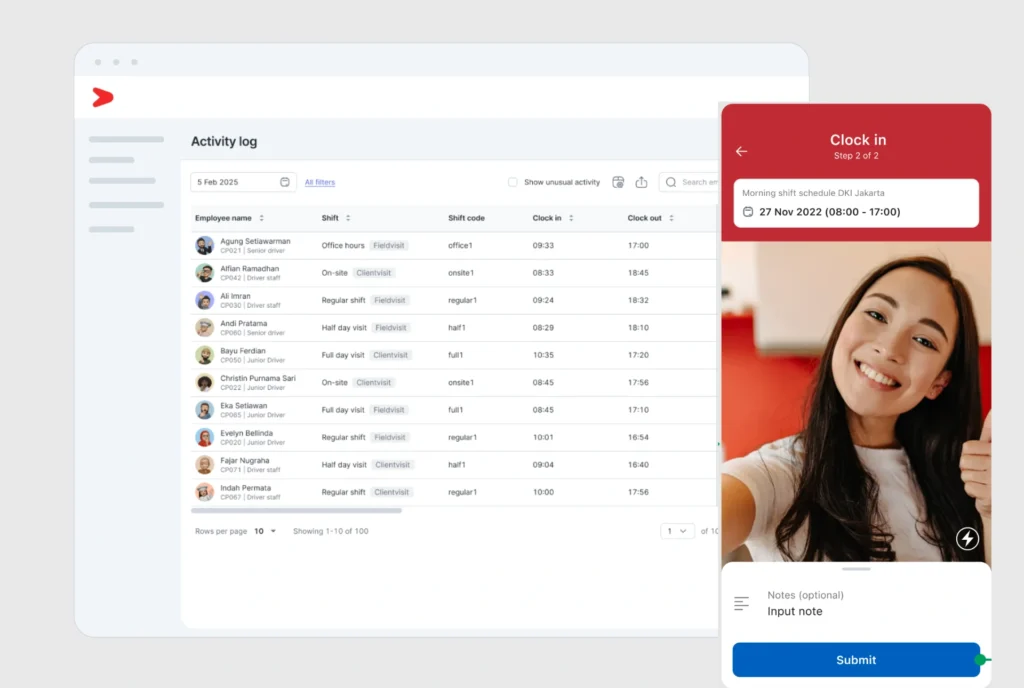
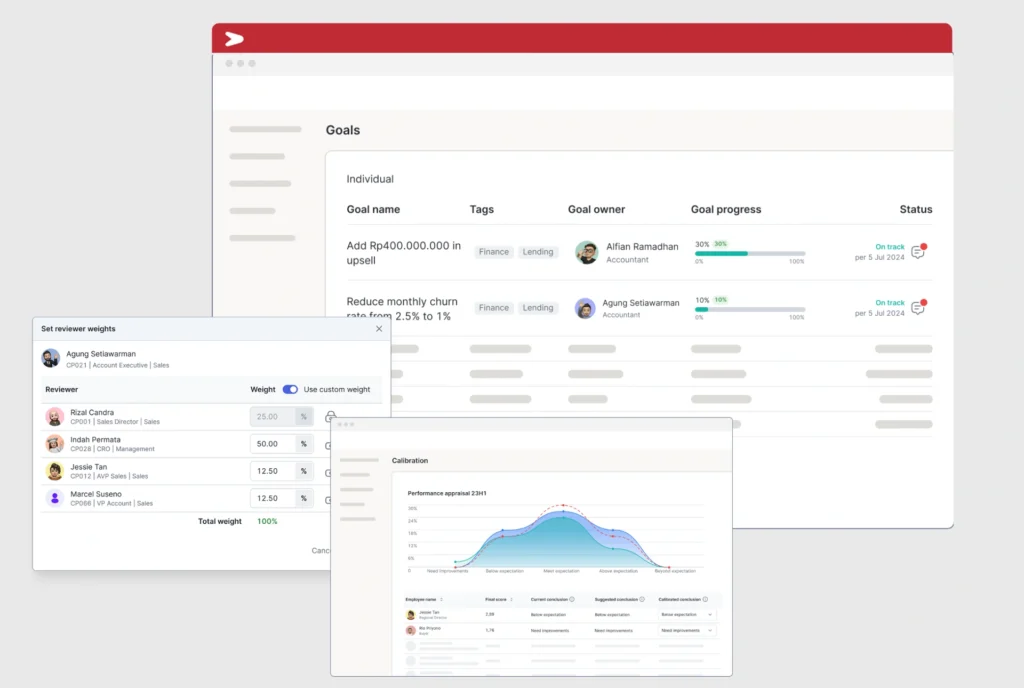
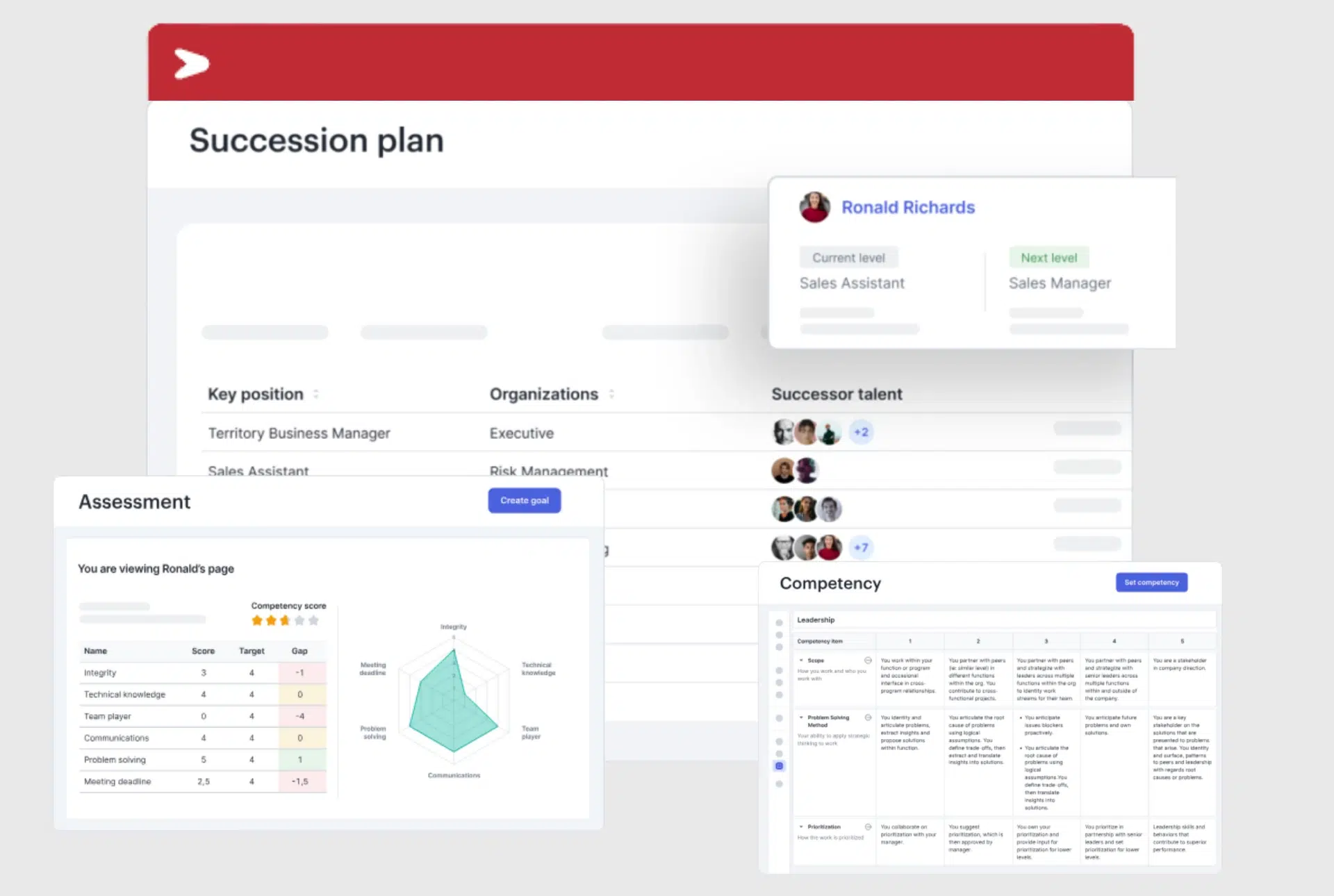
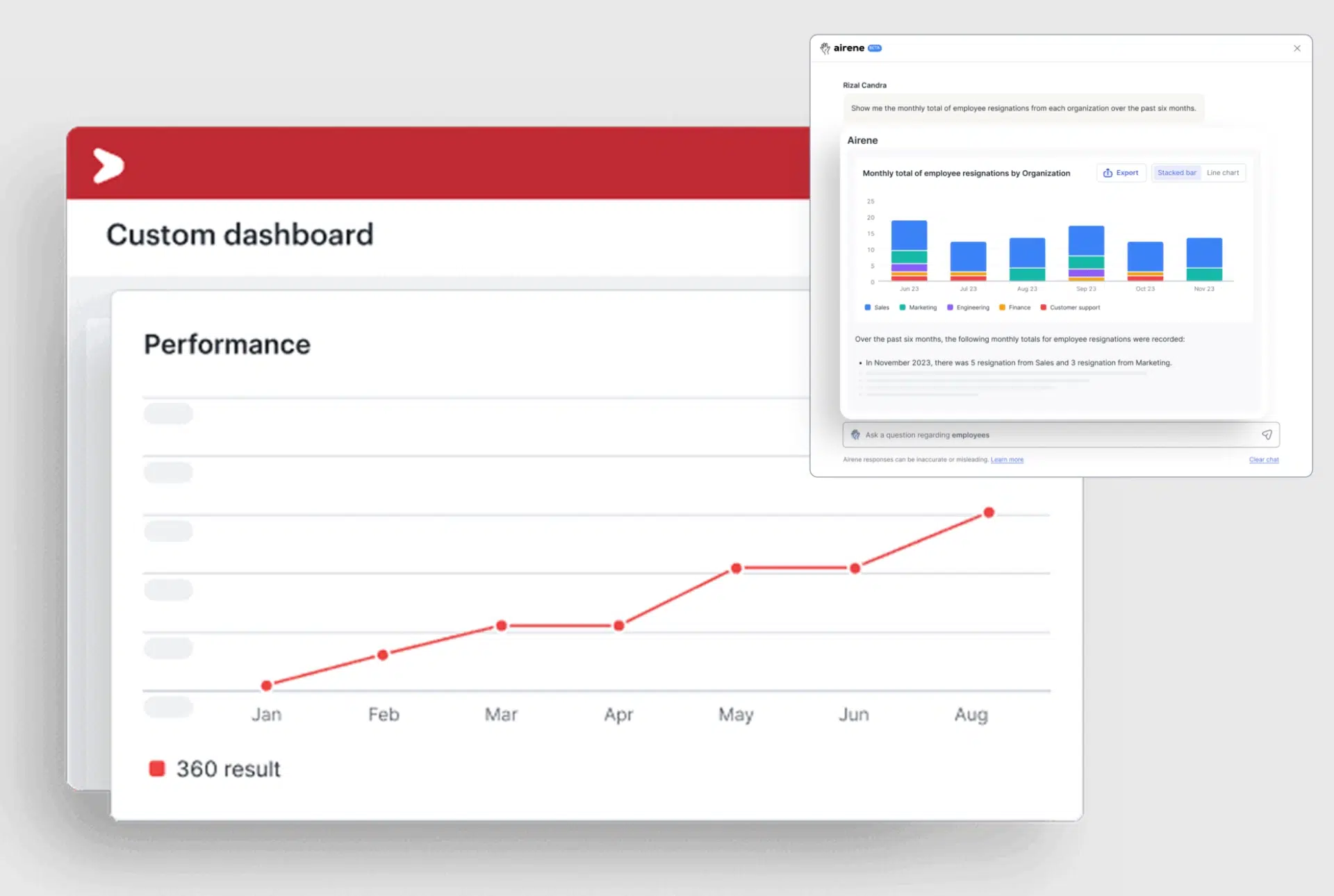
Mekari Talenta is a cloud-based HRIS designed to support remote and hybrid workforce management with a structured, scalable approach.
As part of the integrated Mekari software ecosystem, Mekari Talenta connects seamlessly with complementary business solutions such as accounting, taxation, and expense management, enabling a unified operational workflow across departments.
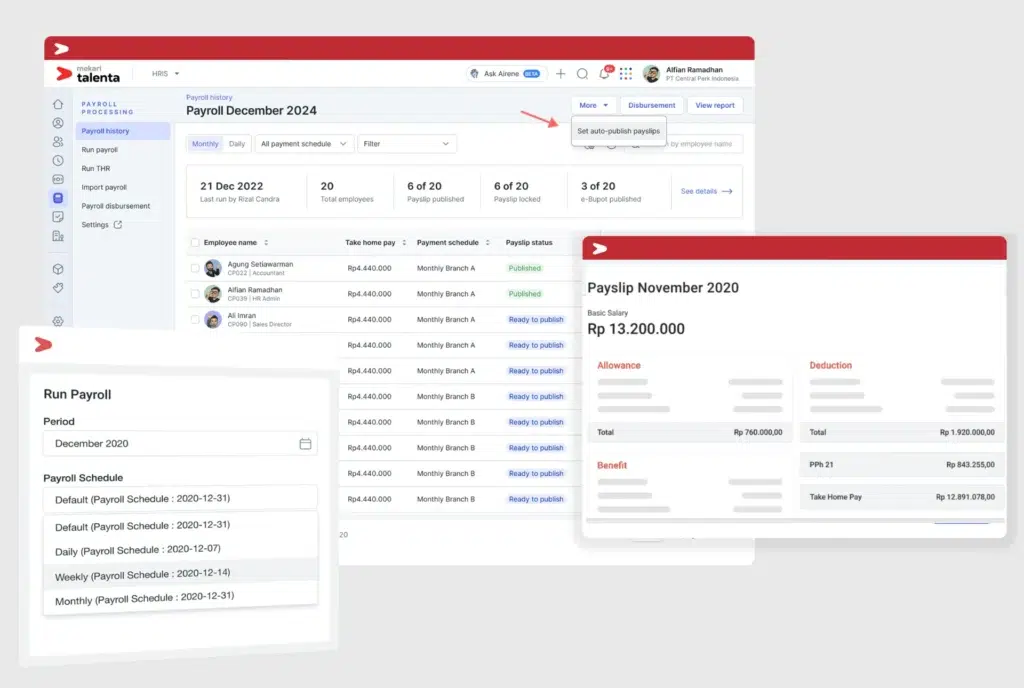
The platform delivers a fully integrated suite of HR capabilities, from automated payroll processing and GPS-enabled attendance tracking to structured leave management and compliant tax reporting.
Built to ensure operational accuracy, regulatory alignment, and process efficiency, Mekari Talenta enables organizations to manage distributed teams with greater visibility, control, and consistency.
Price: Mekari Talenta offers flexible Essential, Plus, and Talenta 360 plans with customized pricing based on company size and selected features.
Key Advantages:
- Advanced location-based check-in/check-out capabilities to support flexible remote and hybrid work arrangements
- Automatic updates in accordance with evolving labor and tax regulations
- End-to-end payroll automation with accurate calculations for salaries, overtime, allowances, and statutory deductions
- Seamless integration with Klikpajak and digital attendance systems to ensure synchronized payroll and tax reporting
- Unified employee database with structured access controls to ensure data consistency, transparency, and accuracy across departments.
- ESS system that empower employees to access payslips, submit leave requests, update personal data, and monitor attendance independently.
- Built-in performance management tools to align employee goals with organizational objectives through measurable KPIs and structured evaluations.
- Actionable insights through dynamic HR dashboards to support data-driven workforce planning and strategic decision-making.
- End-to-end HRIS designed to support remote and hybrid workforce management at scale.
- Integrated payroll, attendance, recruitment, performance, and analytics within one centralized platform.
- ISO 27001-certified data security with reliable technical support.
- Seamless integration with the Mekari ecosystem and other business systems for synchronized operations.
- Requires initial configuration to align with company policies and remote work workflows.
2. BambooHR
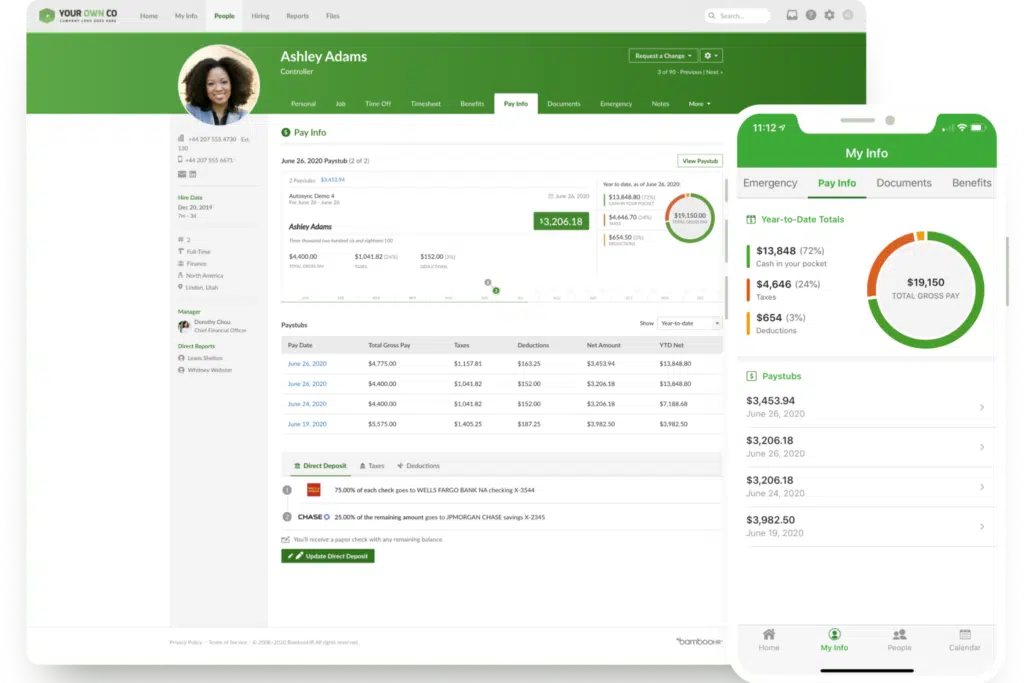
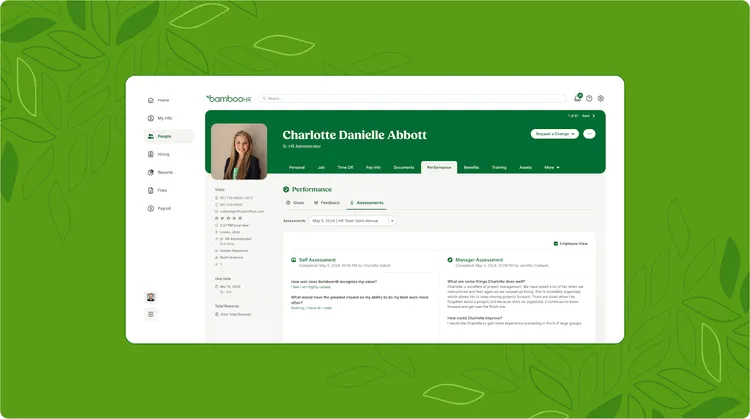
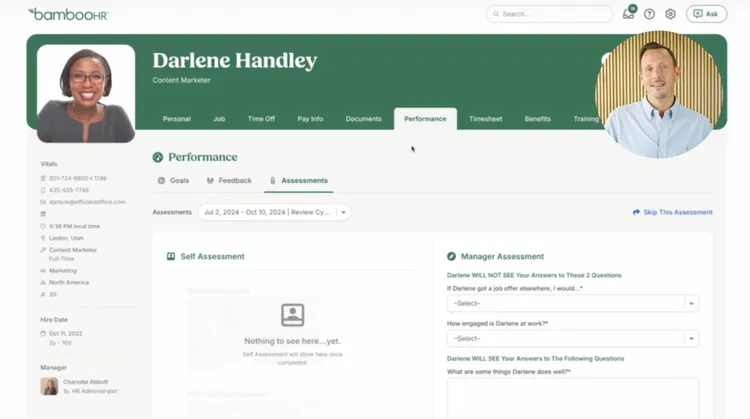
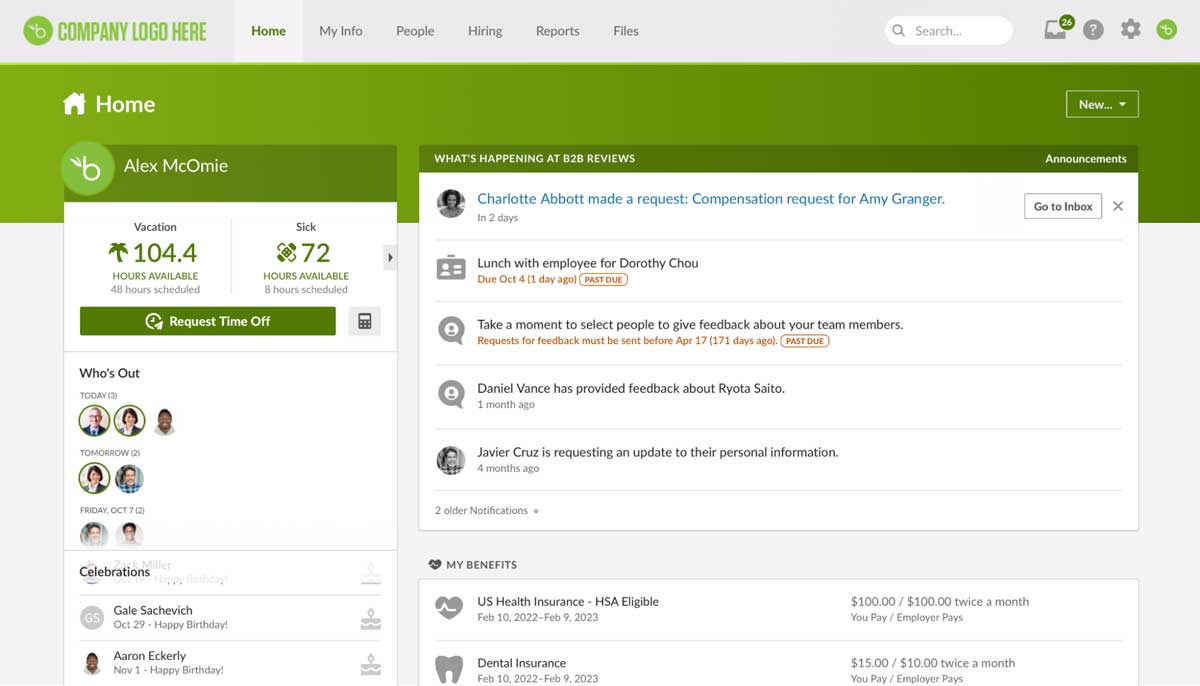
BambooHR is popular among small to medium-sized global companies due to its simple and user-friendly interface. It focuses on employee data management, digital onboarding, and performance evaluation.
Advantages:
- Self-service portal that enables remote employees to update personal information easily
- KPI tracking dashboard and 360° feedback for remote performance evaluations
- Integration with collaboration tools such as Slack, Asana, and Zoom
Price: offers Core ($10), Pro ($17), and Elite ($25) plans priced per employee per month, with optional add-ons for Payroll, Benefits, and Time Tracking.
- Easy adoption for HR teams, managers, and remote employees with minimal training required.
- Consolidates employee records, documents, and role data in one system, supporting distributed workforce management.
- Supports goal tracking, structured feedback cycles, and performance reviews for hybrid teams.
- Enables remote employees to update personal data, request time off, and access documents independently.
- Advanced workflows, analytics, and customization require upgrades.
- Some functionality (like payroll and benefits) is limited geographically.
- May feel restrictive for organizations with multi-layer approvals or cross-border operations.
3. Gusto
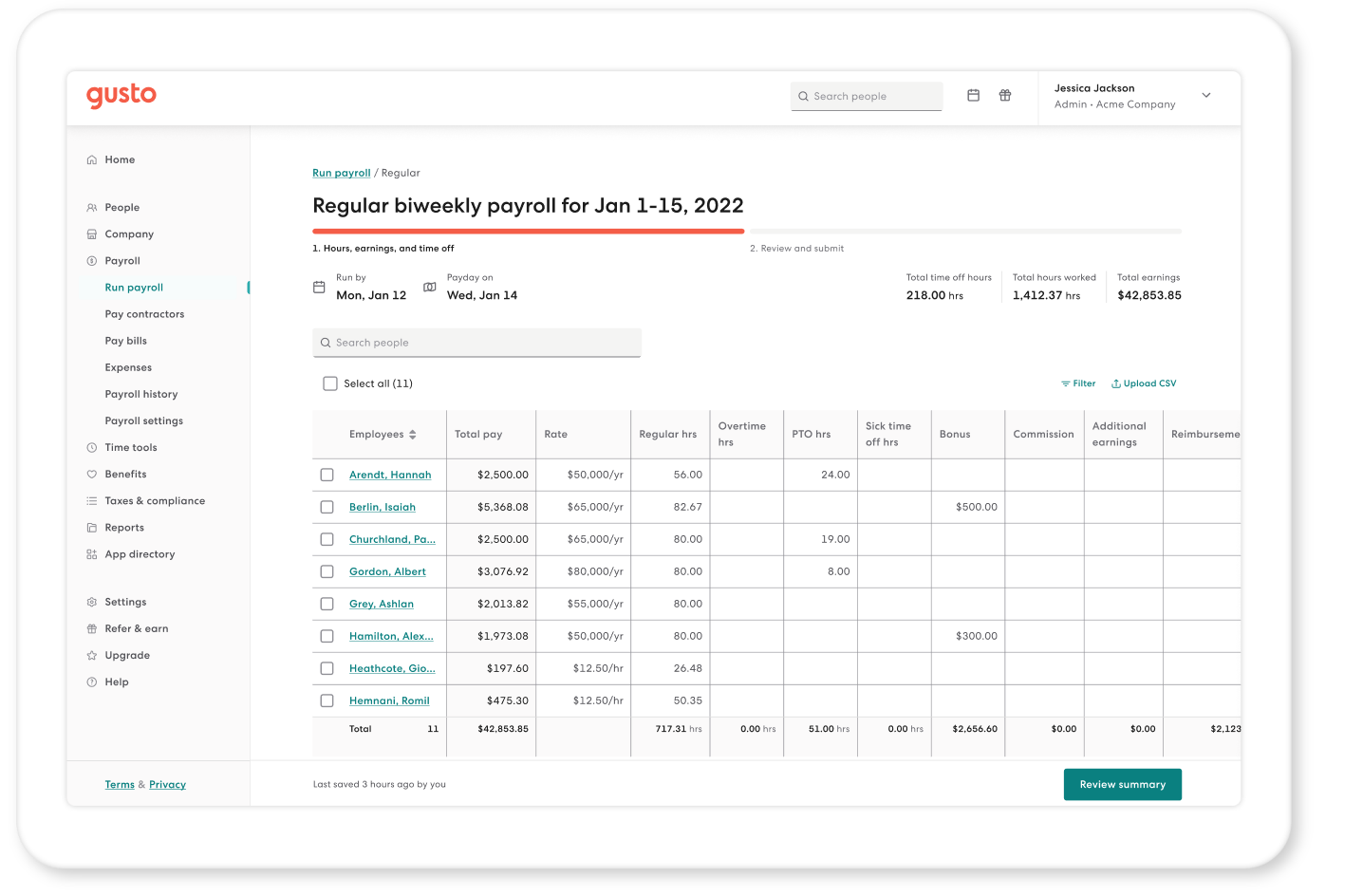
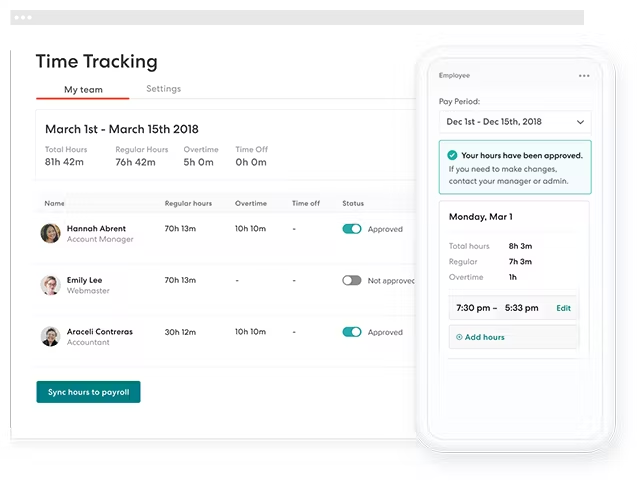
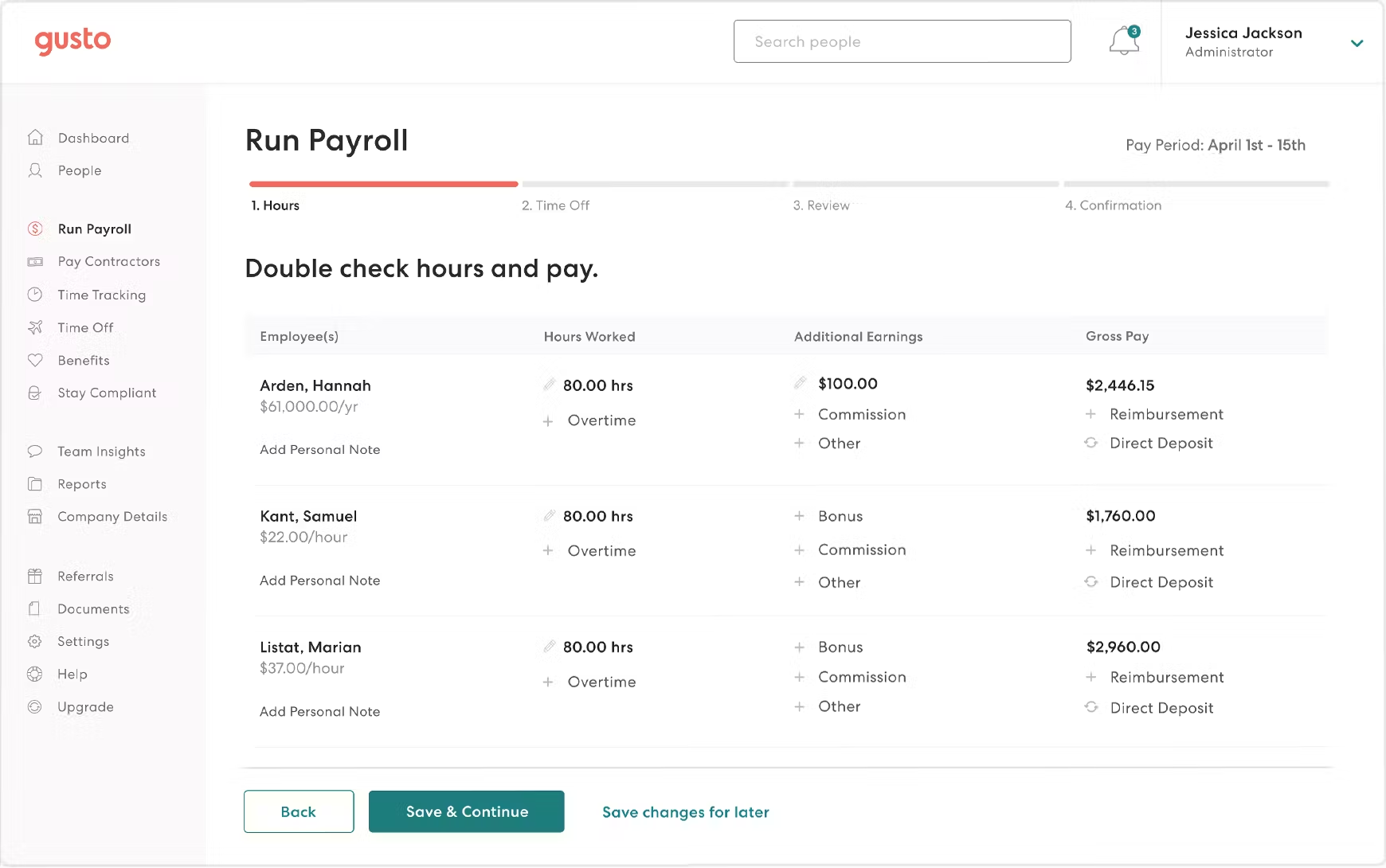
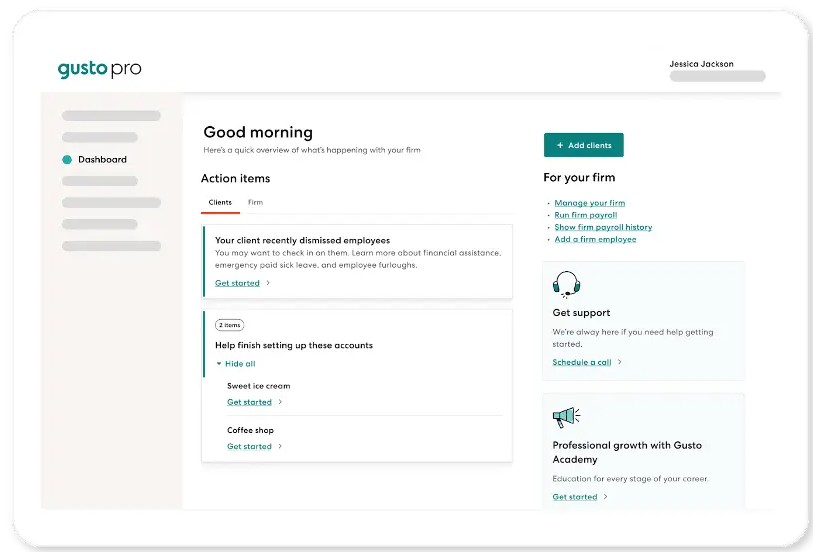
Gusto is known for its strong payroll and benefits management capabilities, especially for startups and technology companies.
It also offers tax automation and compliance services for multi-state employees in the United States.
Advantages:
- Automated payroll and tax deductions for remote workers
- Digital benefits, insurance, and compensation management
- Real-time attendance reporting and integration with accounting software such as QuickBooks
Price: offers Simple ($49/month + $6 per person), Plus ($80/month + $12 per person), and Premium ($180/month + $22 per person) plans with optional payroll, HR, and benefits add-ons.
- Intuitive and user-friendly interface that simplifies payroll, benefits administration, and employee management processes.
- Integrated benefits management, including health insurance and 401(k) administration, within a centralized platform.
- Automated onboarding workflows to streamline new hire documentation and compliance requirements.
- Direct deposit processing times can be slower on entry-level plans compared to higher-tier packages.
- Reporting capabilities can feel less flexible for organizations requiring highly customized or complex reports.
- Customer support availability may be limited outside standard business hours.
4. SAP SuccessFactors
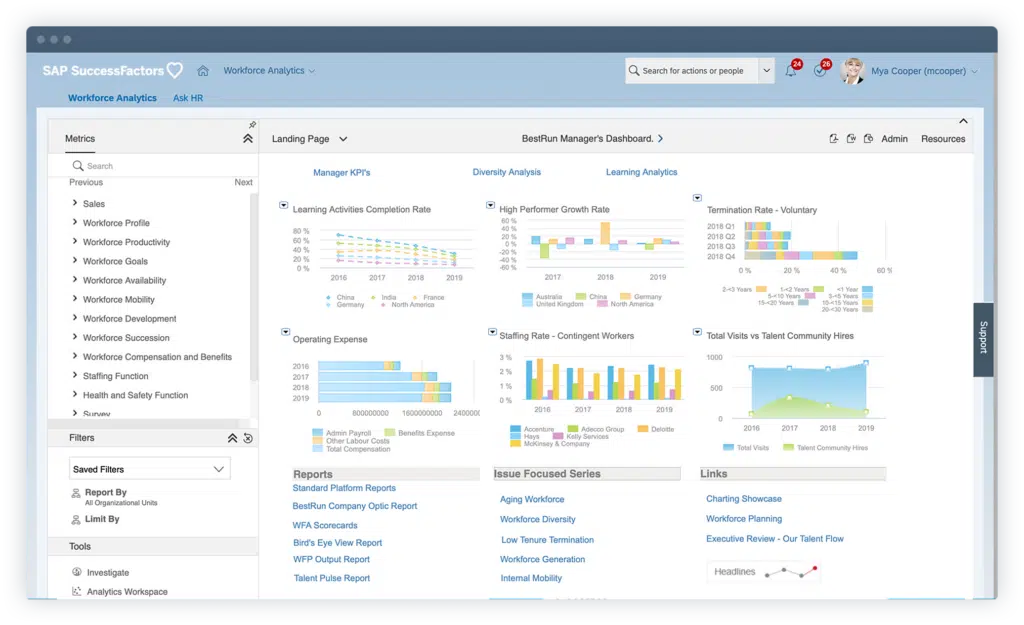
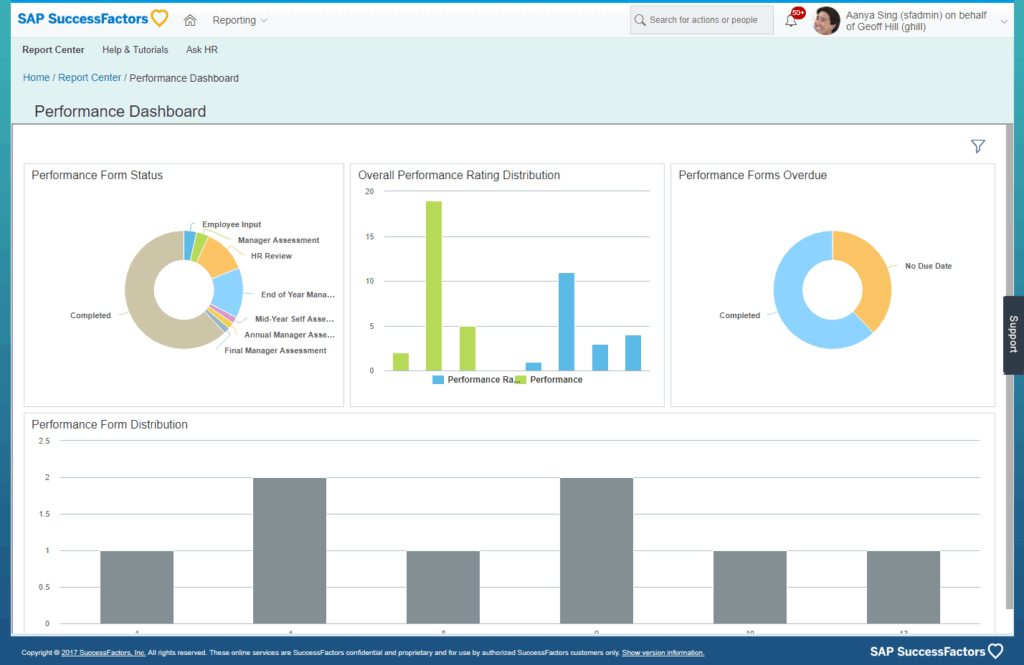
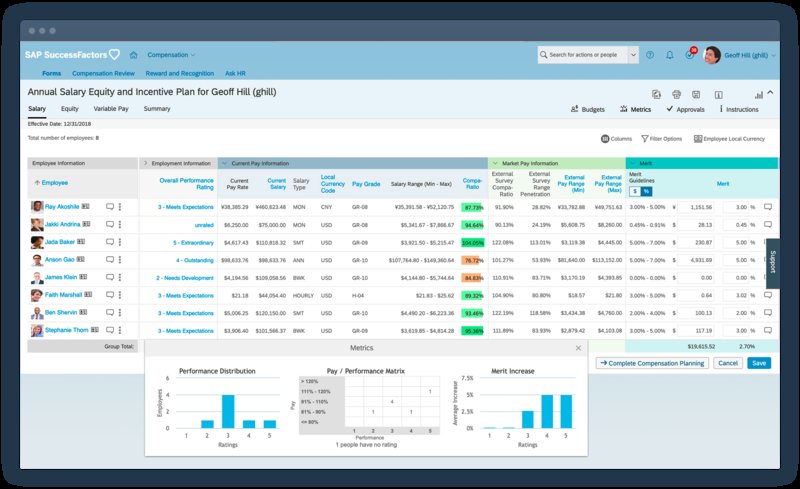
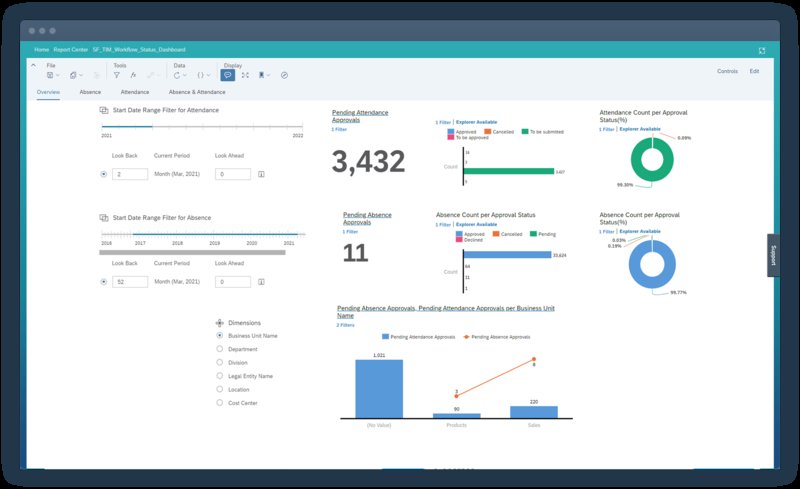
SAP SuccessFactors is suitable for large companies requiring global HR capabilities. It covers comprehensive HR functions from recruitment and learning management to workforce analytics.
Advantages:
- Multi-language and multi-currency support for international teams
- Advanced analytics modules for monitoring employee performance and engagement
- High scalability and enterprise-level data security
Price: uses an annual per-employee, per-month (PEPM) pricing model, typically ranging from $28–$38+ per user depending on selected modules and workforce complexity.
- Multi-language, multi-currency, and compliance-ready architecture suitable for managing hybrid and cross-border workforce structures.
- Designed to support complex organizational structures, layered approvals, and evolving remote workforce models.
- Connects seamlessly with ERP systems, payroll providers, expense tools, and other enterprise-grade platforms.
- Customization and configuration often require dedicated internal teams or external consultants.
- The depth of functionality may initially slow down workflows for smaller or less tech-savvy teams.
- Advanced capabilities and modular structure can increase overall investment.
Criteria for Choosing the Right HRIS for Remote and Hybrid Workforce
Understanding how to choose the right HRIS vendor is crucial before making a long-term investment in workforce technology.
Before selecting an HRIS for distributed workforce, companies should consider the following criteria to ensure alignment with operational needs and work culture:
1. Cloud-Based and Mobile-Friendly Accessibility
A reliable cloud-based HR system is essential for managing a remote workforce effectively.
Since remote and hybrid employees operate from multiple locations, the system must be accessible through laptops, tablets, and smartphones without relying on on-premise infrastructure.
Cloud accessibility ensures real-time data synchronization, allowing HR teams and managers to monitor attendance, approve leave, and review reports instantly.
Mobile-friendly interfaces also improve employee engagement, as staff can conveniently check schedules, submit requests, or access payslips anytime and anywhere.
Read also: Cloud-based HRIS vs On-Premise: Key Differences and How to Choose
2. Integrated Payroll and Digital Attendance Management
An effective HRIS for hybrid workforce should seamlessly integrate payroll processing with digital attendance tracking.
Automated payroll modules reduce manual errors, ensure timely salary disbursement, and simplify complex calculations such as overtime, allowances, and tax deductions.
For companies operating in Indonesia, the system should include accurate PPh 21 tax calculations in compliance with the latest government regulations.
Additionally, location-based (GPS) or biometric attendance tracking enhances accountability for distributed teams while maintaining flexibility.
3. Comprehensive Employee Self-Service Features
Employee self-service functionality is a critical component of modern HRIS for distributed workforce.
This feature empowers employees to independently submit leave requests, download payslips, update personal information, and track attendance records without direct HR intervention.
By reducing administrative dependency, HR teams can focus on more strategic initiatives such as workforce planning and performance development. At the same time, employees benefit from greater transparency and faster processing times.
4. Compliance with Labor and Tax Regulations
Regulatory compliance is a non-negotiable factor when selecting an HRIS. The system should automatically adapt to updates in labor laws, tax regulations, and reporting requirements to minimize compliance risks.
A strong HRIS for remote and hybrid workforce helps companies maintain accurate documentation, standardized processes, and audit-ready records.
This is especially important for organizations managing employees across multiple regions or jurisdictions.
5. Data Security and System Scalability
Handling employee data requires robust security measures. The chosen HRIS must provide advanced data encryption, role-based access controls, and secure cloud storage to prevent unauthorized access or data breaches.
Beyond security, scalability is equally important. As companies grow and workforce structures become more complex, the HRIS should be capable of supporting additional users, new modules, and expanded operational needs without performance limitations.
HRIS Implementation Guide for Remote and Hybrid Contexts
Implementing an HRIS for remote and hybrid workforce requires more than simply adopting new software.
It involves aligning technology, processes, and people to support a flexible and distributed work model.
Without a clear implementation strategy, even the most advanced HRIS may fail to deliver optimal results.
A structured approach ensures smoother adoption, stronger compliance, and long-term operational efficiency.
Steps to Select and Implement HRIS
Implementing an HRIS for remote workforce is not merely replacing an administrative system; it is a comprehensive transformation of how companies manage human resources. Key stages include:
- Identify HR and business needs
- Define appropriate system criteria
- Conduct a pilot project
- Integrate with supporting systems (accounting, tax, project management tools)
- Perform periodic evaluation and optimization
These steps ensure that the selected HRIS is not only functional but also fit for purpose within remote and hybrid work models.
Tips to Involve Employees During Transition
Employee participation is essential to successful HRIS implementation. Digital system changes may face resistance if not managed properly.
- Communicate HRIS goals and benefits transparently
- Involve department representatives as change ambassadors
- Apply a phased implementation approach
- Provide open feedback channels
By engaging employees early, companies foster ownership and accelerate adoption across the organization.
Importance of Training and Technical Support
Adequate training and responsive technical support form the foundation of effective HRIS adoption.
Structured training should be provided to HR teams, supervisors, and employees on key features such as attendance tracking, leave submission, and performance reporting.
Digital documentation—such as video tutorials and help centers—supports independent learning, especially for remote employees.
Vendor technical support via chat, email, or ticketing systems ensures that issues are resolved quickly.
Organizations that prioritize training and technical support maximize the long-term benefits of HRIS for hybrid and distributed workforce, particularly when employees operate across multiple locations.
Ready to Future-Proof Your Remote and Hybrid Workforce?
Managing a distributed team requires more than spreadsheets and disconnected systems. To stay productive, compliant, and competitive, your company needs a scalable HRIS for remote and hybrid workforce that grows with your business.
Mekari Talenta is a cloud-based HRIS alternative trusted by 3,500+ companies in Indonesia to streamline HR operations from end to end.
As part of the integrated Mekari software ecosystem, Mekari Talenta seamlessly connects with payroll, tax (Klikpajak), accounting, and other business systems, ensuring smooth data flow across your organization.
Why Choose Mekari Talenta?
As a comprehensive HRIS for remote and hybrid workforce, Mekari Talenta is designed to simplify complex HR processes while supporting distributed teams across locations.
Its features and capabilities include:
- Recruitment & Onboarding. Streamline candidate sourcing, AI screening, and hiring in one centralized system. Accelerate onboarding with digital document management and structured workflows to ensure a smooth transition for new hires.
- Core HR & Employee Database Management. Maintain accurate, real-time employee records including personal data, employment history, tax status, contracts, and organizational structure—all stored securely in one centralized platform.
- Time & Attendance Management. Monitor employee attendance with GPS-based check-in/check-out, shift scheduling, overtime tracking, and real-time updates that are ideal for remote and hybrid workforce management.
- Automated Payroll & PPh 21 Calculation. Process payroll accurately with automated salary calculations, allowances, deductions, overtime, and tax (PPh 21) compliance aligned with Indonesian regulations.
- Employee Self-Service (ESS). Enable employees to independently access payslips, submit leave requests, update personal information, view attendance records, and track reimbursements.
- Performance Management & KPI Tracking. Set measurable targets, monitor KPIs and OKRs, conduct evaluations, and provide structured feedback to support transparent performance assessments for distributed teams.
- Talent Development & Workforce Planning. Support employee growth through competency tracking, career path mapping, and performance insights to build a future-ready workforce.
- HR Analytics & Reporting. Access real-time dashboards and customizable reports to analyze attendance trends, payroll costs, workforce productivity, and HR metrics for data-driven decision-making.
- Integration System & Open API. Seamlessly integrate with accounting software, tax systems (including Klikpajak), ERP tools, and other business applications to ensure synchronized data across departments.
Whether you are scaling a startup or managing a large enterprise workforce, Mekari Talenta adapts to your operational complexity without the learning curve.
Empower your HR team to move beyond administrative tasks and focus on strategic growth.
Book a free consultation today or request a demo to see how Mekari Talenta can transform your HR management for remote and hybrid teams.