




- In manufacturing environments, HRIS functions as a workforce management backbone supporting operational continuity.
- An integrated HRIS helps manufacturing companies centralize workforce data, automate attendance and payroll processes, and maintain operational visibility across production sites.
- Mekari Talenta supports large manufacturing companies by integrating employee data, attendance, shift scheduling, and payroll in one HR platform.
The global manufacturing sector continues to expand despite economic volatility. According to Interact Analysis, global manufacturing output is projected to grow steadily over the coming years.
It is supported by industrial automation, supply chain restructuring, and regional production expansion.
As operations scale across regions and production capacity increases, workforce structures inevitably become more complex.
In manufacturing environments, HR management is rarely straightforward. Organizations operate with shift-based schedules, multiple plants, distributed teams, frontline-heavy workforces, and strict labor compliance requirements.
Payroll structures often include overtime calculations, shift allowances, production incentives, and site-based variations.
At the same time, workforce challenges continue to intensify.
Research from Targeted HR highlights several persistent workforce issues in manufacturing, including labor shortages, high turnover rates, skills gaps, compliance pressures, and increasing labor costs.
These challenges directly impact operational stability and production continuity.
As manufacturing organizations grow into enterprise-scale operations, many begin enhancing or integrating their HRIS platforms to keep pace with operational demands.
HR systems are no longer viewed purely as administrative tools, but as infrastructure supporting workforce visibility, governance, and long-term scalability.
Read also: 10 Enterprise HRIS Software to Increase Operational Efficiency by 40%
HR Challenges in Manufacturing Industry
Manufacturing organizations often manage large employee populations across multiple production sites. As operations scale, coordinating attendance, payroll, and HR administration becomes increasingly complex.
Shift-Based Workforce Scheduling
Manufacturing facilities commonly operate using rotating shifts to maintain continuous production. Managing these schedules requires accurate attendance tracking and proper coordination between HR teams and operational managers.
Without digital systems, tracking employee attendance and managing shift schedules can quickly become time-consuming and prone to administrative errors.
Multi-Plant Workforce Operations
Many manufacturing companies operate across several production facilities located in different regions. This structure can create challenges in maintaining consistent employee records and HR processes across locations.
Without centralized HR systems, employee data, attendance records, and payroll information may remain fragmented across sites, making it difficult for HR teams to maintain consistent policies and reliable reporting.
Overtime and Variable Payroll Structures
Payroll management in manufacturing environments can be complex. Compensation structures often include overtime pay, shift allowances, and additional components related to working schedules.
Managing these calculations manually increases the risk of payroll errors and administrative delays, particularly when organizations manage large employee populations.
Compliance and Workforce Documentation
Manufacturing companies must comply with regulations related to working hours, overtime limits, and employee documentation. Maintaining accurate records is essential to support compliance and internal governance.
Centralized HR systems help organizations maintain consistent documentation and ensure employee records remain accessible for reporting and audits.
Read more: What is HRIS Data Security? Risks, Best Practices, and Compliance
What Is HRIS and Why Manufacturing Companies Need It

HRIS (Human Resources Information System) is software designed to centralize and automate core HR processes such as employee data management, attendance tracking, payroll administration, and benefits management.
For manufacturing companies, HRIS platforms play an important role in managing employees across multiple locations and shift schedules.
With large employee populations and rotating work patterns, HR teams often need systems that can handle high volumes of administrative tasks accurately and consistently.
Manufacturing organizations typically use HRIS solutions to:
- Centralize employee data across multiple plants and departments, allowing HR teams to maintain consistent and up-to-date employee records.
- Automate payroll calculations, including overtime pay, shift allowances, and other compensation components commonly used in manufacturing environments.
- Maintain consistent HR policies across different locations, ensuring that attendance rules, leave policies, and administrative processes are applied uniformly.
- Integrate attendance and payroll data, helping organizations reduce manual data entry and improve the accuracy of payroll processing.
By implementing an HRIS, manufacturing companies can simplify HR administration, reduce manual processes, and improve visibility into employee information across the organization.
Read more: HRIS Integration: Meaning, Types, Examples, and Best Practices
Key HRIS Features for Manufacturing Industry
Before implementing an HR system, manufacturing organizations should carefully evaluate available platforms based on several key criteria.
The right HR system must support scalability, secure employee data, integrate with operational systems, and provide insights that help manufacturers manage workforce operations and payroll administration across multiple production sites.
Shift and Attendance Management
Manufacturing facilities commonly operate using rotating shifts. HRIS systems help organizations manage shift schedules while accurately recording employee attendance.
Attendance can be captured through biometric devices, facial recognition systems, or mobile applications, allowing companies to maintain reliable attendance records across different production sites.
Payroll Automation with Overtime Calculation
Manufacturing payroll often includes overtime pay, shift allowances, and other compensation components. HRIS platforms automate these calculations by connecting attendance data directly with payroll processing.
This reduces manual calculations and helps improve the accuracy and consistency of payroll administration.
Multi-Location Workforce Visibility
Manufacturing companies frequently operate across multiple plants or production facilities. HRIS systems provide centralized dashboards that allow HR teams to view employee data, attendance records, and payroll information across locations.
This centralized visibility helps organizations maintain consistent HR processes and reporting across different sites.
Centralized Employee Data Management
HRIS platforms store employee records, contracts, and HR documentation in a centralized database. This enables HR teams to manage employee information throughout the entire employment lifecycle—from onboarding to offboarding.
Centralized records also help organizations maintain accurate documentation for compliance and internal reporting.
Read more: Enterprise HRIS: Managing Multi-Entity Workforce with Centralized Control
How to Choose the Right HRIS for Manufacturing Companies
Manufacturing organizations operate in complex environments where employees work across multiple production facilities, departments, and shift schedules.
Because of this operational structure, selecting an HRIS requires careful evaluation of whether the system can support distributed teams, large employee populations, and payroll processes tied to working hours.
The right HR system should simplify HR administration while maintaining accurate employee data across facilities and operational units.
Shift and Attendance Management
Manufacturing operations often run on rotating production shifts. An effective HRIS should allow HR teams to configure shift schedules and capture attendance accurately so employee working hours are recorded reliably.
Accurate attendance data is particularly important for payroll calculations, especially when compensation includes overtime or shift-based allowances.
Payroll Automation
Payroll in manufacturing environments frequently includes multiple compensation components such as overtime pay, shift allowances, and other schedule-related payments.
An HRIS should automate these calculations by connecting payroll processes directly with attendance data.
Automation helps HR teams manage payroll more efficiently while reducing manual administrative work and minimizing calculation errors.
Multi-Site Workforce Management
Many manufacturing companies operate across several production facilities or operational sites. HR systems should allow organizations to manage employee records, attendance data, and payroll processes within a centralized platform.
Centralized HR data enables companies to maintain consistent HR policies while providing management with visibility into employee distribution across locations.
System Integration and Scalability
Manufacturing companies often use multiple operational systems, including attendance devices, payroll software, and other internal tools.
An HRIS should integrate with these systems so employee information can move seamlessly between platforms.
Cloud-based HR systems also provide the scalability required as organizations expand production capacity or open additional facilities.
Read also: HRIS Features Explained: A Capability Matrix
Best HRIS Software for Manufacturing Companies
Several HR technology providers offer solutions that help manufacturing companies manage employee data, payroll administration, and attendance tracking across multiple locations.
The following platforms represent commonly used HR systems that support organizations with complex HR processes and distributed operations.
1. Mekari Talenta
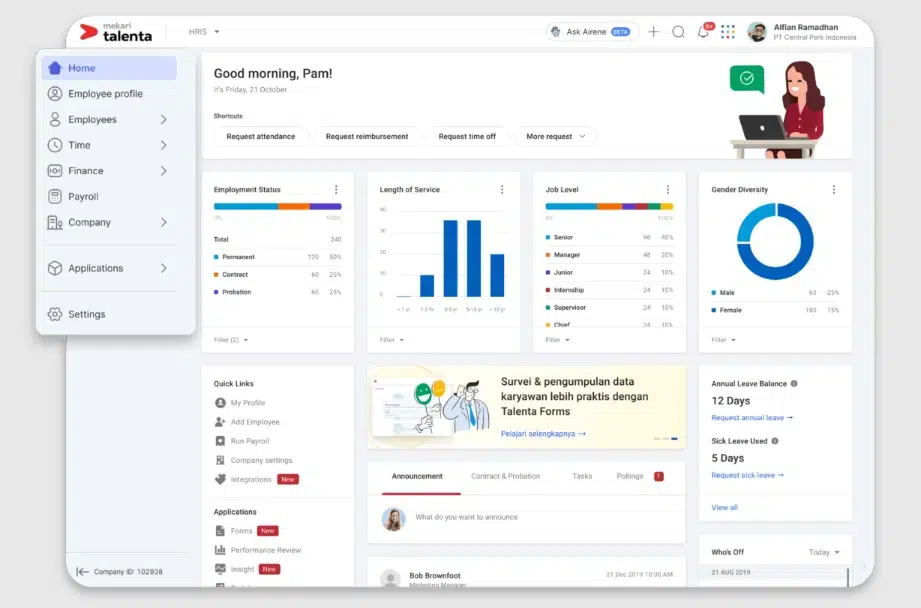
Mekari Talenta is a cloud-based HRIS designed to help organizations manage employee administration, payroll processing, and attendance tracking within a centralized system.
The system supports companies operating across multiple locations and operational units, making it suitable for industries that manage large employee populations and shift-based work environments.
For manufacturing organizations, Mekari Talenta helps centralize employee records, attendance tracking, and payroll administration across multiple facilities.
HR teams can maintain consistent employee data while management gains better visibility into workforce distribution and operational attendance across different production sites.
Attendance data captured through biometric devices or mobile applications can be synchronized directly with payroll calculations, helping ensure compensation is processed accurately based on recorded working hours.
Mekari Talenta also supports payroll automation for compensation structures commonly used in manufacturing environments, including overtime calculations, shift allowances, and other payroll components related to operational schedules.
With centralized employee data management, mobile access, and configurable HR processes, Mekari Talenta helps organizations streamline HR administration while maintaining accurate workforce records across multiple sites. The system operates on secure cloud infrastructure and complies with recognized security standards such as ISO 27001 to help ensure employee data remains protected.
2. UKG (Ultimate Kronos Group)
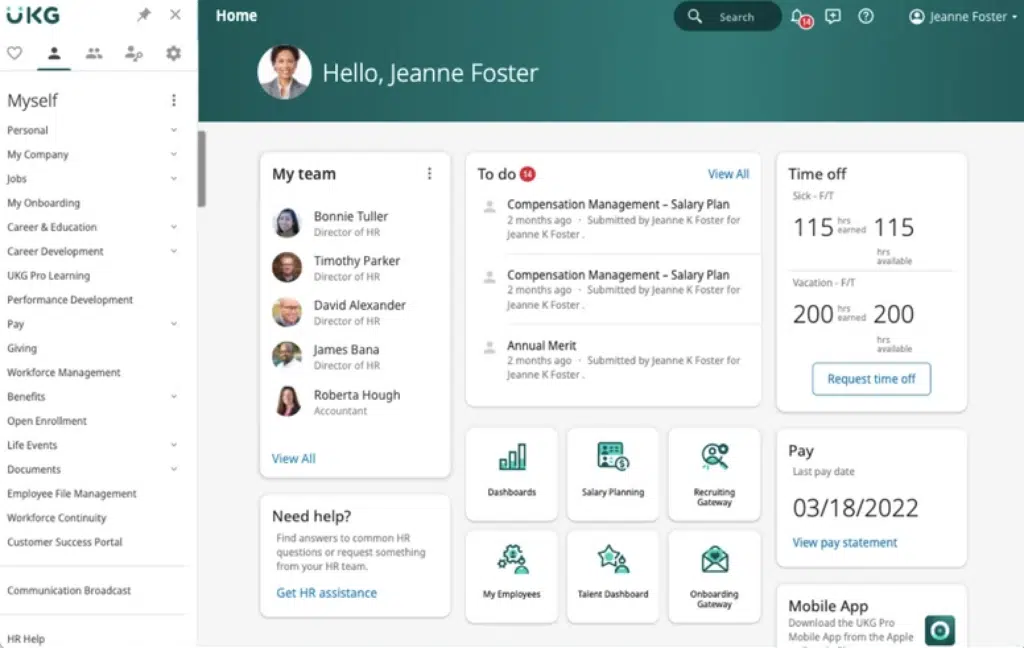
UKG is a global HR and workforce management system widely used by large enterprises. The software provides scheduling tools, attendance tracking, and HR analytics that help organizations manage employee operations at scale.
Many large manufacturing companies use UKG to support complex shift scheduling and large employee populations across multiple locations.
3. SAP SuccessFactors
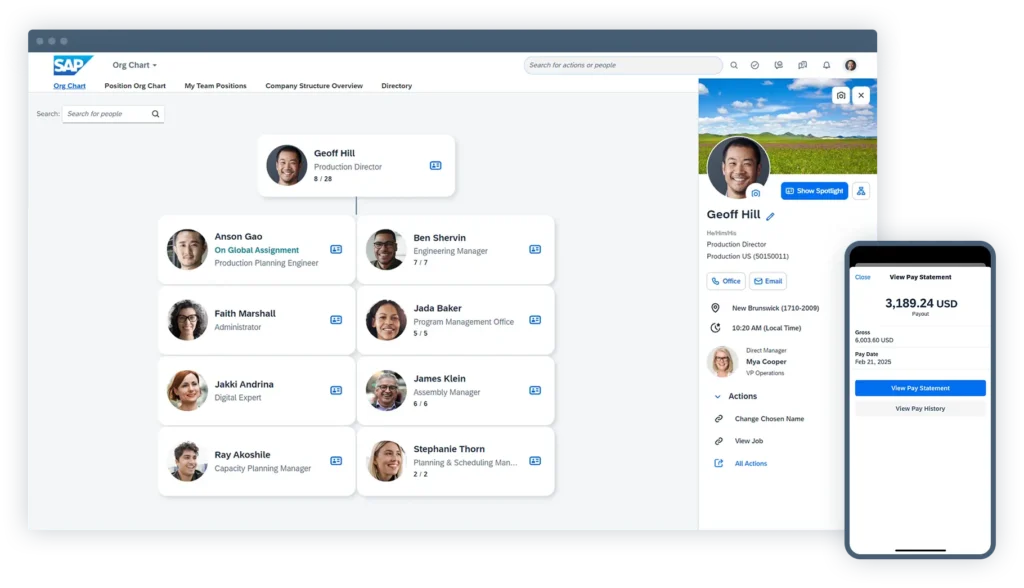
SAP SuccessFactors is a cloud-based Human Experience Management (HXM) solution designed for large global organizations.
As part of the SAP ecosystem, it integrates with various enterprise systems and provides modules for employee data management, talent development, and HR analytics.
The system is commonly used by multinational companies that require comprehensive HR capabilities and enterprise-level integrations.
4. Oracle Cloud HCM
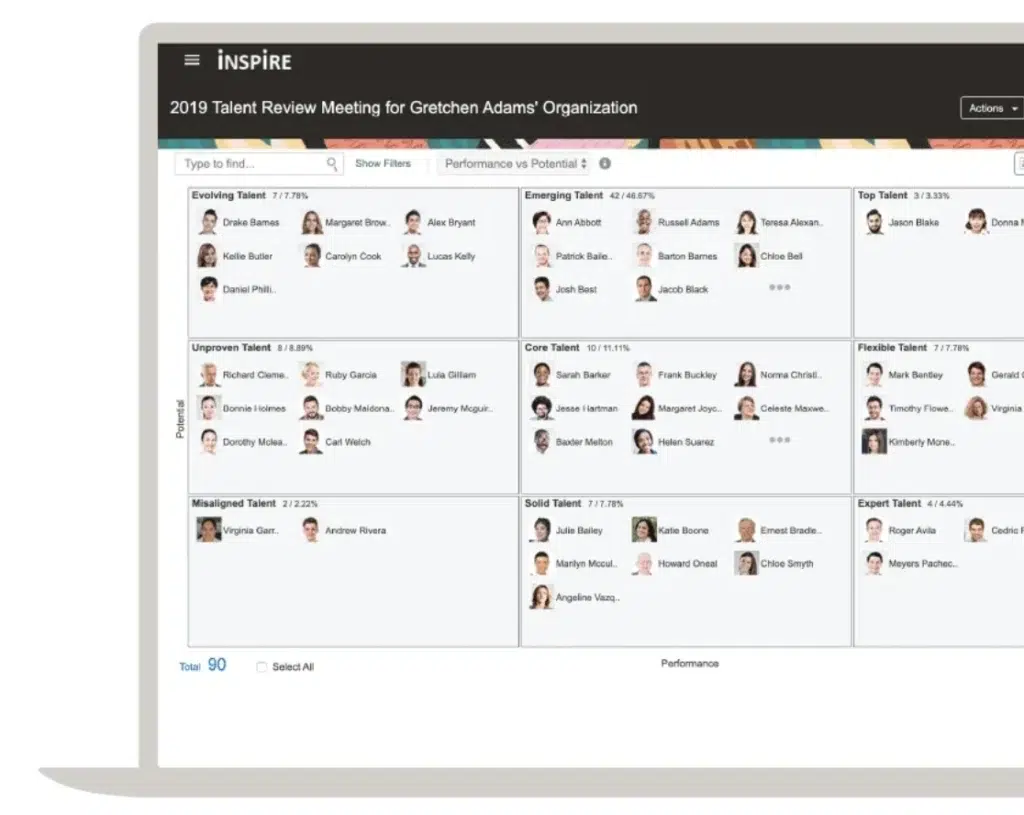
Oracle Cloud HCM is a comprehensive HR system that connects human resource management with broader business processes. It provides tools for employee data management, payroll administration, workforce planning, and HR analytics.
Large manufacturing organizations often adopt Oracle Cloud HCM to manage HR operations across multiple regions and organizational structures.
5. BambooHR
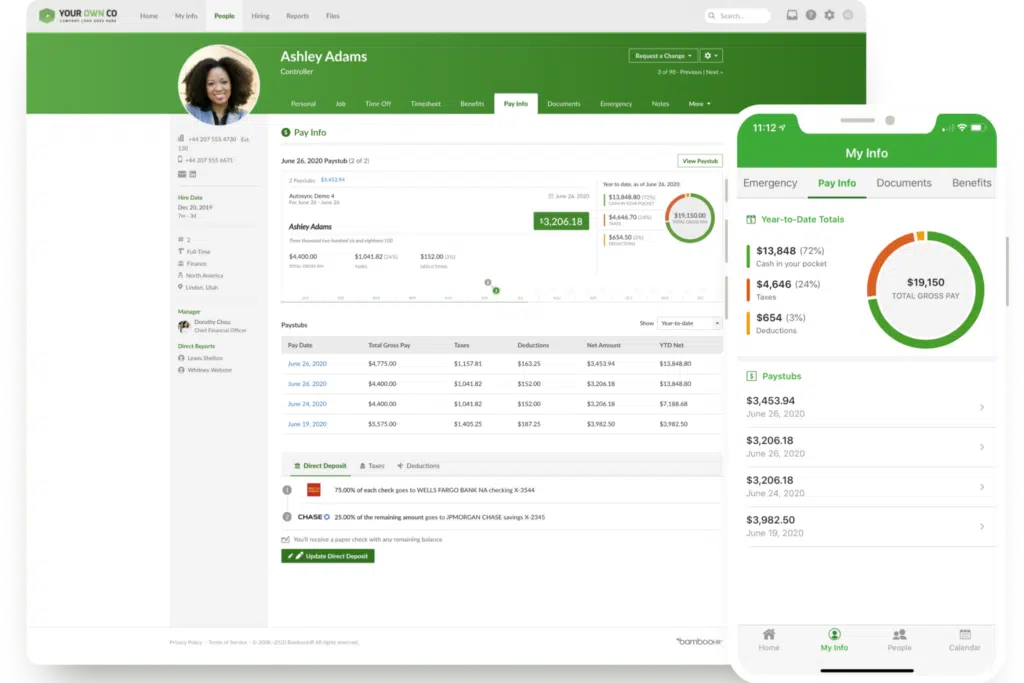
BambooHR is a cloud-based HR software solution designed primarily for small to mid-sized organizations. It focuses on simplifying HR administration through features such as employee data management, onboarding tools, and performance management.
While BambooHR is known for its ease of use, companies with complex payroll or shift management requirements may need additional integrations to support their HR processes.
How Mekari Talenta Supports Manufacturing HR Operations
Mekari Talenta provides HRIS capabilities designed to support organizations managing employee administration across multiple locations.
The system helps companies streamline payroll processing, attendance tracking, and employee data management within a centralized environment.
Flexible Payroll Configuration
Talenta supports payroll automation for compensation structures commonly used in manufacturing environments. HR teams can configure overtime calculations, shift allowances, and other payroll components to align with company policies and working schedules.
Automation helps reduce manual payroll processing and improves the consistency of payroll calculations.
Integrated Attendance Tracking
Attendance data can be recorded through biometric devices or mobile clock-ins and connected directly with payroll processing. This integration helps ensure employee attendance records are reflected accurately when calculating payroll.
Mobile attendance also supports employees who work across different operational locations.
Centralized Multi-Location HR Management
Companies operating across multiple facilities can manage employee records and HR documentation within a centralized system.
Talenta helps HR teams maintain consistent employee data, attendance records, and HR reporting across different branches or operational sites.
Centralized data management supports more consistent HR administration across the organization.
Integration and Data Security
Talenta supports integration with other business systems through open API connectivity, allowing organizations to synchronize HR data with existing tools used within the company.
The system also follows ISO 27001 information security standards to help ensure employee data is managed according to established security practices.
If your organization is evaluating HR solutions for manufacturing industry, you can explore how Mekari Talenta supports scalable and compliant workforce operations.
To learn more, schedule a demo by contacting us and discover how an enterprise-ready HRIS can strengthen your manufacturing workforce strategy.