





- The dynamic structure of a construction company creates payroll complexity. Compensation must be attributed to the correct project budget to maintain margin visibility.
- HRIS helps construction companies centralize workforce data, manage attendance across sites, and automate payroll processes.
- Mekari Talenta supports large construction companies by integrating employee data, attendance, and payroll management across project locations.
The construction industry operates on a project-based model. Teams move between active job sites, workforce allocation shifts depending on project phases, and labor demand fluctuates as contracts evolve.
Unlike office-based industries, construction payroll and attendance processes face daily friction. Time must be captured accurately on-site.
Overtime rules often apply during peak project phases. Compensation may include contractor payments, site allowances, and project-based cost allocations.
Without a centralized system, payroll and attendance management quickly become fragmented. Site supervisors may validate timesheets manually.
HR teams consolidate data from multiple projects. Finance teams struggle to align labor costs with job codes.
Modern HRIS platforms act as the operational backbone for construction companies, centralizing workforce data and automating payroll processes across sites.
Read more: HRIS for Manufacturing Industry
Workforce Challenges in the Construction Industry
Construction companies face distinct operational hurdles that standard HR practices cannot easily address. These challenges stem from the inherent nature of project-based work.
Project-Based Workforce Structure
Construction workforces are structured around projects, not static departments.
Workforce allocation changes based on project phases, deadlines, and contract duration. Employees may rotate across multiple projects within short timelines. Labor cost tracking must follow project-specific job codes and cost centers to ensure accurate financial reporting.
This dynamic structure creates payroll complexity. Compensation must be attributed to the correct project budget to maintain margin visibility.
Multi-Site Operations & Job Site Mobility
Construction companies often manage multiple active sites simultaneously. Teams are distributed geographically, and physical presence matters for compliance and billing accuracy.
Attendance records must reflect actual job site presence. Site supervisors frequently validate time entries before payroll closing. Delays in reporting from one site can disrupt payroll cycles and delay cost visibility for the entire organization.
Without integrated systems, manual timesheet consolidation introduces errors and processing delays.
Overtime & Compensation Complexity
Construction schedules often involve overtime during critical phases. Pay rates may vary depending on role, certification level, or site assignment.
Additional compensation may include transport allowances, per diem payments, hazard pay, or location-based premiums. Payroll systems must calculate these accurately and allocate costs correctly to project budgets.
Failure to automate these variables increases payroll disputes and compliance risk.
Contractor & Subcontractor Workforce Mix
Construction workforces typically combine permanent employees and subcontracted labor.
Each group may have different compensation structures, documentation requirements, and reporting standards. Payroll tracking for employees must be clearly separated from vendor payments for subcontractors.
According to construction payroll reporting practices discussed by Payroll4Construction and sector insights from The Access Group, clear labor categorization is essential for compliance and cost transparency.
Managing this workforce mix manually significantly increases administrative burden.
Read more: Payroll Risk Management: Definitions, Challenges, & Mitigation Guide
Essential HRIS Capabilities for Complex Construction Workforce

Configurable Construction Payroll System
Construction companies require payroll systems that support project codes and cost centers.
A configurable payroll engine allows organizations to define overtime rules, site allowances, and role-based pay structures. Automated calculations reduce manual adjustments while maintaining audit-ready payroll reporting for finance and compliance teams.
Integrated Time & Attendance for Multi-Site Operations
Mobile or on-site attendance capture linked directly to job codes is critical.
Real-time synchronization between attendance records and payroll ensures accuracy. Supervisor approval workflows before payroll finalization strengthen governance.
Integrated attendance systems reduce dependency on manual timesheet consolidation and spreadsheet reconciliation.
Multi-Site Workforce Visibility
A centralized dashboard showing workforce distribution across sites enables leadership teams to monitor labor allocation in real time.
Visibility into attendance trends and overtime patterns helps project managers anticipate cost overruns before payroll closing.
Labor visibility aligned with project budgets improves operational planning.
Centralized Employee & Workforce Data
A single employee master record across all projects eliminates duplication.
Consolidated payroll and attendance history reduces reconciliation errors between sites and strengthens audit readiness.
Centralized data governance supports structured workforce reporting, an increasingly important factor in construction workforce management systems, as highlighted by WebHR.
Operational Benefits of an Integrated HRIS

Implementing an integrated HRIS in construction environments delivers measurable operational benefits.
Payroll accuracy improves when compensation is aligned directly with project labor costs. Automated workflows shorten payroll processing cycles, especially in multi-site operations.
Manual intervention from HR and finance teams decreases significantly, freeing resources for strategic workforce planning.
Documentation readiness for audits and compliance reporting improves when attendance, payroll, and project allocations are recorded within one centralized system.
Construction companies operating at scale require structured systems to maintain financial control and workforce transparency.
Read also: How to Choose the Right HRIS Vendor: A Practical HR Guide
How to Choose the Right HRIS for Construction Companies
Selecting an HRIS for construction companies requires evaluating how well the system supports project-based workforce operations.
Construction environments involve multiple job sites, variable work schedules, and complex payroll structures. Organizations should therefore consider several critical capabilities before choosing a platform.
1. Project-Based Workforce Management
Construction companies often manage employees across multiple projects simultaneously. An HRIS should support workforce organization by project or site, allowing HR and operations teams to monitor staffing, assignments, and labor allocation more effectively.
2. Multi-Site Attendance and Mobile Access
Since employees work across different locations, the system should provide mobile attendance capabilities that allow workers to clock in directly from job sites. This helps companies maintain visibility into working hours and workforce presence across multiple locations.
3. Flexible Payroll and Overtime Management
Construction payroll structures can involve overtime calculations, shift-based schedules, and site allowances. A suitable HRIS should support flexible payroll configurations that accommodate these variations.
4. Integration with Financial and Project Systems
Construction companies often rely on accounting or ERP systems to manage project budgets and operational costs. An HRIS that integrates with these systems can help maintain consistency between workforce data and financial reporting.
5. Workforce Visibility and Reporting
Access to workforce data and reporting tools allows companies to monitor labor costs, staffing levels, and operational trends across projects. This can support better planning and decision-making.
6. Cloud-Based Accessibility and Security
Cloud-based HRIS platforms allow teams to access workforce data from different locations while maintaining centralized control.
Security standards and controlled access are also important to ensure sensitive employee information is properly protected.
Read Also: Measure HR Software ROI: Metrics, Methods and Strategic Guide
Best HRIS Software for Construction Companies
The following platforms represent a cross-section of HRIS solutions used by construction and project-based organizations.
This recommendation is not exhaustive but provides a representative overview of capabilities available in the market.
Each organization should evaluate options based on specific operational needs, budget, and technical requirements.
1. Mekari Talenta
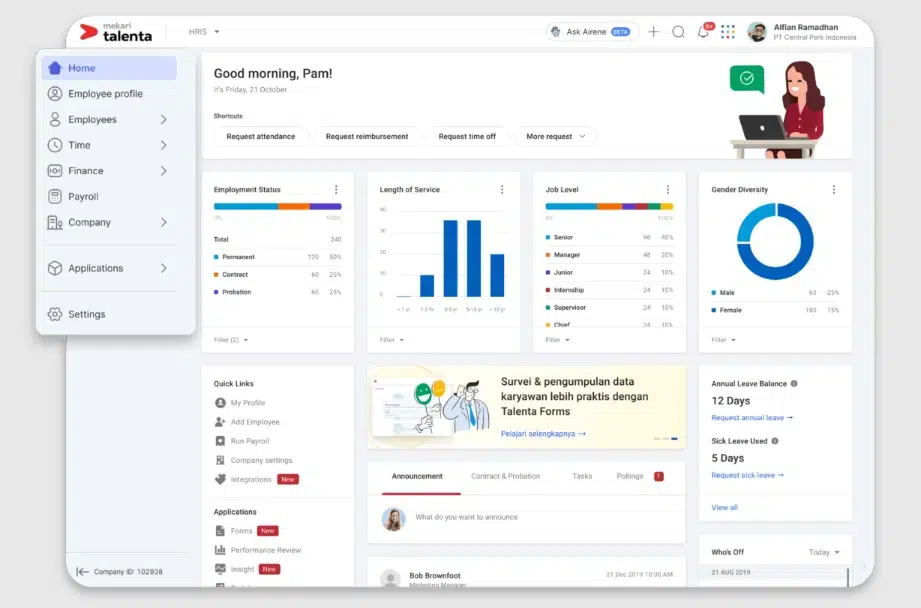
Mekari Talenta is an HRIS platform designed to help organizations manage workforce administration, payroll, and attendance within a centralized system.
Talenta supports companies with distributed and project-based workforces, including construction and engineering environments.
It provides payroll configuration that supports overtime rules, site allowances, and project-based compensation structures commonly used in construction operations.
Talenta also includes attendance management with mobile clock-in capabilities, helping companies track working hours across multiple job sites.
For workforce data management, Talenta centralizes employee records and provides visibility across projects and locations.
The system also supports integration with finance and accounting systems through API connectivity and follows ISO-27001 certified information security standards.
2. BambooHR
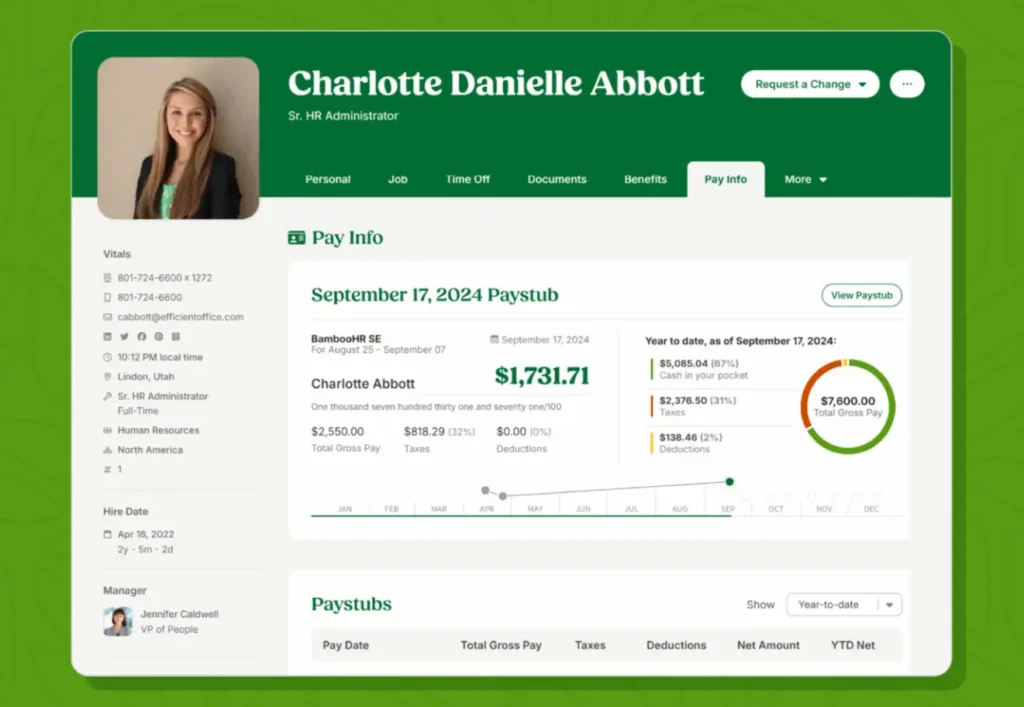
BambooHR is a cloud-based HR software platform focused on employee data management and core HR administration.
The system provides centralized employee records, document management, and HR workflow automation. BambooHR offers time-off tracking, performance management tools, and reporting capabilities suitable for companies seeking to digitize basic HR operations.
While not construction-specific, the platform’s flexibility allows customization for project-based organizations.
Best suited for small to mid-sized construction companies prioritizing employee record management and HR process standardization over complex payroll or multi-site operations.
3. Zoho People
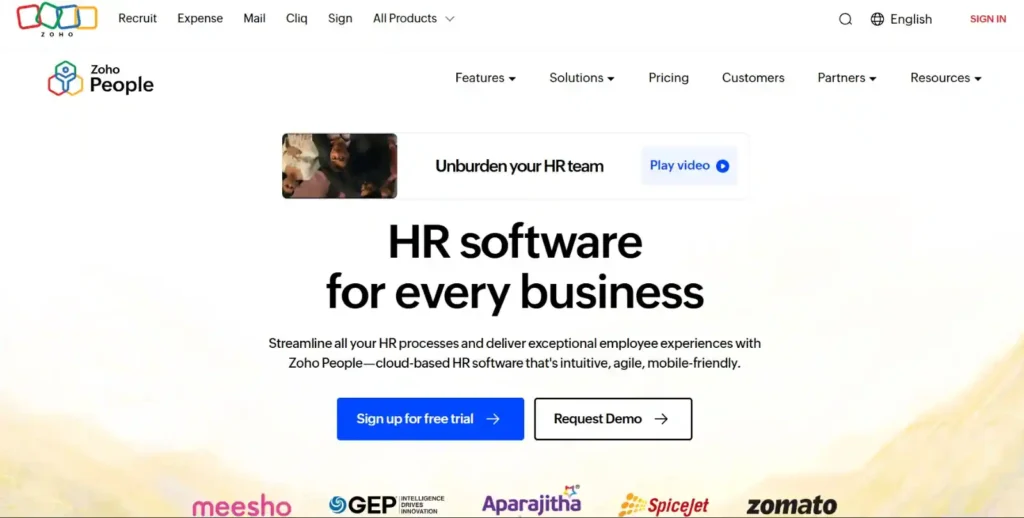
Zoho People is an HR management platform offering workforce automation and employee administration tools. The system includes time and attendance tracking, leave management, performance reviews, and customizable workflows.
Zoho People integrates with the broader Zoho ecosystem, including finance and project management applications. The platform supports shift scheduling and mobile access for field-based teams.
Best suited for growing construction companies seeking an affordable, scalable HRIS with strong integration capabilities within the Zoho product suite.
4. UKG Ready
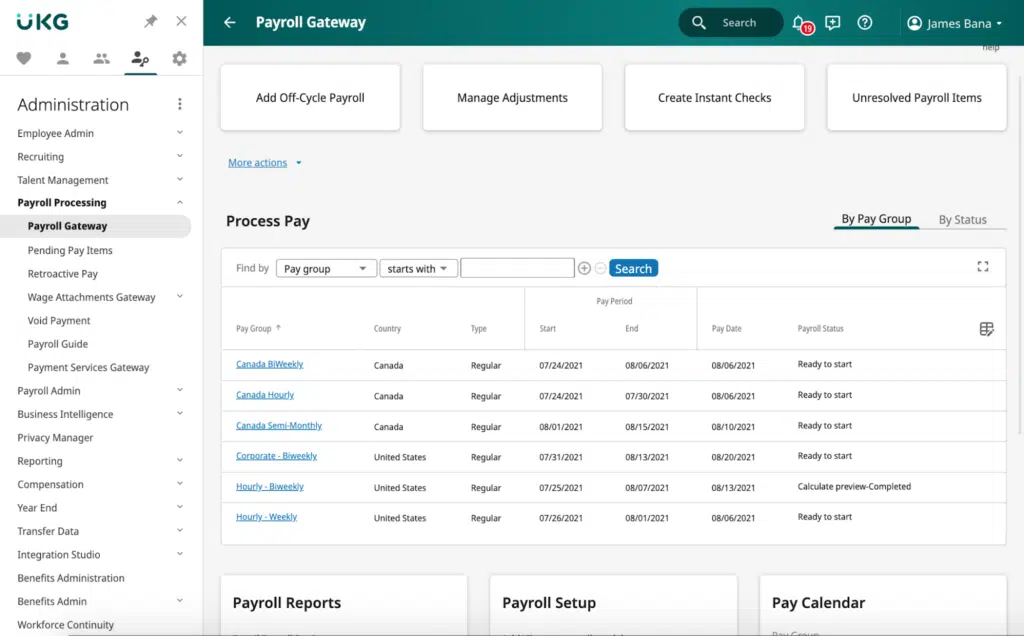
UKG Ready (formerly Kronos) is a workforce management software platform supporting scheduling, time tracking, and compliance monitoring.
The system emphasizes labor optimization, advanced scheduling capabilities, and regulatory compliance features. UKG Ready provides robust time and attendance functionality with support for complex pay rules and union requirements.
The platform includes workforce analytics and forecasting tools for labor planning. Best suited for large construction firms with complex scheduling needs, union workforces, or multi-location operations requiring advanced labor compliance management.
5. Sage HR
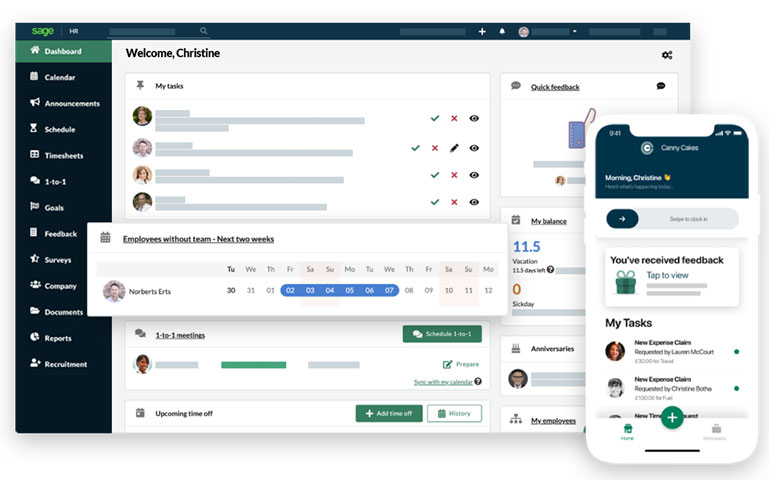
Sage HR is an HR software platform supporting employee data management, leave tracking, and performance administration.
The system offers shift scheduling, document management, and workflow automation for core HR processes. Sage HR provides mobile access and integrates with Sage accounting products. The platform emphasizes ease of use and quick implementation.
Best suited for small to mid-sized construction companies seeking straightforward HR digitization with integration to existing Sage financial systems.
Read more: HRIS Integration: Meaning, Types, Examples, and Best Practices
How Mekari Talenta Supports Construction Workforce Operations
In construction environments, integrated HR capabilities help reduce administrative friction and strengthen governance.
Mekari Talenta provides a centralized HRIS platform designed to support complex workforce structures, including construction and engineering environments.
Mekari Talenta supports construction workforce operations through:
- Flexible payroll configuration for overtime rules and site-based allowances via Payroll Software
- Integrated Attendance Management to track shift-based and on-site attendance linked directly to payroll
- Centralized workforce data across multiple job sites
- API readiness for integration with finance and accounting systems.
- ISO-certified data security standards aligned with structured data governance practices
Through its Construction Industry Solution Page, Mekari Talenta supports companies in managing multi-site workforce operations with centralized visibility.
Key capabilities include:
- Configurable payroll rules aligned with project-based compensation
- Centralized employee master records across sites
- Supervisor-based approval workflows before payroll closing
- Real-time labor allocation monitoring
- Secure role-based access to workforce data
By integrating attendance, payroll, and workforce reporting within one platform, Mekari Talenta helps HR and finance teams reduce duplication, improve payroll accuracy, and maintain clear visibility across active projects.
For construction companies seeking scalable and structured workforce management, exploring an integrated HRIS platform can strengthen operational control and long-term project profitability.
Conclusion
Construction workforce management is inherently complex. Project-based teams, multi-site mobility, overtime-heavy schedules, and contractor mixes create operational challenges that cannot be handled effectively through manual processes.
An integrated HRIS acts as the backbone for centralizing workforce data, automating payroll, and improving project labor cost visibility.
For construction companies operating across multiple sites, structured HR technology is a strategic infrastructure that supports operational efficiency, financial control, and sustainable growth.