




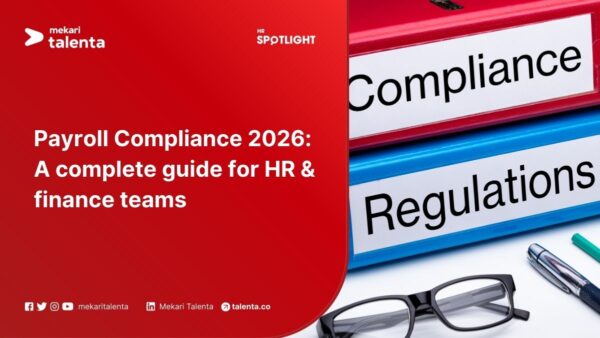
Payroll compliance is a critical pillar in ensuring accurate, consistent, and transparent salary payments within an organization.
As businesses grow more complex and regulations continue to evolve, payroll compliance is no longer a purely administrative responsibility. It has become a strategic concern for HR and Finance teams.
Inaccurate payroll processing or non-compliance with regulations can expose companies to tax penalties, labor disputes, reputational damage, and operational disruption.
For this reason, payroll compliance must be treated as an integral part of enterprise risk management and corporate governance.
As companies prepare for 2026, strengthening payroll compliance frameworks is essential to protect both the organization and its workforce.
Read also: HRIS Audit Checklist Guide and Framework
What Is Payroll Compliance?
Payroll compliance refers to an organization’s obligation to ensure that all payroll processes comply with applicable labor laws, tax regulations, and statutory requirements.
This includes calculating wages correctly, paying employees on time, deducting and remitting taxes, and maintaining accurate payroll records.
In a global business context, payroll compliance covers not only salary payments but also employee benefits, social security contributions, working hours, leave entitlements, and reporting obligations.
Payroll compliance ensures fairness for employees while safeguarding the company from regulatory and legal exposure.
Why Is Payroll Compliance Important for Businesses?
Payroll compliance plays a crucial role in maintaining business sustainability. Non-compliance can result in financial penalties, audits, back payments, and legal sanctions that disrupt operations and drain resources.
From an employee perspective, compliant payroll processes protect workers’ rights by ensuring they receive accurate compensation and statutory benefits.
For the organization, payroll compliance reinforces trust, strengthens governance, and supports long-term operational stability.
In highly regulated environments like Indonesia, compliance failures can escalate quickly and impact corporate reputation.
Read more: Understanding Global Payroll Management
Key Elements of Payroll Compliance

To ensure smooth operations and minimize legal risks, companies must pay close attention to the following key elements:
1. Employee Salary Calculation and Payment
Companies are required to ensure that all salary components, such as base salary, fixed and variable allowances, overtime pay, and incentives, are calculated accurately and paid on time.
These calculations must be based on:
- Employee employment contracts
- The company’s salary structure and pay scale
- Applicable minimum wage regulations
- Working hours and overtime provisions
Errors in salary calculations can lead to employee dissatisfaction and may result in violations of labor regulations.
Salary Deductions and Payroll Taxes
Payroll compliance also includes the company’s obligation to apply salary deductions in accordance with applicable regulations. These deductions include:
- Income Tax (PPh 21) as employee income tax
- BPJS Kesehatan
- BPJS Ketenagakerjaan (JHT, JKK, JKM, and JP, where applicable)
Companies are not only responsible for calculating these deductions correctly, but also for remitting them to the relevant authorities on time.
Late or incorrect payments may result in administrative sanctions and financial penalties.
3. Payroll Reporting and Year-End Tax Filing
In addition to deductions and payments, companies are required to perform regular payroll reporting. These obligations include:
- Monthly tax reports (SPT Masa PPh 21)
- Issuance of withholding tax certificates for employees
- Annual Corporate Income Tax Return (SPT Tahunan PPh Badan) reporting
- Annual recapitulation of employee income and tax data
Accurate and timely reporting helps companies avoid tax audits and legal sanctions.
4. Payroll Documentation and Recordkeeping
Companies must retain all payroll-related documents as part of administrative compliance. These documents include:
- Payslips
- Payroll summaries
- Proof of tax and BPJS payments
- PPh 21 withholding tax slips
Payroll documents must be stored securely and systematically for a specific period in accordance with legal requirements, to support audits or future inspections.
Read more: Understanding Payroll Cutoff Dates in Payroll Operations
Payroll Compliance Regulations and Legal Considerations
Payroll compliance requirements vary by jurisdiction, but most countries, including Indonesia, regulate core payroll areas such as minimum wages, tax obligations, benefits, working hours, and reporting standards.
In Indonesia, payroll is influenced by regulations issued by the Ministry of Manpower, Direktorat Jenderal Pajak (DJP), and BPJS.
Companies operating across multiple regions or countries must ensure payroll practices align with local regulations in each jurisdiction, as misalignment often leads to compliance gaps.
Understanding and continuously monitoring regulatory changes is essential, especially as labor and tax regulations evolve toward greater transparency and digital reporting.
Common Payroll Compliance Challenges Faced by HR Teams

HR and Finance teams commonly face the following payroll compliance challenges:
1. Frequent regulatory changes
Updates to tax rates, wage regulations, and labor laws require constant monitoring and system adjustments.
2. Manual payroll processes
Spreadsheet-based or partially manual payroll increases the risk of calculation errors, data inconsistency, and missed deadlines.
3. Complex payroll structures
Multiple payroll components, allowances, and benefit schemes complicate compliance management.
4. High administrative workload
Payroll compliance consumes significant HR resources, reducing time available for strategic initiatives.
5. Limited visibility and audit readiness
Inadequate documentation and audit trails make it difficult to demonstrate compliance during inspections or audits.
How to Ensure Payroll Compliance
To maintain consistent and sustainable payroll compliance, companies must implement strategic measures that focus not only on payroll processes, but also on systems, data accuracy, and administrative discipline.
The following steps outline how payroll compliance can be effectively ensured:
1. Use Payroll Software
Using payroll software such as Mekari Talenta helps companies automate salary calculations, tax computations, and various deductions in a systematic manner.
With automated systems, the risk of manual errors, such as incorrect salary, tax, or overtime calculations, can be significantly reduced.
In addition, payroll software is generally aligned with applicable labor and tax regulations, enabling more accurate and consistent calculations of PPh 21, BPJS Kesehatan, and BPJS Ketenagakerjaan contributions.
This greatly supports HR and finance teams in maintaining compliance without having to perform repetitive manual calculations each payroll period.
2. Manage Payroll and Reporting Schedules Consistently
Payroll compliance is highly dependent on timeliness. Therefore, companies should establish a clear and well-documented payroll calendar. This calendar should include:
- Employee salary payment dates
- Deadlines for tax and social security contributions
- Monthly and annual tax reporting schedules
With a consistent schedule, companies can avoid late payments or delayed reporting that may result in administrative penalties or fines. Consistency also helps build employee trust in the company’s payroll system.
3. Ensure Accurate Employee Classification and Attendance Records
Employee classification has a direct impact on salary calculations, tax obligations, and BPJS contributions. Incorrect classification can lead to payroll miscalculations and potential regulatory violations.
Accurate attendance data, including attendance records, leave, absences, and overtime, also forms the foundation of payroll calculations.
An attendance system integrated with payroll ensures that working hours, delays, and overtime are recorded accurately and transparently.
4. Remit Payroll Deductions Regularly and on Time
After salary deductions are applied, companies are obligated to remit taxes and social security contributions to the relevant authorities within the prescribed deadlines. Late or incorrect remittances may result in:
- Administrative fines
- Interest penalties
- Increased risk of audits or inspections
Therefore, companies must ensure that remittance processes are carried out regularly, properly documented, and fully traceable as part of internal payroll control mechanisms.
Read more: Understanding On-Cycle vs Off-Cycle Payroll: Key Differences and When to Use Each
Conclusion
Payroll compliance is a fundamental requirement for modern businesses, particularly as regulatory expectations increase toward 2026. It is not a one-time activity, but a continuous process that requires accuracy, discipline, and reliable systems.
By strengthening payroll compliance, organizations protect themselves from legal and financial risk while ensuring fairness and transparency for employees. Modern payroll systems play a critical role in supporting compliance, operational efficiency, and strong corporate governance.
To support payroll compliance effectively, many companies use Mekari Talenta, which helps automate salary calculations, PPh 21 tax processing, BPJS contributions, attendance integration, and compliance documentation in one centralized system.
With the right payroll technology, HR and Finance teams can manage compliance more confidently while focusing on strategic business priorities.
References:
Direktorat Jenderal Pajak (DJP) – PPh Pasal 21